Philosophy School
Islamic Cosmology
Islamic intellectual tradition interpreting creation, heavens, earth, time, souls, angels, jinn, matter, elements, celestial spheres, divine providence, eschatology, astronomy, cosmography, kalām, falsafa, Sufi and Ismāʿīlī metaphysics, and works such as al-Qazwīnī’s Wonders of Creation.
Period
Medieval History500 CE – 1499 CE
Era
High Medieval1000 CE – 1299 CE
Begin
1203 CE
End
1283 CE
Structural Factors
- Shared Core Claims
- Islamic Cosmology holds that the cosmos is an ordered creation disclosing divine wisdom, intelligibility, and providence. It explains the relation between Creator and creation through Qurʾānic exegesis, kalām theology, philosophical natural science, astronomy, cosmography, and metaphysical accounts of emanation, causation, and wonder.
- Shared Methods
- The tradition uses Qurʾānic and Hadith interpretation, kalām disputation, Aristotelian and Neoplatonic reasoning, astronomical observation, mathematical modeling, encyclopedic compilation, cosmography, geography, wonder literature, manuscript illustration, philosophical commentary, and comparative engagement with Greek, Persian, Indian, and Abrahamic sources.
- Shared Lineage
- The lineage runs from Qurʾānic creation teaching, late antique astronomy, Aristotle, Ptolemy, Neoplatonism, Syriac and Persian transmission, al-Kindī, al-Fārābī, Ibn Sīnā, the Ikhwān al-Ṣafāʾ, al-Ghazālī, Ismāʿīlī cosmology, al-Bīrūnī, Ibn Rushd, Naṣīr al-Dīn al-Ṭūsī, and al-Qazwīnī.
- Shared Problems
- Central problems include creation and eternity, divine command, causation, celestial motion, hierarchy of beings, matter and form, elements, time, place, providence, miracles, human souls, angels, jinn, eschatological worlds, the relation of astronomy to theology, and how wonder can become knowledge.
- Shared Vocabulary
- Key terms include khalq, kawn, kosmos, falak, hayʾa, ʿālam, samāʾ, ʿarsh, kursī, malakūt, jabarūt, ʿajāʾib, gharāʾib, kalām, falsafa, fayḍ, ʿaql, nafs, hayūlā, jawhar, ʿaraḍ, sabab, qadar, tadbīr, and tawḥīd.
- Shared Historical Context
- Islamic Cosmology developed from the seventh century onward across Arabic, Persian, Turkish, and other Islamicate settings, shaped by scripture, translation movements, observatories, courts, madrasas, Sufi and Ismāʿīlī networks, illustrated manuscripts, Mongol-era scholarship, and debates between theologians and philosophers.
Defining Axes
- Doctrine
- Doctrinally, the tradition is defined by the conviction that the universe is meaningful, created or ordered by God, hierarchically structured, and intelligible through disciplined inquiry, while disputed accounts differ over eternity, emanation, atomism, occasionalism, celestial souls, and natural causation.
- Method
- Its method is exegetical, philosophical, mathematical, and encyclopedic: interpret revelation, reason about being and causation, observe and calculate celestial order, catalogue creatures and places, compare inherited authorities, and arrange cosmic knowledge as a guide to contemplation.
- Lineage
- The lineage runs from Qurʾānic cosmology and late antique science through the translation movement, falsafa, kalām, Ismāʿīlī and Sufi metaphysics, astronomical schools, cosmographical encyclopedias, al-Qazwīnī’s ʿAjāʾib al-makhlūqāt, Ottoman and Persian manuscript traditions, and modern history of science.
- Subject Focus
- The school focuses on philosophy of religion, metaphysics, natural philosophy, astronomy, cosmography, theology, causation, creation, eschatology, philosophy of science, geography, manuscript culture, Islamic studies, intellectual history, and comparative cosmology.
- Geography / Culture
- The tradition spans the Islamic world from Arabia, Iraq, Syria, Iran, Central Asia, al-Andalus, North Africa, Anatolia, South Asia, and Ottoman lands, circulating through Arabic and Persian scholarship, courts, observatories, madrasas, libraries, manuscript ateliers, and later global academic study.
- Historical Reaction
- Islamic Cosmology responds to Qurʾānic creation teaching, Greek astronomy and metaphysics, Persian and Indian scientific inheritances, theological disputes over divine power, philosophical claims about eternal order, Mongol-era encyclopedism, and the need to harmonize revelation, reason, observation, and wonder.
Internal Structure
- Foundational Texts
- Foundational materials include Qurʾānic creation passages, Hadith and tafsīr, Aristotle and Ptolemy in Arabic transmission, al-Kindī’s cosmological writings, al-Fārābī, Ibn Sīnā’s Shifāʾ and Najāt, the Rasāʾil of the Ikhwān al-Ṣafāʾ, al-Ghazālī, Ismāʿīlī texts, al-Bīrūnī, Ṭūsī, and al-Qazwīnī’s Wonders of Creation.
- Core Vocabulary
- Core vocabulary includes creation, world, heaven, earth, sphere, planet, star, element, nature, soul, intellect, angel, jinn, time, place, motion, causation, providence, command, destiny, wonder, marvel, geography, cosmography, emanation, and divine unity.
- Metaphysics
- Islamic cosmological metaphysics analyzes the relation between God and world, necessary and contingent being, creation and emanation, intellect and soul, celestial and sublunary realms, substance and accident, atomism and hylomorphism, divine providence, and the hierarchy of visible and invisible beings.
- Epistemology
- Its epistemology combines revelation, reason, testimony, observation, mathematical astronomy, inherited authorities, travel reports, manuscript transmission, and contemplative wonder, while debating the reliability of sense perception, demonstration, allegory, and miraculous or unseen realities.
- Ethics
- Islamic Cosmology often treats knowledge of the cosmos as ethically formative: contemplating order and wonder should deepen humility, gratitude, piety, intellectual discipline, care for creation, and awareness of human finitude within a divinely governed universe.
- Method
- The school proceeds through scriptural interpretation, philosophical proof, astronomical calculation, cosmographical arrangement, encyclopedic collection, visual depiction, classification of beings, debate over causes, and the use of marvels to move readers from curiosity toward contemplation.
- Internal Debates
- Internal debates concern creation versus eternity, emanation versus creation by command, atomism versus Aristotelian natural philosophy, occasionalism versus causal necessity, literal versus allegorical cosmology, the status of astrology, and the relation between scientific astronomy and religious cosmography.
- Successors
- Successors include Ottoman and Persian cosmographical manuscripts, postclassical Islamic philosophy, madrasa astronomy, Sufi and Shiʿi cosmologies, early modern encounters with new astronomy, modern Islamic thought on science and creation, and contemporary scholarship on Islamicate science and cosmography.
External Classification Context
- History of Philosophy
- Islamic Cosmology is a major crossroad of medieval and postclassical philosophy, joining theology, metaphysics, natural philosophy, astronomy, geography, and encyclopedic literature into sustained reflection on the structure and meaning of the universe.
- Philosophy of Philosophy
- The tradition treats philosophy as ordered contemplation of creation: inquiry should clarify the intelligible structure of the world, test inherited explanations, and turn knowledge of beings toward wisdom about God, humanity, and the unseen.
- Intellectual History
- The tradition links Qurʾānic exegesis, Greek-to-Arabic translation, Abbasid court science, kalām, falsafa, Ismāʿīlī and Sufi metaphysics, observatory culture, manuscript illustration, Mongol and Timurid encyclopedism, Ottoman reception, and modern history of science.
- University Classification
- Classify Islamic Cosmology under Islamic philosophy, philosophy of religion, medieval philosophy, metaphysics, natural philosophy, history of science, astronomy, theology, Islamic studies, manuscript studies, cosmography, and intellectual history.
- Classical Sources
- Classical sources include the Qurʾān, tafsīr, Hadith, Aristotle, Ptolemy, Plotinian and Proclean materials in Arabic transmission, al-Kindī, al-Fārābī, Ibn Sīnā, Ikhwān al-Ṣafāʾ, al-Ghazālī, al-Bīrūnī, Ibn Rushd, Naṣīr al-Dīn al-Ṭūsī, and al-Qazwīnī.
- Sociology of Knowledge
- Islamic Cosmology spread through mosques, madrasas, courts, observatories, translation circles, libraries, manuscript copying, illustrated cosmographies, geographical encyclopedias, Sufi and Ismāʿīlī networks, Ottoman and Persian workshops, colonial catalogues, museums, and modern university scholarship.
Linked Philosophers
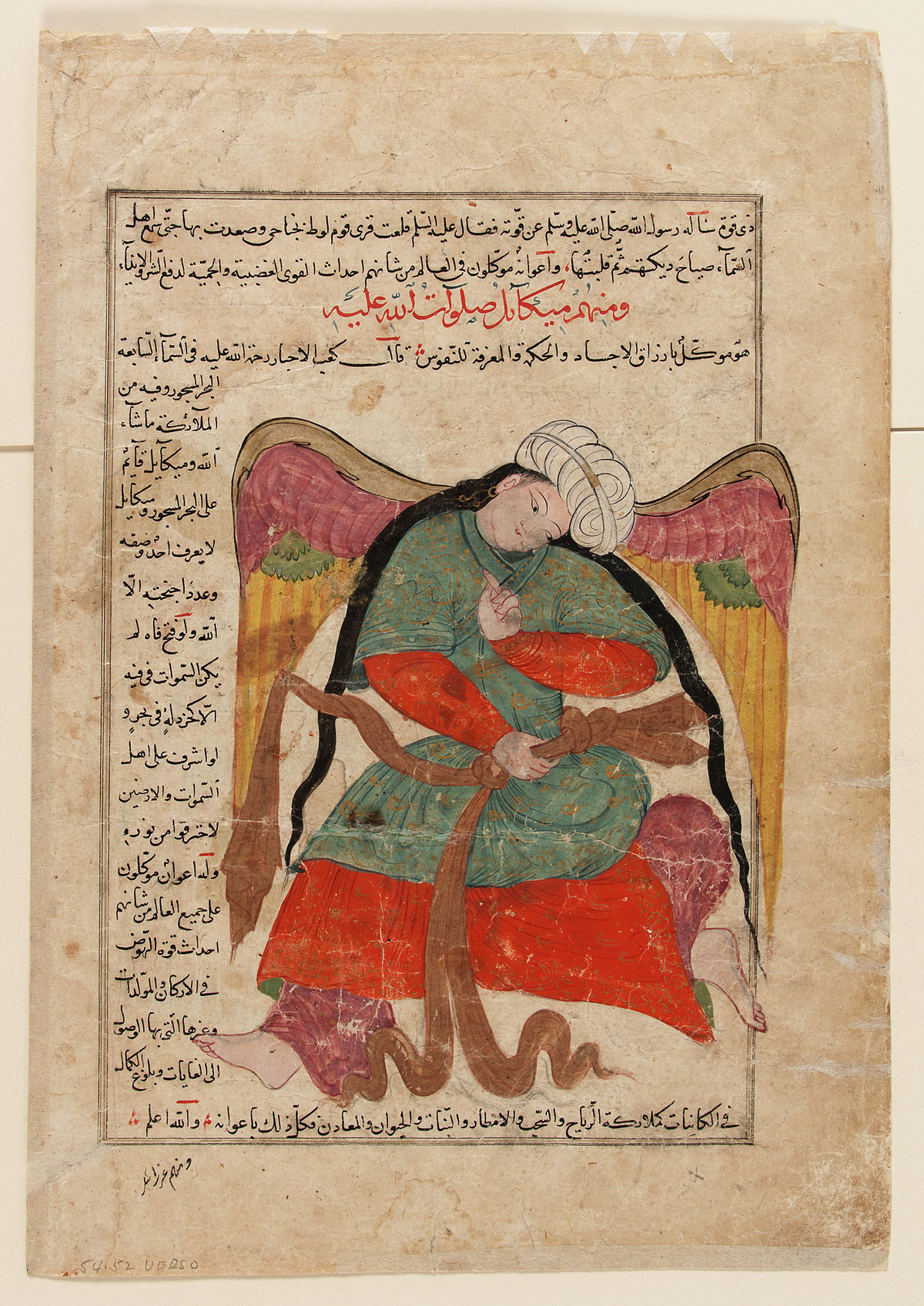
Zakariyya al-Qazwini
1203 CE – 1283 CE
Qazvin
Persian Islamic cosmographer and geographer whose Wonders of Creation and Monuments of the Lands joined natural history, geography, astronomy, marvel literature, manuscript illustration, and theological reflection on created order.