Philosophy School
Mohism
Mohism names the Warring States school associated with Mozi, centered on inclusive care, public benefit, anti-aggression, frugality, Heaven, meritocratic order, and later Mohist logic.
Region
Eastern Thought
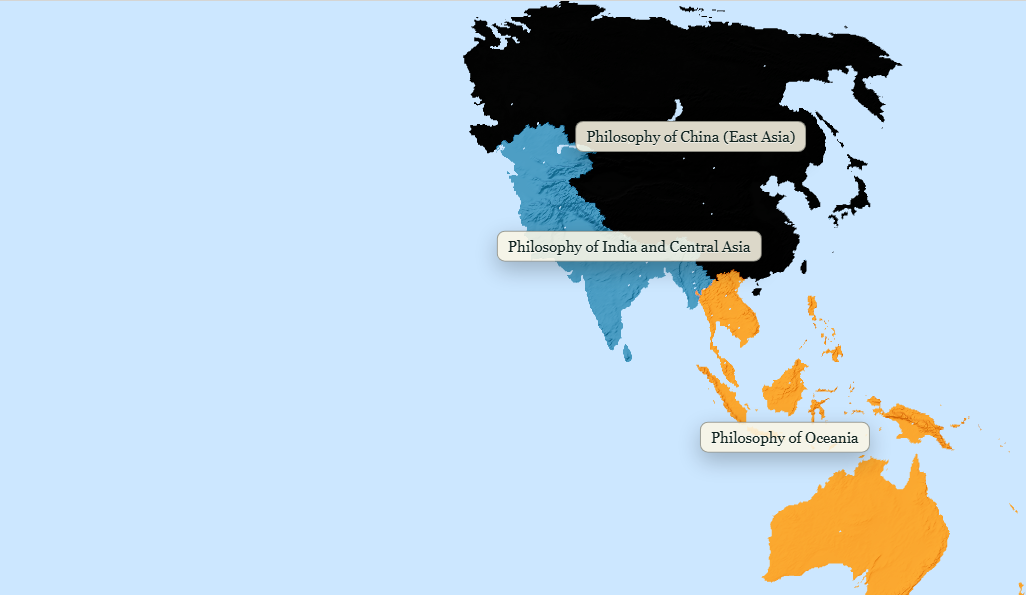
Terra Avita
China (East Asia)

Terra Avita Region
North China Plain & Loess Belt
Structural Factors
- Shared Core Claims
- Mohism argues that right policy and conduct should benefit the world, reduce harm, and be judged by public standards. It emphasizes inclusive care, anti-aggression, frugality, meritocratic government, the intent of Heaven, ghosts and spirits, objective moral standards, and later Mohist work in language, inference, optics, mechanics, and disputation.
- Shared Methods
- Public argument, fa or models, analogical reasoning, disputation, appeal to benefit and harm, criticism of waste and aggressive war, textual comparison of the Mozi, and reconstruction of later Mohist canons and explanations.
- Shared Lineage
- The school begins with Mozi or Mo Di and organized Mohist communities. The received Mozi preserves core doctrinal essays, anecdotes, defensive-warfare materials, and later technical canons associated with anonymous Mohist groups in the Warring States period.
- Shared Problems
- Inclusive care, benefit, rightness, social order, meritocracy, anti-aggression, defensive warfare, frugality, funerals, music, Heaven, ghosts, objective standards, names, models, disputation, analogical extension, sameness and difference, optics, mechanics, and the dating and layering of the Mozi.
- Shared Vocabulary
- Mohism, Mozi, Mo Di, Mo Tzu, Mo-tzu, jian ai, inclusive care, benefit, li, rightness, yi, fa, models, Tian, Heaven, ghosts, spirits, anti-aggression, frugality, meritocracy, bian, disputation, Mohist Canons, Mohist Dialectics, School of Names.
- Shared Historical Context
- Mohism developed in the Warring States period as a rival to Confucian ritual hierarchy and aristocratic privilege. It combined ethical and political reform, disciplined community organization, religious appeal to Heaven and spirits, and practical expertise in defensive warfare and technical inquiry.
Defining Axes
- Doctrine
- Consequentialist and public-benefit ethics: inclusive care, benefit to the world, anti-aggression, frugality, meritocratic order, and objective standards for moral and political judgment.
- Method
- Argument by models, analogies, benefit-harm tests, public disputation, textual triads, and later Mohist canons on language, knowledge, classification, and inference.
- Lineage
- Mozi and early Mohist communities, followed by later Mohist groups responsible for the canons, explanations, and technical materials preserved in the Mozi.
- Subject Focus
- Ethics, political philosophy, philosophy of language, logic, epistemology, philosophy of religion, social philosophy, military ethics, optics, mechanics, and early Chinese philosophy of science.
- Geography / Culture
- Warring States Chinese philosophy, traditionally connected with Lu and Song contexts and the wider North China Plain world of competing states, itinerant advisers, craftsmen, and disputers.
- Historical Reaction
- A reaction against Confucian ritual expenditure, hereditary privilege, partial family-centered ethics, aggressive war, and unreliable standards of moral and political judgment.
Internal Structure
- Foundational Texts
- Foundational evidence includes the received Mozi, Chinese Text Project Mozi, The Mozi translation surface, Wikisource Motze/Mozi translation, SEP Mohism, SEP Mohist Canons, IEP Mozi, Britannica Mohism, and catalog and scholarship rows.
- Core Vocabulary
- jian ai, inclusive care, li, benefit, yi, rightness, fa, models, Tian, Heaven, ghosts, spirits, anti-aggression, frugality, meritocracy, ming, names, bian, disputation, canons, explanations, Mohist Dialectics, Mozi.
- Metaphysics
- Mohism is not primarily a metaphysical school, but it treats Heaven and spirits as morally significant, and later Mohists analyze objects, parts, causality, space, time, sameness, difference, optics, and mechanics.
- Epistemology
- Mohist epistemology seeks reliable public standards for judgment through models, evidence, analogy, testimony, benefit-harm comparison, and later canons on knowing, naming, and distinguishing kinds.
- Ethics
- The ethical center is inclusive care guided by benefit to the world, opposition to aggressive warfare, frugality, merit-based government, and standards meant to overcome partiality and social disorder.
- School Method
- Mohist method argues from practical consequences, public models, clear standards, textual triads, analogical extension, and disciplined disputation rather than inherited ritual status or family partiality.
- Internal Debates
- Internal issues include how to interpret inclusive care, whether Mohist ethics is direct or indirect consequentialism, how Heaven and ghosts ground moral standards, how the later canons relate to early doctrine, and how to reconstruct damaged technical texts.
- Successors
- Mohism declined as an organized movement but influenced early Chinese ethics, political thought, disputation, logic, language theory, scientific and technical writing, Legalist and Han policy debates, and modern comparative philosophy.
External Classification Context
- History of Philosophy
- Belongs to Warring States Chinese philosophy as a major rival to Confucianism and a central source for early Chinese ethics, political philosophy, logic, and philosophy of language.
- Philosophy of Philosophy
- Shows philosophy as public argument about standards, benefit, names, and policy, with doctrines defended through explicit reasons rather than deference to inherited ritual authority.
- Intellectual History
- Connects artisan and military expertise, itinerant persuasion, small-state defense, Warring States competition, anti-Confucian polemic, later Mohist technical writing, and modern reconstruction of the Mozi.
- University Classification
- Classify under ancient Chinese philosophy, Mohism, Warring States thought, ethics, political philosophy, philosophy of language, logic, epistemology, philosophy of religion, and philosophy of science.
- Classical Sources
- Evidence includes SEP Mohism, SEP Mohist Canons, IEP Mozi, Britannica Mozi and Mohism, Chinese Text Project Mozi, The Mozi, Wikisource, Open Library, WorldCat, Internet Archive, PhilPapers and PhilArchive, Cambridge, Oxford, JSTOR, and selected Mozi/Mohism gallery-reference rows.
- Sociology of Knowledge
- The school is reconstructed through the received Mozi, later anonymous Mohist technical chapters, early Chinese rival testimony, translation surfaces, cataloging, image-source curation, and modern scholarship on classical Chinese schools.
Linked Philosophers

Mozi (Mo Di)
470 BCE – 391 BCE
State of Lu or State of Song, Warring States China
Warring States philosopher of Mohism, jian ai, impartial care, anti-aggression, meritocracy, frugality, Heaven, ghosts, standards, logic, optics, and siege defense.
Other Voices
Source entries, public text surfaces, catalog rows, gallery references, and scholarship connected to Mohism, Mozi, inclusive care, anti-aggression, Heaven, benefit, fa models, the Mozi, and the Mohist Canons.