1. Identity & Scope
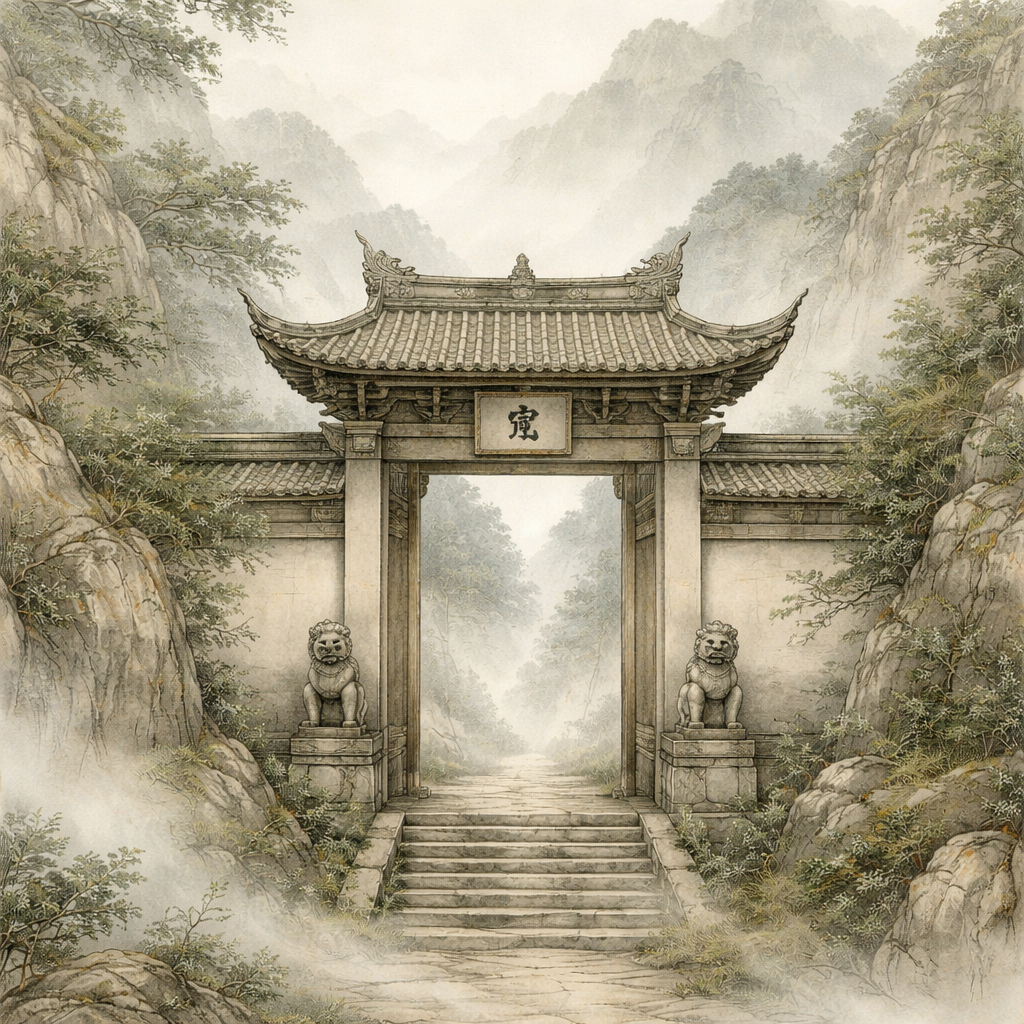
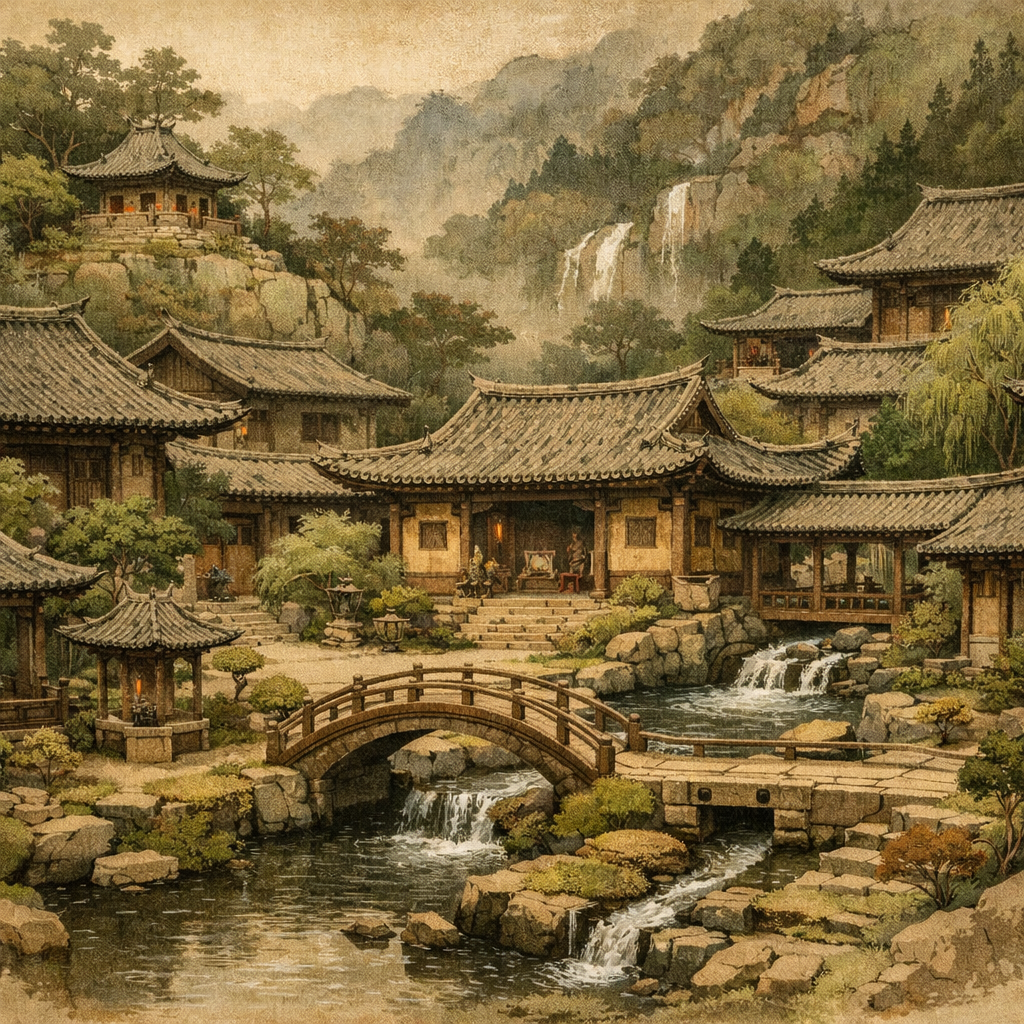
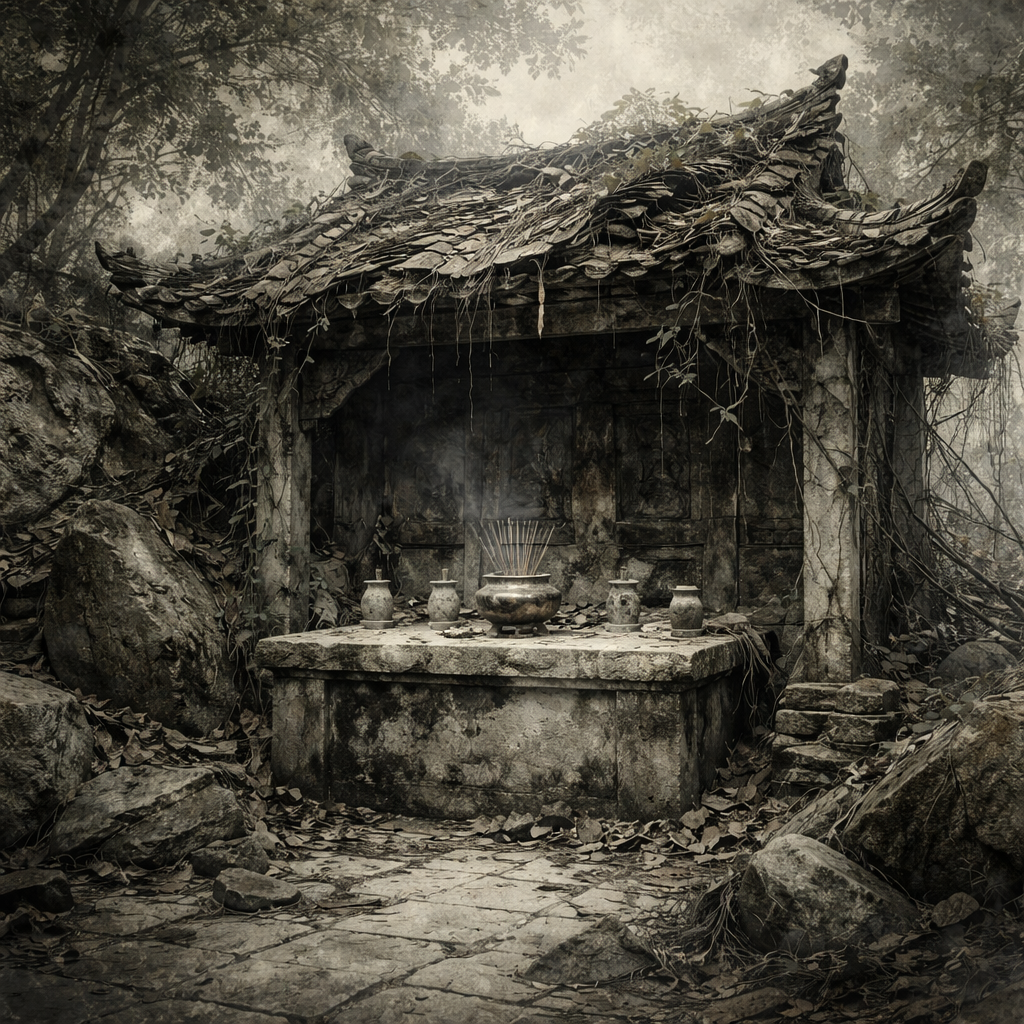
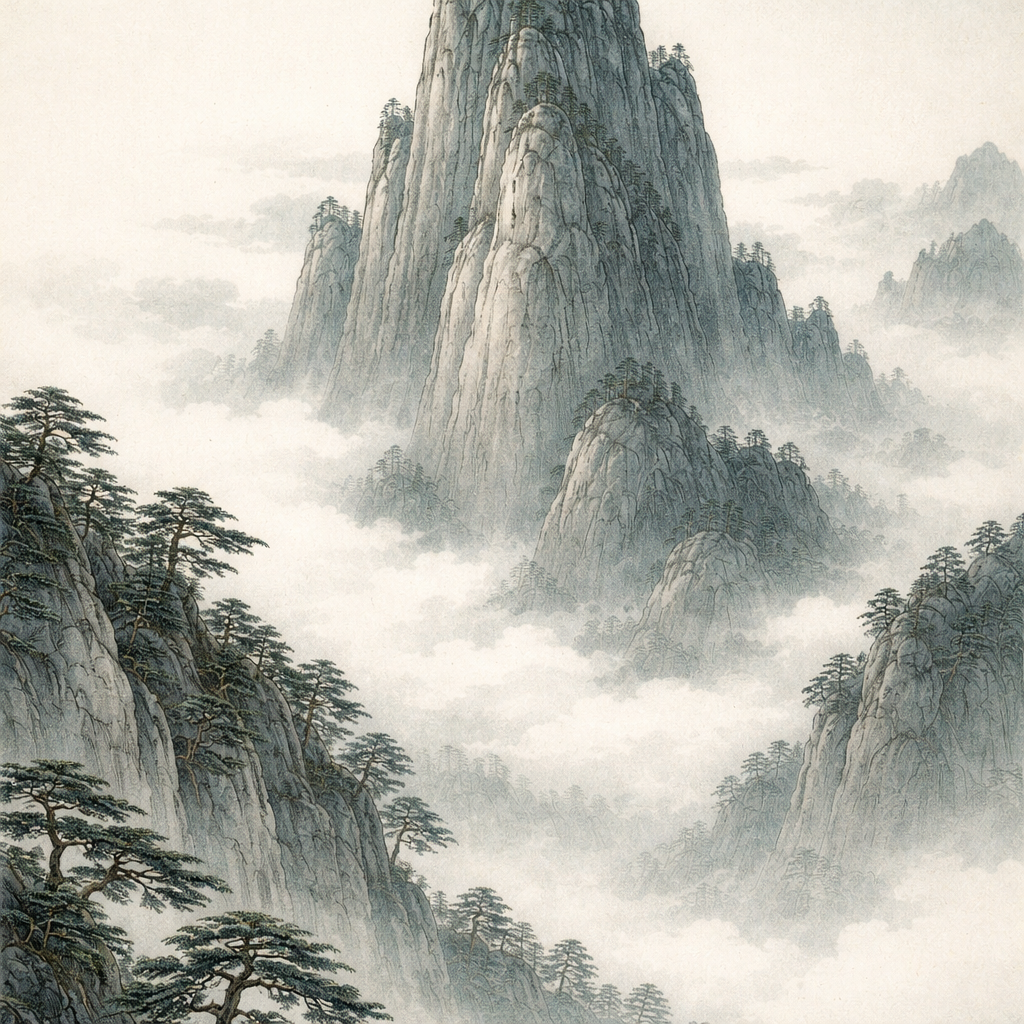
- Names: Daoism (Taoism), Dàojiā (philosophical Daoism), Dàojiào (religious Daoism).
- Scope: Indigenous Chinese religion/philosophy emphasizing harmony with the Dao (the Way).
- Nature: Two intertwined currents: classical Daoist philosophy (Laozi, Zhuangzi) and institutional religious Daoism (ritual, temples, priesthood).
Daoism represents an East Asian religious tradition in which identity coheres around cosmological alignment and embodied practice rather than belief assent or institutional centralization. Emerging from early Chinese intellectual and ritual culture, Daoism integrates metaphysical orientation, ethical naturalism, and technical cultivation into a single lived system. Its historical development reflects deep syncretism within Chinese civilization while retaining clear boundaries grounded in reference to the Dao and continuity of practice. Daoism’s persistence across time is best understood through its practical coherence and adaptability rather than through doctrinal definition.
2. Historical Context


- Origins: Spring and Autumn / Warring States periods (6th–4th c. BCE).
- Early texts: Daodejing (Laozi), Zhuangzi.
- Institutionalization: 2nd c. CE, Celestial Masters movement, merging with folk practices.
- Medieval: Flourishing during Tang dynasty (Daoism as state religion), interaction with Buddhism and Confucianism.
- Modern: Suppressed during 20th-century revolutions, revived as cultural and religious practice.
Daoism develops without a single founder, emerging through a combination of classical philosophical texts and institutional religious movements centered on ritual practice, revelation lineages, and priestly transmission. From its early textual articulation in the Warring States period to later communal organization and canon formation, Daoism consolidates through ritual standardization rather than doctrine, expands via local temple networks and lineage transmission, and reforms through new movements instead of schism. Despite modern suppression and reclassification, Daoism continues today as a plural, locally embedded ritual tradition shaped by state interaction, cultural adaptation, and enduring transmission systems.
3. Sources of Evidence
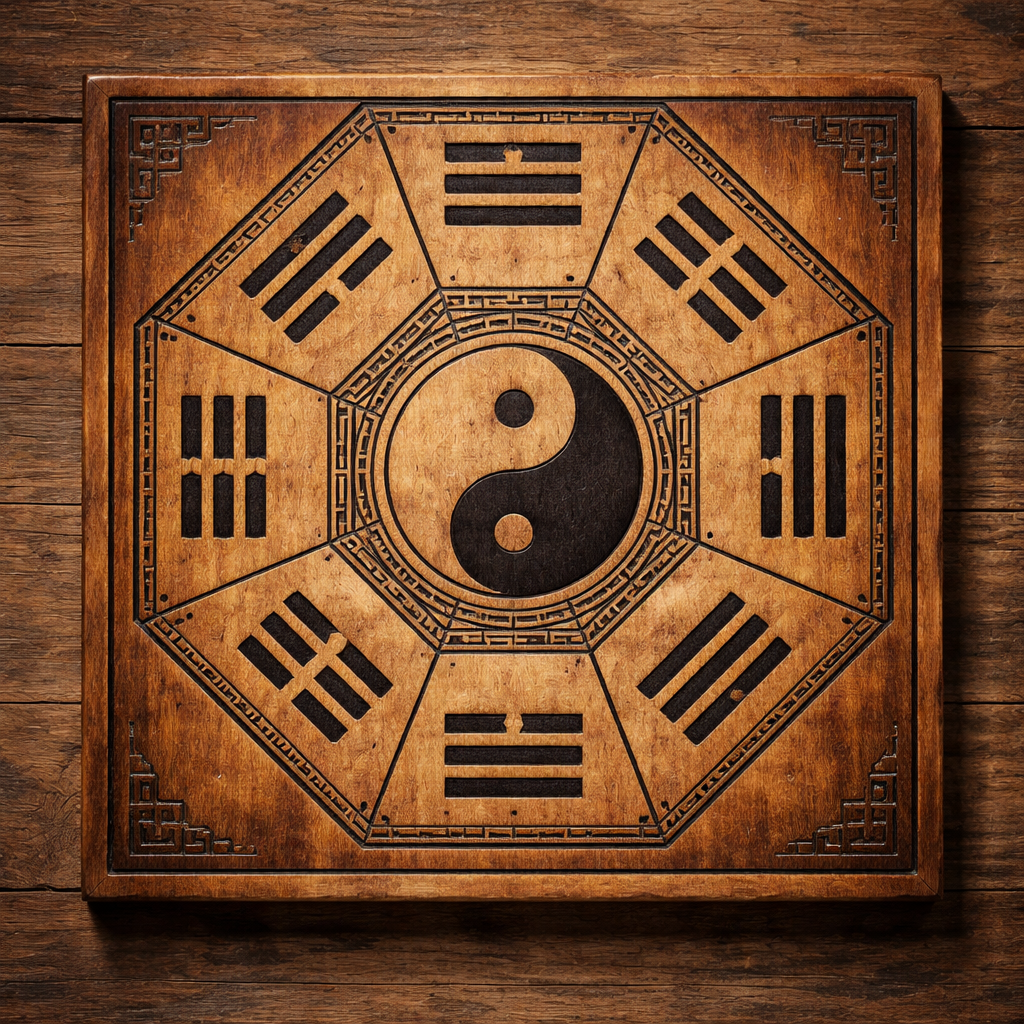
- Texts: Daodejing, Zhuangzi, Liezi, Daozang (Daoist Canon, 1400+ texts).
- Archaeology: Temples, talismans, alchemical sites.
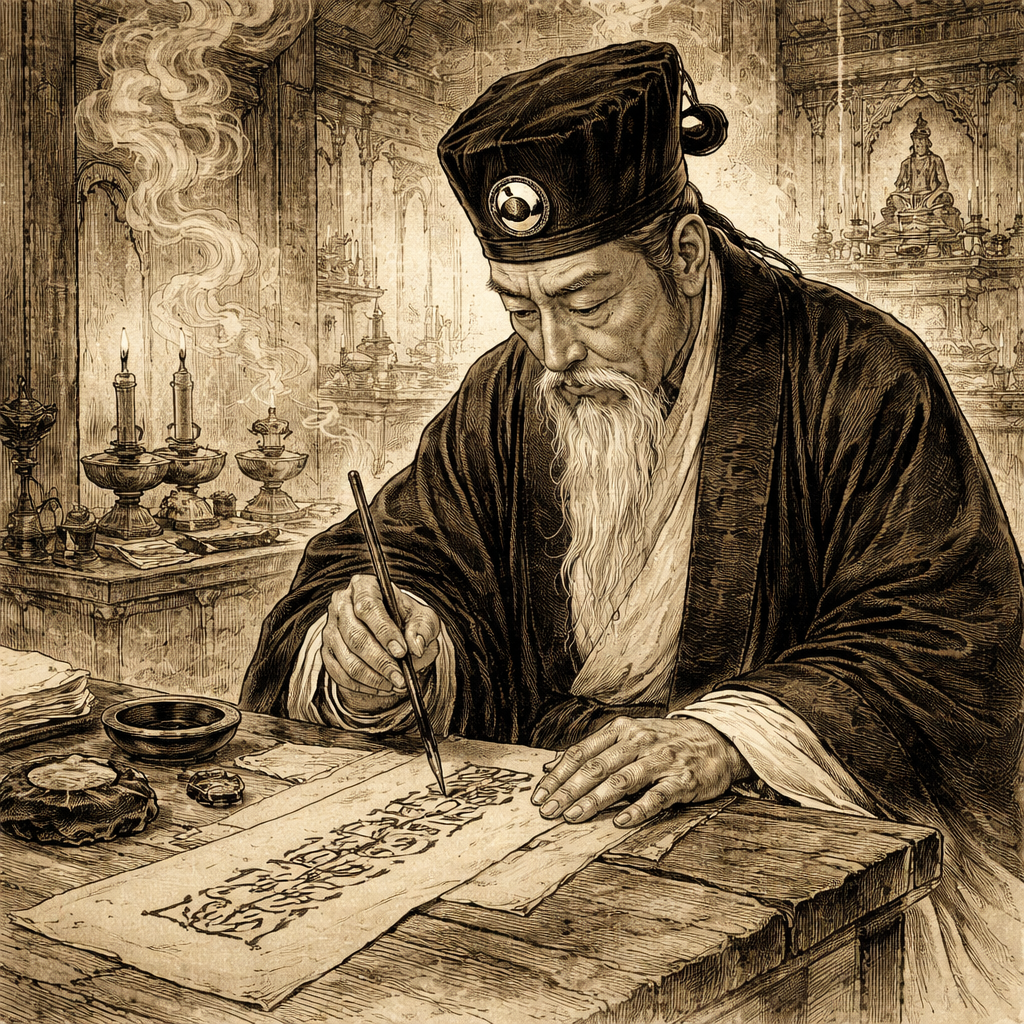
- Oral/ritual: Transmission of liturgy, talismanic practices, priestly lineages.
Daoism’s evidence base is best approached as a three-layer system rather than a single archive: a classical textual layer, an institutional-liturgical layer, and a local ritual-performative layer. The classical layer is built around early texts later treated as foundational (Daodejing, Zhuangzi) and the dense commentarial traditions that reframed them across centuries. The institutional layer is preserved in revealed corpora, ritual registers, ordination lineages, and the Daozang—an evolving canon-as-catalog that records what institutions chose to collect and classify, not a final boundary for Daoist authority. The local-performative layer is carried through chanting, talismanic technologies, healing rites, temple and mountain cult networks, and practical manuals whose authority rests on usage and apprenticeship more than on canonical status. Inscriptions and state records illuminate patronage, regulation, and temple geography, while archaeology and material culture emphasize durable centers over perishable ritual economies. Because Daoism continuously interacts with Buddhism, Confucian governance, and regional religious life, its sources must be read with disciplined attention to provenance, sect, function, and medium, separating legitimating self-presentation from historically datable evidence and keeping elite textual systems distinct from village-level religious practice.
4. Pantheon & Supernatural Beings
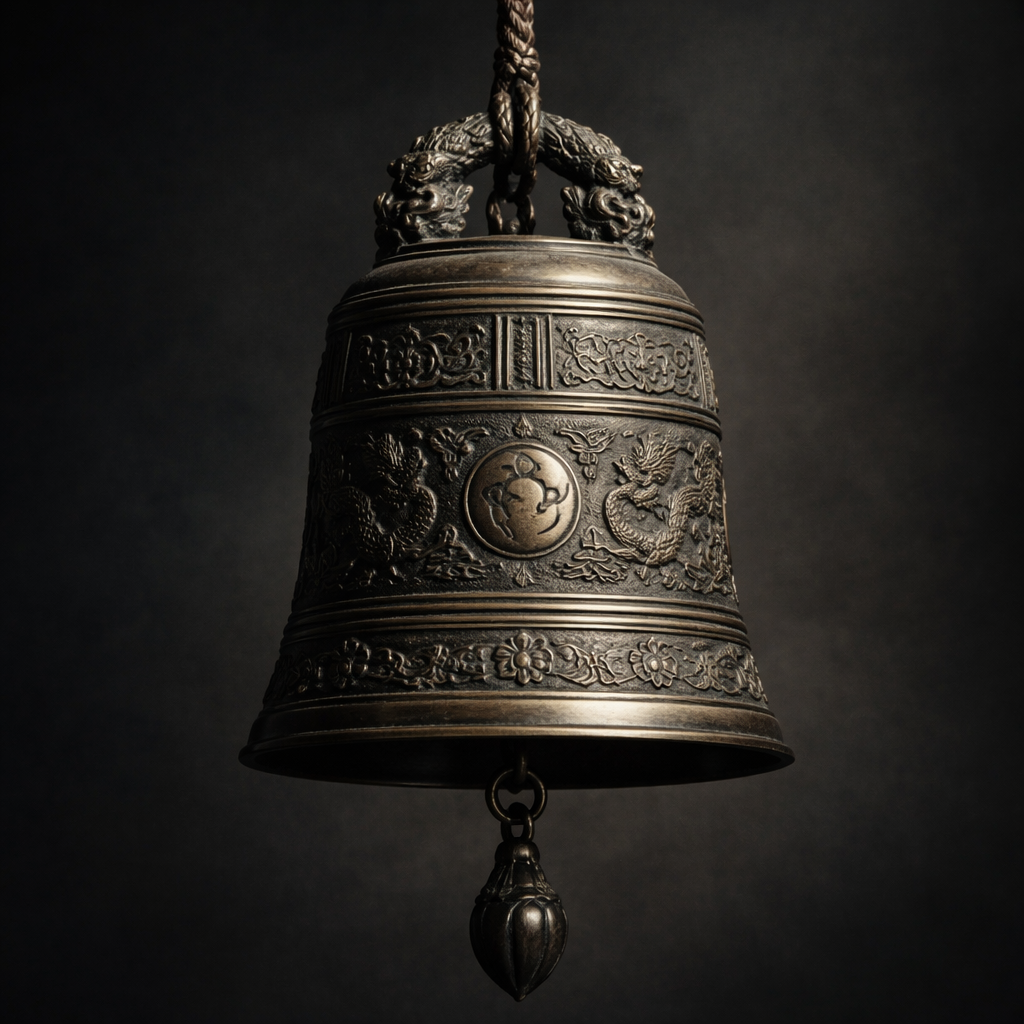
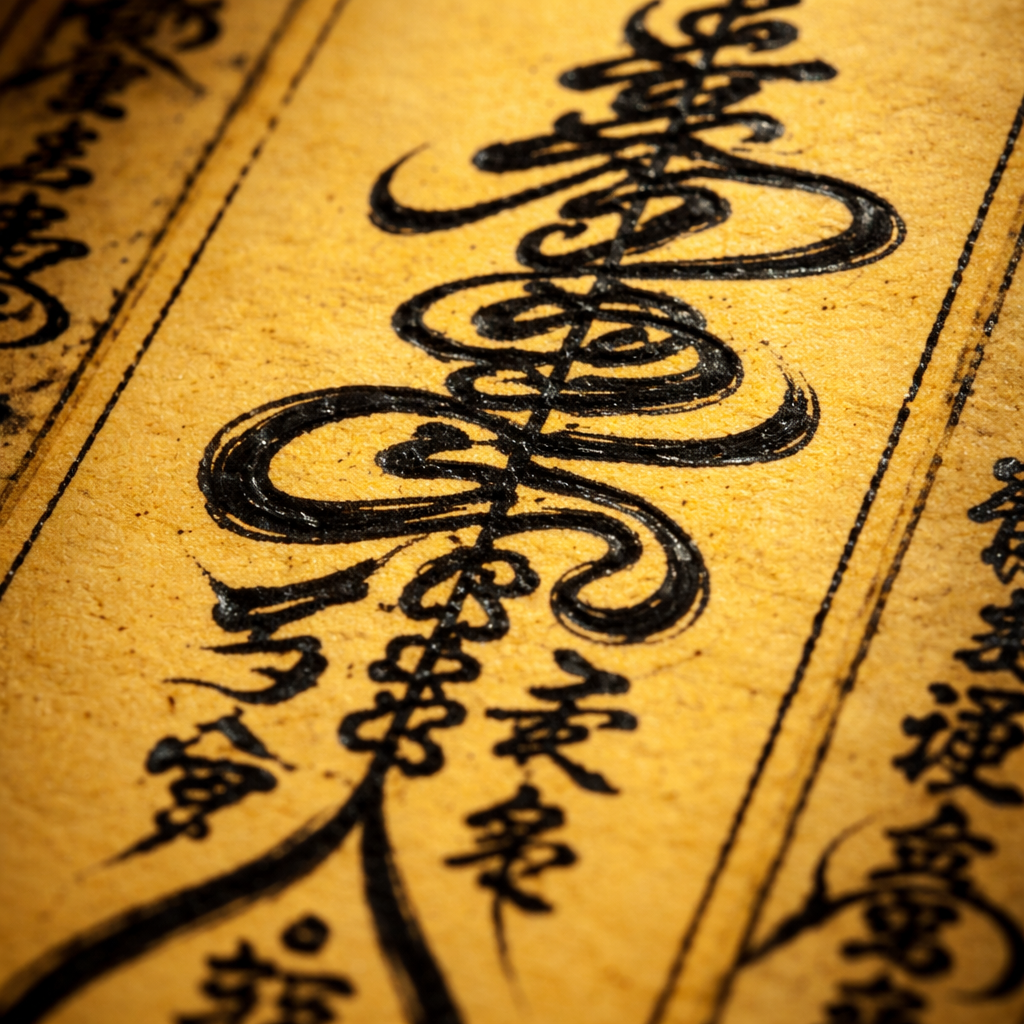
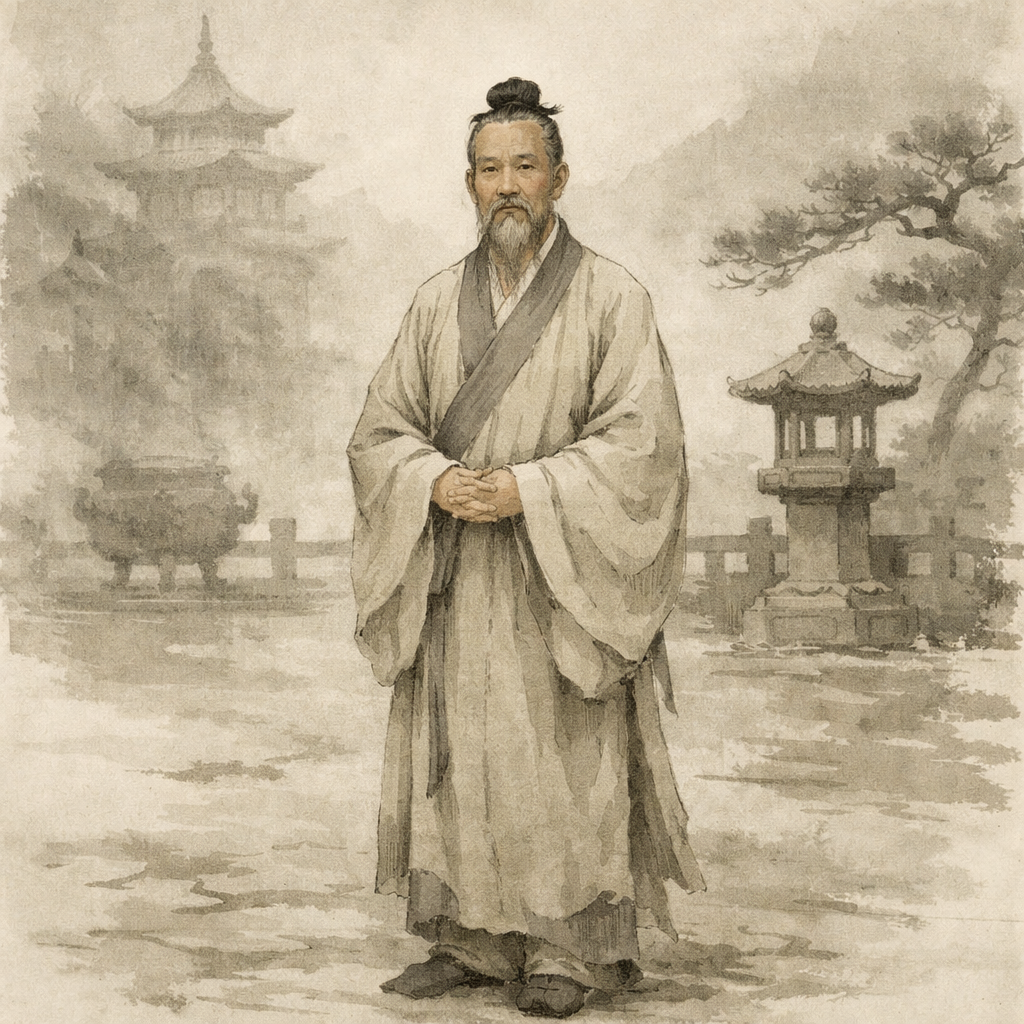
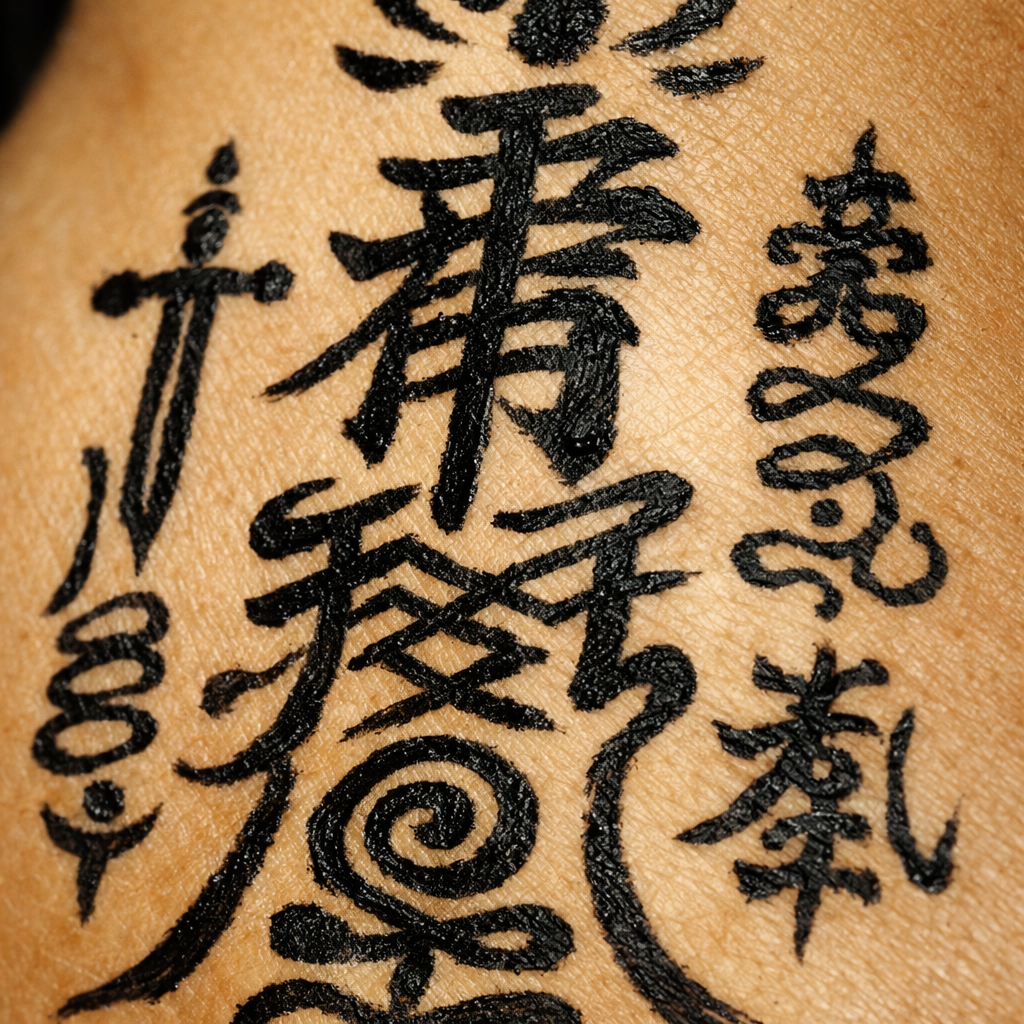
- Dao: The ineffable ultimate principle, beyond gods.
- Deities: Jade Emperor, Three Pure Ones, Queen Mother of the West, local city gods.
- Immortals: Eight Immortals, sages, perfected beings (xian).
- Spirits: Nature spirits, ancestors, demons, tutelary gods.
Daoism presents one of the most explicitly administrative and process-oriented supernatural systems in religious history. Rather than centering divine authority in a creator god or moral sovereign, it organizes supernatural beings within a multi-tiered bureaucratic cosmos governed ultimately by the Dao—an impersonal, ineffable principle beyond agency or will. Divine figures range from high theological manifestations and celestial rulers to city gods, household protectors, immortals, spirits, and wandering souls, each occupying a defined office or function rather than an absolute rank. Advancement, demotion, ascent, or decline are possible for both gods and humans, reflecting a system oriented toward cultivation, correction, and balance rather than fixed hierarchy. Supernatural disorder is understood as situational and remediable, addressed through ritual technologies administered by specialists who mediate between human communities and the celestial administration. This page maps that system as it is actually structured in Daoist thought and practice: bureaucratic without absolutism, plural without chaos, and ordered toward harmonization rather than domination.
5. Cosmology & Myth
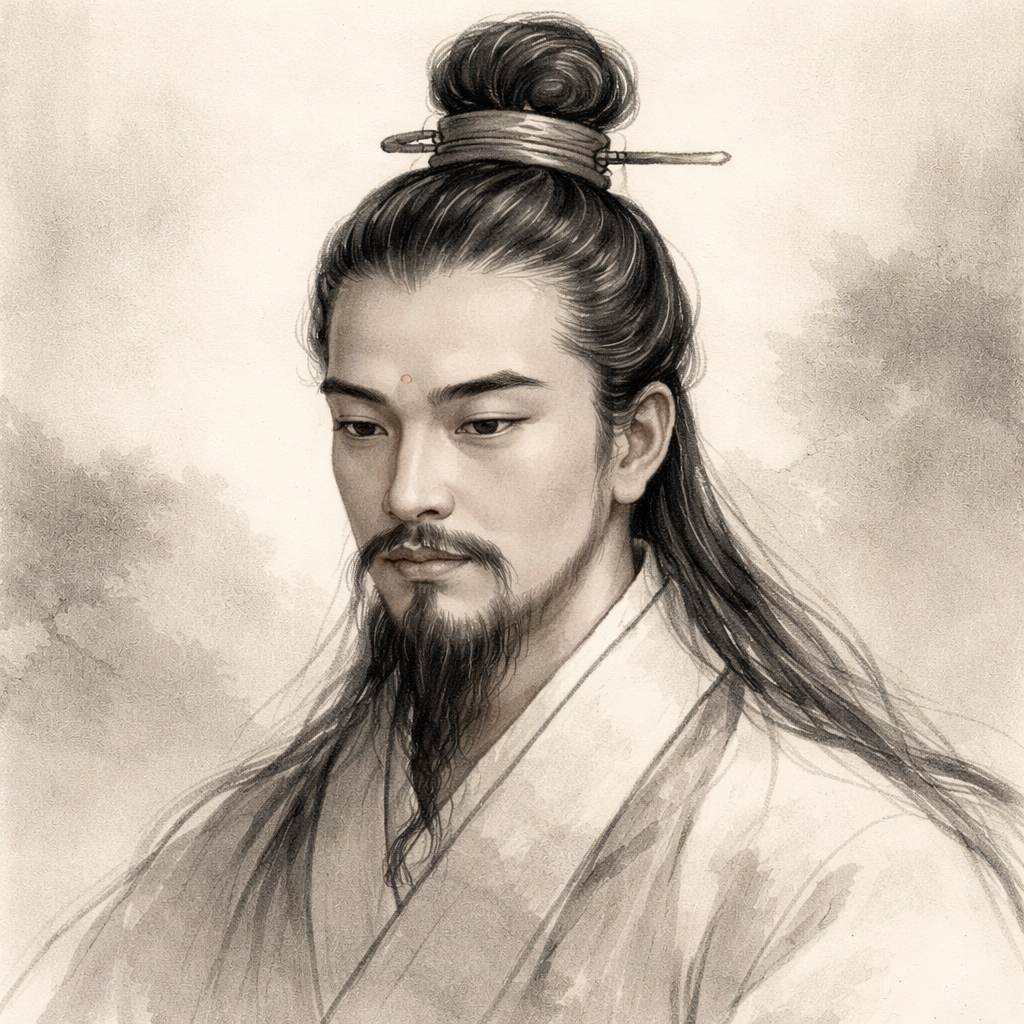
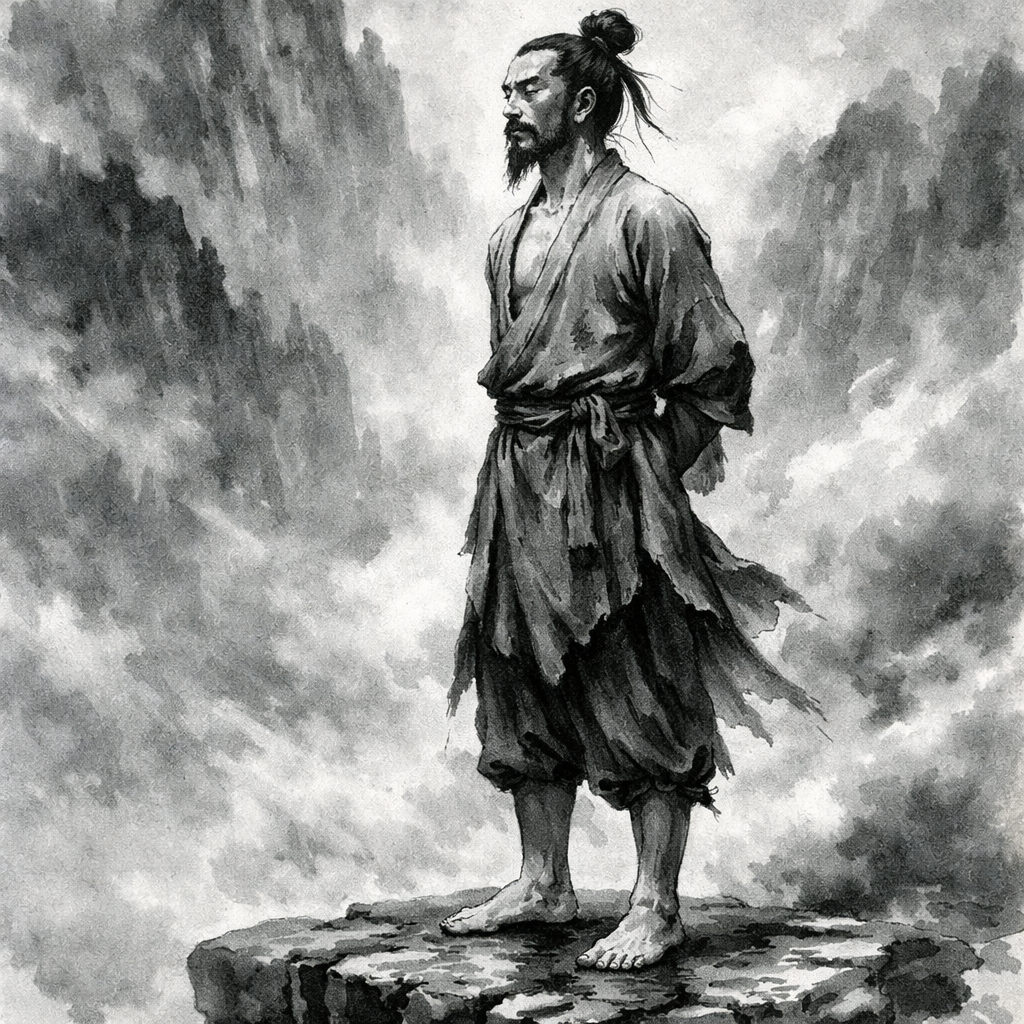
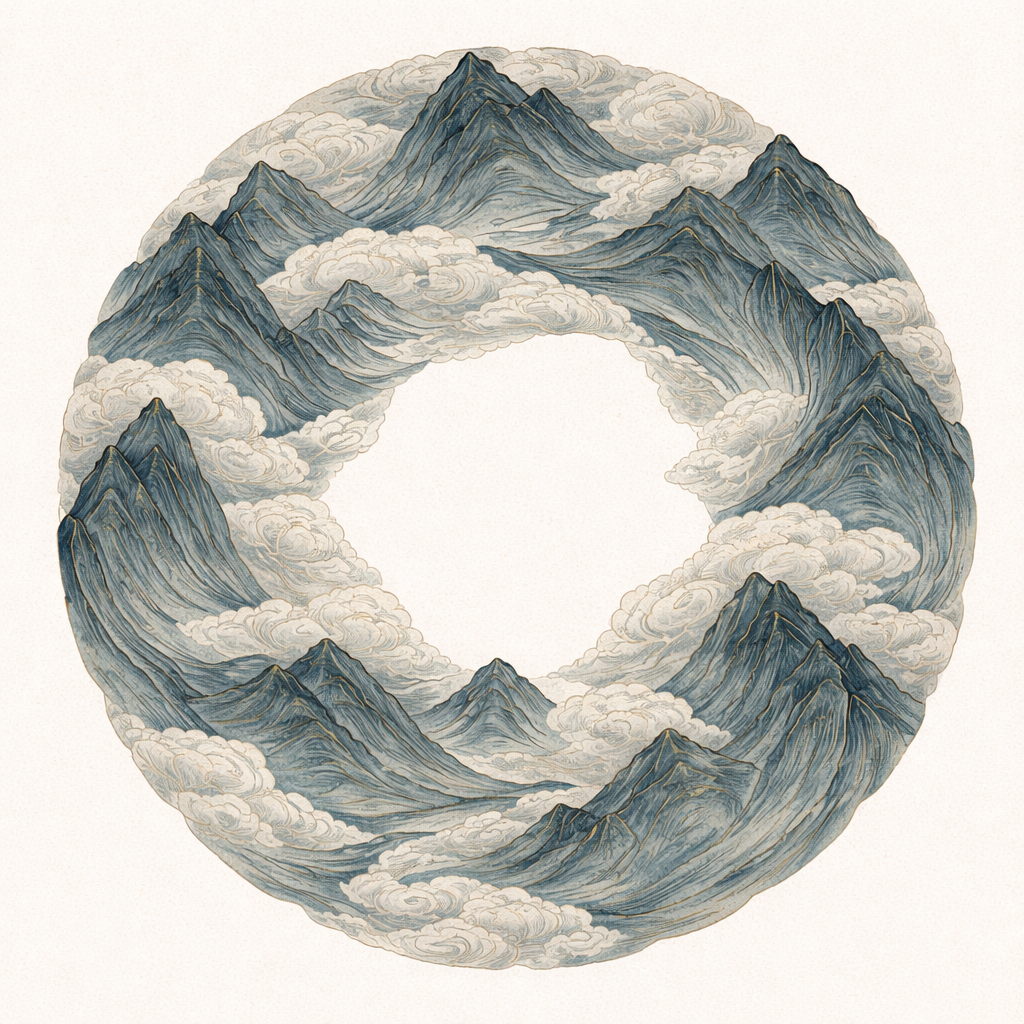
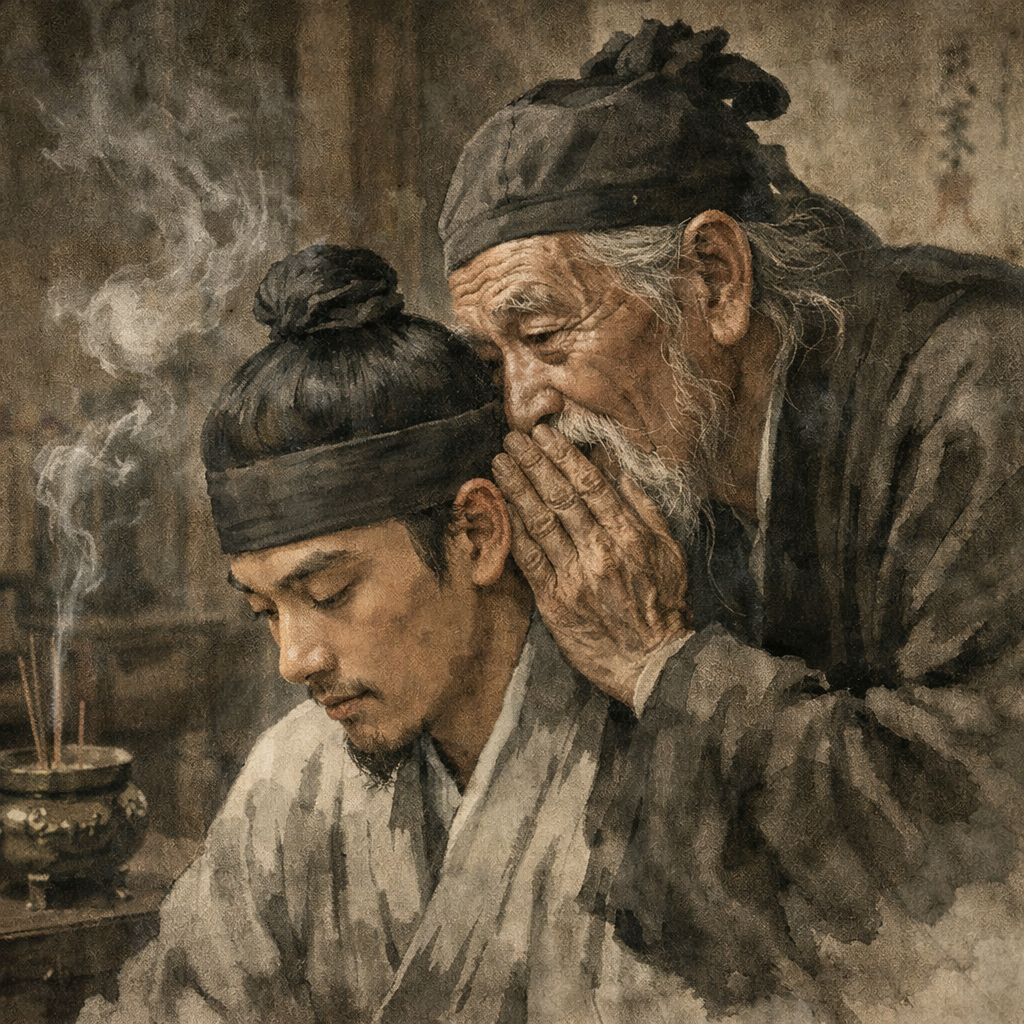
- Dao: Source of all things, spontaneous, self-generating.
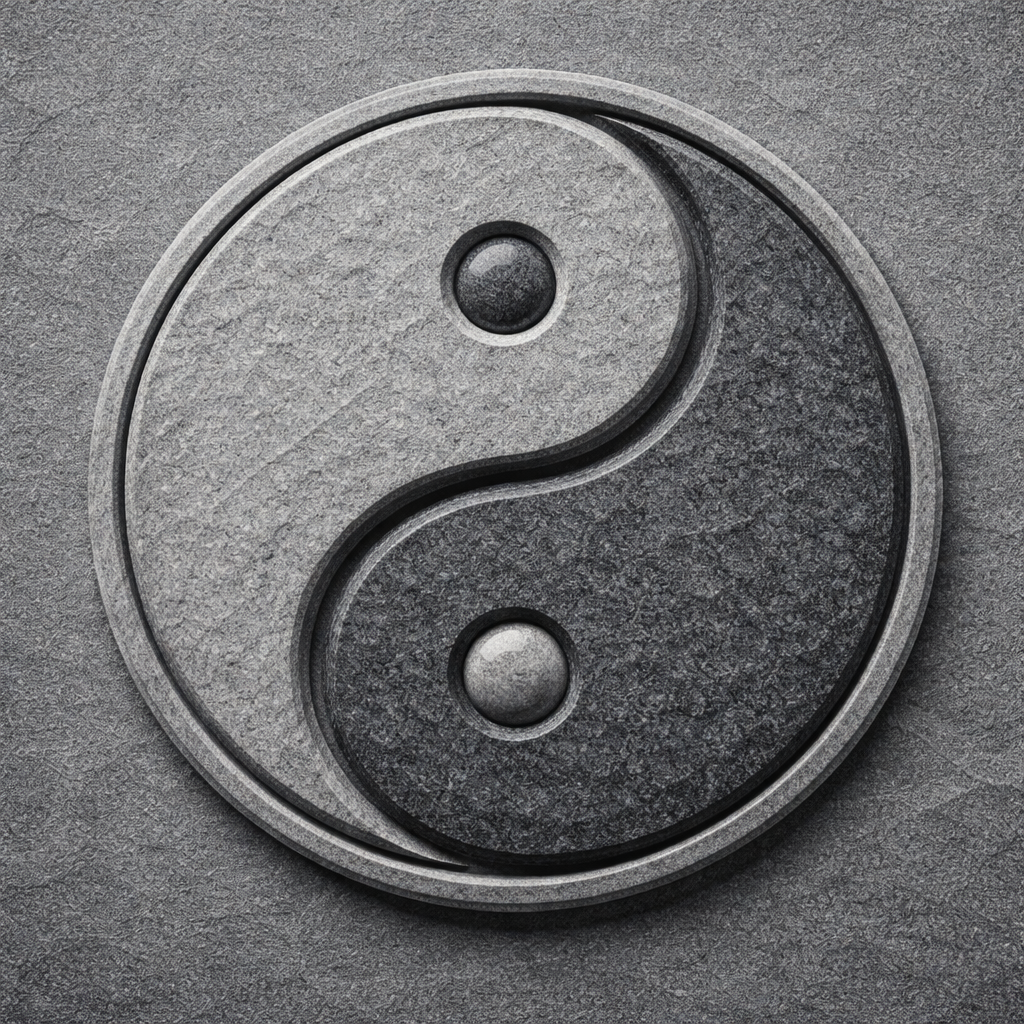
- Yin-Yang & Five Phases: Cosmic principles of balance.
- Heavenly realms: Bureaucratic pantheon reflecting imperial order.
- Mythic cycles: Creation myths, immortal journeys, legendary rulers (Yellow Emperor).
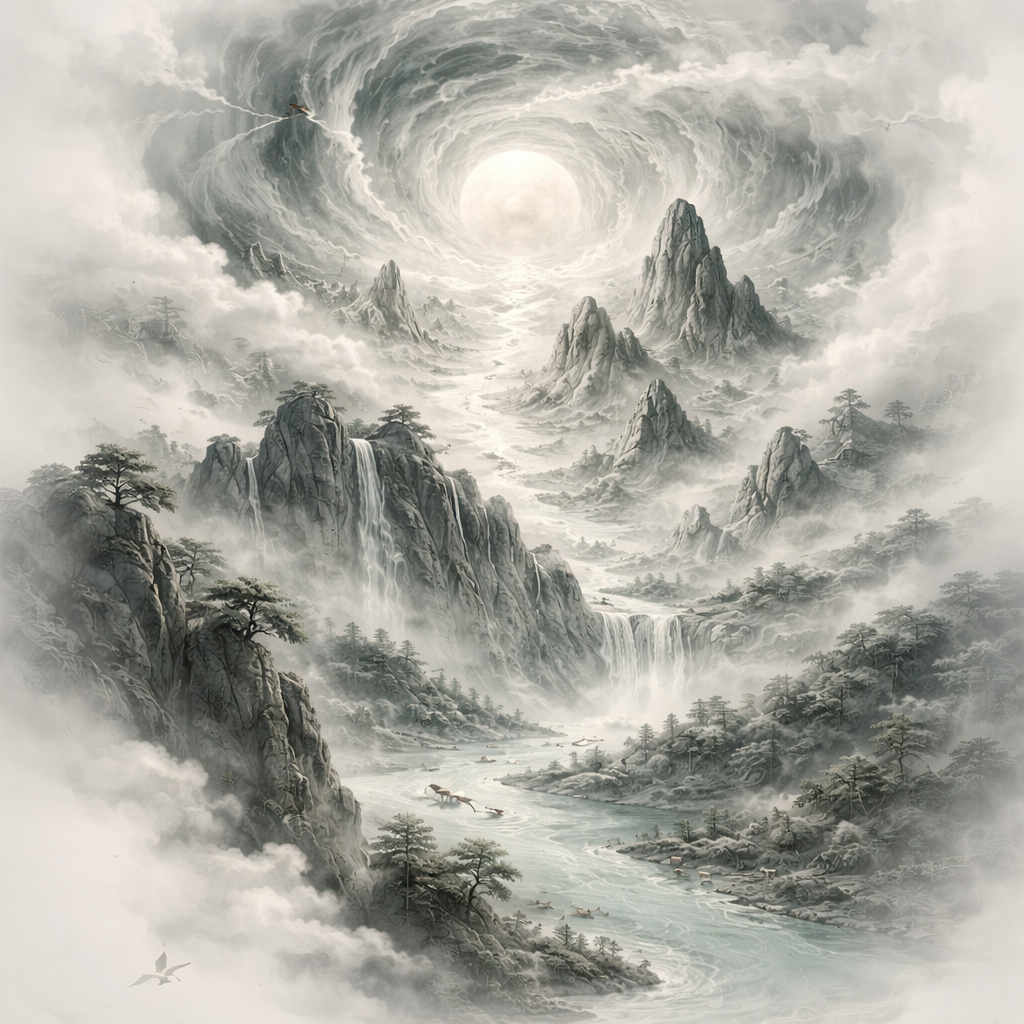
Daoism approaches cosmology as an account of how reality continuously organizes itself, rather than as a story of origins, divine authority, or historical destiny. The Dao names the underlying process through which being and nonbeing co-arise, polarity unfolds, and the ten thousand things emerge and return without intention or command. The universe is conceived as a living field of transformation structured by qi, yin–yang, and patterned change, not by fixed realms or legislated order. Time moves through repetition and return, not toward culmination, and cosmic order is sustained through balance and responsiveness rather than moral struggle or enforced law. Daoist myth is sparse and deliberately anti-foundational, favoring sages, paradox, and destabilizing narratives over heroes, inventions, or civilizing conquests. Across this framework, cosmology serves a practical function: orienting life toward alignment, restraint, and non-forcing, allowing flourishing within a world defined by continual change rather than ultimate beginnings or final ends.
6. Ritual & Practice
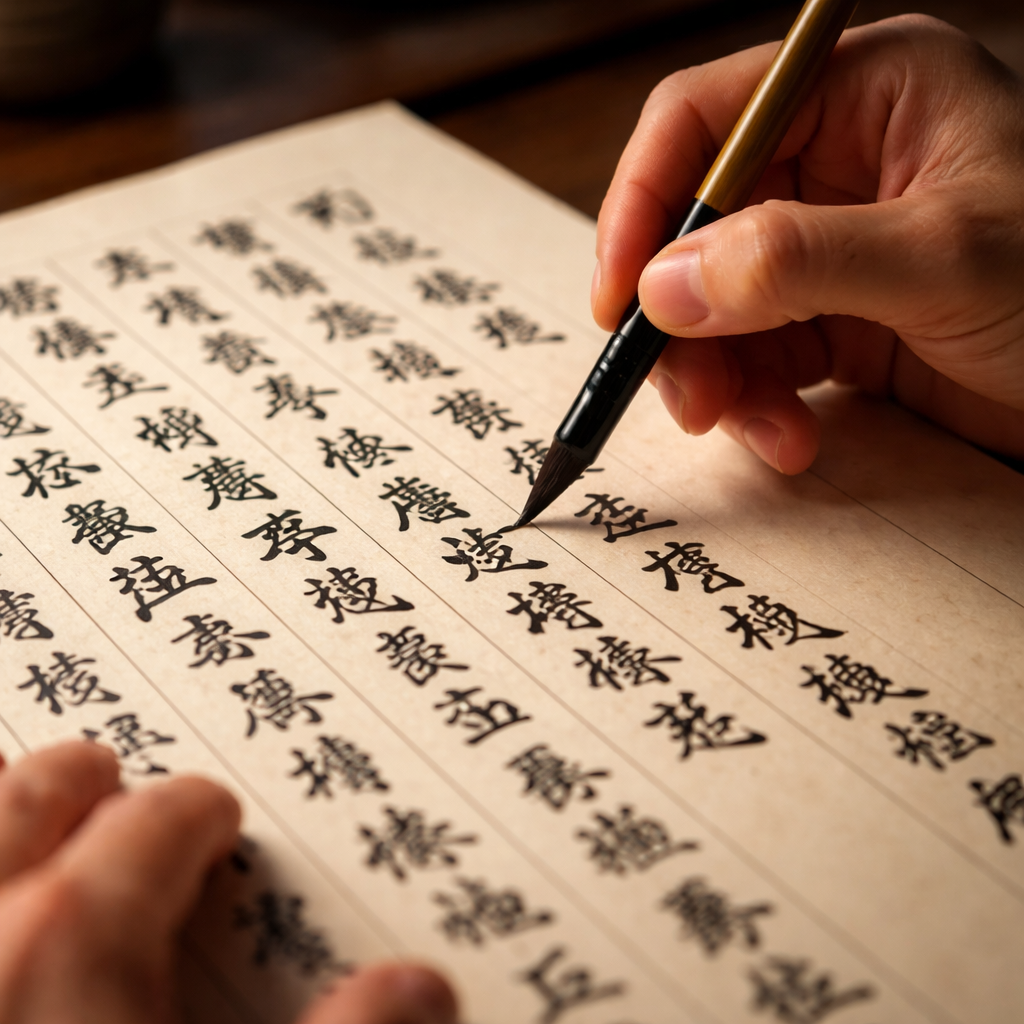
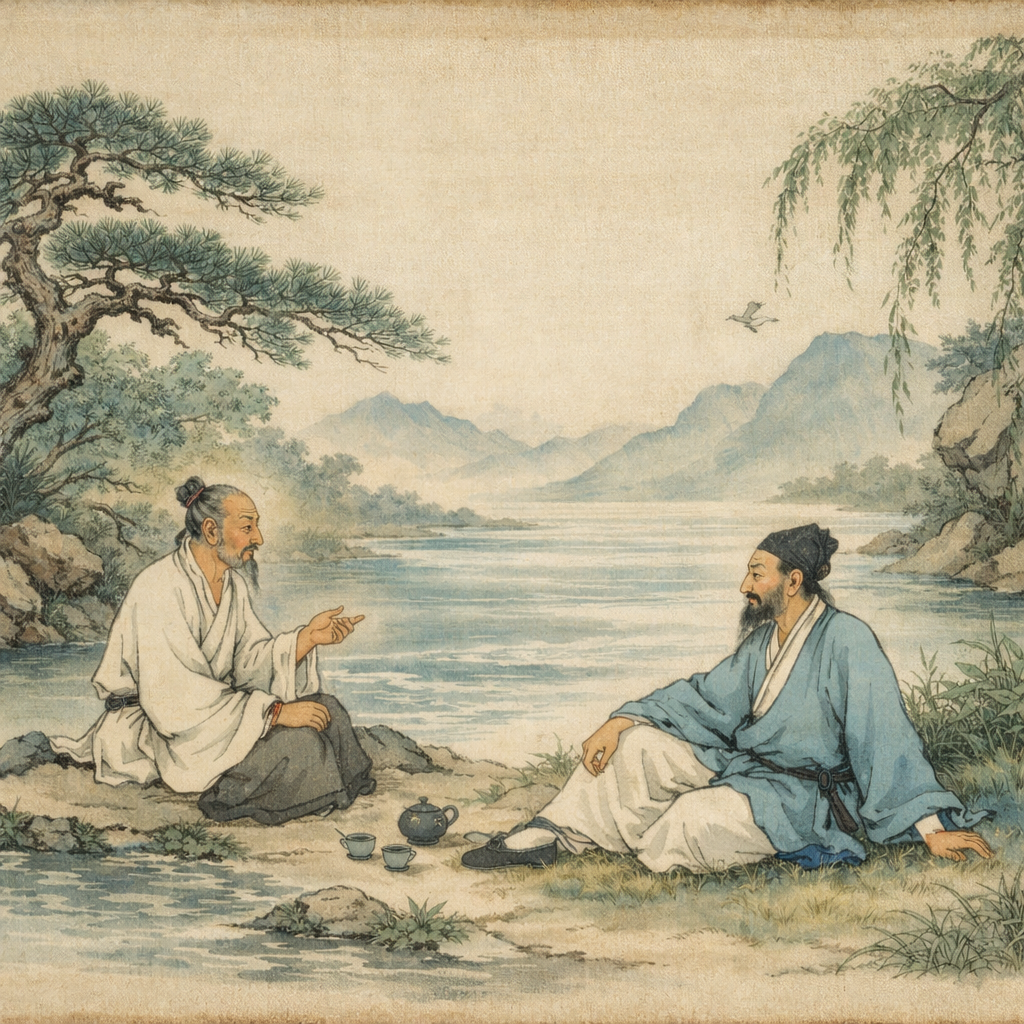
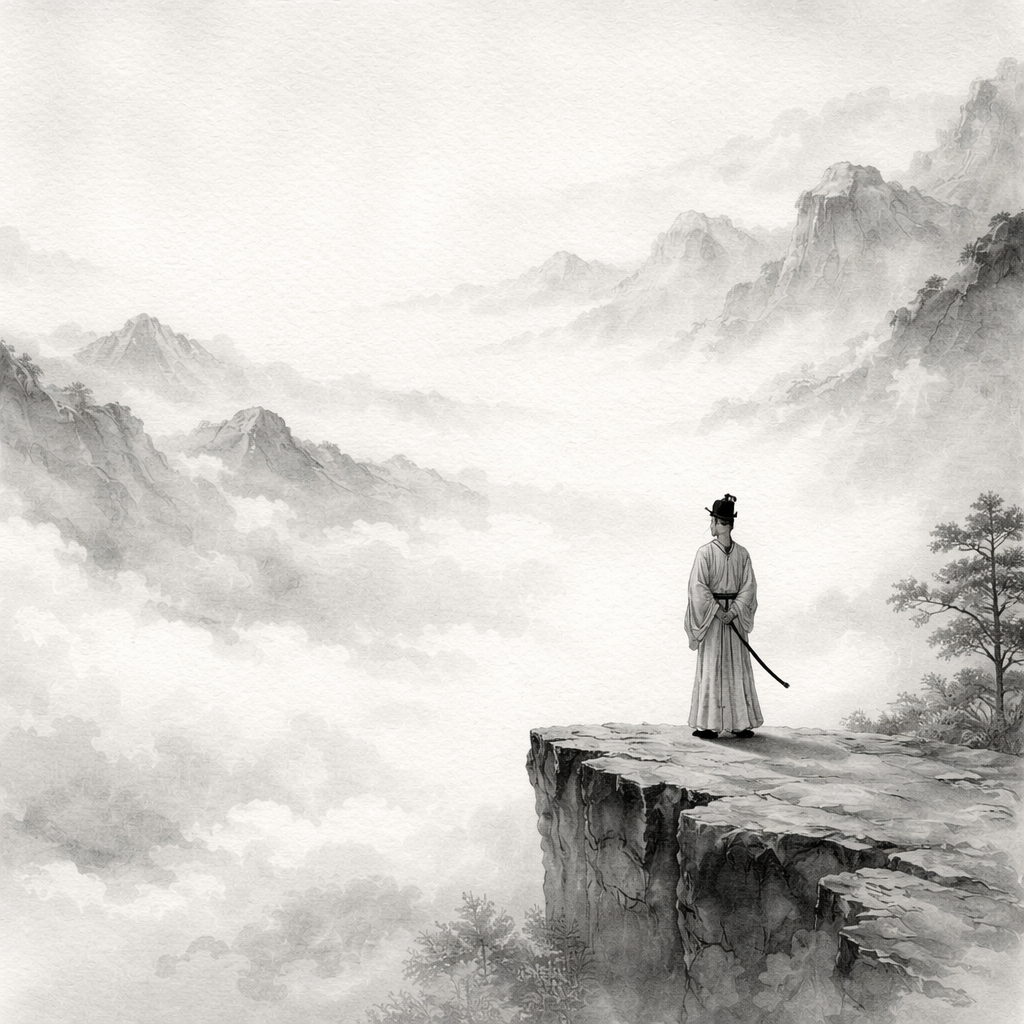
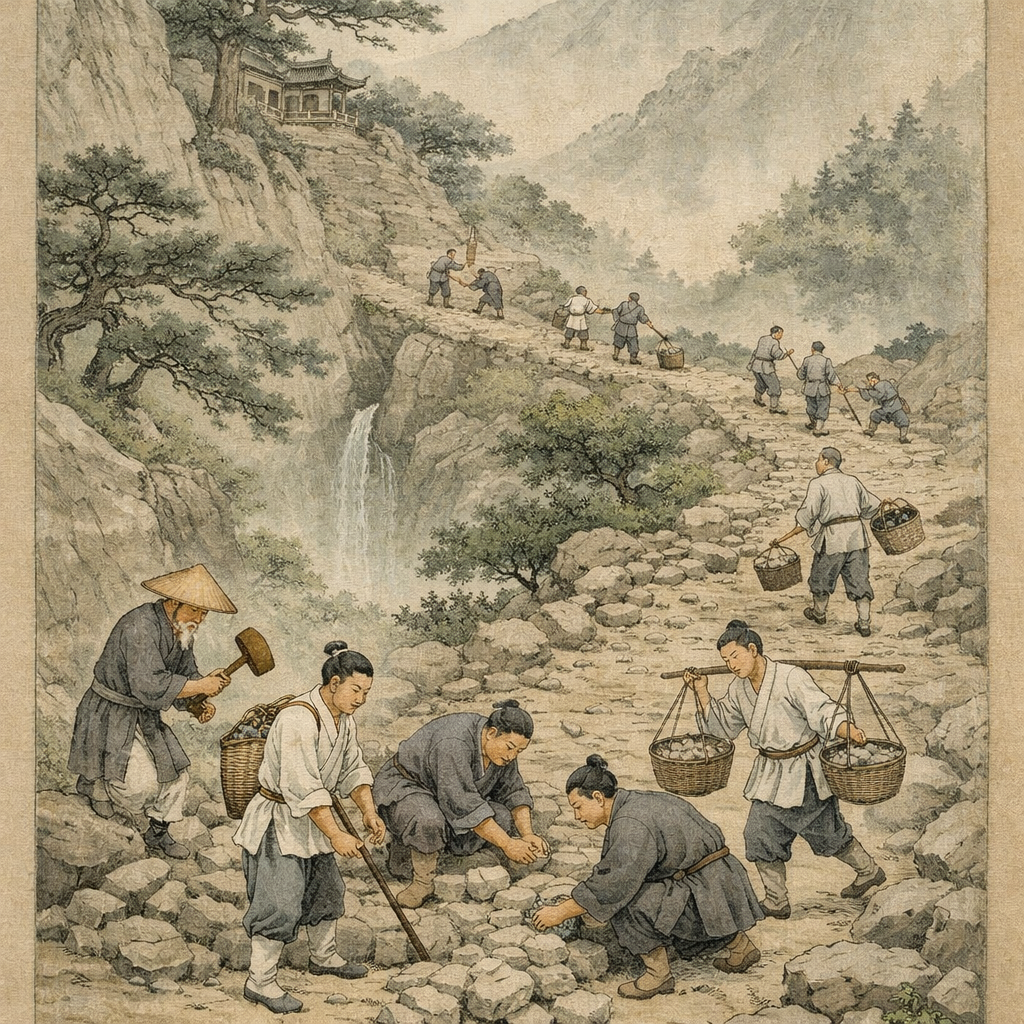
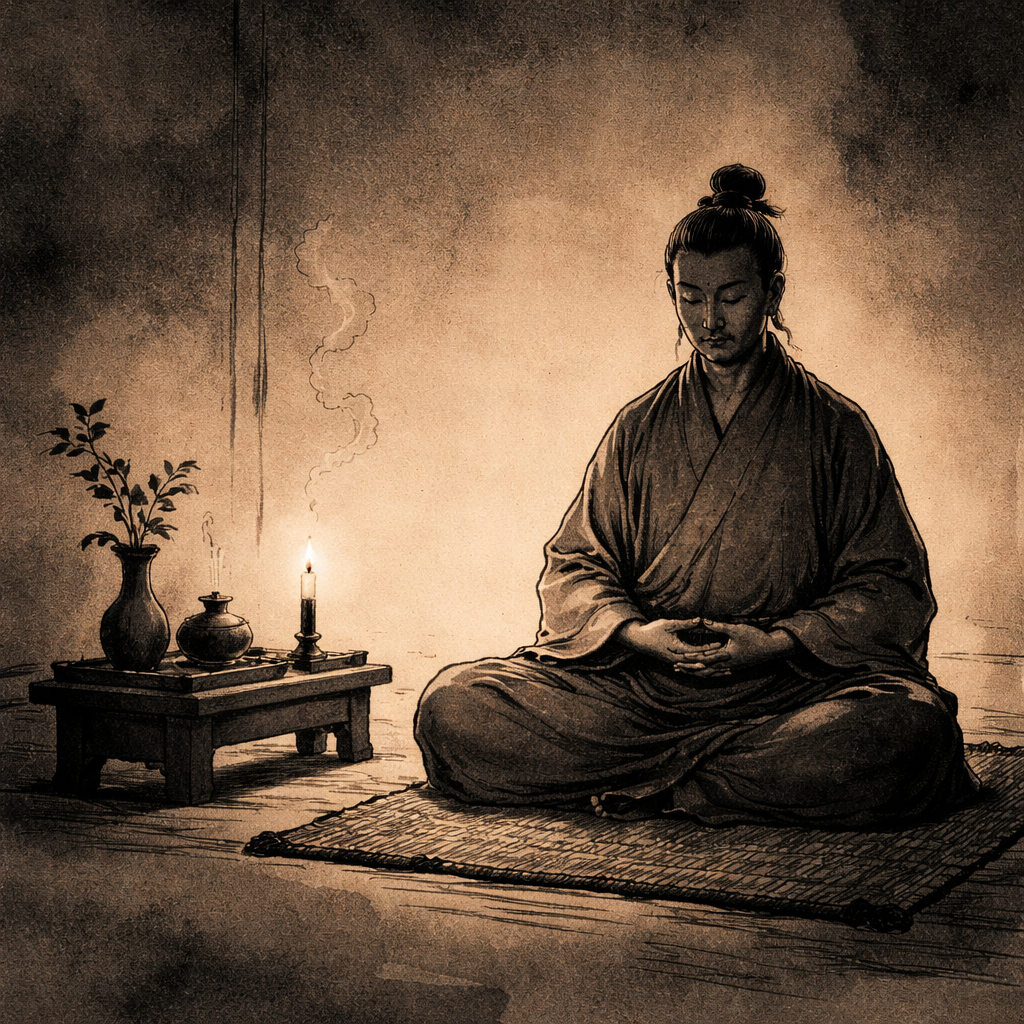
- Meditation: Quiet sitting, inner observation, visualization.
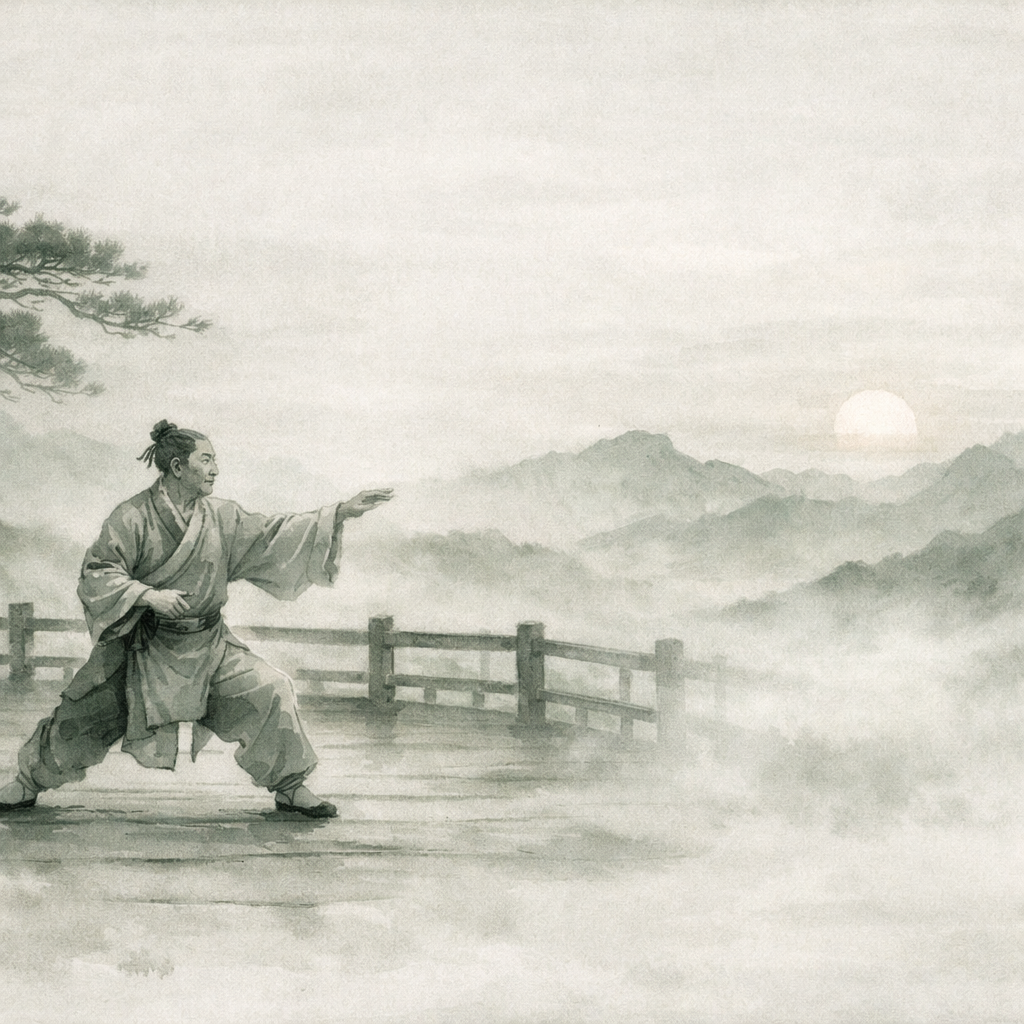
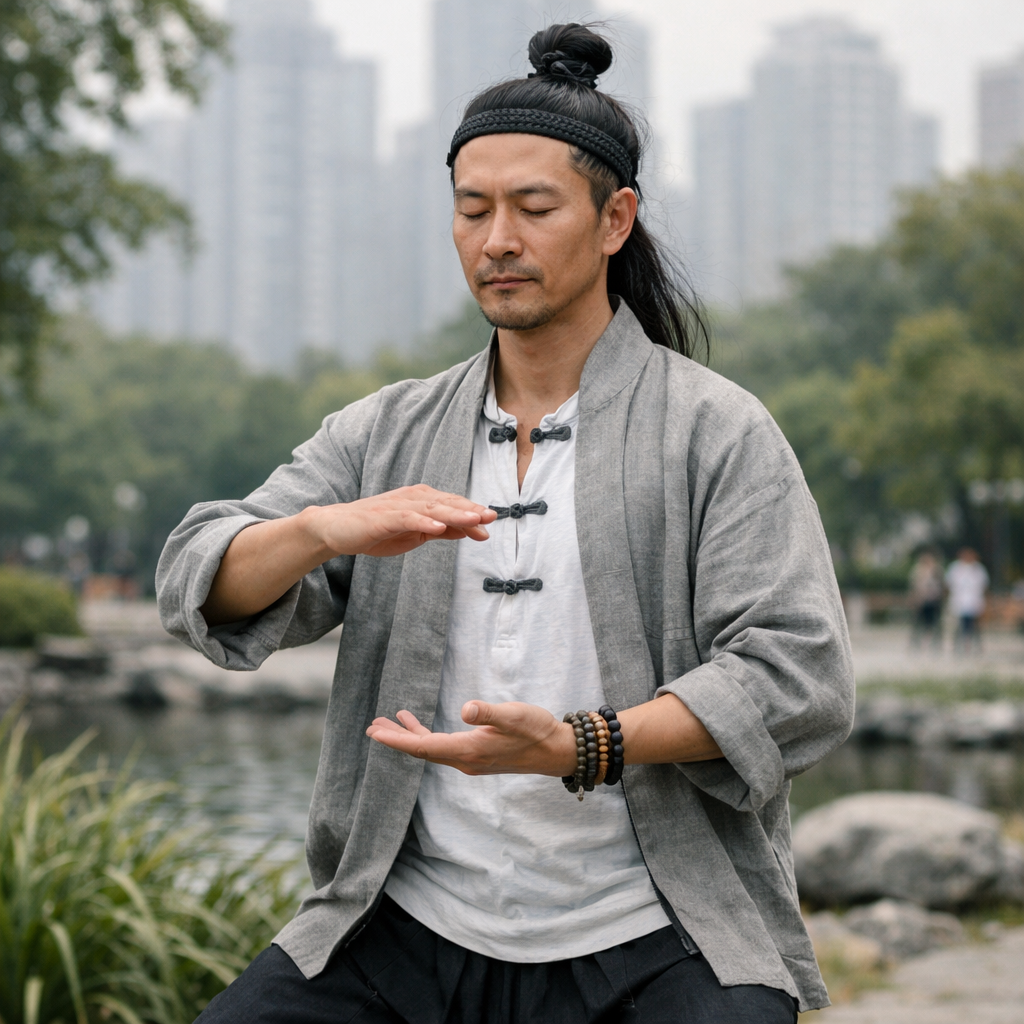
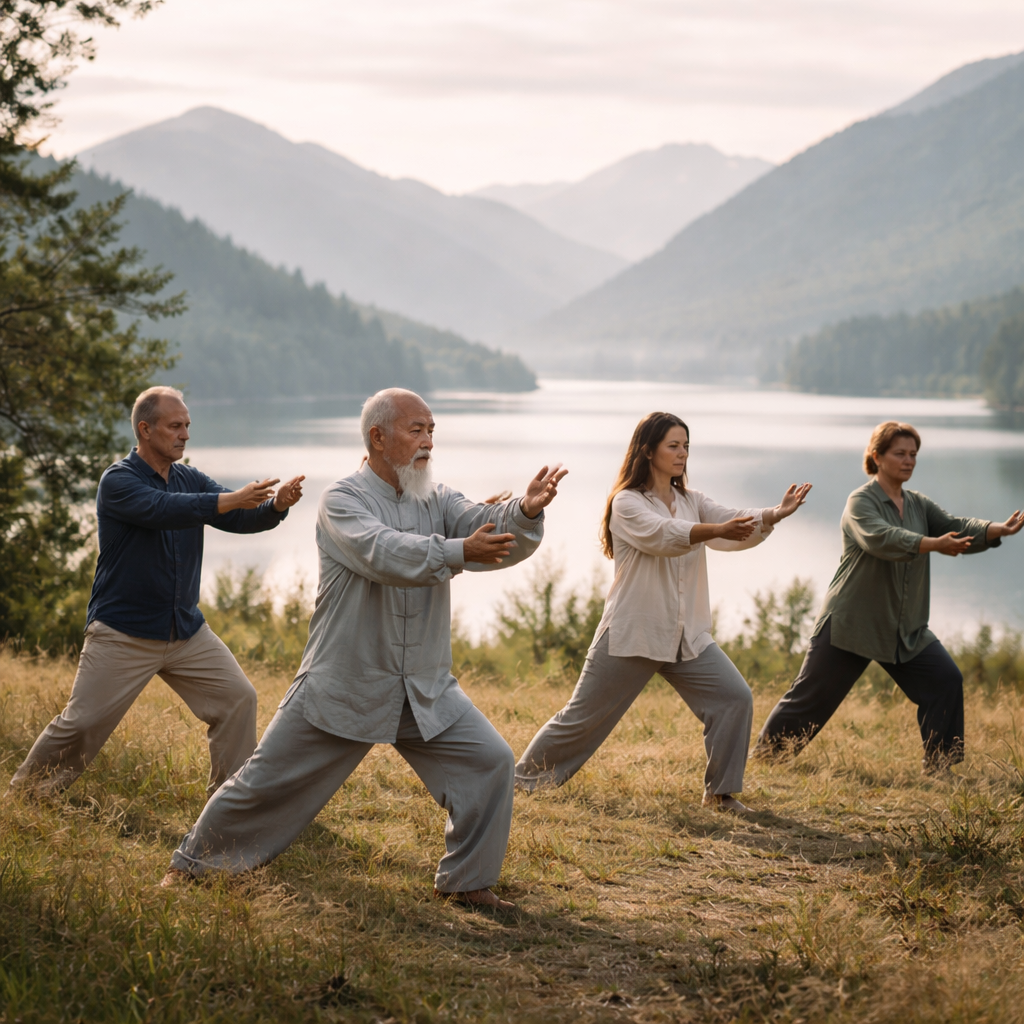
- Cultivation: Qigong, Tai Chi, breathing exercises, alchemy (internal and external).
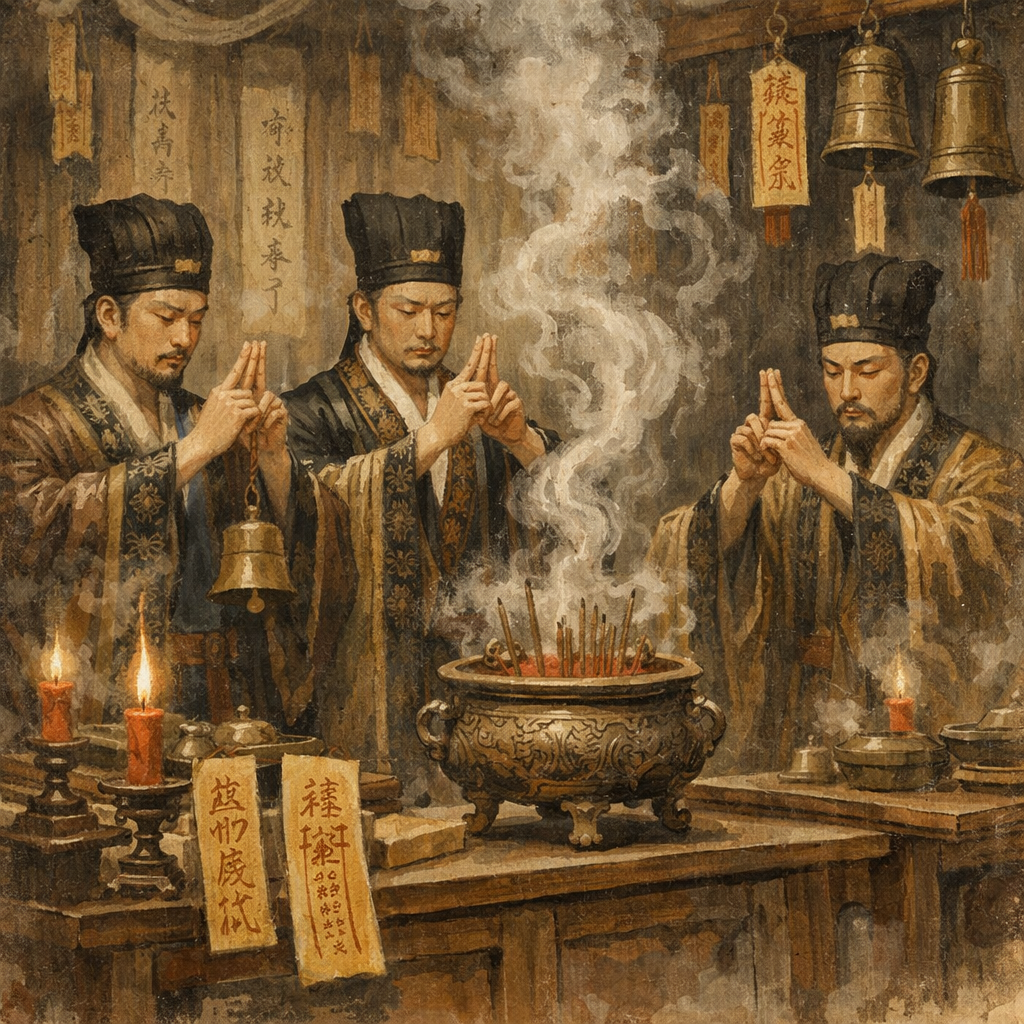
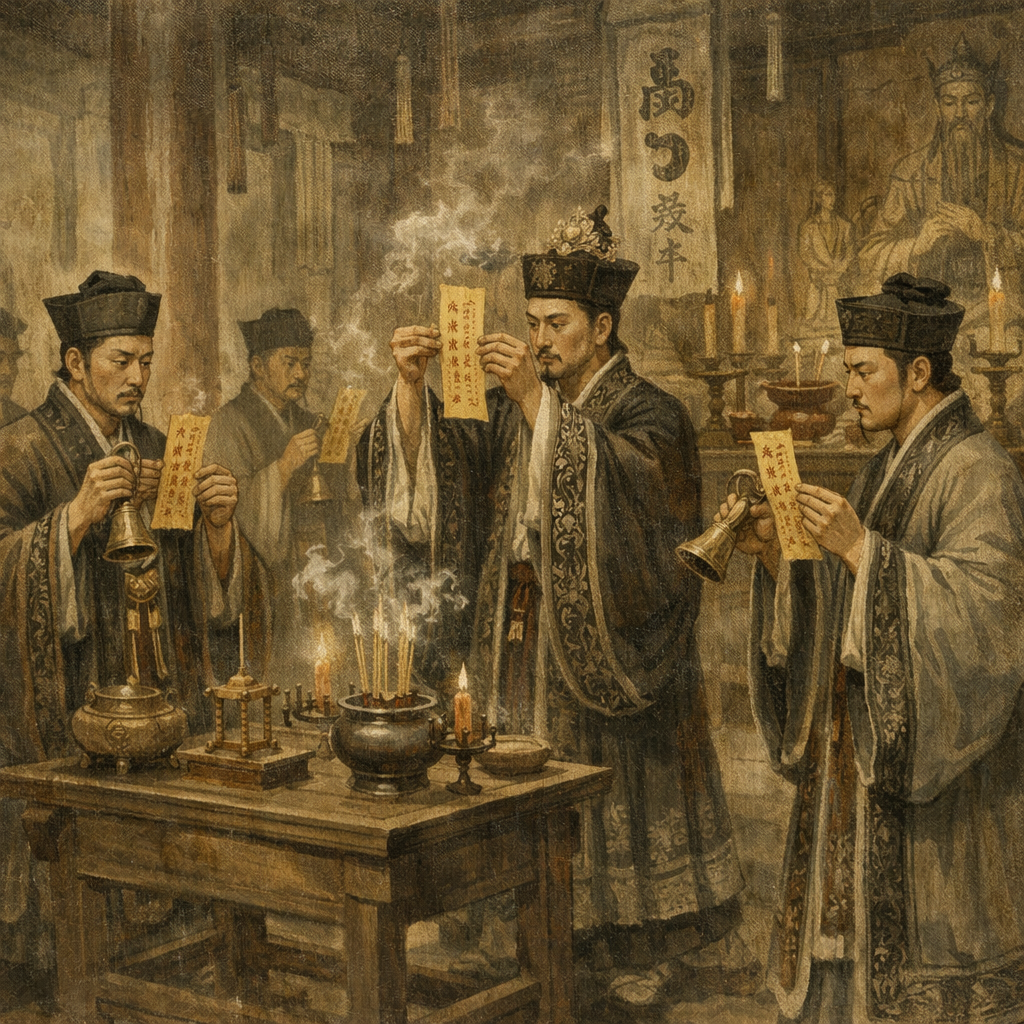
- Rituals: Priestly liturgy, exorcisms, offerings, talismans.
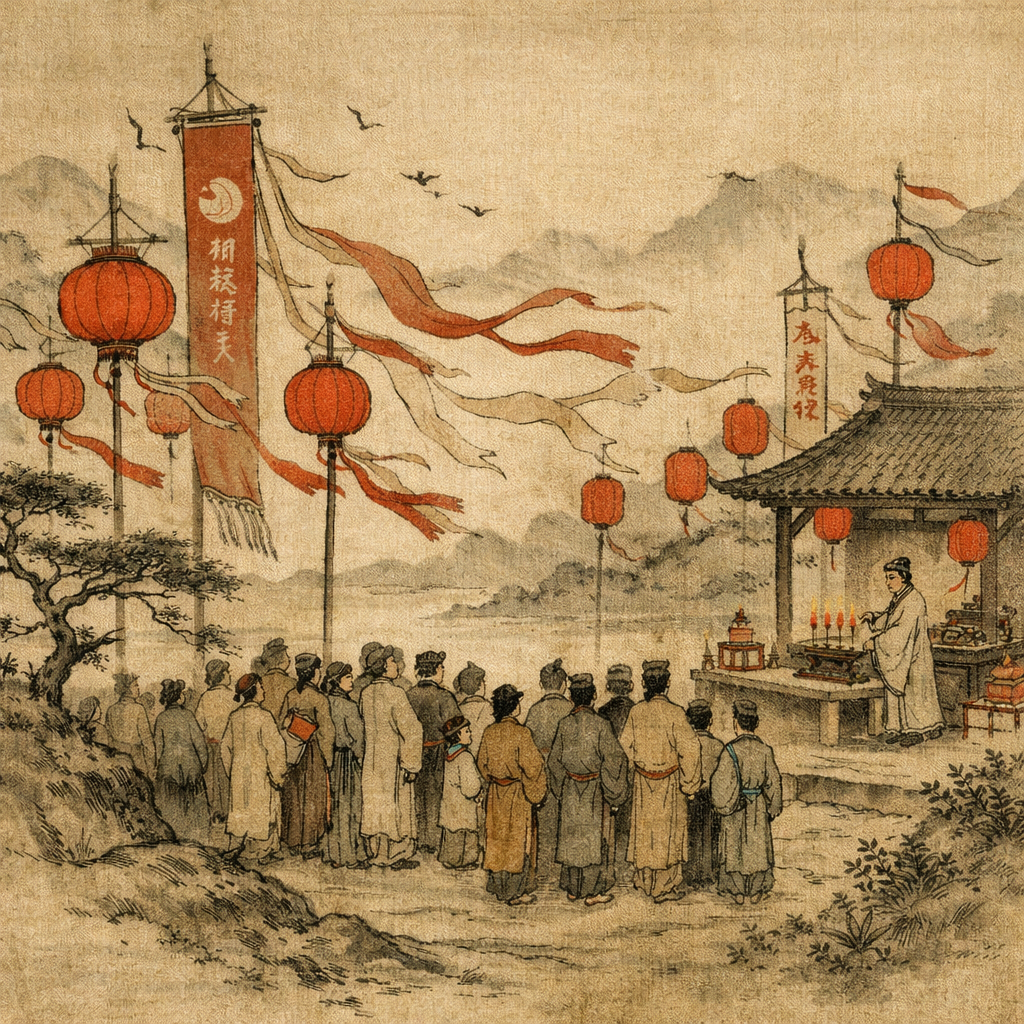
- Festivals: Lunar New Year, Ghost Festival, rites for immortals and ancestors.
- Ethics: Non-action (wu wei), simplicity, compassion, humility.
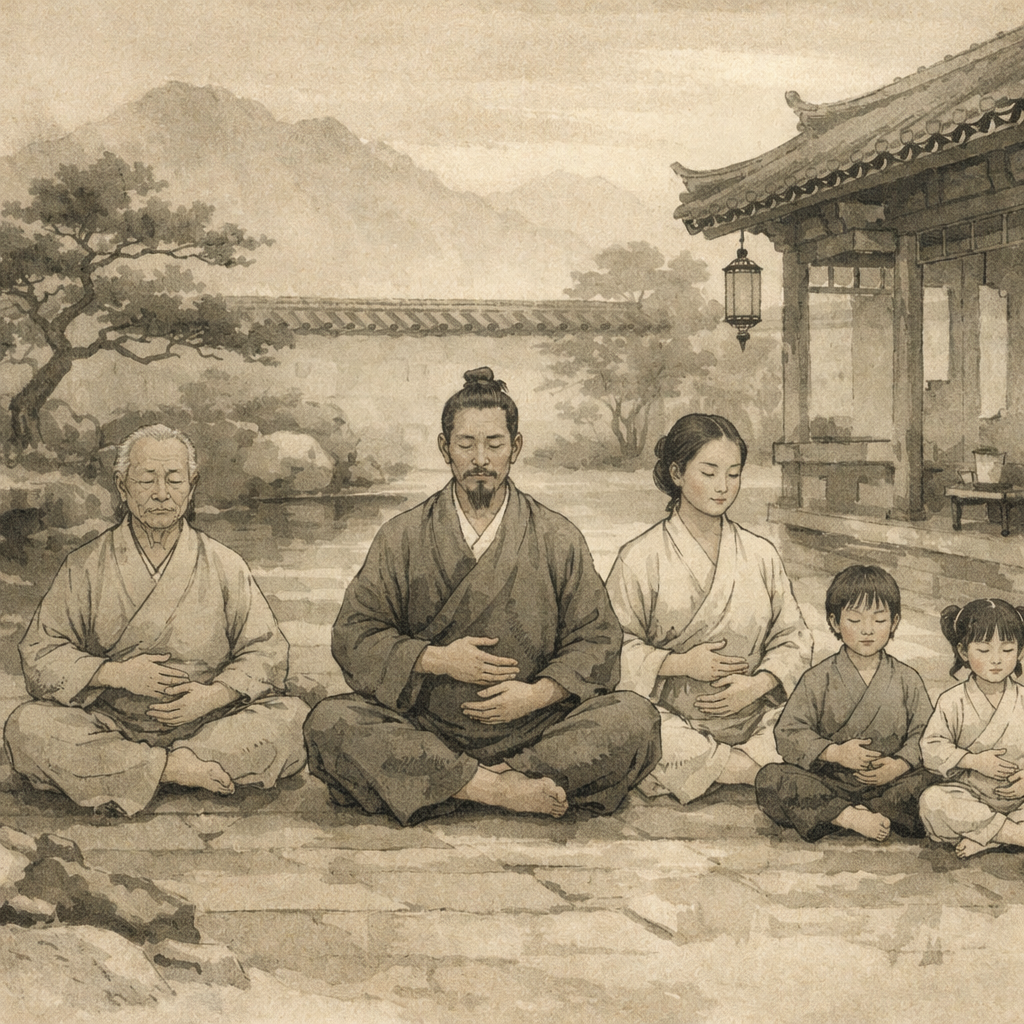
Daoism approaches religion primarily as a set of practices for managing harmony between humans, environment, and unseen forces, rather than as a system of belief, creed, or moral law. Its ritual life is plural, situational, and lineage-based, encompassing self-cultivation disciplines, specialist rites, communal observances, and techniques for addressing imbalance, misfortune, and transition.
Unlike traditions centered on mandatory worship or universal obligation, Daoist practice emphasizes alignment over obedience and efficacy over symbolism. Rituals are evaluated by their capacity to restore balance, clarify timing, and sustain vitality—whether through seasonal festivals, healing rites, divinatory assessment, or disciplined bodily cultivation. Sacred time is cyclical, pilgrimage is elective, and ascetic intensity varies widely according to role and capacity.
Taken together, Daoist ritual and practice function as a distributed technology of order. Through cultivation, rite, and lineage transmission, Daoism provides adaptable tools for living within a changing world—tools that integrate body, community, and cosmos without requiring exclusive identity or doctrinal uniformity.
7. Sacred Space & Material Culture
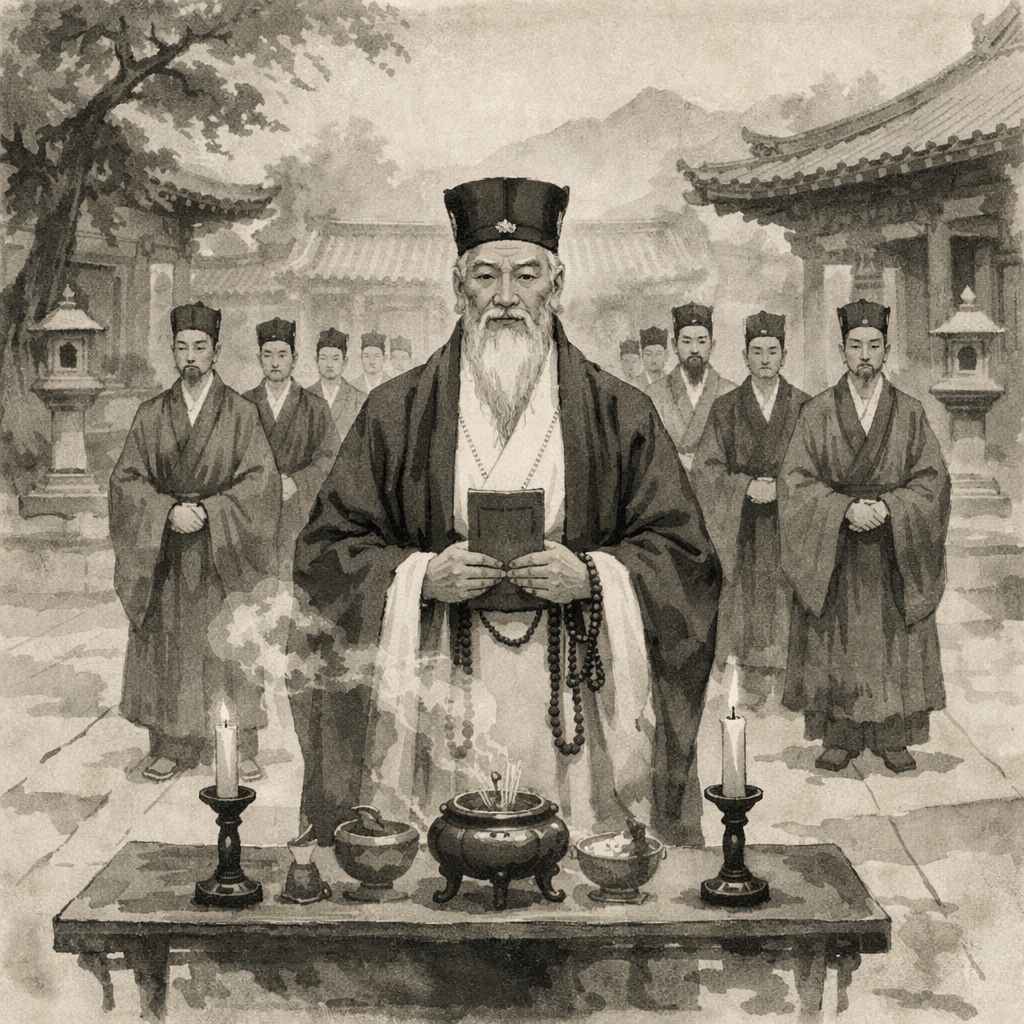
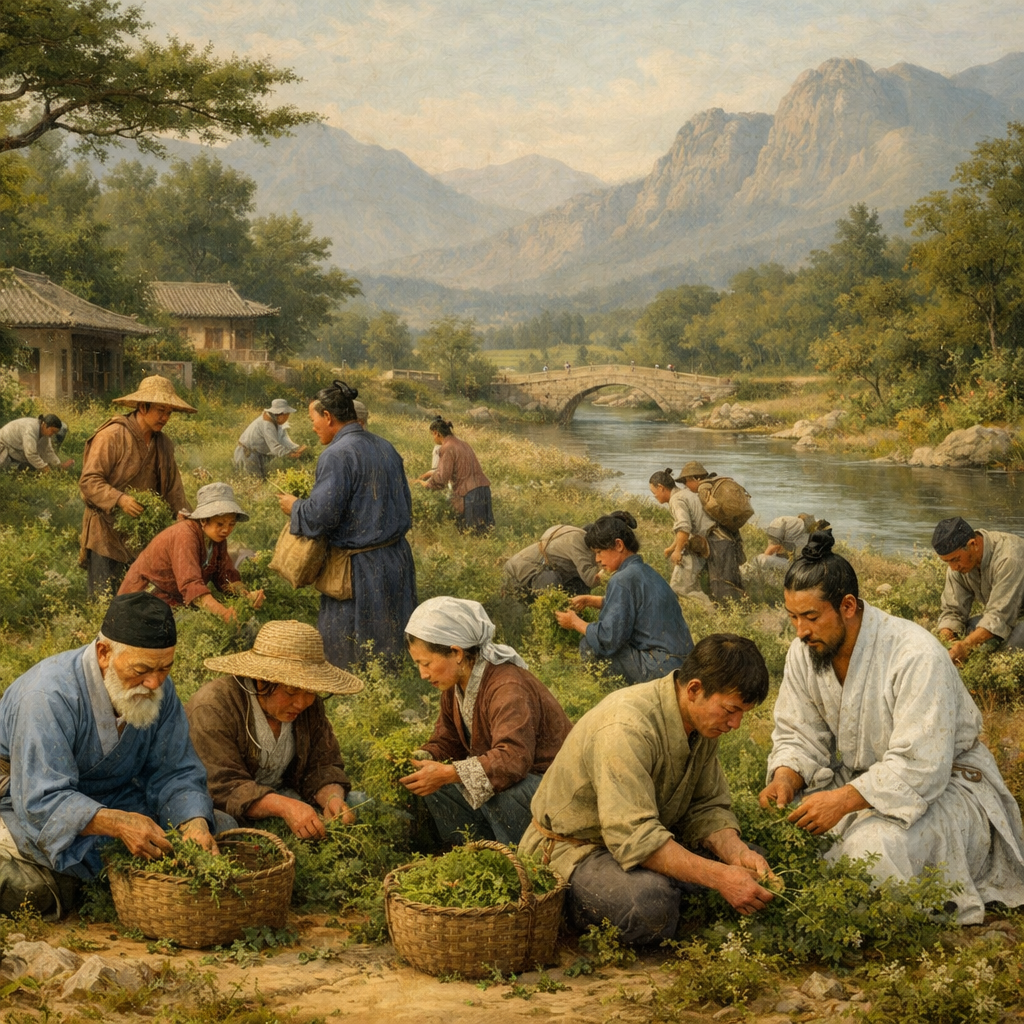
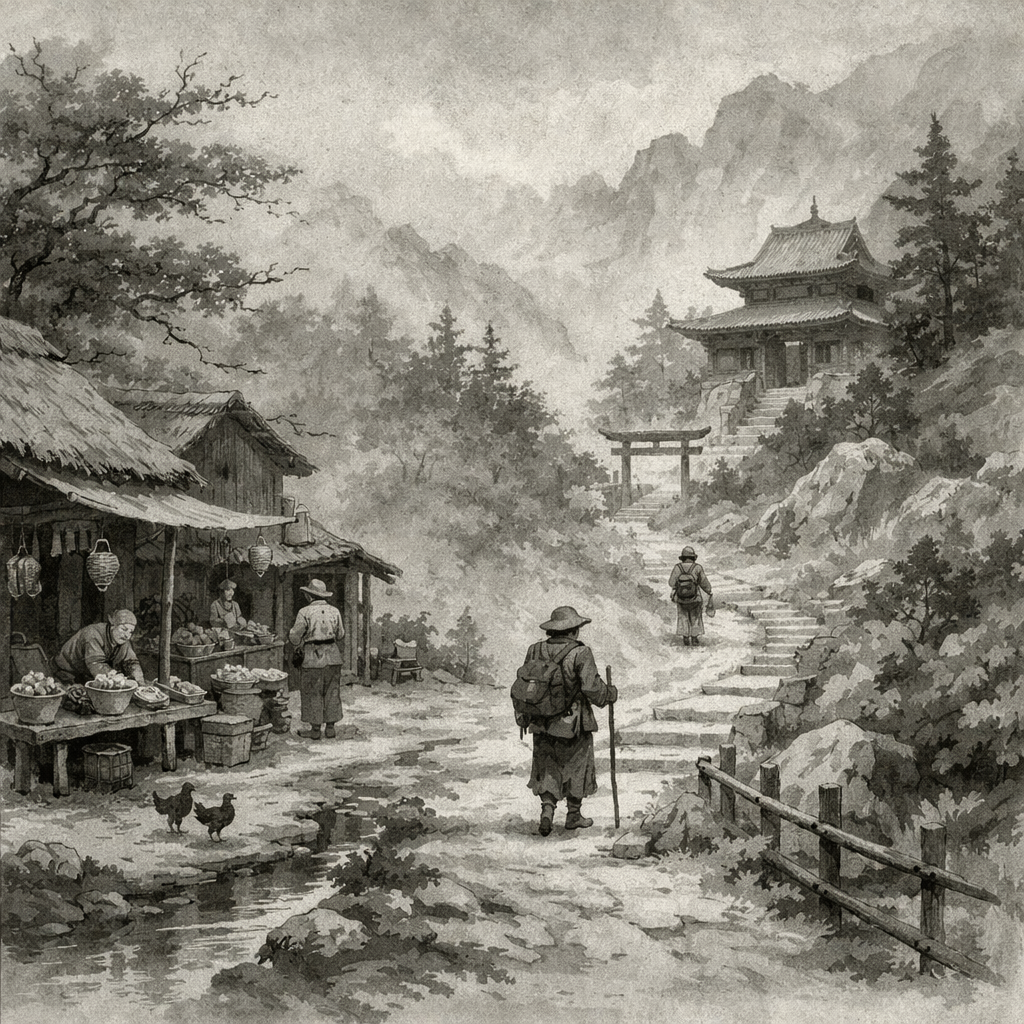
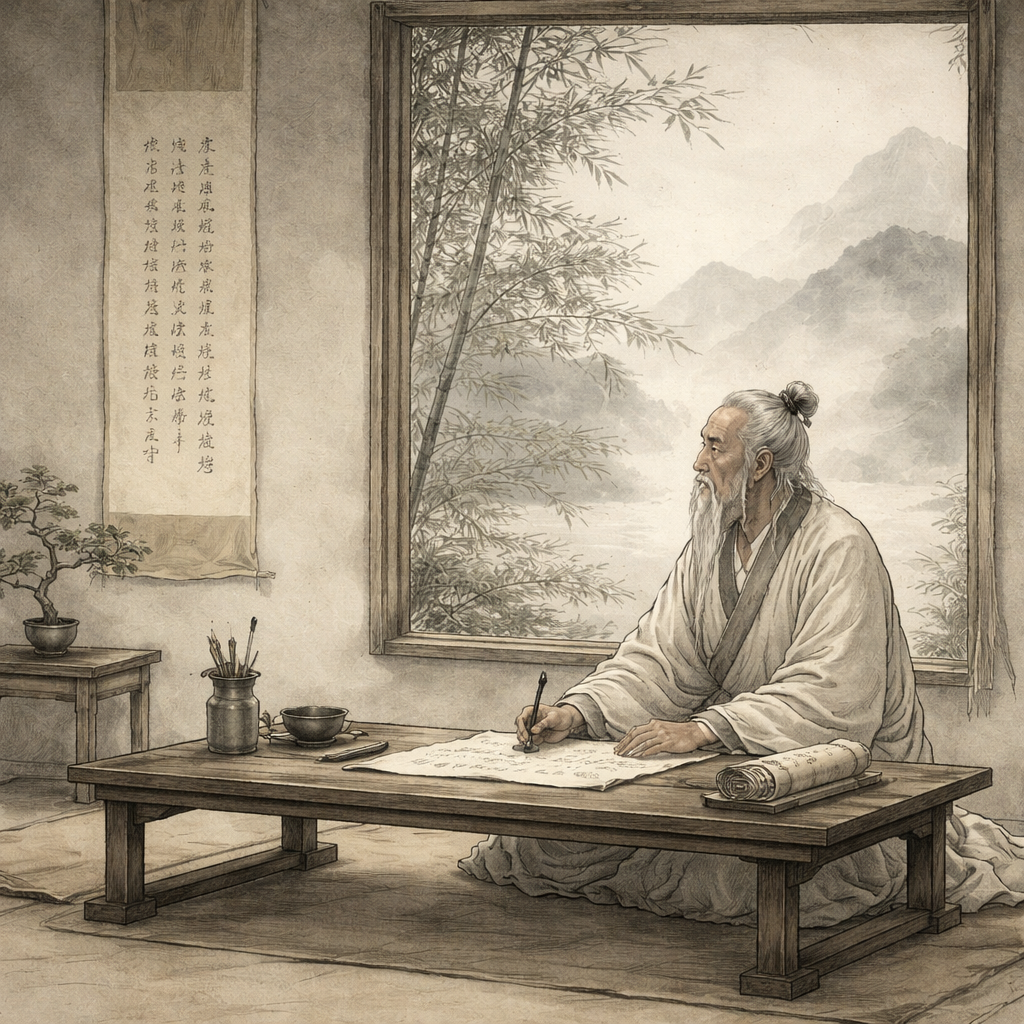
- Temples: Dedicated to Daoist deities and immortals.
- Sacred mountains: e.g., Mount Tai, Wudang, Mount Qingcheng.
- Objects: Talismans, ritual swords, cinnabar (alchemy), statues of immortals.
- Icons: Calligraphy of Daoist maxims, yin-yang symbols.
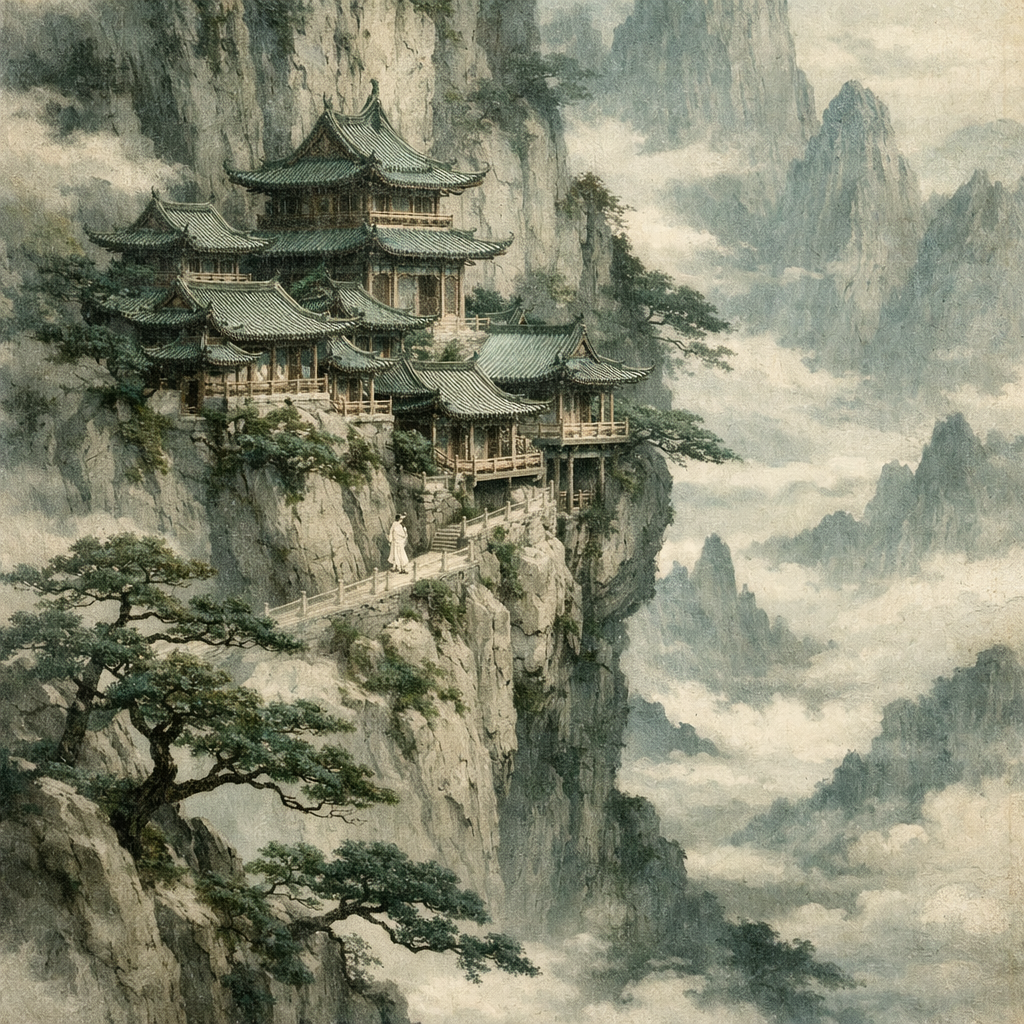
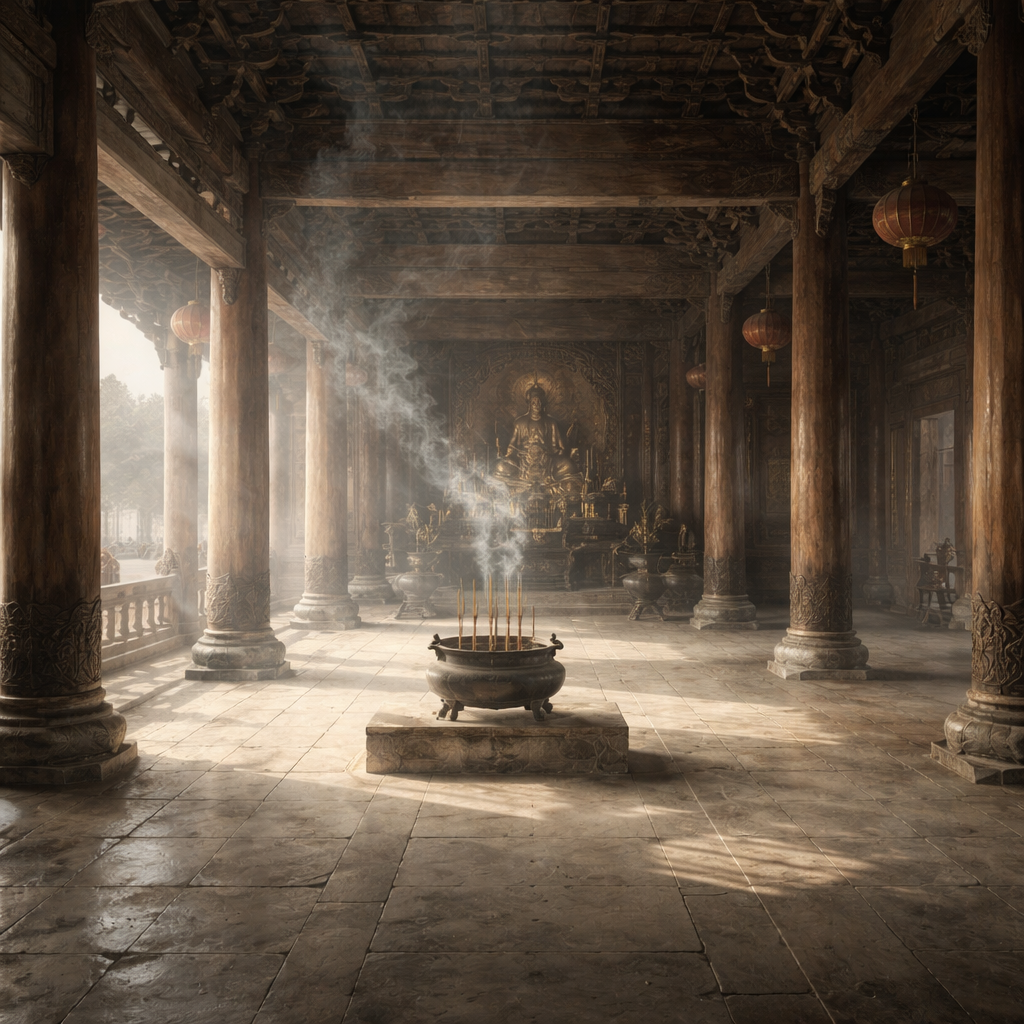
Daoist approaches to sacred space reflect a broader religious orientation toward process, resonance, and technique rather than belief, revelation, or moralized sanctity. Space, architecture, objects, and art are evaluated according to their capacity to harmonize qi and facilitate correct ritual action, not their symbolic meaning or historical status. Sacred geography emerges through networks of mountains, caves, lineages, and practices rather than centralized institutions or universally binding sites. Material culture operates within a cosmological model of administration and authorization, where efficacy is conditional, contextual, and reversible. Destruction, relocation, and rebuilding do not threaten continuity, which is preserved through lineage transmission, embodied technique, and repeatable practice rather than enduring monuments. Taken together, Daoist sacred space functions as a dynamic field of alignment, continuously adjusted to changing conditions while remaining anchored in the persistence of the Dao beyond any single form, place, or object.
8. Religious Specialists & Institutions
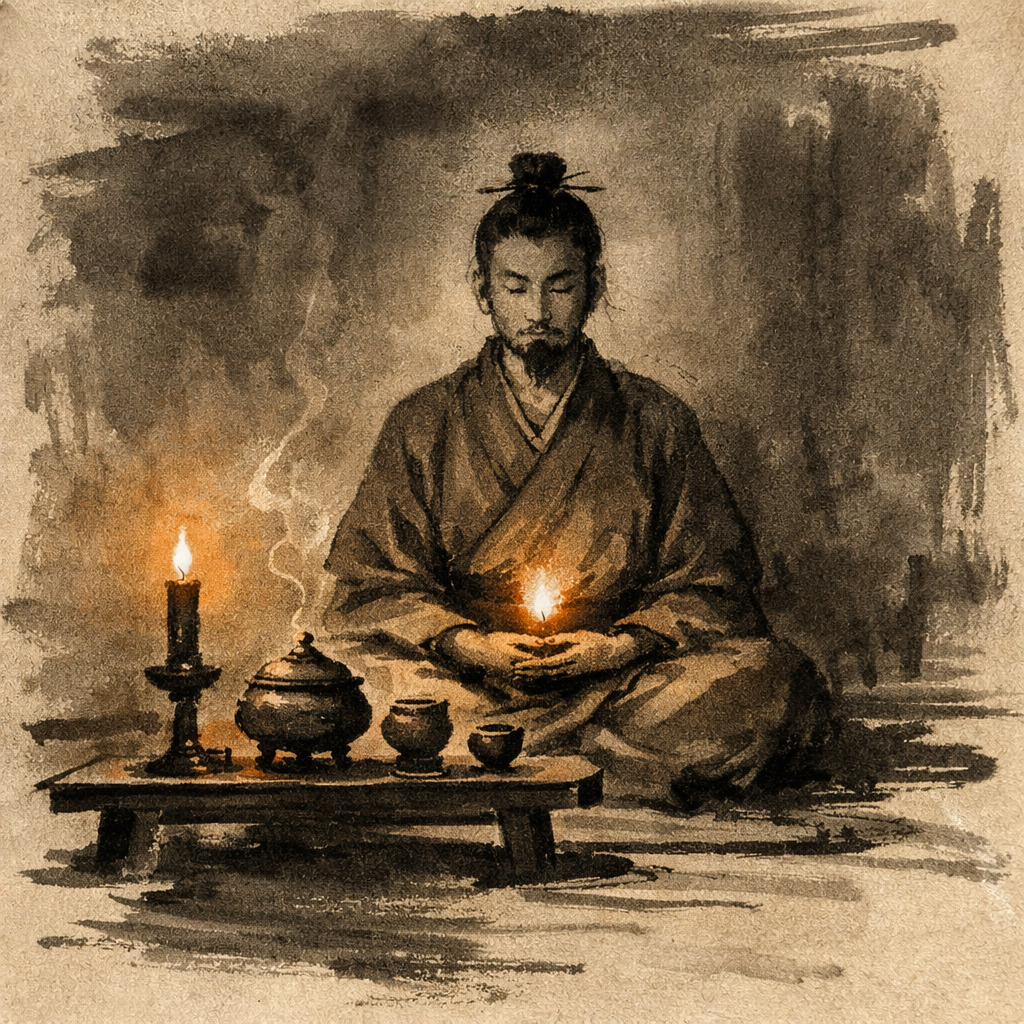
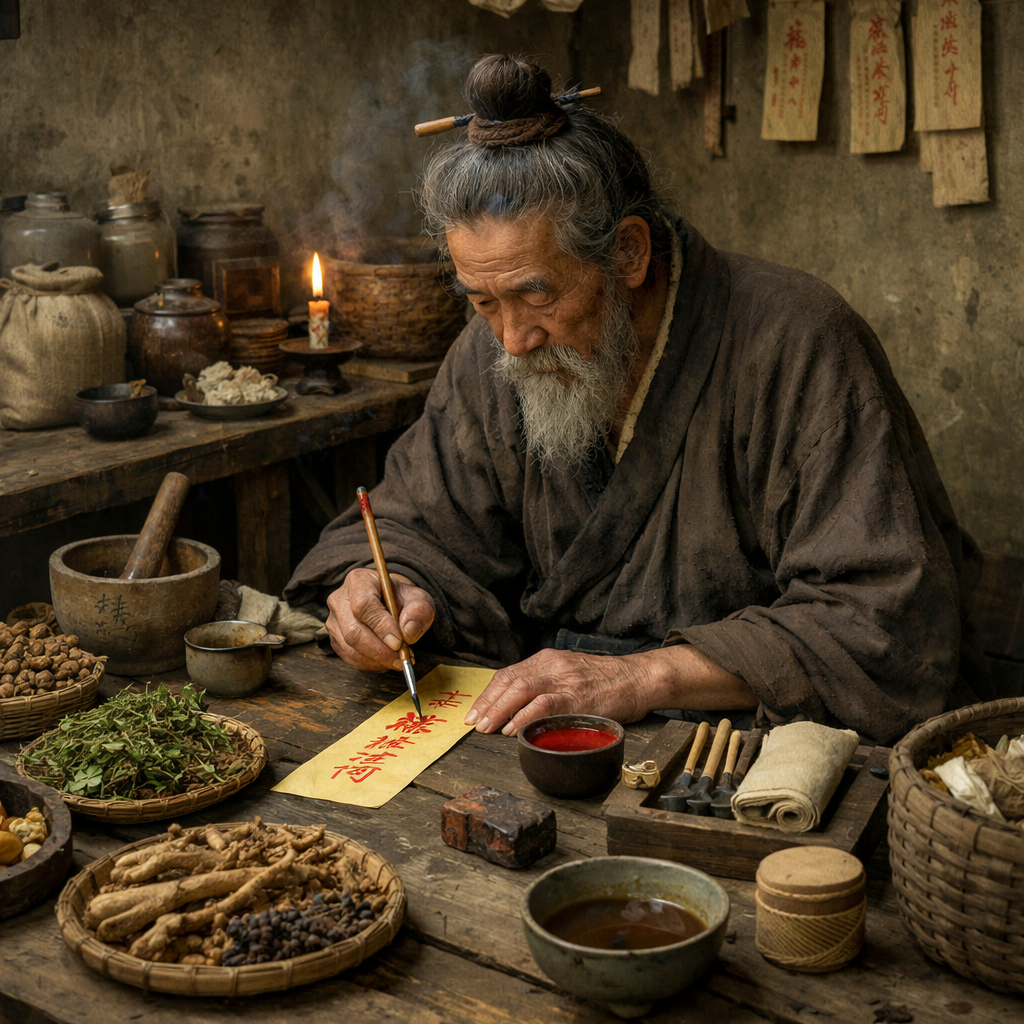
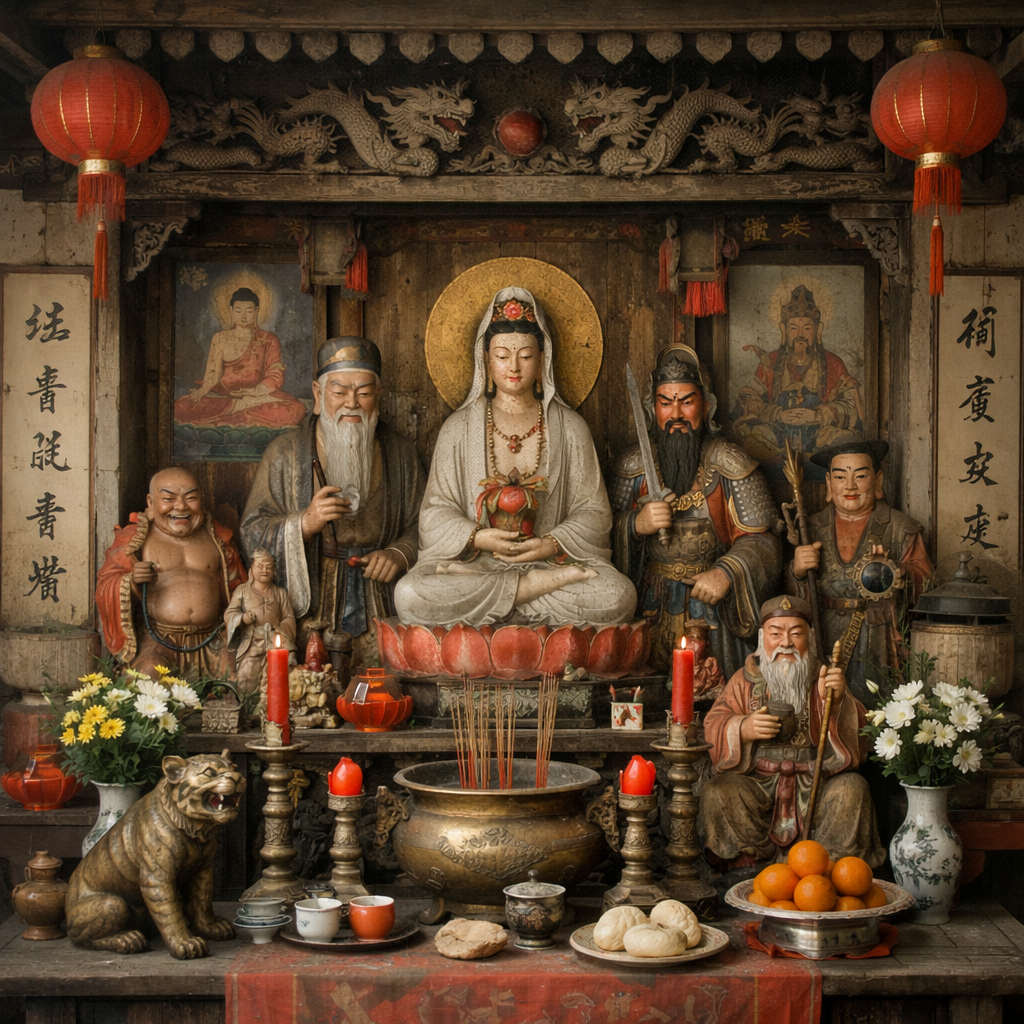
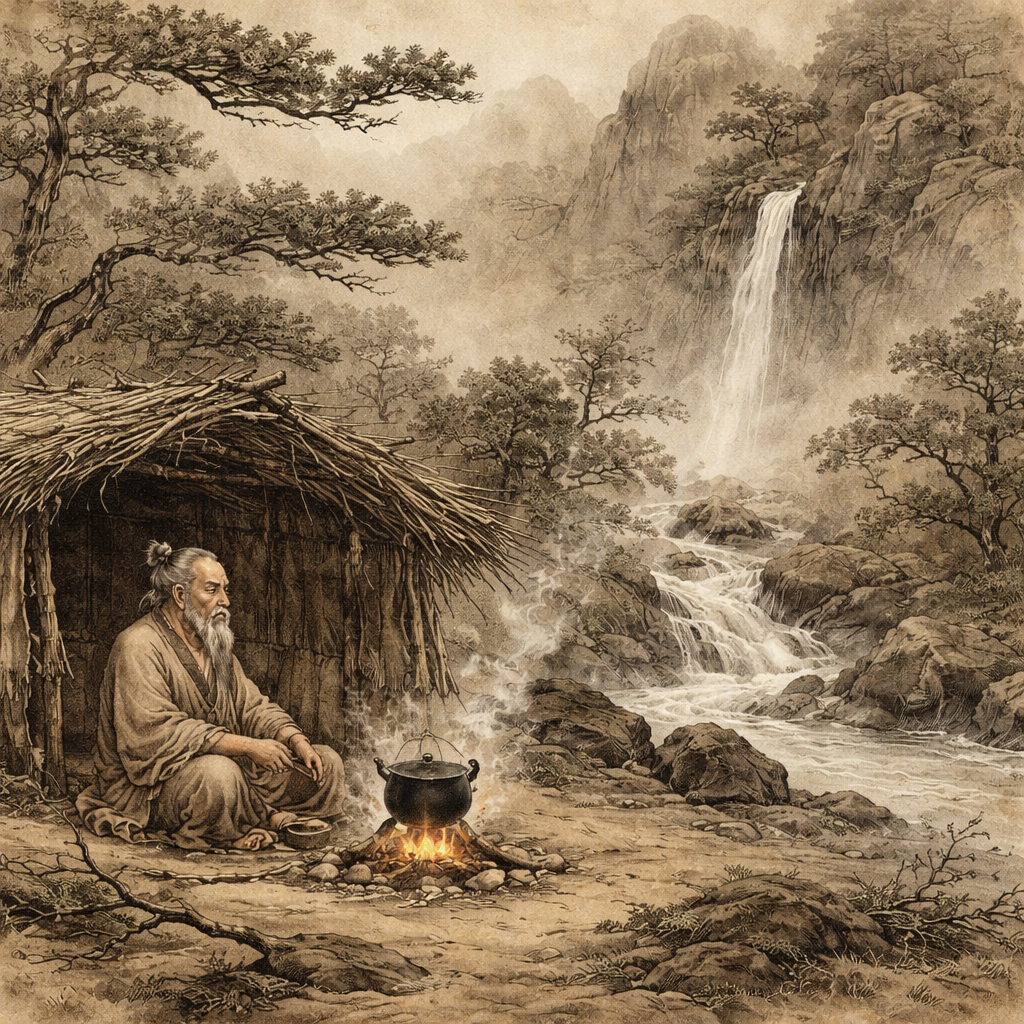
- Priests: Daoshi—conduct rituals, exorcisms, community ceremonies.
- Hermits/monks: Practitioners of meditation, alchemy, seclusion.
- Lineages: Celestial Masters (Tianshi), Shangqing, Lingbao, Quanzhen schools.
- Community: Temples integrated into village and imperial life.
Daoist religious life is sustained by a diverse ecosystem of specialists, lineages, and practices rather than a centralized institution or singular authority model. Priestly, monastic, teaching, and lay roles coexist within overlapping networks defined by ritual competence, lineage legitimacy, and practical mastery of cosmological techniques. Authority is distributed and conditional, requiring ratification through recognized systems rather than personal charisma alone. Institutions develop pragmatically in response to regional needs, state pressures, and ritual demands, remaining historically contingent rather than divinely fixed. Education and transmission prioritize apprenticeship, restricted knowledge, and technical precision, while reform consistently negotiates the balance between charismatic renewal and bureaucratic continuity. Together, Daoist specialists and institutions form a flexible, practice-centered system oriented toward maintaining cosmic harmony rather than enforcing belief or hierarchy.
9. Social Function & Law
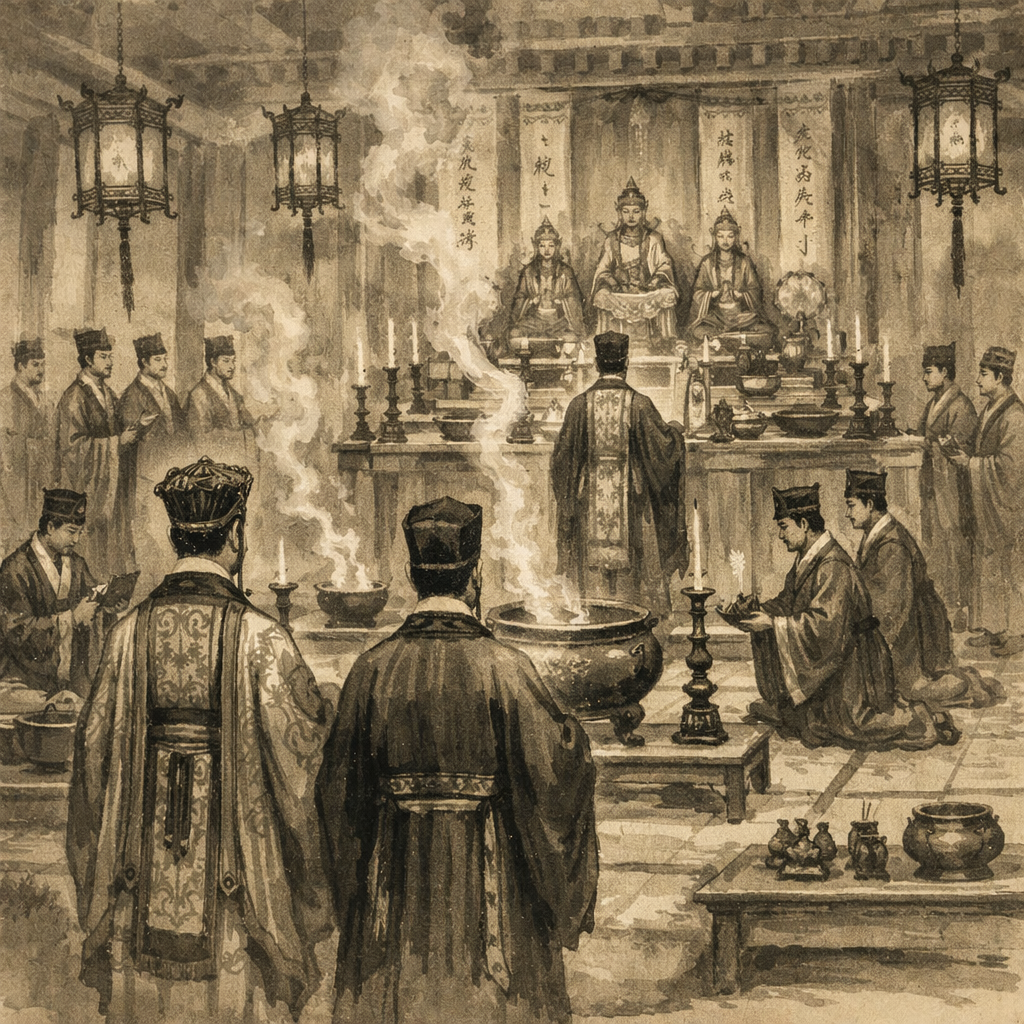
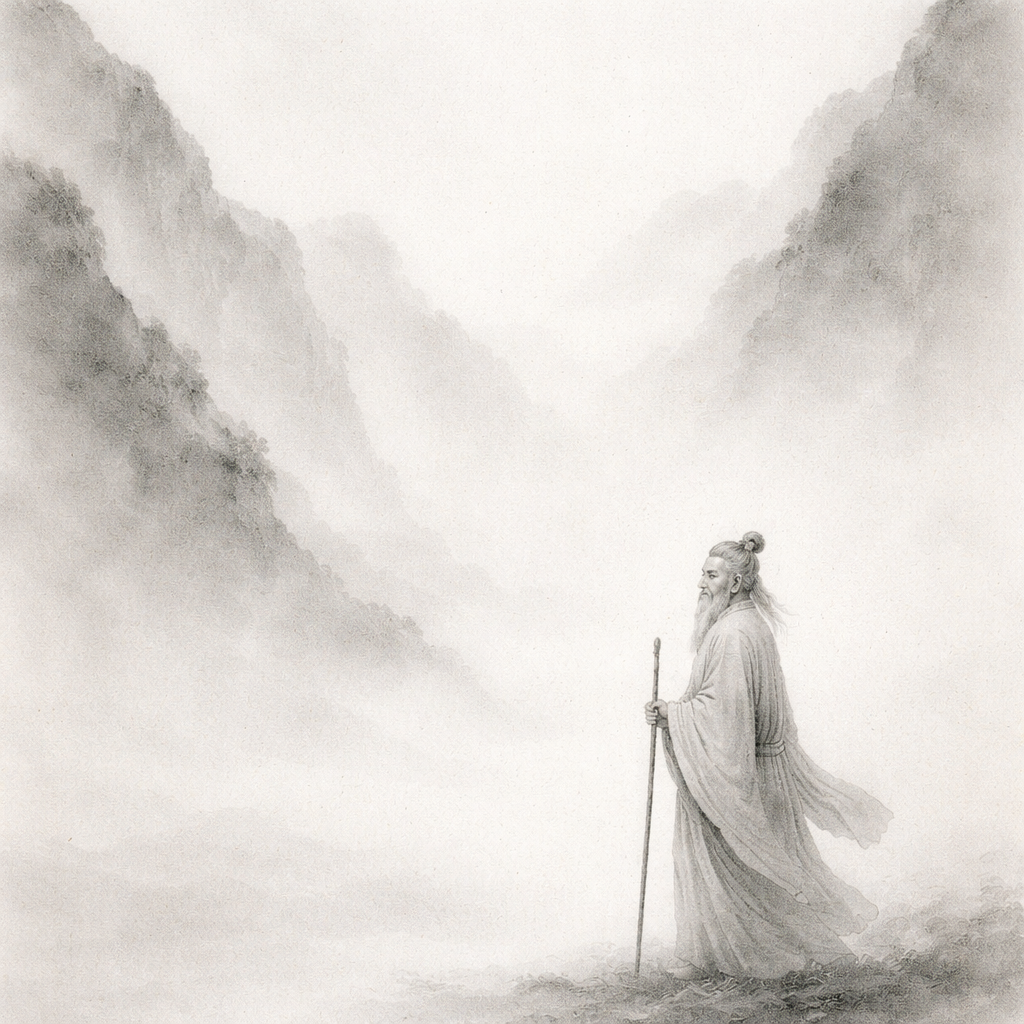
- Daoism legitimized emperors as rulers in harmony with the Dao.
- Priests mediated between communities and spirit world.
- Provided healing, divination, feng shui.
- Taboos around purity, pollution, diet (vegetarianism in some sects).
Daoism organizes social order through alignment rather than law, privileging harmony, restraint, and non-imposition over authority, punishment, or command. Governance is evaluated by its effects—balance versus disorder—not by titles or mandates, and codified law is treated as a symptom of misalignment rather than a solution. Ethical regulation remains descriptive and diagnostic, while discipline operates through internal cultivation and ritual correction instead of coercion. Community cohesion arises from shared, pragmatic practices that restore balance rather than enforce belief, allowing Daoism to function without juridical authority, moral absolutism, or institutional enforcement.
10. Death & Afterlife
- Afterlife realms governed by celestial bureaucracy.
- Souls judged, may be reborn, punished, or elevated.
- Ancestor cult integrated into Daoist ritual.
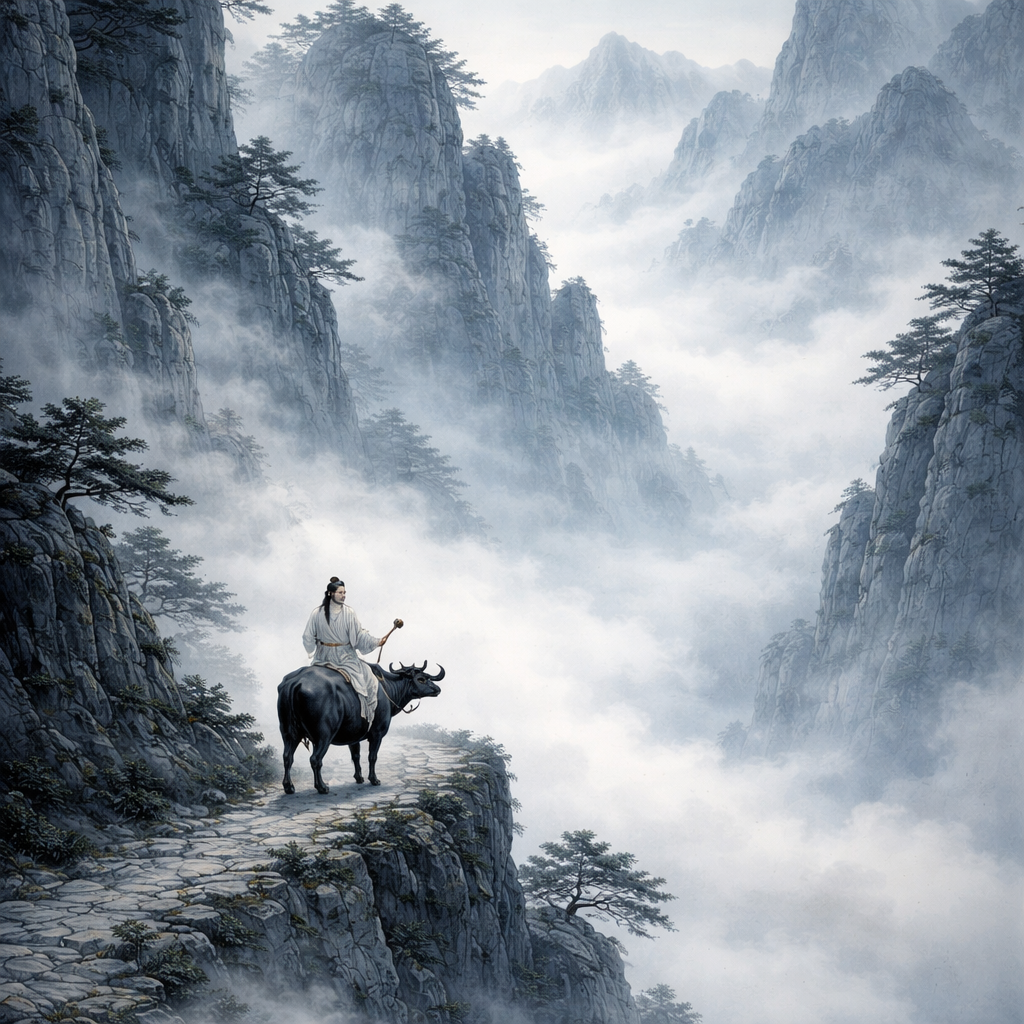
- Goal of many Daoists: immortality (physical or spiritual transcendence).
Within Daoism, conceptions of death reflect the tradition’s broader understanding of reality as processual, cyclical, and self-regulating. Rather than centering on a fixed afterlife doctrine, Daoist approaches to death vary across texts, lineages, and historical periods, ranging from philosophical minimalism to elaborate religious cosmologies. What unifies these views is the rejection of linear eschatology, universal judgment, and guaranteed immortality. Death is approached as a moment of energetic transition requiring careful ritual management, especially in religious Daoism, where priestly specialists mediate relations between the living and the dead. Postmortem outcomes are diverse and contingent, shaped by cultivation, ritual competence, and cosmic alignment rather than belief or moral accounting. In this way, Daoism integrates death into a broader vision of ongoing cosmic continuity, where transformation, balance, and refinement take precedence over final resolution.
11. Symbolism & Cultural Expression
- Symbols: Yin-yang, Daoist talismans, Bagua (eight trigrams).
- Immortals: Popular in art, literature, opera.
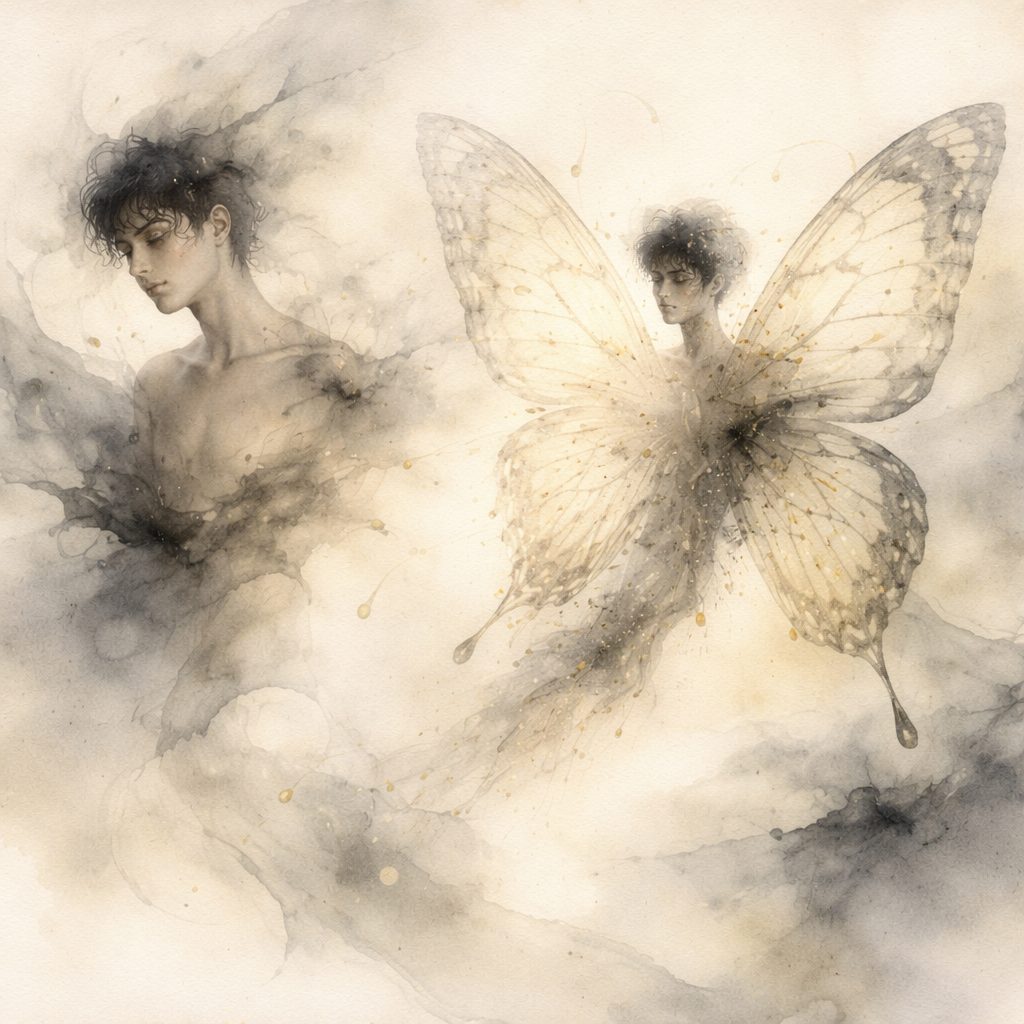
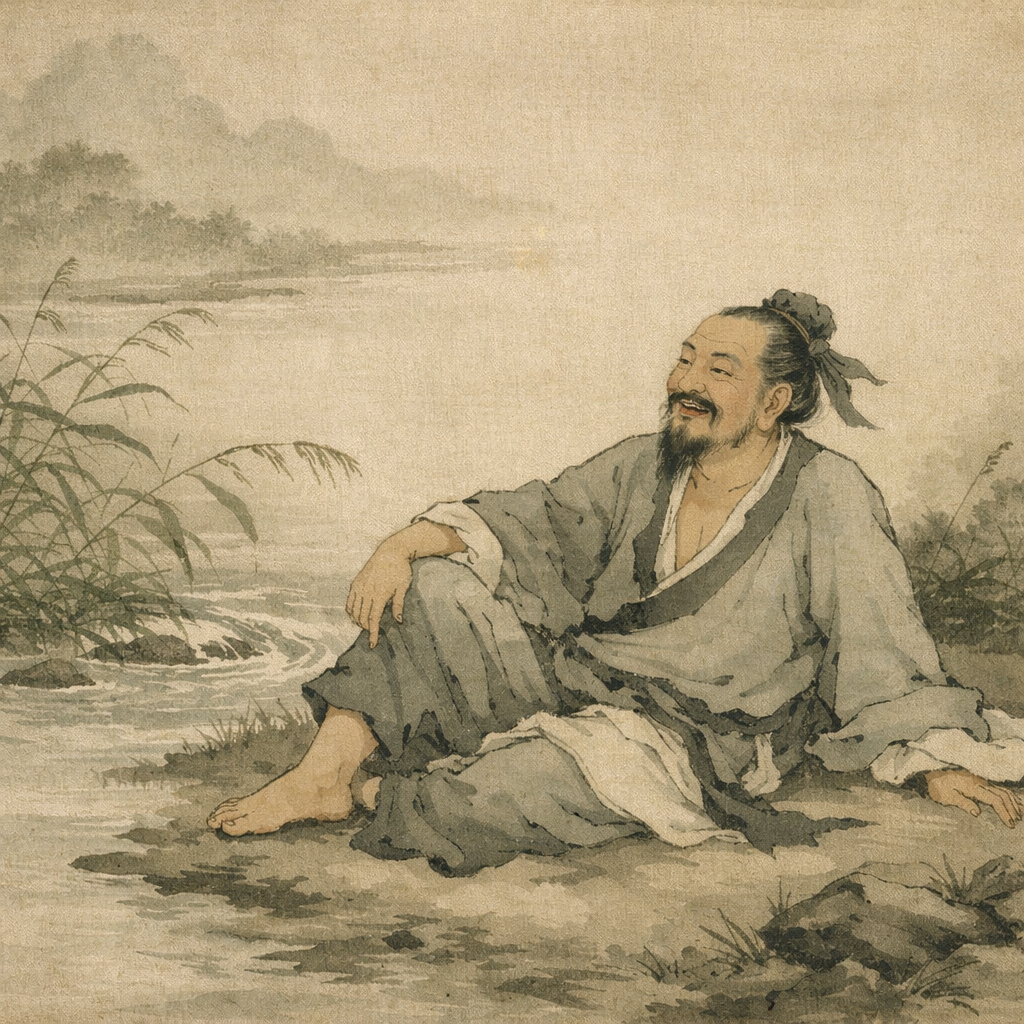
- Literary style: Parables and allegories (Zhuangzi’s butterfly dream).
- Music/dance: Ritual music in temple ceremonies.
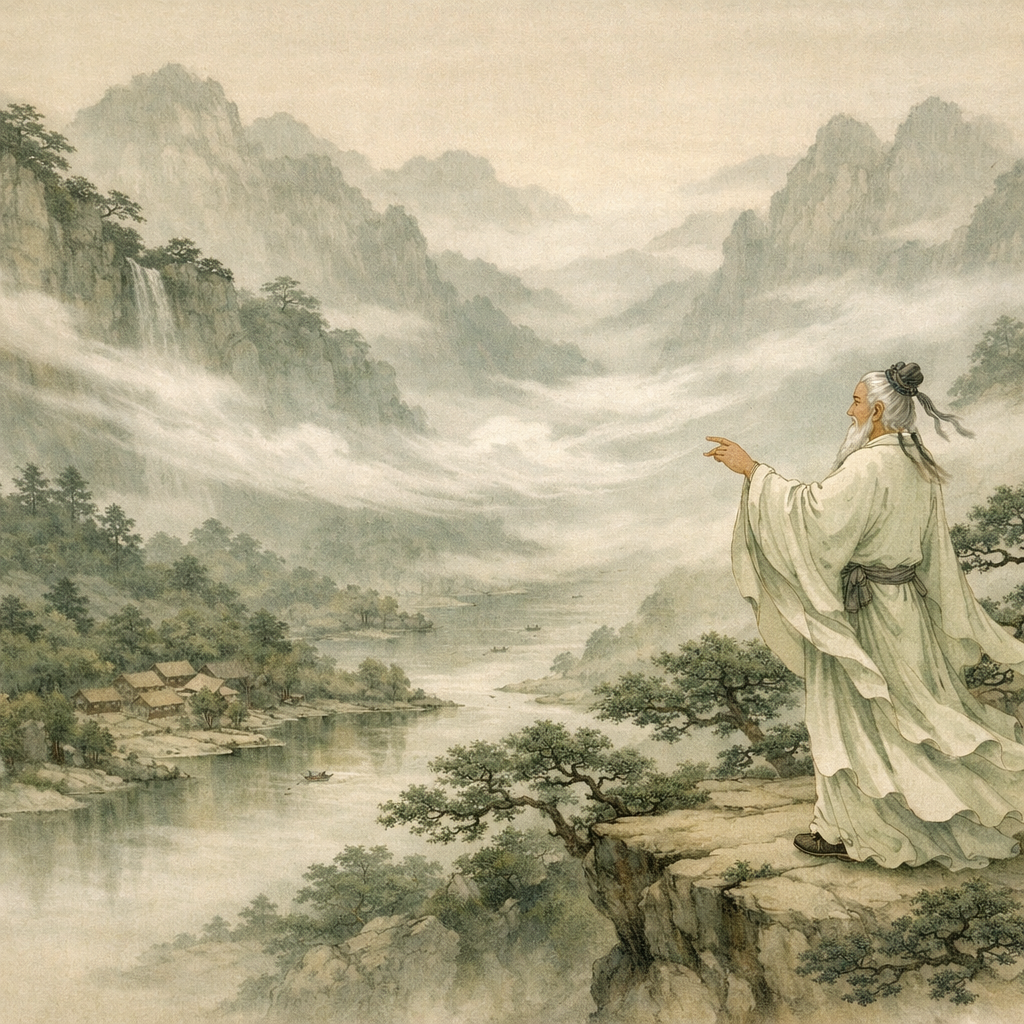
Within the broader landscape of Eastern religious symbolism, Daoism represents a mode in which symbols are used primarily to undo fixation rather than establish order. Unlike traditions that emphasize boundary-marking, moral codification, or exemplary figures, Daoist symbolism foregrounds process, reversal, and emptiness as operative principles. Symbols function as guides for alignment with an impersonal, self-regulating order rather than as markers of identity, authority, or belief.
This section shows how Daoist symbolic expression consistently privileges modeling over representation: language that refuses precision, images that diagram flow, rituals that mirror cosmic administration, and social symbols that valorize non-interference and withdrawal. Daoism’s symbolic system thus occupies a distinctive position among Eastern traditions, using symbols not to anchor meaning but to keep it mobile, adaptive, and resistant to capture.
12. Contact & Transformation
- Interaction: Intertwined with Chinese folk religion; competed and fused with Buddhism and Confucianism.
- Spread: Influenced Korea, Japan, Vietnam.
- Suppression: Declined under modern Chinese state campaigns; temples destroyed or secularized.
- Revival: Cultural heritage recognition, martial arts, global interest in Daoist meditation and longevity practices.
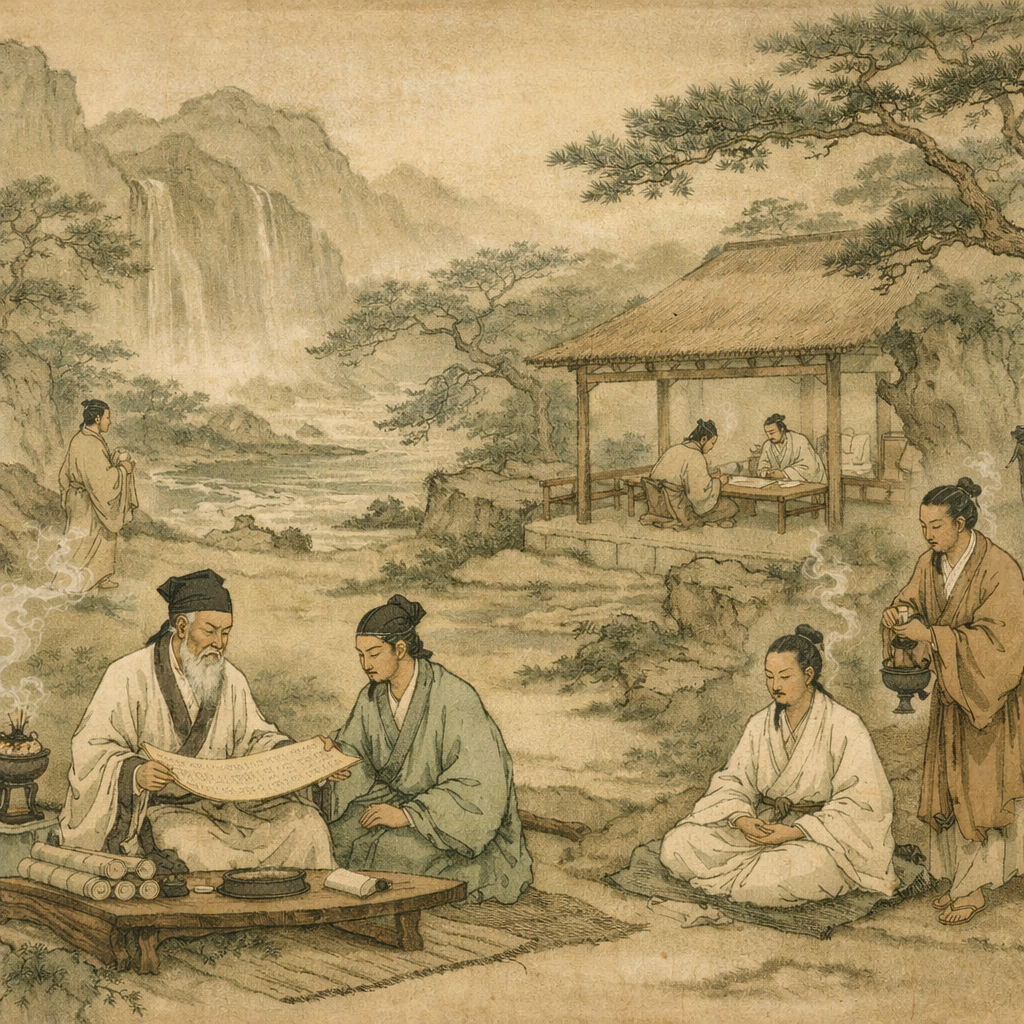
Daoism’s historical continuity is inseparable from sustained contact. Rather than emerging as a bounded or exclusive system, Daoism forms and persists as a layered tradition within a plural religious field, shaped by ongoing interaction with Confucian ethics, Buddhist institutions, and local ritual life. Syncretism operates as a constitutive condition, while internal boundaries are maintained through lineage authority, ritual specialization, and canon formation rather than belief enforcement.
Periods of reform and disruption reorganize Daoism institutionally rather than redefining it doctrinally. Canonical consolidation, state regulation, suppression under modern political regimes, and later revival through cultural policy repeatedly alter Daoism’s public form without dismantling its core ritual and transmission structures. In global circulation, Daoist ideas diffuse selectively and abstractly, while embodied practice remains transmission-bound. Across these shifts, Daoism demonstrates continuity through controlled adaptation, preserving identity through canonical memory, lineage reproduction, and ritual regeneration amid changing political and cultural conditions.