See below for Religion Analysis framework
Standard Christian Organization
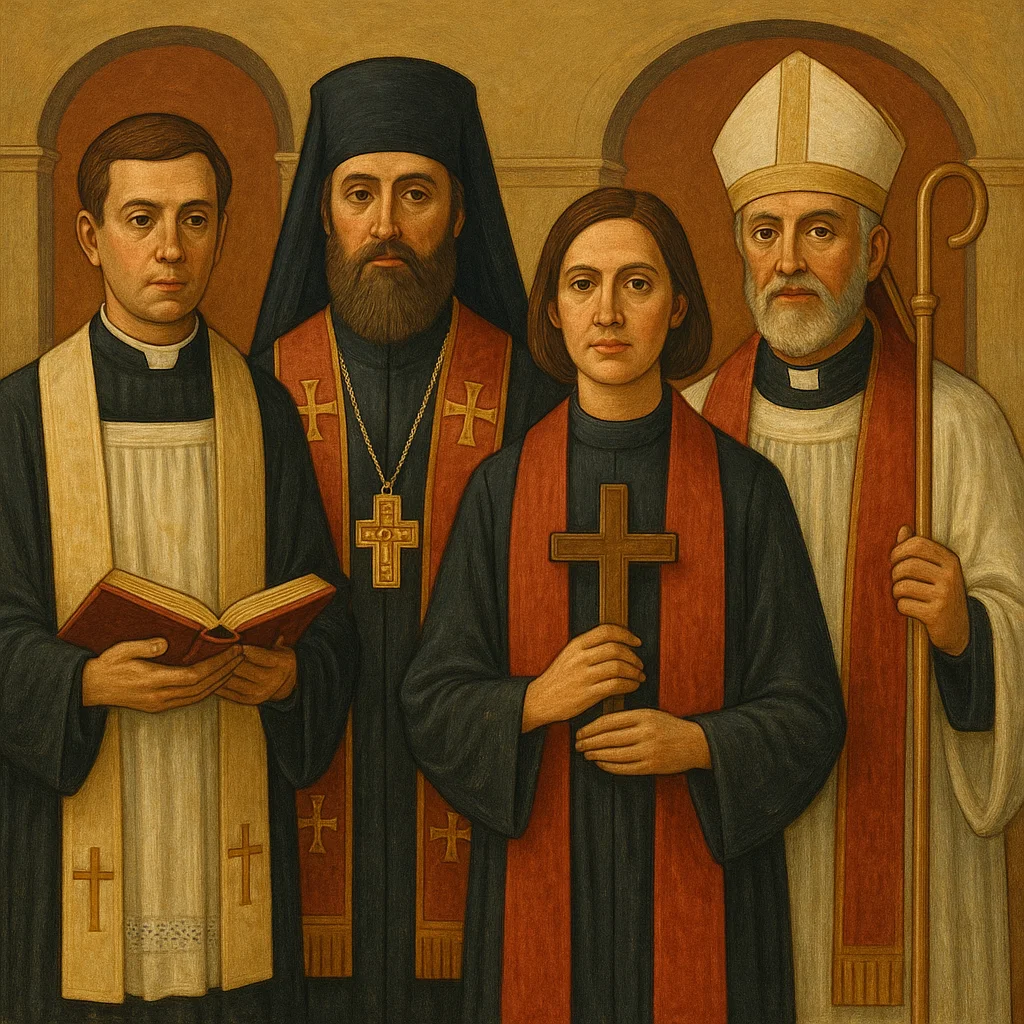
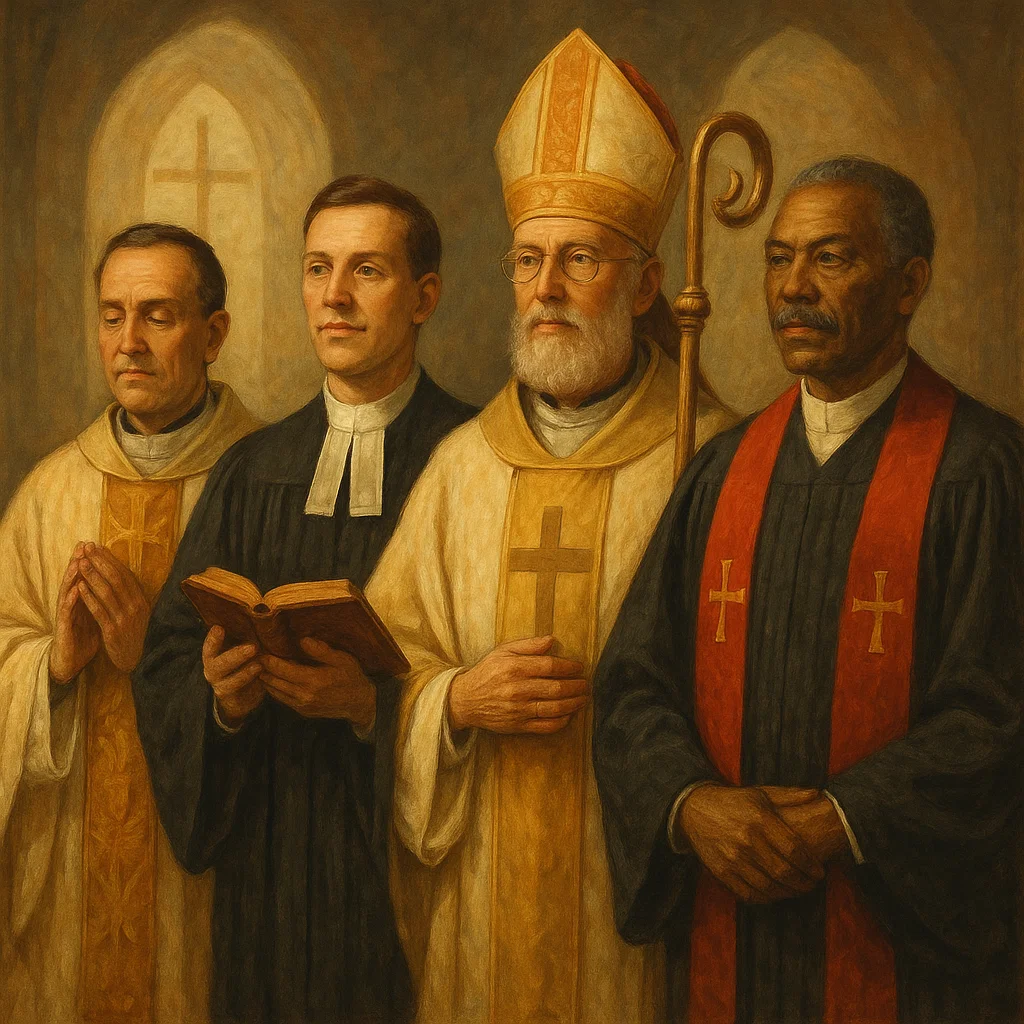
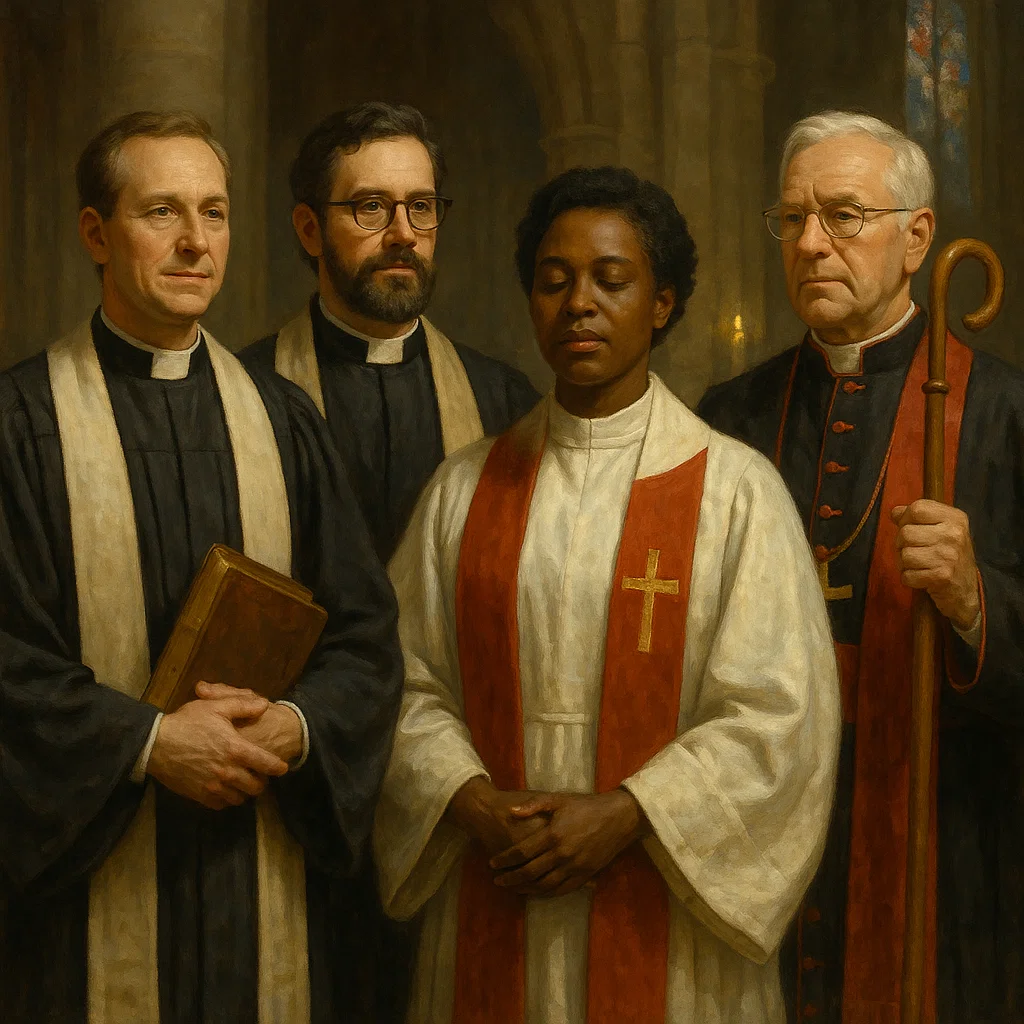
Clergy and Ordained Ministers
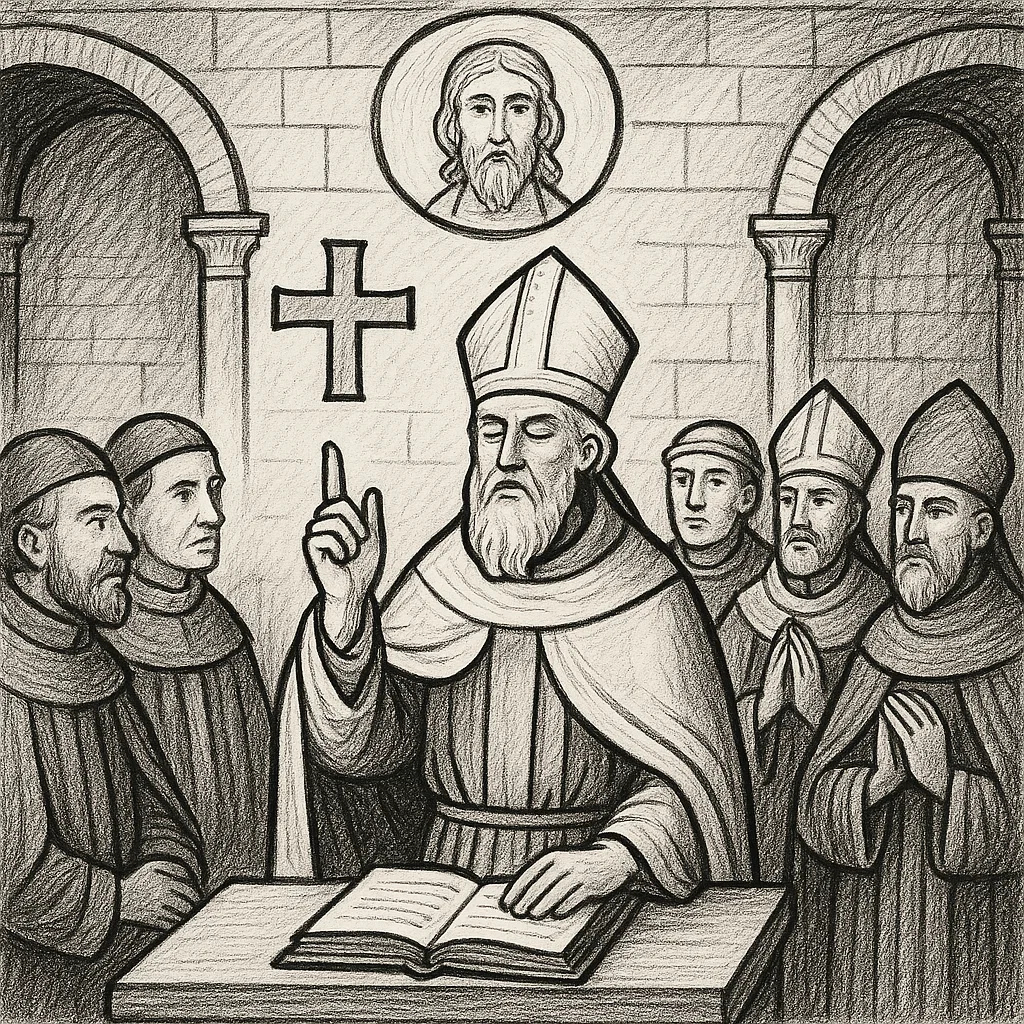
Those formally commissioned to teach, lead worship, and administer sacraments or ordinances. They embody institutional continuity and interpret divine authority within the community of faith. Ordination marks them as stewards of doctrine, discipline, and pastoral care, though the basis of that authority—apostolic succession, scriptural mandate, or spiritual calling—differs by tradition.
Principal Roles
- Pope (Catholic)
- Patriarch, Metropolitan (Orthodox)
- Archbishop / Bishop (all episcopal systems)
- Priest (Catholic and Orthodox)
- Deacon (all historic churches)
- Pastor / Minister (Protestant and Evangelical)
- Elder / Presbyter (Reformed and Presbyterian)
- Evangelist, Prophet, Apostle (Pentecostal charismatic titles)
- Chaplain (institutions such as military, hospital, school)
Tradition Differences
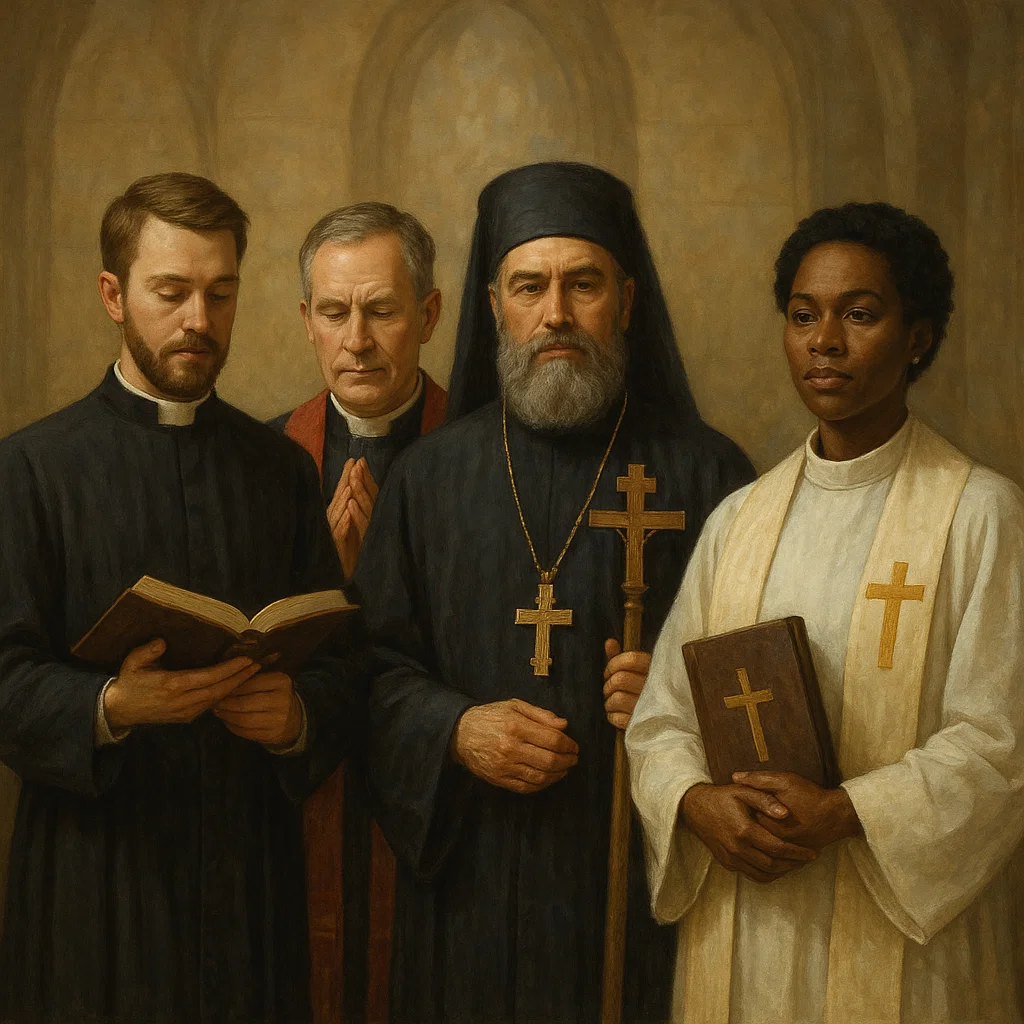
- Catholic: Ordained through sacramental Holy Orders; celibate male clergy in Latin rite.
- Orthodox: Similar three-fold order; married parish priests allowed, bishops celibate.
- Protestant: Reject apostolic succession as necessary; ordination seen as communal commission.
- Evangelical / Pentecostal: Authority derived from calling and spiritual gift rather than office.
Monastic and Religious Orders
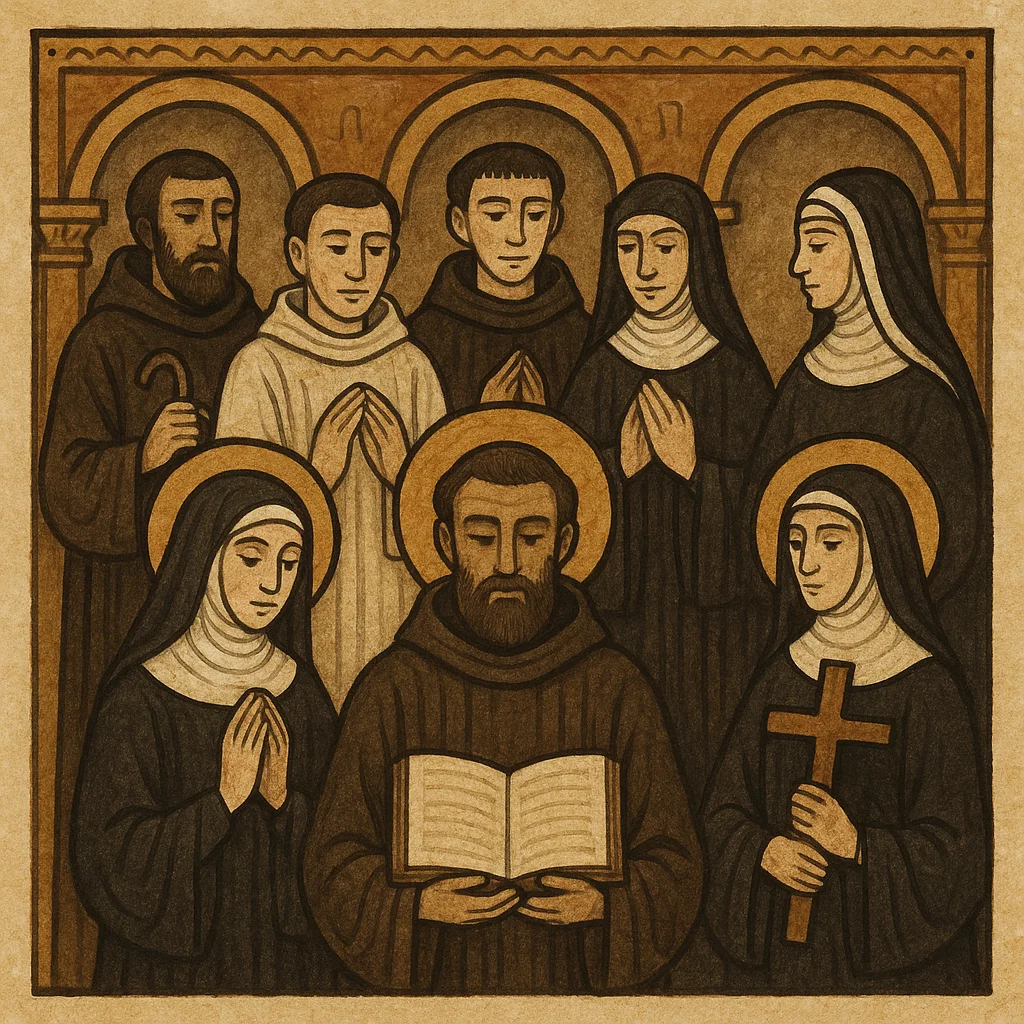
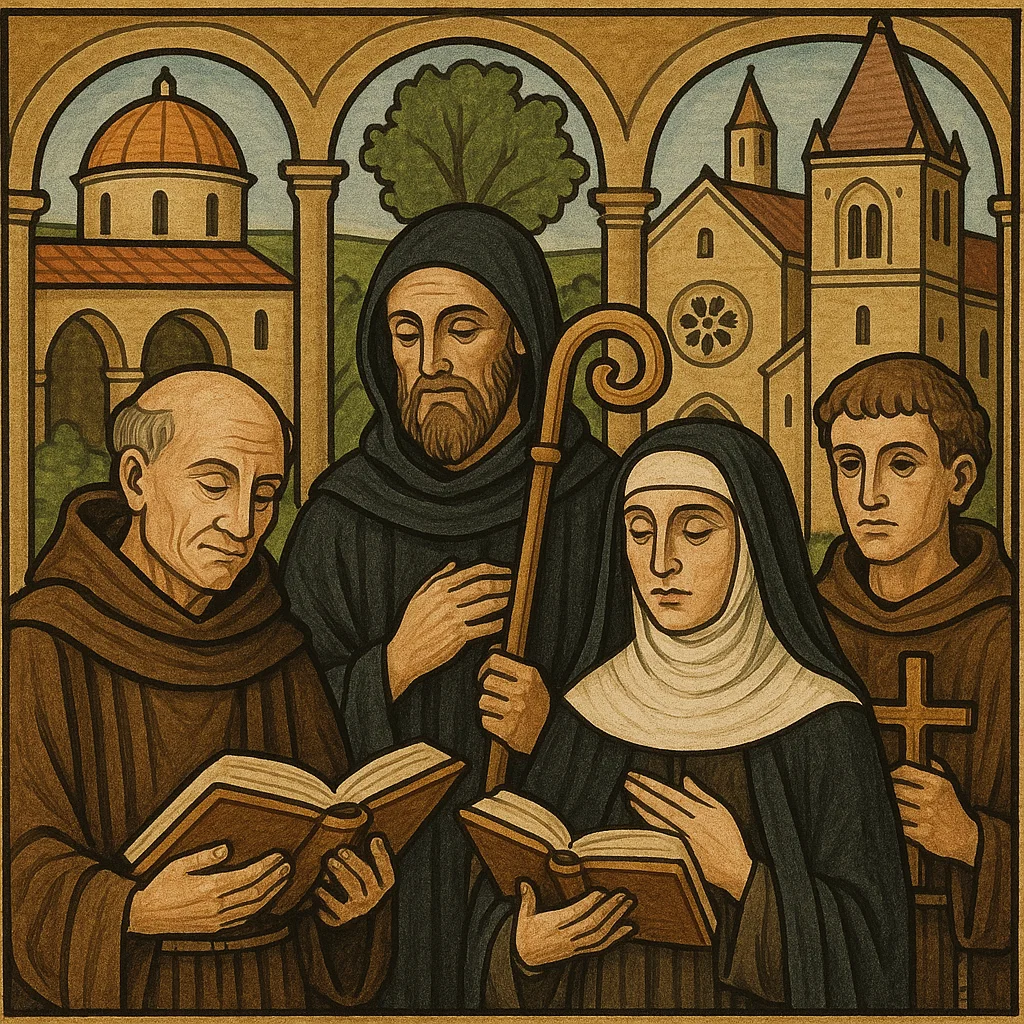
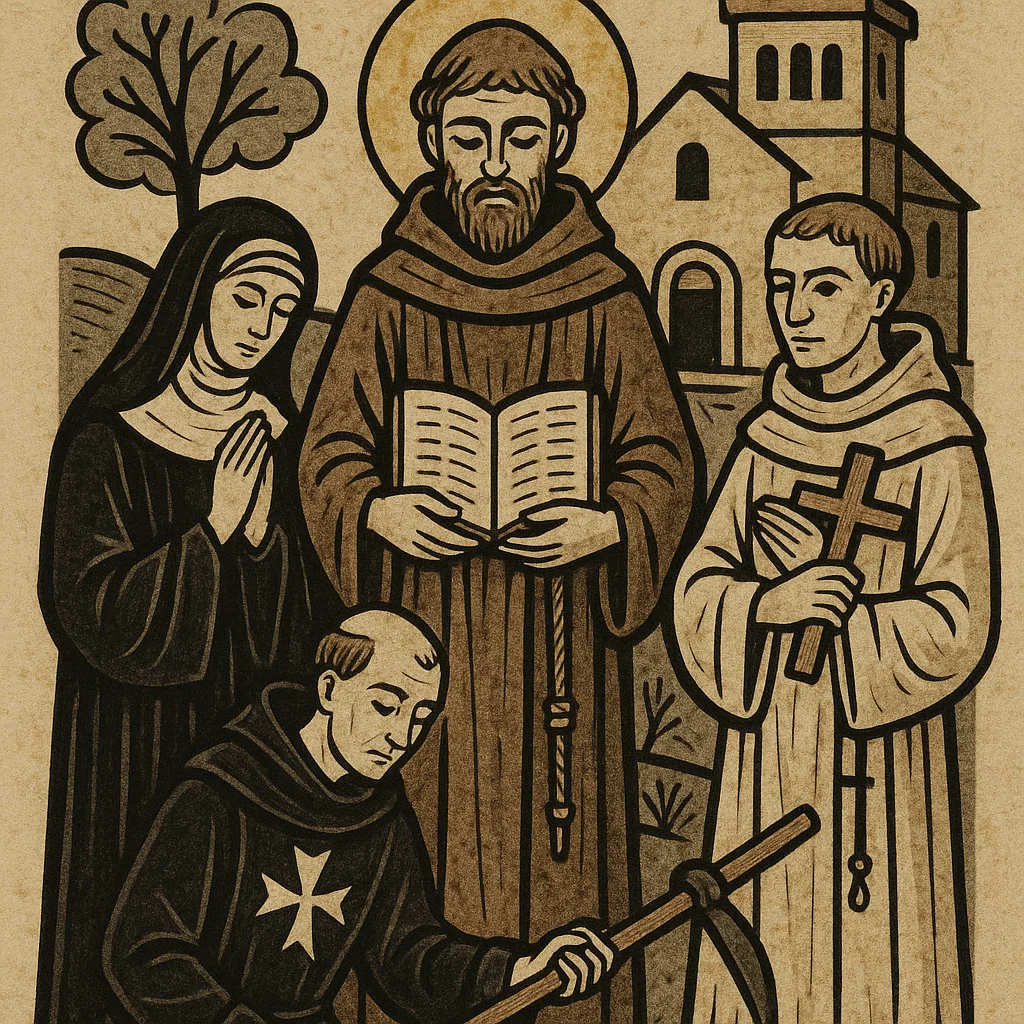
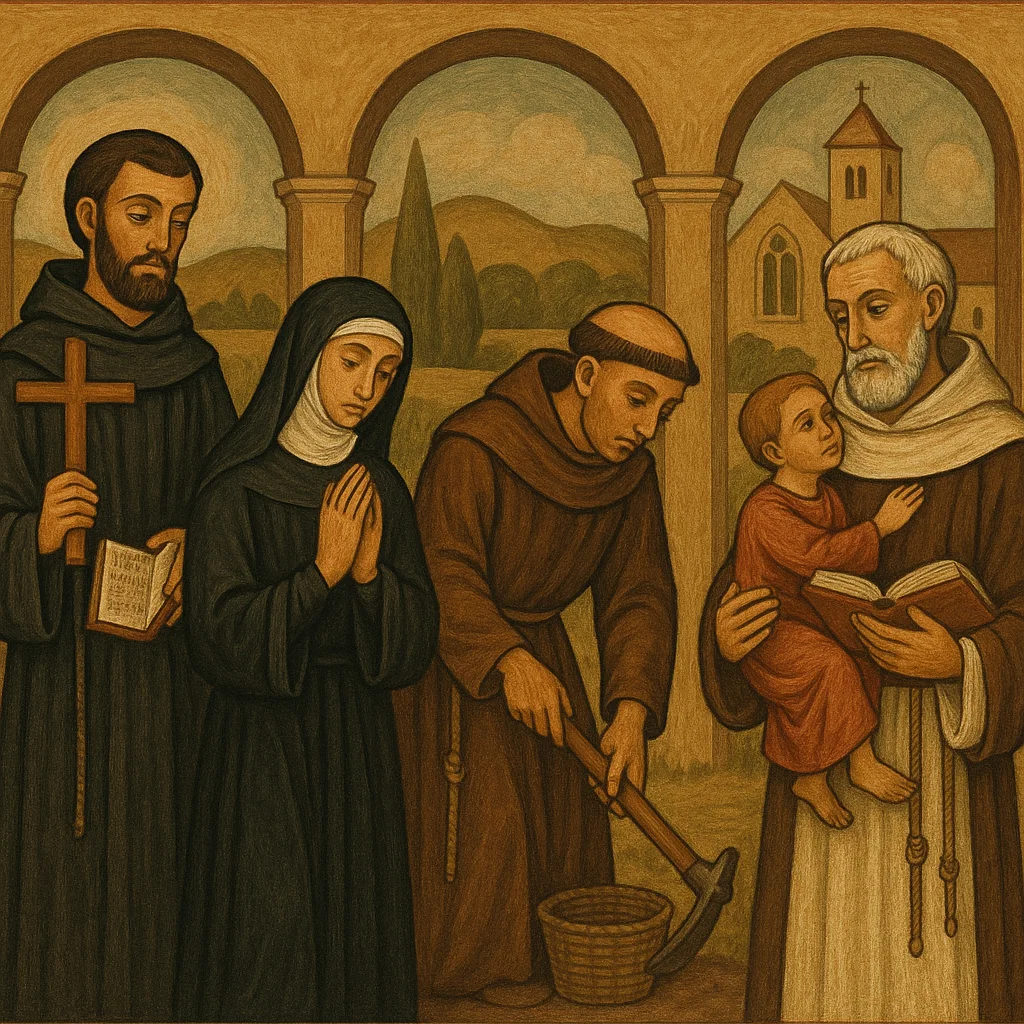
Communities or individuals who renounce ordinary life to pursue prayer, discipline, and service. Their goal is union with God through stability, work, and contemplation. They sustain liturgy, education, and charity, representing the contemplative dimension of the Church.
Principal Forms
- Monk / Nun (cloistered or active)
- Friar (mendicant preacher or teacher)
- Hermit / Anchorite (solitary ascetic)
- Brother / Sister (non-ordained religious member)
- Abbot / Abbess (monastic superior)
- Novice, Oblate, Tertiary (associated lay vocations)
Tradition Differences
- Catholic: Vast system of orders (Benedictines, Dominicans, Jesuits, Franciscans, Carmelites).
- Orthodox: Monasticism central to spiritual life (Mount Athos model, hesychastic tradition).
- Protestant: Mostly abolished after Reformation; some modern revivals as intentional or missionary communities.
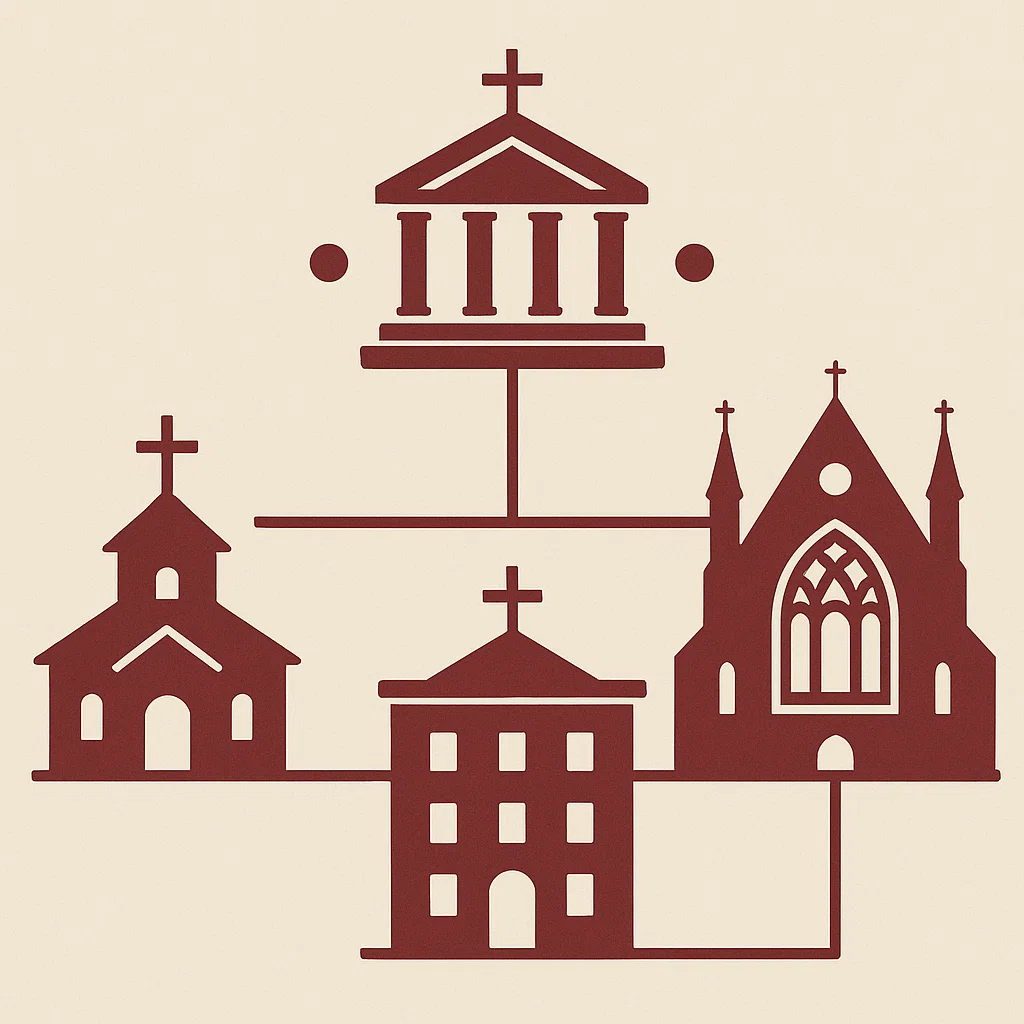
Governance Units and Institutions
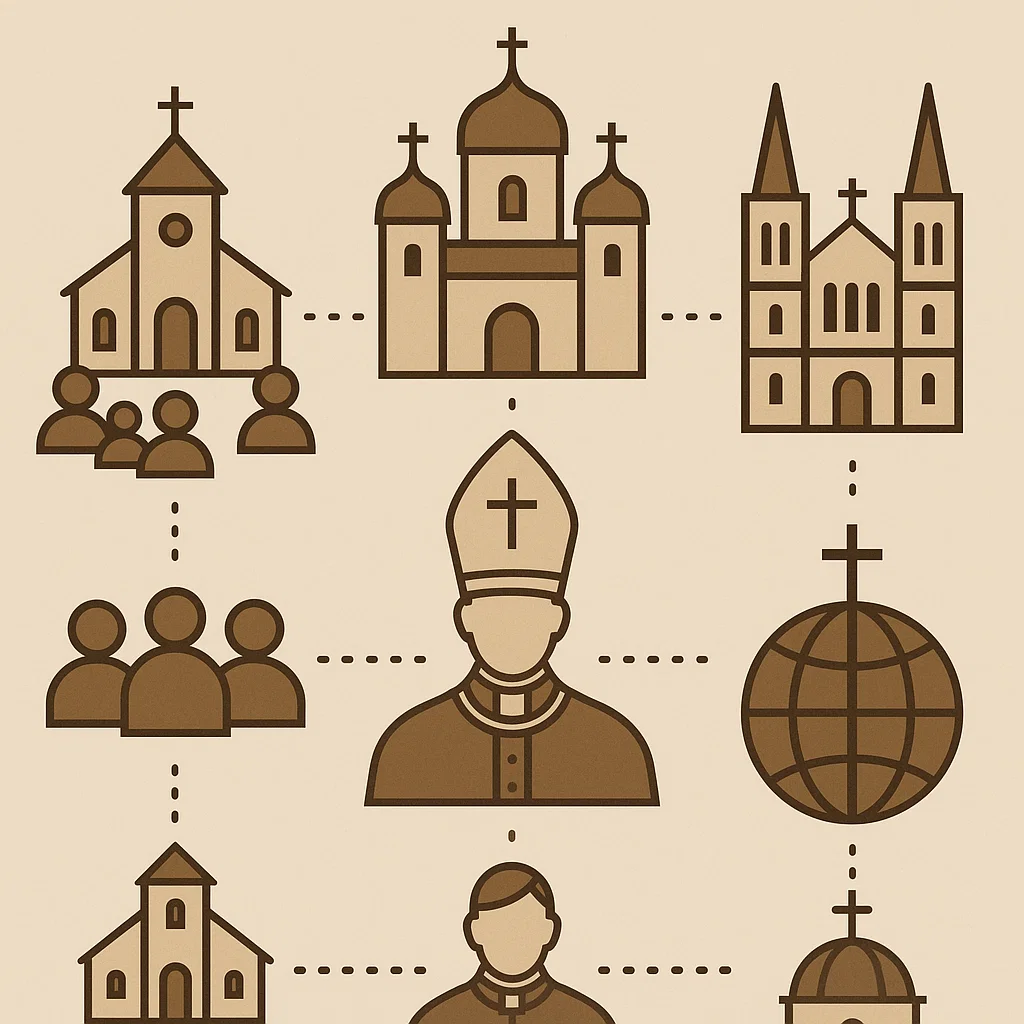
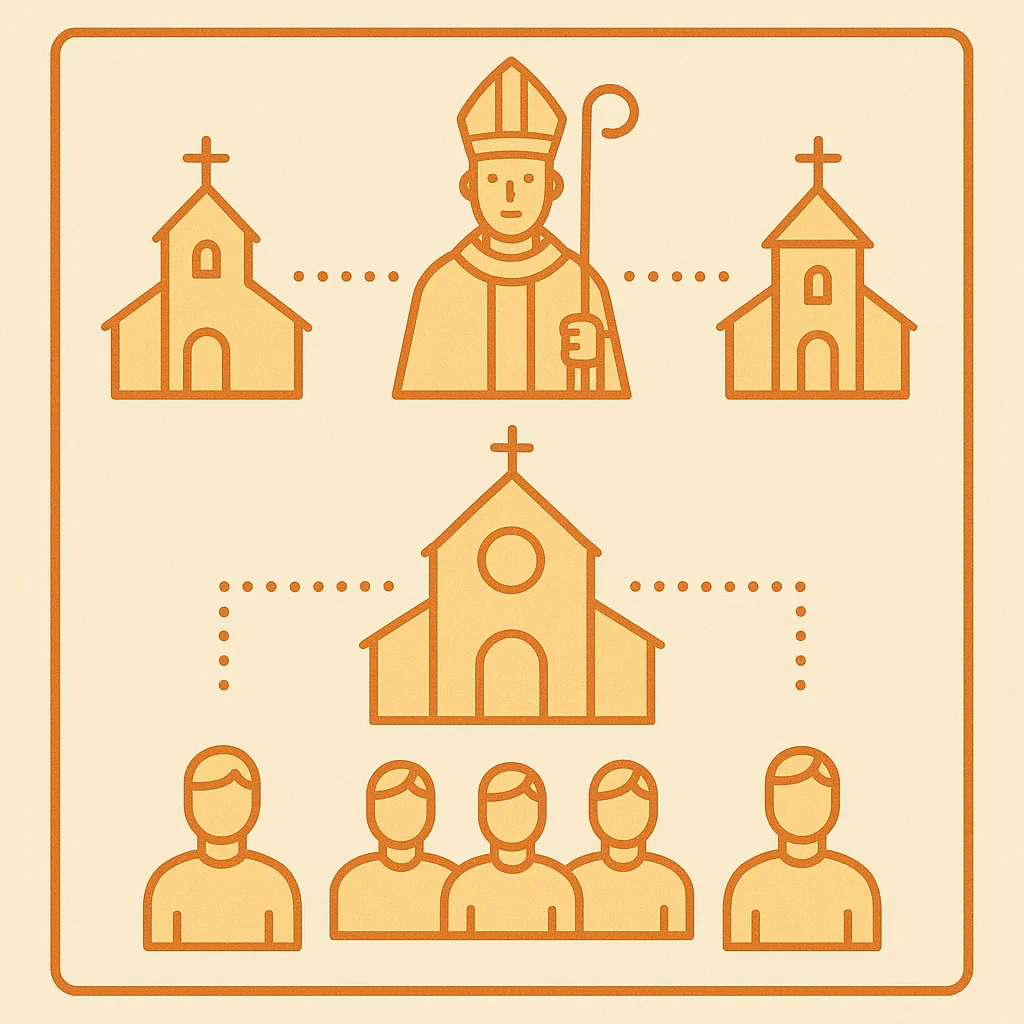
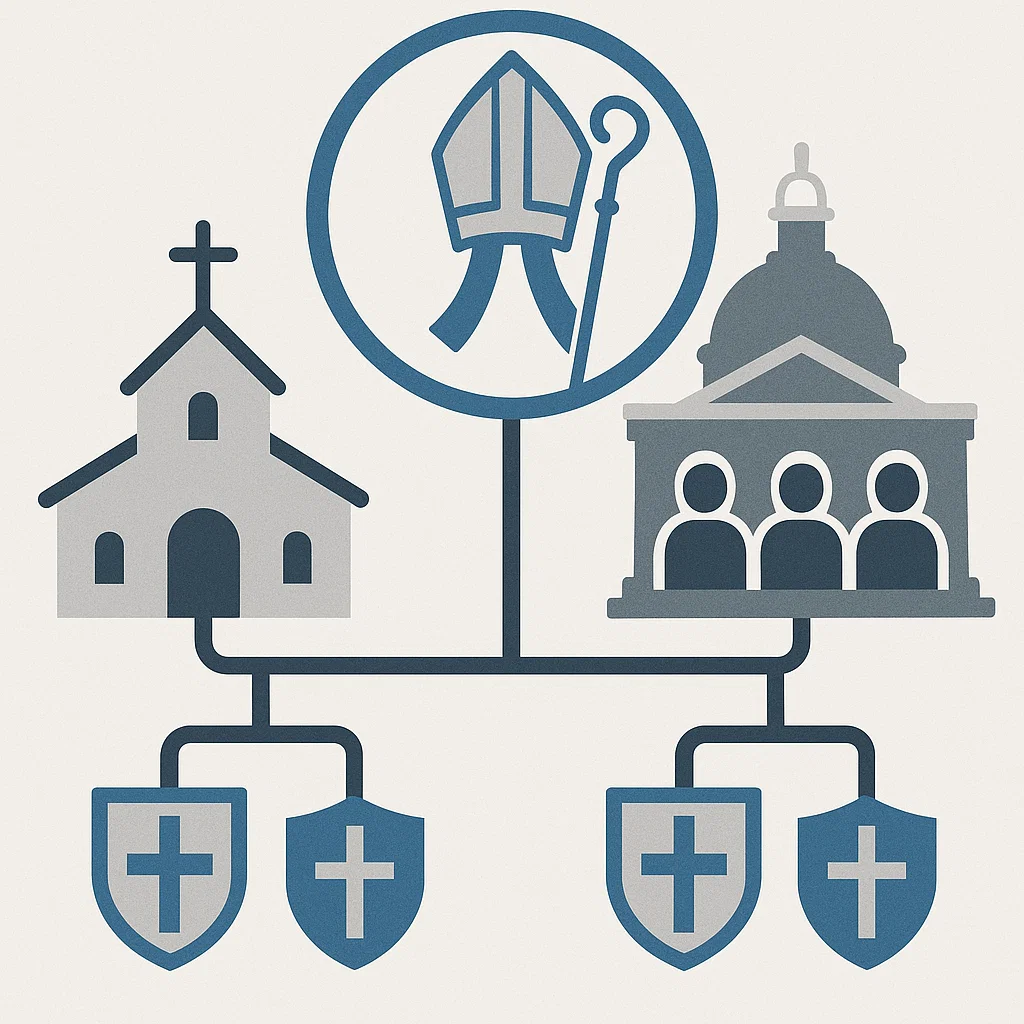
Administrative structures through which the Church organizes territory, discipline, and accountability. They define the visible framework of Christian community—from parish to global communion—and determine how authority is exercised across levels of hierarchy or fellowship.
Structural Levels
- Parish / Congregation (local community)
- Diocese / Eparchy / Conference (regional jurisdiction)
- Archdiocese / Province (group of dioceses)
- Patriarchate / National Church (Orthodox and Eastern Catholic)
- Holy See (Vatican City — supreme Catholic jurisdiction)
- Synod of Bishops / General Assembly (decision body)
- Denomination / Convention (Protestant federal unit)
Tradition Differences
- Catholic: Centralized papal monarchy; canon law universal.
- Orthodox: Network of autocephalous churches in communion.
- Protestant: Governance forms — episcopal (Anglican, Methodist), presbyterian (Reformed), congregational (Baptist, independent).
- Evangelical / Charismatic: Often non-hierarchical or network-based.
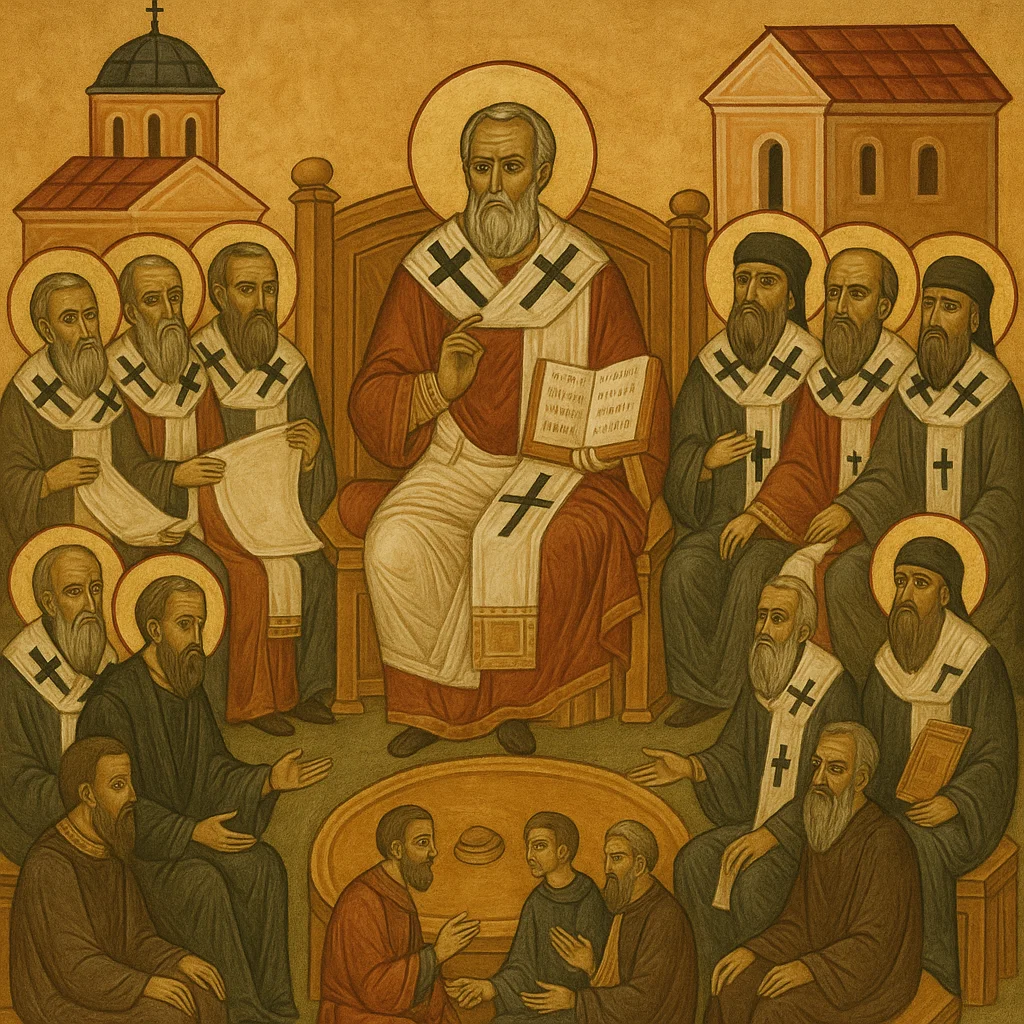
Councils and Synodal Bodies
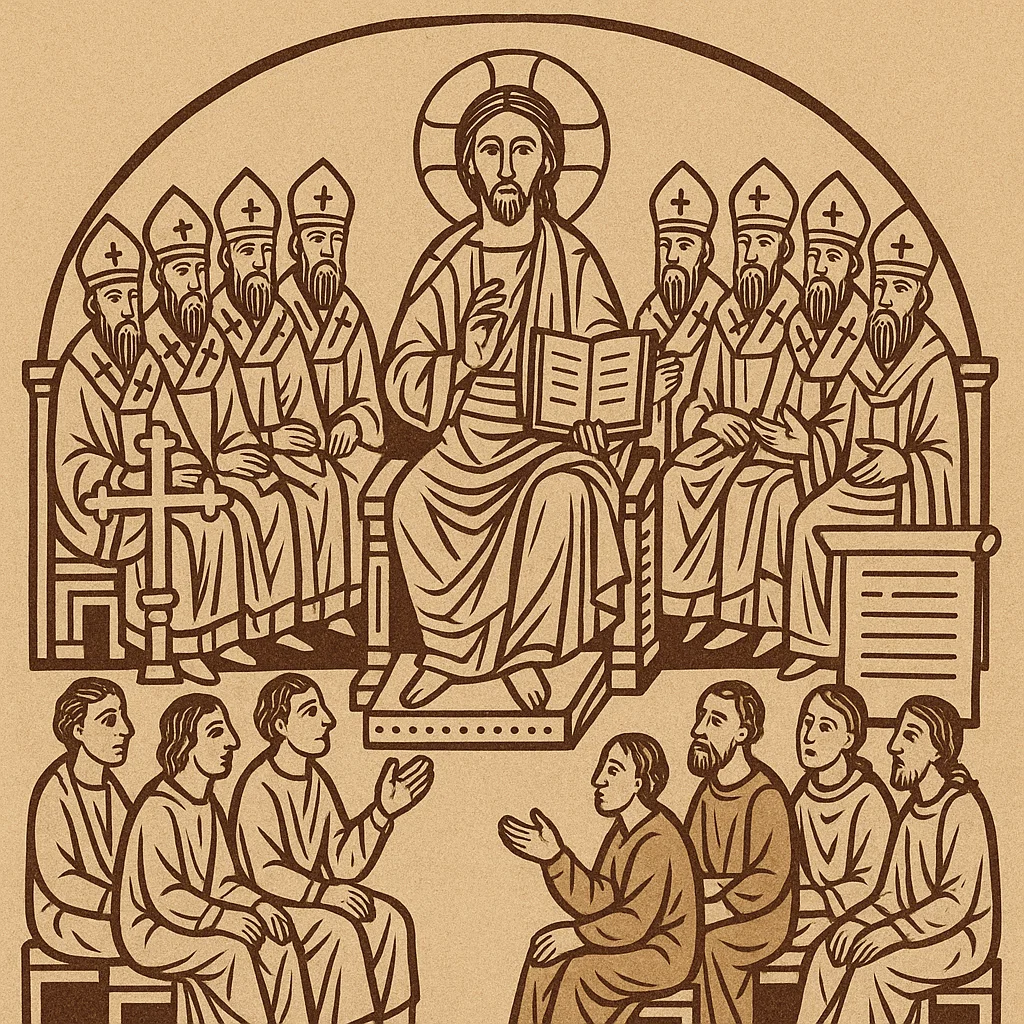
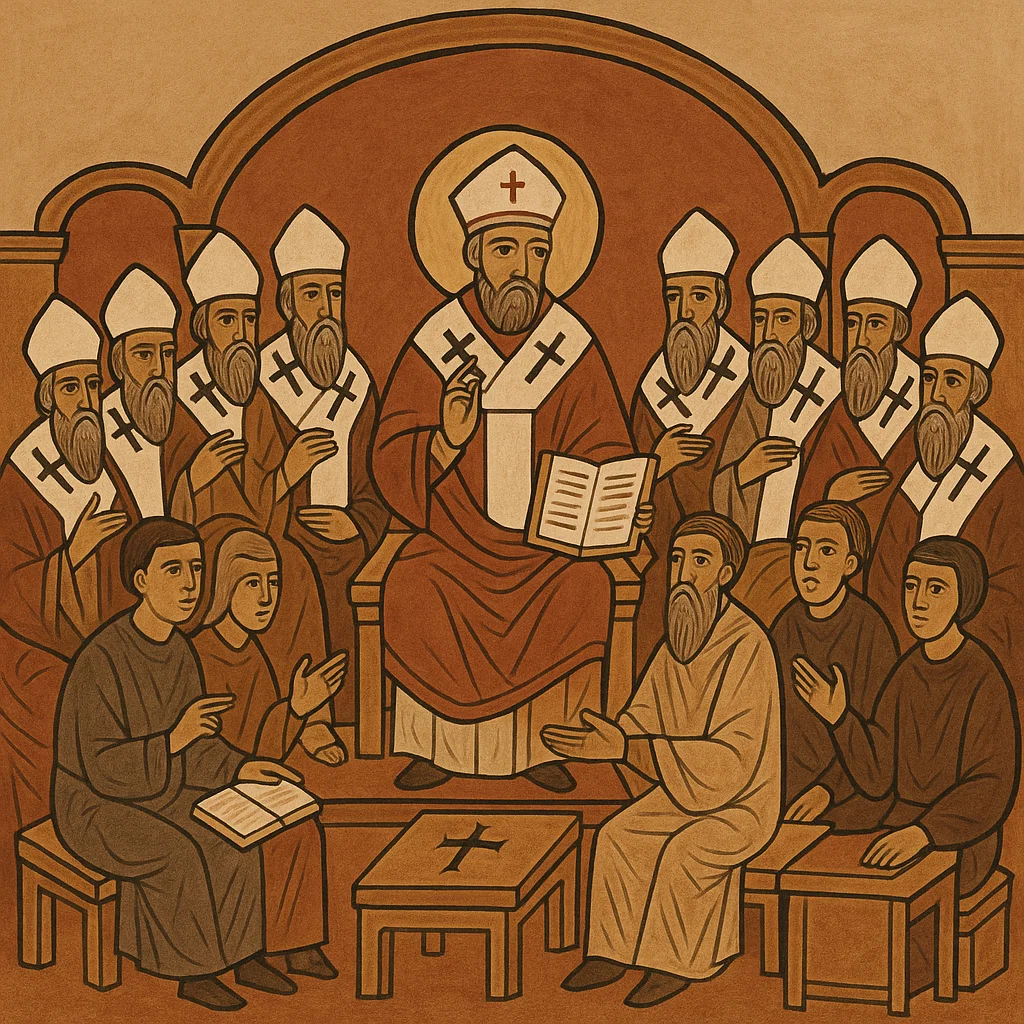
Formal assemblies where clergy and sometimes laity deliberate on doctrine, discipline, and unity. They express the Church’s collective mind, balancing authority and consensus. Their decisions define orthodoxy, address heresy, and adapt governance to changing contexts.
Principal Types
- Ecumenical Council (universal doctrinal authority)
- General Council or Convocation (denominational assembly)
- Local Council / Provincial Synod (regional issues)
- Parish Council (lay-clergy administration)
- Ecumenical Organizations (World Council of Churches, regional conferences)
Tradition Differences
- Catholic: Pope convenes ecumenical councils; teaching authority (Magisterium).
- Orthodox: Conciliar authority shared among patriarchs and bishops.
- Protestant: Synods and conventions set policy democratically; no universal authority.
- Ecumenical Movements: Inter-denominational councils seek doctrinal and social cooperation.
Religion Analysis Framework
1. Priests and Ritual Officials
- Existence of a priestly office (tradition-dependent):
- Catholic & Orthodox: Ordained priests are central ritual officials.
- Anglican: Priestly office retained with varying theology.
- Most Protestant traditions: Reject priesthood as a distinct sacrificial class; retain pastors/ministers instead.
- Core duties (where priesthood exists):
- Preside over sacraments (especially Eucharist).
- Lead communal worship and the liturgical calendar.
- Provide pastoral care, confession (tradition-dependent), and instruction.
- Guard doctrinal and ritual boundaries within the community.
- Source of authority:
- Ordination through apostolic succession (Catholic, Orthodox, Anglican).
- Authority understood as delegated service, not personal spiritual power.
- In Protestant settings, authority derives from call by the congregation and training, not ontological change.
- Full-time vs part-time:
- Historically full-time in established churches; bi-vocational ministry common in modern Protestant contexts.
- Boundary rule:
- Priests do not function as shamans or mediators who control access to God.
- All ritual authority is derivative of God’s action; priests serve as stewards, not sources, of the sacred.
2. Prophets, Shamans, Visionaries
- Prophetic role (historical, not ongoing):
- Christianity affirms biblical prophets (Old Testament) and apostolic witnesses as foundational.
- Prophecy is understood as completed in Christ in normative theology; no new public revelation is expected.
- Visionary experience (bounded):
- Visions, dreams, and revelations may be acknowledged (e.g., saints’ visions), but they are non-binding and subject to discernment.
- Such experiences cannot add doctrine or override scripture and tradition.
- Charismatic expressions (tradition-dependent):
- Pentecostal/Charismatic movements: accept contemporary prophecy, healing, and tongues.
- These are interpreted as gifts of the Holy Spirit, not shamanic access to spirits.
- Charisma is evaluated communally to prevent abuse or doctrinal drift.
- Rejection of shamanism:
- Christianity rejects trance, possession, or ecstatic mediation as sources of authority.
- No individual claims privileged access to God outside the community’s discernment structures.
- Boundary rule:
- Prophetic or visionary claims are subordinate to scripture, creeds, and communal authority.
- Charisma serves the church; it does not govern it.
3. Teachers and Theologians
- Role and function:
- Teachers and theologians interpret, systematize, and transmit doctrine, scripture, and moral teaching.
- They do not create revelation; they clarify and defend what is received.
- Authority sources (tradition-dependent):
- Catholic & Orthodox: authority rooted in fidelity to scripture and tradition; theologians work under episcopal oversight.
- Protestant: authority tied to scripture, academic rigor, and confessional standards; greater latitude for debate.
- Institutional locations:
- Seminaries, universities, monasteries, and cathedral schools (historically).
- Modern theological faculties and denominational training programs.
- Forms of teaching:
- Biblical exegesis, doctrinal theology, moral theology/ethics, pastoral theology.
- Catechesis (instruction of laity) alongside advanced scholarly work.
- Influence and limits:
- Major theologians shape doctrine and practice across centuries, but their authority is persuasive, not coercive.
- Doctrinal boundaries are ultimately set by councils, creeds, or denominational bodies, not individual thinkers.
- Boundary rule:
- No theologian possesses infallibility by virtue of scholarship alone.
- Teaching authority remains accountable to the wider church and its recognized norms.
4. Monastic Orders and Ascetics
- Existence and purpose:
- Monasticism is a recognized vocation within Christianity (especially Catholic and Orthodox), oriented toward intensified prayer, discipline, and communal life.
- It is exemplary, not normative; monastics model devotion but do not define ordinary Christian obligation.
- Forms of monastic life:
- Eremitic (hermit): solitary ascetic life focused on prayer.
- Cenobitic: communal monastic life under a rule (e.g., Benedictine).
- Mendicant orders: communal life combined with preaching and service (e.g., Franciscans, Dominicans).
- Vows and disciplines:
- Common vows include poverty, chastity (celibacy), and obedience (varies by order).
- Daily rhythms emphasize prayer (hours), work, study, and hospitality.
- Institutional role:
- Centers of learning, manuscript preservation, education, and social service (historically hospitals, schools).
- Spiritual influence exceeds numerical size due to moral authority and continuity.
- Protestant perspectives:
- Most Protestant traditions reject monastic vows as unnecessary or unscriptural.
- Some retain intentional communities or disciplined spiritual practices without vows.
- Boundary rule:
- Asceticism does not earn salvation or confer higher spiritual status.
- Practices that imply contempt for creation or the body are rejected; discipline is ordered toward love and service.
5. Institutional Hierarchies
- Existence of formal governance structures:
- Christianity developed institutional hierarchies to preserve doctrine, regulate worship, and maintain unity across communities.
- Structures vary significantly by tradition but serve analogous functions.
- Major hierarchical models:
- Catholic: Pope → bishops → priests → deacons (centralized, global authority).
- Orthodox: Patriarchs/synods → bishops → priests → deacons (conciliar, autocephalous churches).
- Anglican: Bishops with synods; balance of episcopal authority and national autonomy.
- Protestant:
- Presbyterian: elders and regional assemblies.
- Congregational: local church autonomy.
- Episcopal (some): retained bishops with limited authority.
- Functions of hierarchy:
- Guard doctrinal boundaries and interpret tradition.
- Regulate sacraments, ordination, and discipline.
- Resolve disputes and coordinate mission.
- Relationship to political power:
- Historically intertwined with states (imperial patronage, established churches).
- Modern stance ranges from separation to cooperative engagement, depending on context.
- Authority logic:
- Authority understood as service and stewardship, not domination.
- Ultimately accountable to God, scripture, and the believing community.
- Boundary rule:
- Hierarchy does not replace conscience or faith.
- No institutional structure is treated as divine in itself; reform remains possible and recurrent.
6. Lay Roles
- Universal participation:
- Christianity affirms the priesthood of all believers (explicit in Protestant theology; implicit in others), meaning all members share responsibility for faith and witness.
- Lay people are not passive recipients but active participants in the life of the church.
- Common lay functions:
- Participation in worship (prayer, singing, responses).
- Teaching (Sunday school, catechesis, small groups).
- Service and charity (care for poor, sick, marginalized).
- Governance roles (elders, council members, vestry, parish committees).
- Ritual participation:
- Lay persons assist in liturgy (readers, servers, choir).
- In some traditions, extraordinary ministers assist with sacraments under clerical authority.
- Gender and inclusion:
- Roles vary by tradition:
- Catholic & Orthodox: lay leadership broad, ordination restricted.
- Many Protestant traditions: ordination and leadership open to all genders.
- Women historically central to education, charity, and community formation even where formal authority was limited.
- Roles vary by tradition:
- Popular religion:
- Lay initiative often sustains devotion through pilgrimages, confraternities, prayer groups, and local customs.
- Lived religion frequently exceeds official prescriptions.
- Boundary rule:
- Lay roles do not confer sacramental authority reserved to ordained offices (where such offices exist).
- The church’s vitality depends on active lay engagement, not clerical action alone.
7. Education and Transmission
- Formal education structures:
- Seminaries and theological schools train clergy and ministers in scripture, theology, ethics, and pastoral practice.
- Historical centers include cathedral schools, monasteries, and universities; modern systems are denominational and academic.
- Curriculum focus:
- Biblical languages and interpretation (Hebrew, Greek; sometimes Latin).
- Doctrine, church history, moral theology/ethics, liturgy, and pastoral care.
- Formation includes intellectual, spiritual, and practical components.
- Apprenticeship and mentoring:
- Clergy formation involves supervised ministry and mentorship under experienced leaders.
- Ordination processes assess character, competence, and calling.
- Lay transmission:
- Catechesis, Sunday schools, confirmation classes, and adult education.
- Family-based transmission through prayer, storytelling, and participation in worship.
- Oral and textual balance:
- Teaching combines scripture reading, preaching, and discussion with written curricula.
- Translation into vernacular languages prioritized to ensure accessibility.
- Boundary rule:
- Education transmits received faith, not private revelation.
- Innovation is evaluated against scripture, creeds, and communal discernment.
8. Corruption and Reform
- Endemic tension:
- Christianity has a persistent tension between charismatic authority (spiritual vitality, reformers, prophets) and institutional authority (office, hierarchy, law).
- Periods of stability often produce institutional inertia; periods of crisis generate reform movements.
- Forms of corruption (historically recurrent):
- Clerical abuse of power (financial, sexual, political).
- Doctrinal rigidity serving institutional preservation over pastoral truth.
- Alignment with state power that compromises moral witness.
- Reform mechanisms:
- Internal reform: councils, synods, disciplinary law, renewal movements (e.g., monastic reforms).
- Doctrinal clarification: creeds, confessions, catechisms responding to controversy.
- Structural reform: reorganization of offices, checks on authority, renewed accountability.
- Schismatic reform:
- When internal reform fails, reform may occur through breakaway movements (e.g., Protestant Reformation).
- Schism is typically justified theologically as fidelity to the Gospel over corrupt institutions.
- Charisma vs bureaucracy:
- Charismatic leaders energize reform but risk fragmentation.
- Bureaucracy preserves continuity but risks ossification.
- Christianity repeatedly oscillates between these poles.
- Theological framing:
- Corruption is understood as a consequence of human fallibility, not failure of divine truth.
- Reform is framed as return (reformatio) to original faithfulness, not innovation ex nihilo.
- Boundary rule:
- No institution is immune from critique or reform.
- Claims of absolute institutional infallibility are tightly constrained and continually contested within Christianity.