The standard nine levels of angels come from Pseudo-Dionysius the Areopagite (5th–6th century) and were later formalized by Thomas Aquinas. They are organized into three hierarchies, each with three choirs:
| Triad | Function Summary | Order | Primary Function | Symbolic Element | Appearance / Imagery | Relationship to Humanity | Notes and Distinctions |
|---|---|---|---|---|---|---|---|
| First Triad: Contemplative (Heavenly Governors) | Directly contemplate and adore God. Perpetual adoration and mediation of divine will. | Seraphim | Eternal worship; transmit pure divine love; maintain God’s holiness. Illumination through burning love | Fire, light, purification | Six-winged beings of flame; perpetual chant of “Holy, Holy, Holy” | Indirect—purify souls, inspire mystical union | The “burning ones.” Their fire symbolizes perfect charity and direct vision of God. |
| Cherubim | Guard divine mysteries and cosmic knowledge. Revelation through intellect | Light, knowledge, stars | Four-faced winged beings (human, lion, ox, eagle); radiant with insight | Convey divine wisdom to lower orders | “Fullness of knowledge.” Often guardians of sacred spaces or divine secrets. | ||
| Thrones | Manifest God’s justice and equilibrium; serve as chariots of divine will. Execution of divine judgment | Crystal, balance, wheels | Vast, wheel-like forms with eyes and fire | Inspire human justice and humility | Represent divine stability—“the living wheels” upon which God rides. | ||
| Second Triad: Cosmic Governors | Order the universe and transmit divine governance. Execute and sustain God’s cosmic law. | Dominions | Govern duties of lower choirs; channel divine authority. Delegation of divine power | Scepter, crown, order | Regal figures bearing orbs or sceptres | Guide earthly rulers and church hierarchy | Embody disciplined authority—pure governance of heaven’s structure. |
| Virtues | Embody divine strength; perform miracles; regulate nature’s laws. Infusion of divine energy | Light, motion, vitality | Shining beings emitting rays; sometimes wingless | Strengthen faith, courage, endurance | “Virtus” = power—channel miraculous energy into creation’s movement. | ||
| Powers | Defend the universe from evil; maintain moral equilibrium. Spiritual warfare; protection | Armor, sword, discipline | Warriors of light with flaming swords | Protect souls, repel demonic forces | The military administrators of heaven’s harmony. | ||
| Third Triad: Messengers and Ministers | Administer to creation and humanity. Carry out divine missions within time and space. | Rulers | Govern realms, peoples, and angels below them. Guidance of collective destiny | Banners, nations, leadership | Figures bearing emblems or standards | Shape civilizations, inspire leaders | Angelic patrons of kingdoms and movements. |
| Archangels | Deliver critical messages; command angels. Communication of divine will | Trumpet, scroll, flame | Human-like, radiant, armed messengers | Intervene directly—e.g., Michael, Gabriel, Raphael | Transitional order linking celestial and human domains. | ||
| Angels | Protect individuals; convey daily providence. Continuous personal guidance | Light, humility, companionship | Winged human forms; personal guardians | Direct—assigned to every soul | Most involved with human life; lowest in rank but vital in presence. |
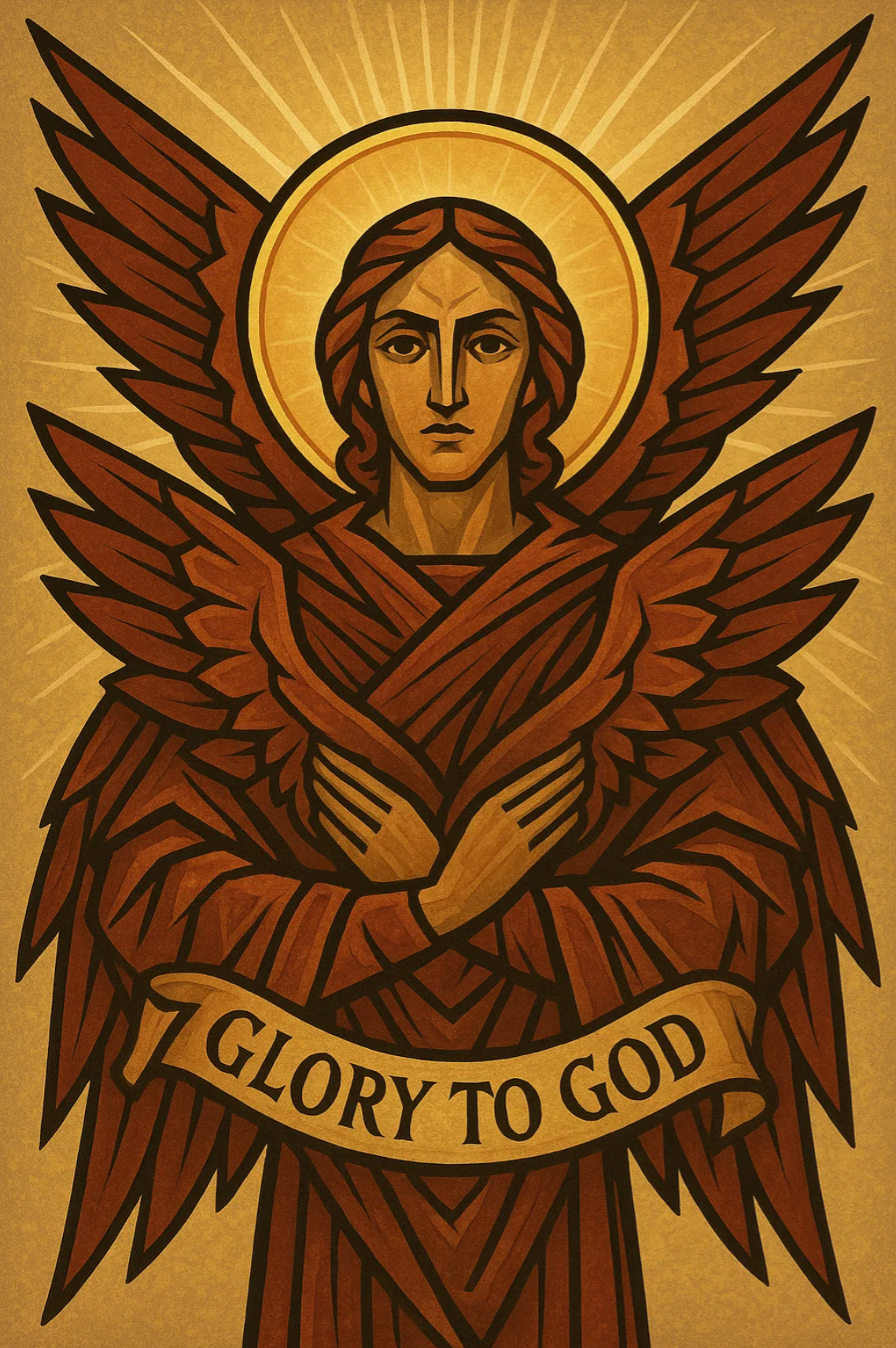
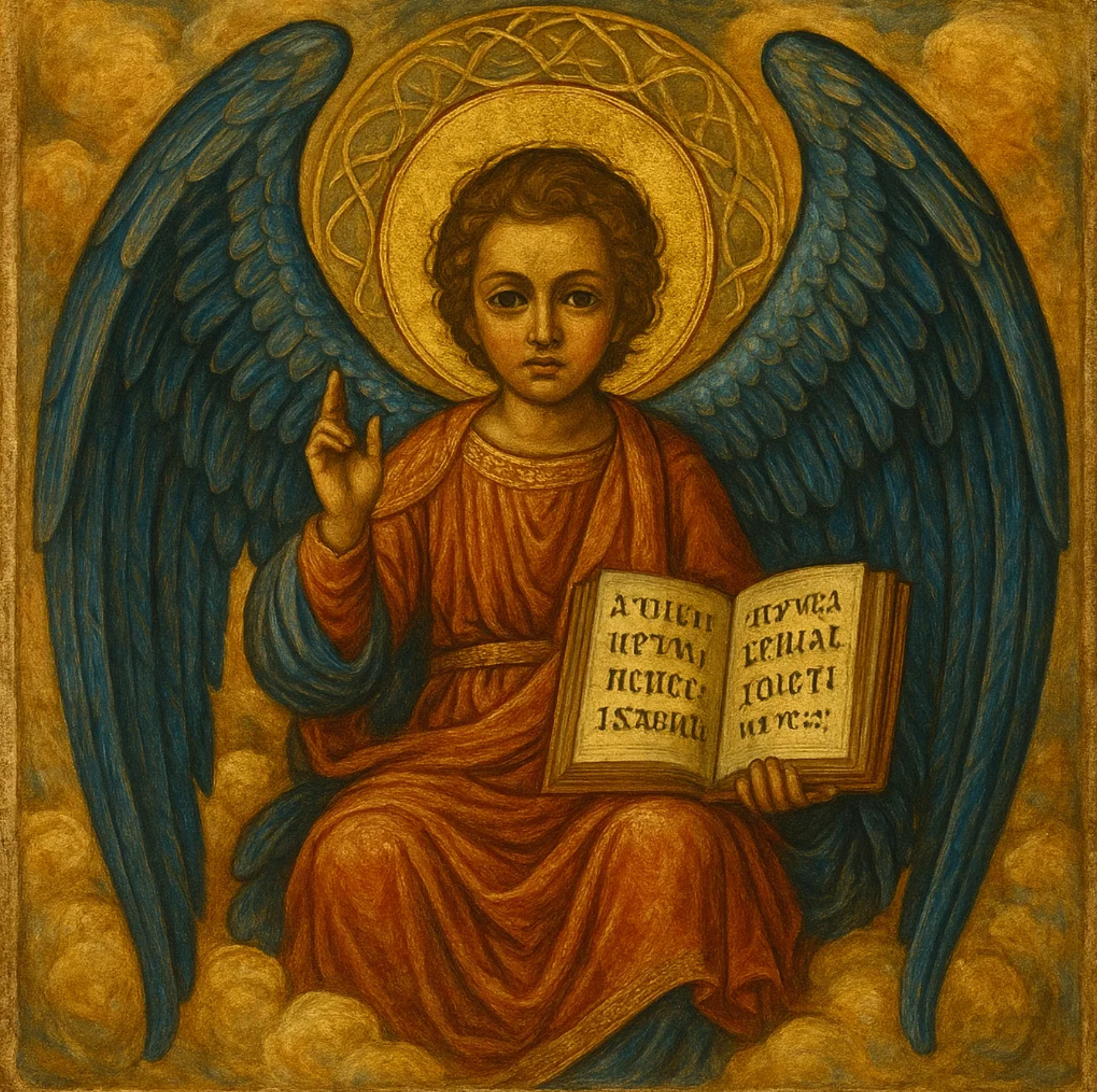
Cherubim
Development
The ninefold structure developed through a blend of Scripture, Jewish tradition, and early Christian philosophy. Sequence is key:
1. Scriptural Basis
- The Bible never lists nine choirs in one place.
- References are scattered:
- Seraphim – Isaiah 6:2–6.
- Cherubim – Genesis 3:24, Ezekiel 10.
- Thrones, Dominions, Powers, Principalities – Colossians 1:16.
- Archangels – 1 Thessalonians 4:16; Jude 1:9.
- Angels (general) – throughout Scripture.
- These terms suggested a multi-layered celestial order, but without a clear framework.
2. Jewish and Hellenistic Influence
- Jewish apocrypha (e.g., 1 Enoch) described layers of angelic beings with names and duties.
- Hellenistic philosophy (especially Neoplatonism) emphasized hierarchies of being—descending from the One down to material reality.
- Early Christian thinkers absorbed this: angels as intermediaries between God and creation.
3. Pseudo-Dionysius (5th–6th c.)
- Wrote Celestial Hierarchy.
- Systematized scattered biblical names into three triads of three (9 total).
- His logic:
- First triad contemplates God directly (Seraphim, Cherubim, Thrones).
- Second triad mediates divine governance (Dominions, Virtues, Powers).
- Third triad applies divine order to creation and humans (Principalities, Archangels, Angels).
- Influenced by Proclus’ triadic structures in Neoplatonism (everything flows: One → Mind → Soul).
4. Thomas Aquinas (13th c.)
- In Summa Theologica, Aquinas adopted Dionysius’ nine orders as authoritative.
- Gave them specific roles tied to Scripture and Catholic theology.
- Framed angels as pure intellects, with “choirs” ranked by how directly they receive illumination from God.
5. Scholastic Consolidation
- By the Middle Ages, this ninefold hierarchy became orthodox teaching in Catholic theology.
- Artists, mystics, and preachers used it as a fixed framework.
- Dante’s Paradiso even mapped the nine angelic choirs to the nine heavens.
Summary of Development
- Scripture → Jewish Apocrypha → Neoplatonic Philosophy → Pseudo-Dionysius → Scholastic Theology.
- Each stage added structure until the ninefold order was cemented as standard.