Source page: McKinsey & Company
Commentary
A byte out of crime
Financial services | Cybersecurity
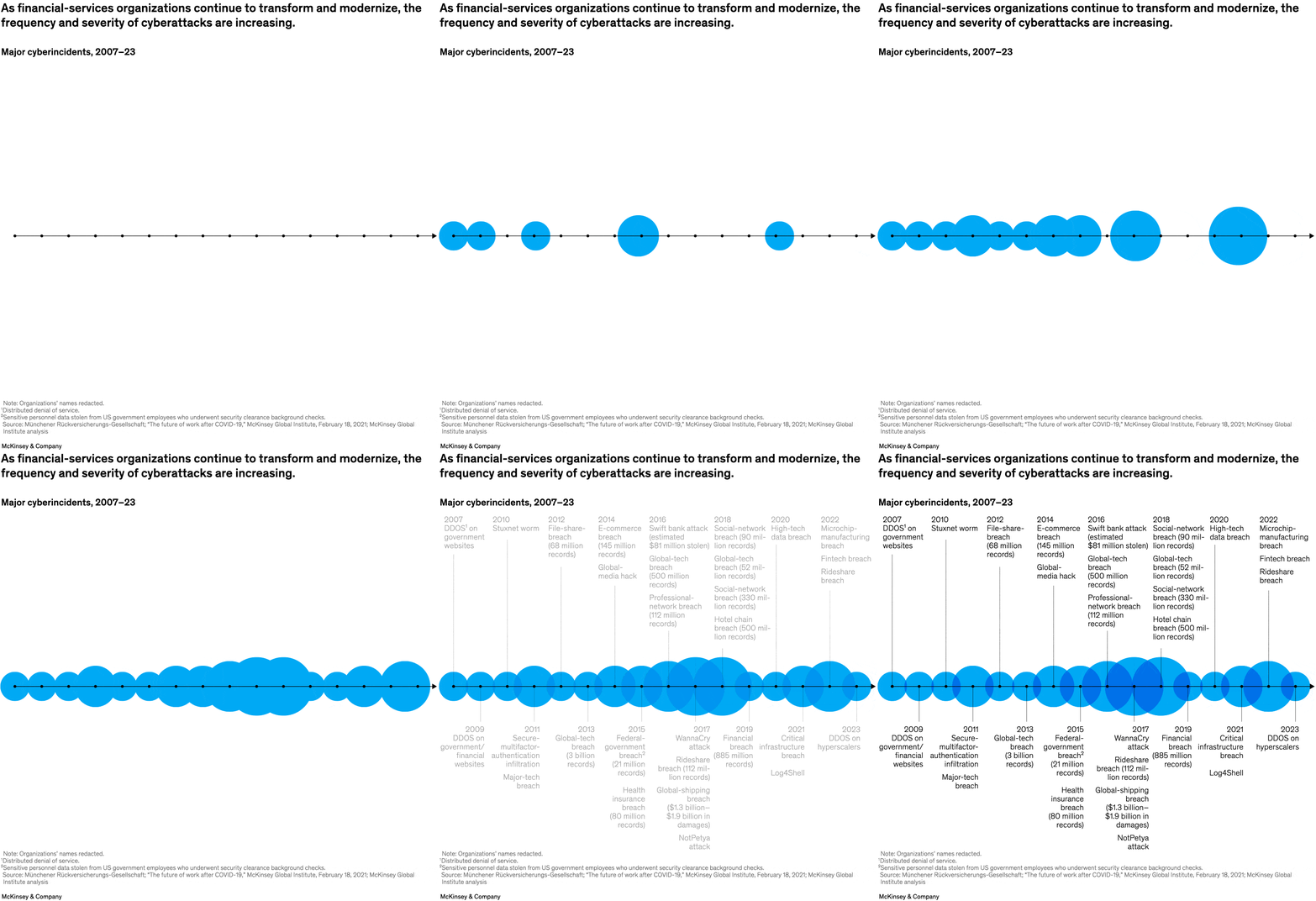
April 16, 2024 – Financial-services companies, already familiar with managing cyber risk, may want to step up their vigilance: the frequency and severity of cyberincidents are on the rise, partner Justin Greis and colleagues note. And while companies introduce more technologies into their organizations, cyber criminals have become more sophisticated, using emerging technologies such as generative AI to carry out their attacks.
To read the report, see “The cyber clock is ticking: Derisking emerging technologies in financial services,” March 11, 2024.
customizer here
Visual form
Bubble chart.
Layout / body structure
The page uses a single horizontal timeline with major cyber incidents plotted across years from left to right. The reading order follows the line chronologically and then moves up and down into the labels attached to each bubble.
What is being compared
It compares major cyber incidents over time, showing both the timing of attacks and the relative scale or severity of each event.
Measurement system
Time runs along the horizontal axis by year, and bubble size encodes the scale of the incident. The labels identify the breached organization and the size of the compromise, often in millions or billions of records or dollars.
Visible structure inside the graphic
A chain of blue circles sits on a single timeline, with small and large bubbles alternating across the sequence. Text annotations extend above and below the line to name events such as major government, healthcare, financial, and technology breaches.
Main takeaway from the visual
The chart shows that cyberattacks in financial services and adjacent sectors have become both more frequent and more severe over time, with especially large incidents clustering in the later years of the chart.
Key standout values or extremes
The biggest bubbles appear in the mid-to-late portion of the timeline where some events are labeled in the billions of breached records or other very large incident totals. Earlier years contain smaller circles and fewer outsized events by comparison.
Controls / sequence, when applicable
This is a static chart image with no in-chart controls to operate.
Companion media, when applicable
There is no separate companion audio or video; the chart image is the full visual on this page.