Source page: McKinsey & Company
Commentary
A defensive transition
Defense | Economy
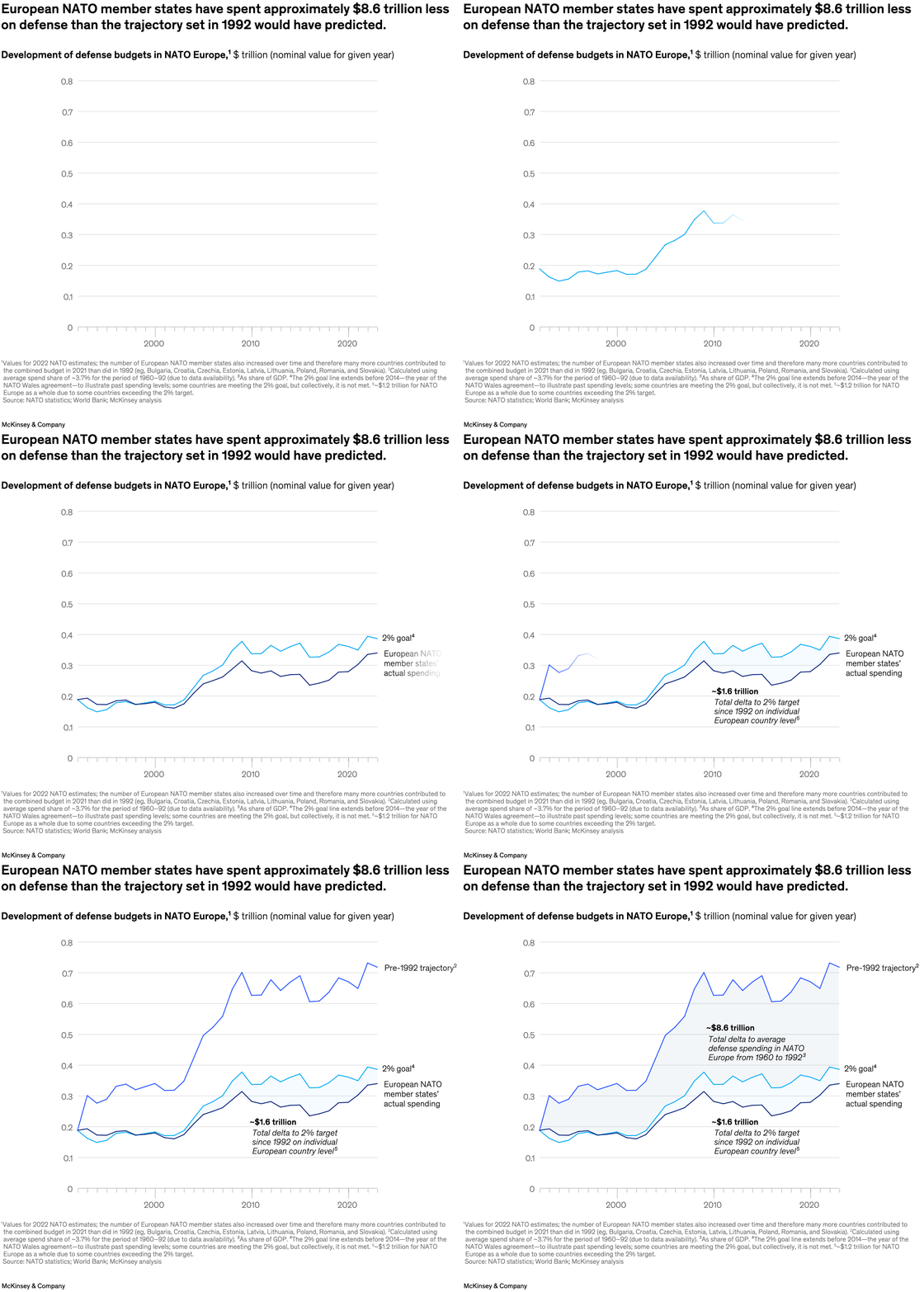
April 3, 2024 – European countries are rebuilding their defense capabilities in response to geopolitical tensions after three decades of reduced military spending. During the past 30 years, European NATO countries spent $1.6 trillion less than they would have had they met the 2 percent of GDP target stipulated by the alliance, senior partner David Chinn and coauthors find. Had spending continued on the trajectory it followed until 1992, European NATO states would have contributed an estimated $8.6 trillion more to defense budgets.
To read the article, see “Innovation and efficiency: Increasing Europe’s defense capabilities,” February 28, 2024.
customizer here
Visual form
Line chart.
Layout / body structure
This is a single time-series chart with three lines moving from the 1990s to the early 2020s. The reading order runs left to right across time and then into the callouts attached to the lines near the right side of the plot.
What is being compared
It compares the development of defense budgets in NATO Europe against a pre-1992 trajectory and a 2 percent spending target path.
Measurement system
The y-axis is defense budgets in trillions of dollars at nominal value for a given year, and the x-axis is calendar time. Separate line colors distinguish the pre-1992 trajectory, the 2 percent target line, and the actual European NATO spending line.
Visible structure inside the graphic
Three lines track together in the 1990s and then diverge sharply. The top line rises to the highest path, while the actual spending line stays much lower, and text callouts quantify the cumulative shortfall relative to the comparison paths.
Main takeaway from the visual
The chart shows that actual European NATO defense spending fell far short of both the earlier trajectory and the 2 percent benchmark path, leaving a very large cumulative gap over time.
Key standout values or extremes
The callout marks about an $8.6 trillion shortfall versus the pre-1992 trajectory and about a $1.6 trillion shortfall versus the 2 percent target path, with the actual-spending line ending well below the highest benchmark line by the right edge of the chart.
Controls / sequence, when applicable
This is a static chart image with no in-chart controls to operate.
Companion media, when applicable
There is no separate companion audio or video; the chart image is the full visual on this page.