Source page: McKinsey & Company
Commentary
A new funding stream
North America | Public Sector
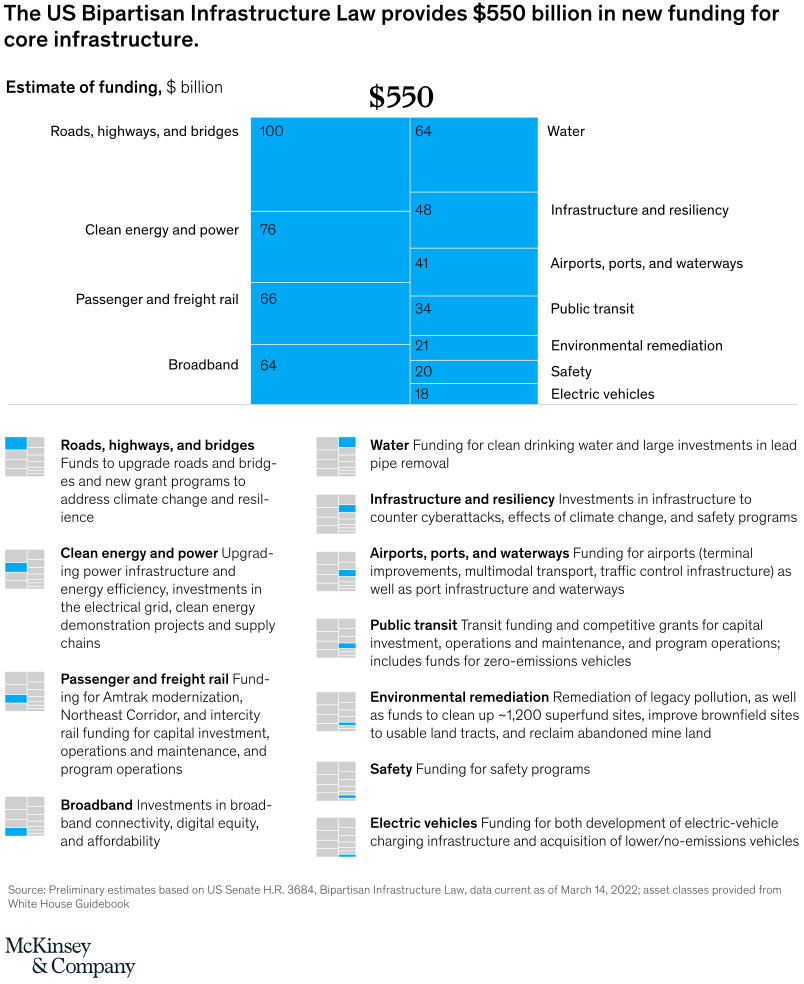
April 12, 2022 – The Bipartisan Infrastructure Law (BIL) provides $550 billion in new funding to rebuild core infrastructure in the US. While $100 billion is allotted to fixing roads, highways, and bridges, a historic amount of funding will be devoted to providing greater access to clean water and the removal of lead pipes.
To read the article, see “Here comes the 21st century’s first big investment wave. Is your capital strategy ready?,” March 18, 2022.
customizer here
Visual form
Funding-allocation block chart with descriptive category panels.
Layout / body structure
The chart is split into a large funding-allocation block at the top and a two-column explanation section below. Read the top allocation block first to see how the 550 billion dollars is divided, then use the lower text panels to match each funding box to the type of infrastructure spending it supports.
What is being compared
The chart compares the major categories of new funding in the US Bipartisan Infrastructure Law. It compares roads, highways, and bridges; clean energy and power; passenger and freight rail; broadband; water; infrastructure and resiliency; airports, ports, and waterways; public transit; environmental remediation; safety; and electric vehicles.
Measurement system
The top block measures funding in billions of dollars, with one large rectangle subdivided into category boxes labeled directly with their dollar amounts. The lower section is descriptive rather than quantitative, explaining what kinds of projects sit inside each funding category.
Visible structure inside the graphic
The top allocation block uses a treemap-like layout with the biggest categories on the left and a stacked column of smaller categories on the right. The bottom half repeats a small icon and bold label for each category with a prose description, turning the page into a quantitative allocation view followed by a narrative legend.
Main takeaway from the visual
The largest share of the new funding goes to transportation and energy-related backbone systems, with roads, clean energy and power, rail, broadband, and water occupying the most area in the top block. The smaller categories remain meaningful but are visually secondary to the dominant infrastructure cores.
Key standout values or extremes
The total new funding is 550 billion dollars. Roads, highways, and bridges is the largest category at 100 billion, followed by clean energy and power at 76, passenger and freight rail at 66, broadband at 64, and water at 64; the remaining categories are infrastructure and resiliency at 48, airports, ports, and waterways at 41, public transit at 34, environmental remediation at 21, safety at 20, and electric vehicles at 18.
Controls / sequence, when applicable
This is a static chart image with no in-chart controls to operate.
Companion media, when applicable
There is no separate companion audio or video; the chart image is the full visual on this page.