Source page: McKinsey & Company
Commentary
A taste of easing inflation?
Economy | Food | Inflation
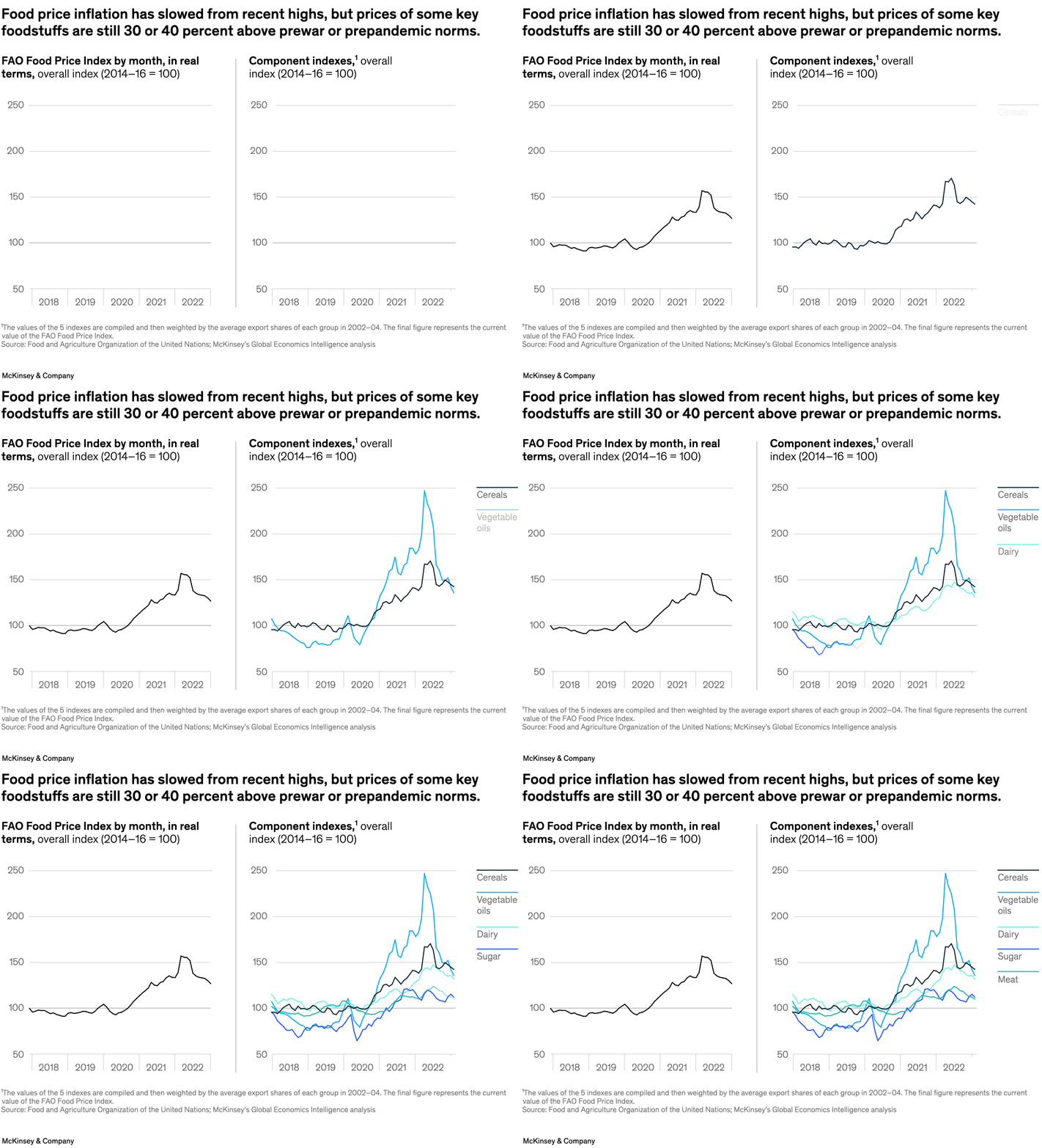
March 28, 2023 – Sticker shock at the grocery store could be letting up. According to chair of insights and ecosystems and chair of McKinsey Global Institute Sven Smit and colleagues, food price inflation has slowed. However, prices of food items in some regions remain as much as 30 or 40 percent above prepandemic norms.
To read the article, see “Global Economics Intelligence executive summary, February 2023,” March 16, 2023.
customizer here
Visual form
Two-panel line chart.
Layout / body structure
The page is arranged as a left-to-right pair of time-series charts. The left panel shows the overall food price index, and the right panel breaks the story into individual component indices for major food groups.
What is being compared
It compares the overall FAO food price index with the component paths for cereals, vegetable oils, dairy, sugar, and meat over the same monthly period.
Measurement system
Both panels use real index values with 2014 – 16 set to 100, so the reader is tracking how far prices moved above their pre-shock baseline and how much they retreated afterward.
Visible structure inside the graphic
The left chart uses a single dark line for the overall index, while the right chart uses five colored lines keyed by a legend. The overall series climbs through 2021 and early 2022 before easing, and the component chart shows a much more volatile spike for vegetable oils than for the other categories.
Main takeaway from the visual
The overall food price index has come down from its peak, but the component panel shows that several categories remain elevated relative to the baseline, so the easing is partial rather than a full return to earlier price levels.
Key standout values or extremes
The overall index rises from around 100 to a peak above 150 before easing back to the low 130s. In the component panel, vegetable oils spike the highest at roughly 250, while cereals, dairy, sugar, and meat all remain above the 100 baseline even after the peak passes.
Controls / sequence, when applicable
This is a static chart image with no in-chart controls to operate.
Companion media, when applicable
There is no separate companion audio or video; the chart image is the full visual on this page.