Source page: McKinsey & Company
Commentary
An electric power play
Decarbonization | Electric power and natural gas | Sustainability
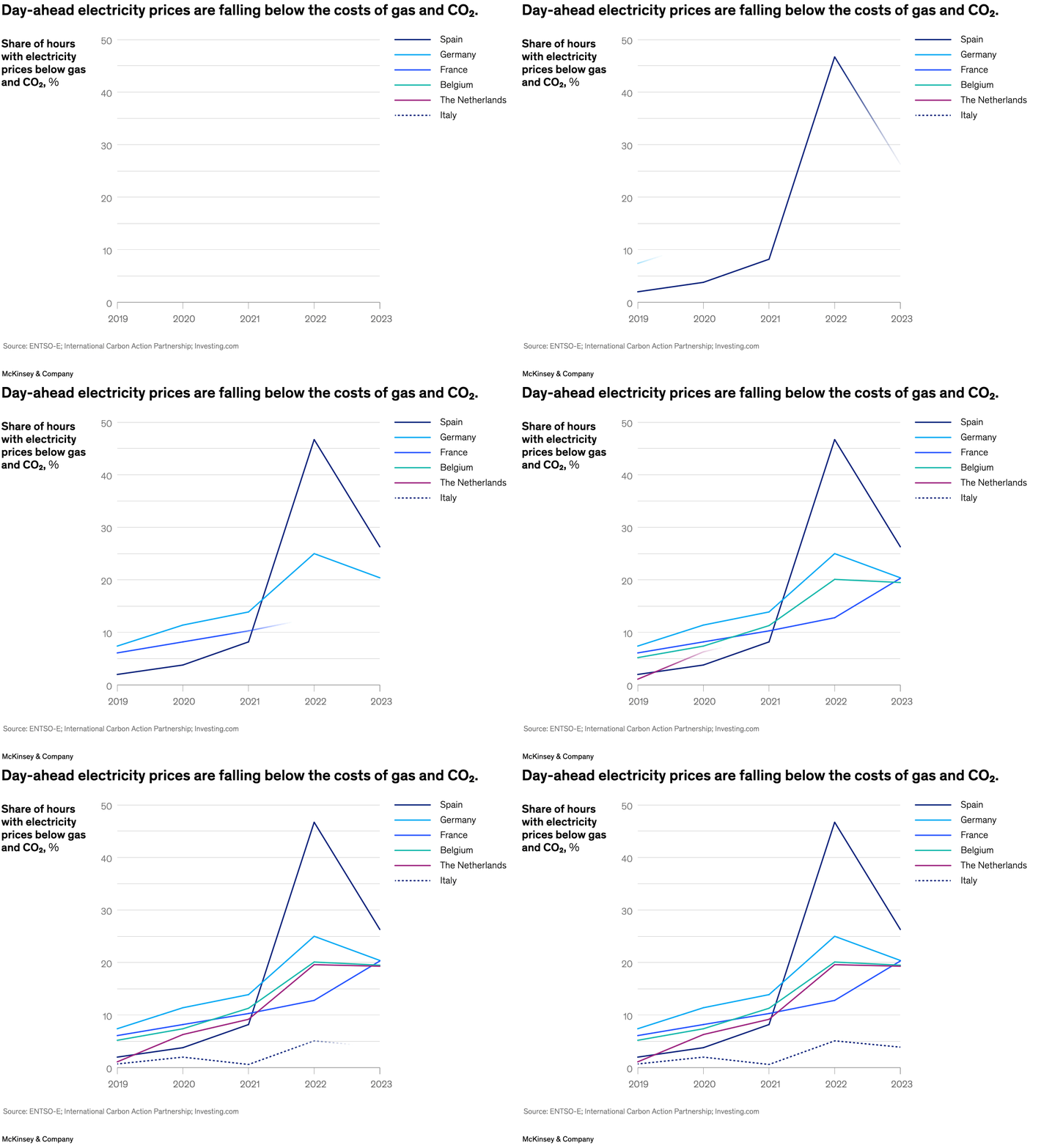
August 1, 2024 – In many European countries (where industry must pay for CO2 emissions), the price of electricity is falling below the costs of gas and of CO2 emissions, making it increasingly feasible to electrify industrial heat processes. Partner Joris van Niel and colleagues observe that electricity is cheaper than fossil fuels for a growing share of hours in countries such as France, Germany, and Spain. Electrifying industrial heat could significantly reduce greenhouse gas emissions, while also leading to cost savings for businesses.
To read the article, see “Net-zero electrical heat: A turning point in feasibility,” July 16, 2024.
customizer here
Visual form
Multi-country line chart.
Layout / body structure
The chart is a single time-series panel read left to right from 2019 to 2023, with a legend on the right identifying six country lines and the same percentage scale shared across them all.
What is being compared
It compares the share of hours in which day-ahead electricity prices fell below the combined costs of gas and CO2 across Spain, Germany, France, Belgium, the Netherlands, and Italy.
Measurement system
The vertical axis is a percentage share of hours, the horizontal axis is calendar year, and each colored line represents one country on the same scale.
Visible structure inside the graphic
Five solid lines and one dotted line move across the panel, with Spain’s dark line making the sharpest upward jump in 2022, Germany and France sitting in the middle tier, Belgium and the Netherlands clustering close together, and Italy remaining the low dotted outlier.
Main takeaway from the visual
The chart shows that this pricing dynamic becomes much more common in several European markets by 2022 and 2023, with Spain far ahead of the rest and Italy barely participating relative to peers.
Key standout values or extremes
Spain surges to roughly 47 percent in 2022 before easing to about 26 percent in 2023, Germany reaches about 25 percent in 2022, France climbs to about 20 percent by 2023, Belgium and the Netherlands both hover around 20 percent in 2022 and 2023, and Italy stays near the bottom around 5 percent or less.
Controls / sequence, when applicable
This is a static chart image with no in-chart controls to operate.
Companion media, when applicable
There is no separate companion audio or video; the chart image is the full visual on this page.