Source page: McKinsey & Company
Commentary
As COVID-19 lockdowns end, European cities need to rethink commuting patterns
COVID-19 | Travel & Transportation | Europe
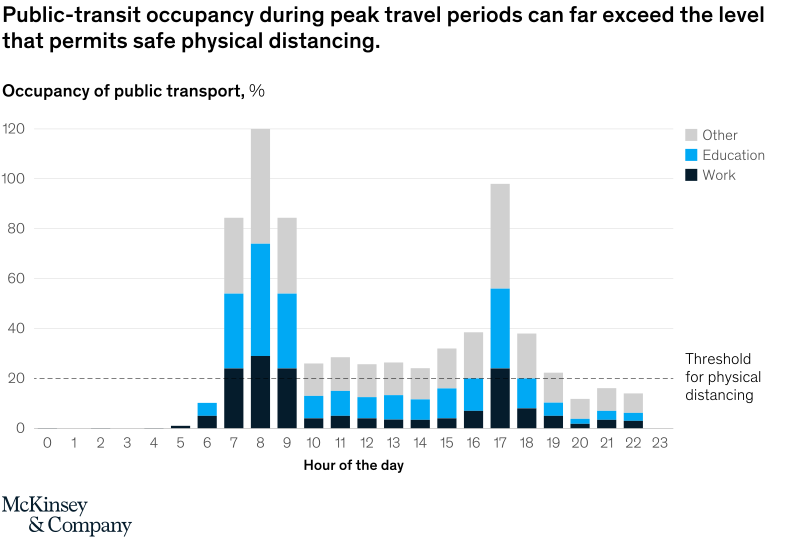
June 16, 2020 – Under normal circumstances, up to five times more people ride buses and trains during the morning rush hour than at midday. To enable physical distancing, cities are exploring ways to stagger ridership, including adjusting start times for schools and public offices.
To read the article, see “Restoring public transit amid COVID-19: What European cities can learn from one another,” June 5, 2020.
customizer here
Visual form
Stacked hourly occupancy bar chart for public transit.
Layout / body structure
The horizontal axis runs from hour 0 through hour 23. Each bar stacks work, education, and other travel, and a dashed horizontal line marks the threshold for physical distancing.
What is being compared
It compares public-transit occupancy by hour of day and trip purpose, showing when peak commuting loads exceed distancing capacity.
Measurement system
The vertical axis is occupancy of public transport in percent. The dashed threshold is placed at about 20 percent occupancy.
Visible structure inside the graphic
Morning and evening peak bars rise far above the distancing threshold, especially around hours 7 to 9 and 17. Midday and late-evening bars are lower but still vary by purpose mix.
Main takeaway from the visual
European cities needed to rethink commuting patterns because ordinary peak travel periods could far exceed the occupancy level compatible with safe physical distancing.
Key standout values or extremes
The morning peak reaches about 120 percent occupancy around hour 8, and the evening peak rises close to 100 percent around hour 17, both far above the 20 percent threshold.
Controls / sequence, when applicable
This is a static chart image with no in-chart controls to operate.
Companion media, when applicable
There is no separate companion audio or video; the chart image is the full visual on this page.