Source page: McKinsey & Company
Commentary
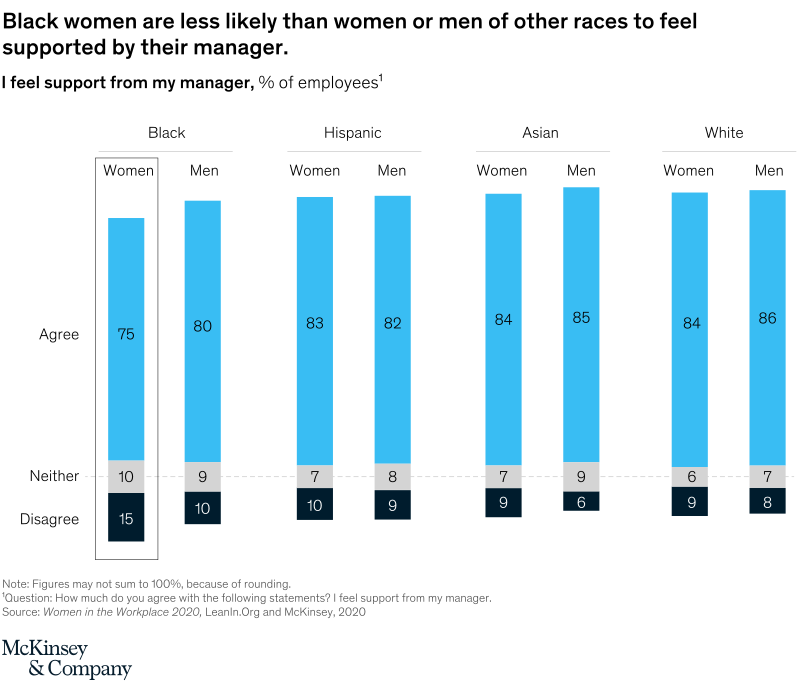
Black women are less likely to feel their managers support them at work
Inequality | Diversity & Inclusion
October 15, 2020 – As a result, Black women are also less likely than men or women of other races to report that they have equal opportunity for advancement.
To read the article, see “Women in the Workplace 2020,” September 30, 2020.
customizer here
Visual form
Bar Chart: workplace-support survey comparison for Black women versus other employee groups.
Layout / body structure
The visual is organized by support behavior or workplace perception. Each row or category compares Black women with broader employee groups rather than following a time sequence.
What is being compared
It compares how supported Black women feel at work against other women, men, or White colleagues across manager check-ins, inclusive culture, allyship, workload support, and advancement opportunity.
Measurement system
The measure is survey share or percentage reporting that a support behavior happened or that a workplace condition is present.
Visible structure inside the graphic
The comparison repeats across several support dimensions, showing Black women below comparison groups on multiple measures rather than on one isolated question.
Main takeaway from the visual
The chart shows a broad support deficit for Black women at work, spanning manager behavior, team climate, and advancement conditions.
Key standout values or extremes
The source page’s clearest anchor is that fewer than one in three Black women say their manager checked in on them after recent racial violence or fostered an inclusive team culture.
Controls / sequence, when applicable
This is a static survey-comparison bar chart; there are no in-chart controls to operate.
Companion media, when applicable
There is no separate companion audio or video; the workplace-support comparison chart is the full visual on this page.