Source page: McKinsey & Company
Commentary
Bolstering the energy talent pipeline
Jobs | Oil & Gas
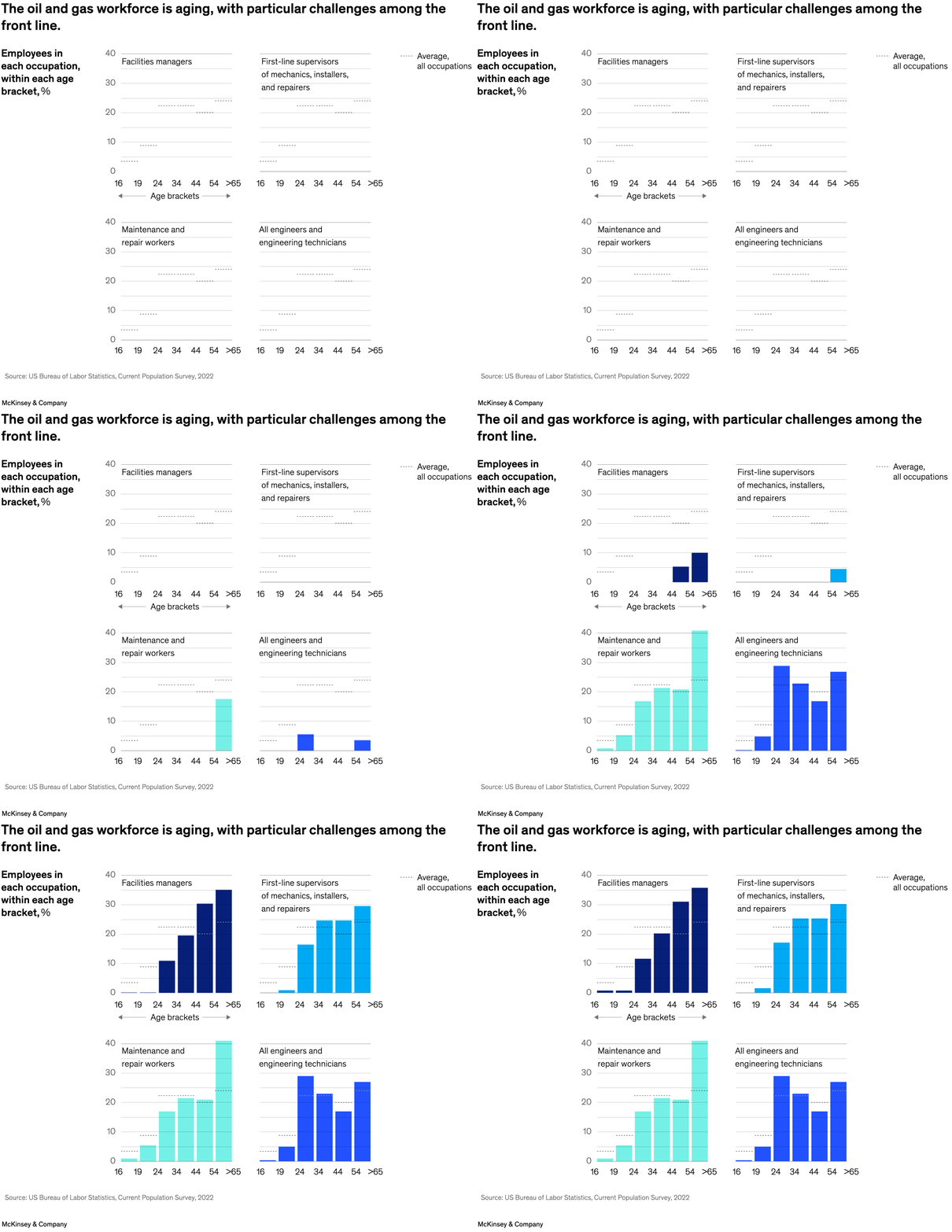
March 15, 2024 – The competition for talent is heating up in the oil and gas industry, especially as new energy businesses and workforce demographics contribute to a potential talent crunch. Partner Christopher Handscomb and coauthor find that more than a fourth of employees at US oil and gas companies are nearing retirement age, and many of these workers are frontline employees. The industry may need to think creatively about boosting the recruitment pipeline in the coming decade to help meet demands for talent.
To read the report, see “The State of Energy Organizations 2024,” January 25, 2024.
customizer here
Visual form
Multi-panel bar chart.
Layout / body structure
The chart is arranged as four small panels, each showing age distribution for a different occupation group. The reading order is left to right across the top row and then left to right across the bottom row.
What is being compared
It compares the age structure of the oil and gas workforce across facilities managers, first-line supervisors of mechanics and installers, maintenance and repair workers, and all engineers and engineering technicians.
Measurement system
The y-axis in each panel is percentage of employees within each age bracket, and the x-axis is the age bracket itself. Each occupation group uses its own colored bar series but shares the same age-band framing.
Visible structure inside the graphic
Each panel contains a rising or uneven set of vertical bars across age categories from the late teens through over 65. The oil-and-gas frontline panels lean heavily toward the older brackets, while the engineering panel has a somewhat different distribution.
Main takeaway from the visual
The chart shows that the oil and gas labor pool is aging, and the front-line occupations are especially concentrated in the older age brackets, which points to a pipeline challenge as those workers move toward retirement.
Key standout values or extremes
Facilities managers and maintenance and repair workers have some of the tallest bars in the 55-to-65 and over-65 brackets, while the youngest brackets remain very small across those same panels. The engineering panel is somewhat younger but still shows a heavy mid-to-late-career concentration.
Controls / sequence, when applicable
This is a static chart image with no in-chart controls to operate.
Companion media, when applicable
There is no separate companion audio or video; the chart image is the full visual on this page.