Source page: McKinsey & Company
Commentary
Calling on dispatch
Decarbonization | Renewable energy
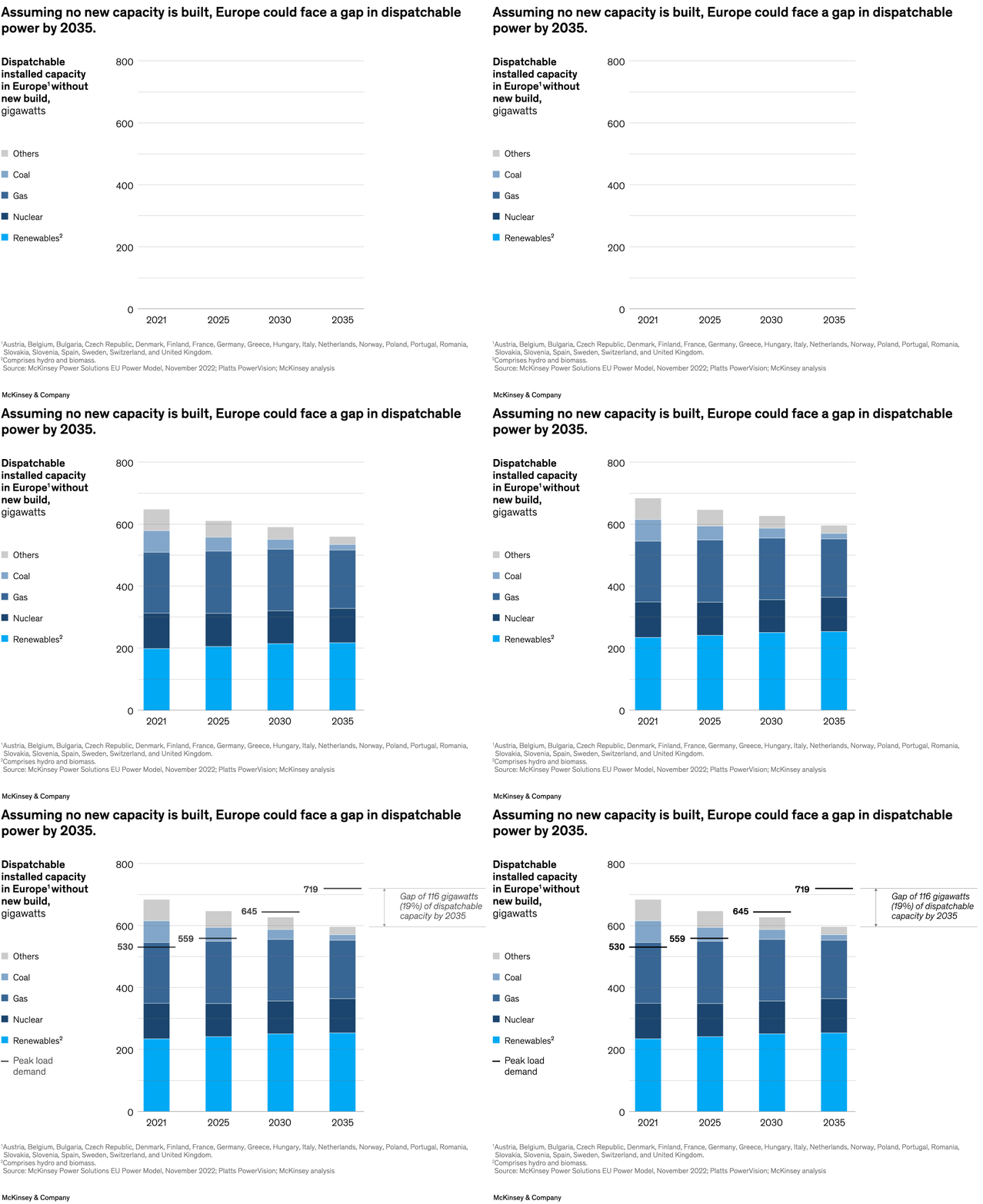
February 27, 2023 – Renewable energy sources are a critical component of Europe’s decarbonization efforts, and are expected to provide 60 percent of the continent’s energy capacity by 2030, find senior partner Alexander Weiss and colleagues. However, wind and solar are intermittent sources of power—that is, they aren’t dispatchable. Without more clean sources of dispatchable capacity (battery systems and hydrogen, for example), Europe could face a dispatchable capacity gap of 116 GW by 2035—the equivalent of 19 percent of peak-load demand.
To read the article, see “Four themes shaping the future of the stormy European power market,” January 27, 2023.
customizer here
Visual form
Stacked bar chart with demand reference lines.
Layout / body structure
The chart uses four vertical bars for 2021, 2025, 2030, and 2035, with a horizontal reference line crossing each bar to show peak load demand. Reader moves left to right through time while comparing the stack height to the demand marker.
What is being compared
It compares Europe’s dispatchable installed capacity over time by source and sets that against projected peak-load demand.
Measurement system
The vertical axis is gigawatts. The stacked bars break capacity into renewables, nuclear, gas, coal, and other sources, while the thin horizontal markers show the peak-load benchmark for each year.
Visible structure inside the graphic
Each bar is built from colored segments, with renewables forming the bright base and nuclear and gas carrying much of the middle height. Coal and other sources shrink as the sequence progresses, and the bar tops fall below the demand line by the final year.
Main takeaway from the visual
The chart shows a narrowing cushion between available dispatchable capacity and peak load over time, ending in a visible shortfall by 2035 if no new capacity is built.
Key standout values or extremes
The bar labels show 530 gigawatts in 2021, 559 in 2025, 645 in 2030, and 719 as the peak-load reference by 2035. The final annotation marks a gap of 116 gigawatts, or 19 percent of dispatchable capacity need, by 2035.
Controls / sequence, when applicable
This is a static chart image with no in-chart controls to operate.
Companion media, when applicable
There is no separate companion audio or video; the chart image is the full visual on this page.