Source page: McKinsey & Company
Commentary
Calm down: Your work and life may depend on it
Organization
February 26, 2021 – Continual, or chronic, stress can cause mood swings, reduced empathy, and impulse-control issues. It’s also associated with an increased risk of cardiovascular disease and stroke.
To read the article, see “How to turn everyday stress into ‘optimal stress’,” February 18, 2021.
customizer here
Visual form
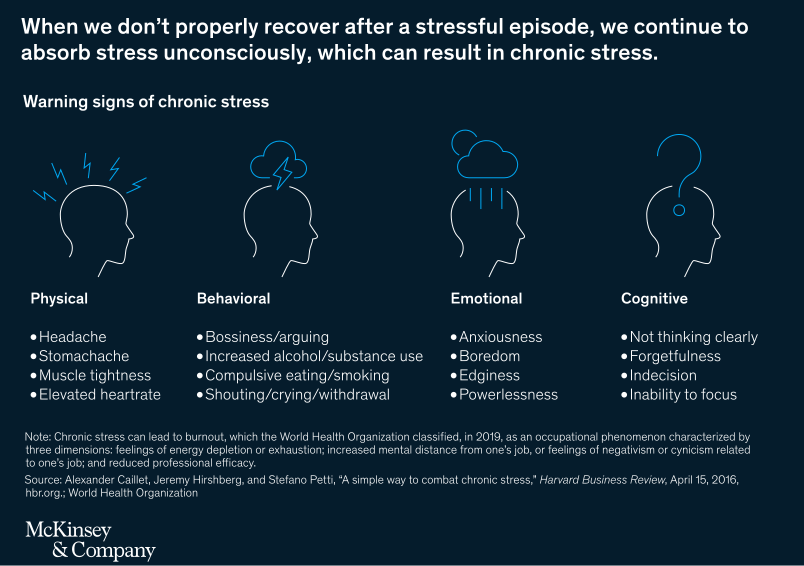
Four-column symptom infographic.
Layout / body structure
The chart is a single row of four equal columns labeled Physical, Behavioral, Emotional, and Cognitive. Reader moves left to right across the columns, using the icon above each column and the bullet list underneath to understand the symptom cluster.
What is being compared
It compares four types of warning signs associated with chronic stress: physical symptoms, behavioral responses, emotional effects, and cognitive effects.
Measurement system
This visual is categorical rather than numeric. There is no axis or scale; the comparison depends on the grouped symptom lists and the repeated column structure.
Visible structure inside the graphic
Each column uses the same anatomy: a head outline, a stress icon above it, a bold category label, and a four-item bullet list below. The repeated layout makes the categories easy to scan as parallel symptom buckets rather than as a ranked chart.
Main takeaway from the visual
Chronic stress does not show up in just one part of life. The page spreads its effects across the body, behavior, mood, and thinking, which makes the condition look broad and persistent rather than isolated to a single symptom.
Key standout values or extremes
Each category lists four concrete examples. Physical includes headache, stomachache, muscle tightness, and elevated heartrate; Behavioral includes bossiness or arguing, increased alcohol or substance use, compulsive eating or smoking, and shouting or crying or withdrawal; Emotional includes anxiousness, boredom, edginess, and powerlessness; Cognitive includes not thinking clearly, forgetfulness, indecision, and inability to focus.
Controls / sequence, when applicable
This is a static chart image with no in-chart controls to operate.
Companion media, when applicable
There is no separate companion audio or video; the chart image is the full visual on this page.