Source page: McKinsey & Company
Commentary
COVID-19 crisis could almost triple US credit-card losses
COVID-19 | Banking | North America
May 26, 2020 – Depending on how quickly the virus is contained and how long the recession lasts, retail-credit lenders need to think about how to take care of their customers.
To read the article, see “What next for US credit-card debt?,” May 13, 2020.
customizer here
Visual form
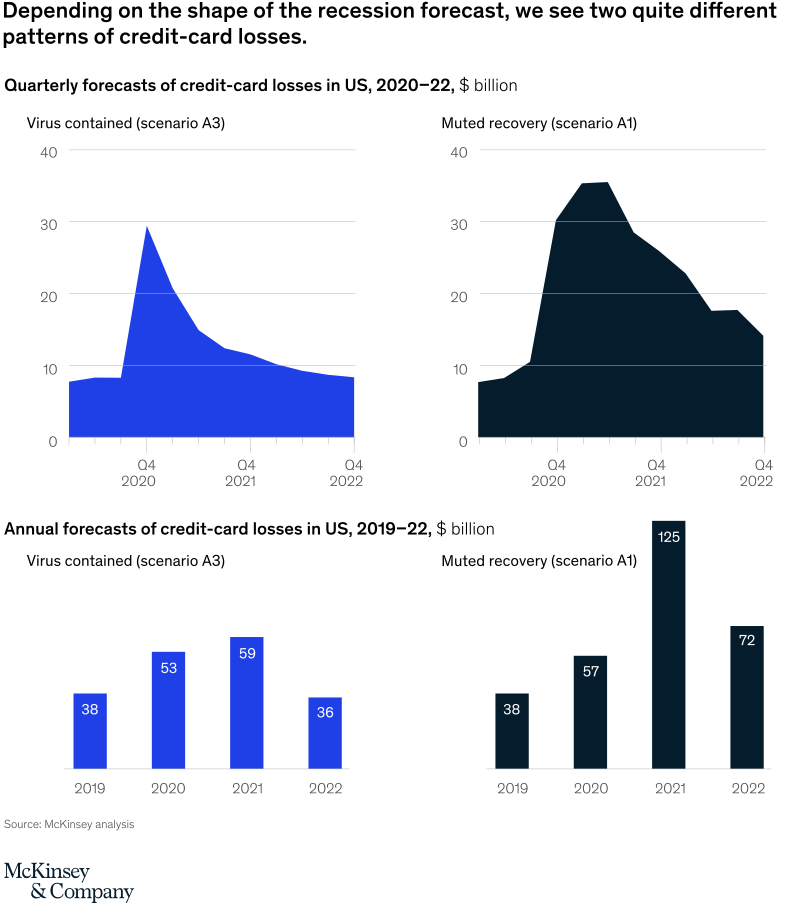
Area Chart and Bar Chart: four-panel forecast of US credit-card losses under two recovery scenarios.
Layout / body structure
The graphic uses a two-by-two layout. The left column is the virus-contained scenario, the right column is the muted-recovery scenario, the top row uses quarterly area charts, and the bottom row uses annual bar charts from 2019 through 2022.
What is being compared
It compares projected US credit-card losses under two economic-recovery paths. The quarterly area charts show timing and shape, while the annual bar charts show how the losses aggregate by year.
Measurement system
All values are measured in billions of US dollars. The top row is quarterly, and the bottom row is annual, so the reader can see both the near-term loss spike and the year-level burden.
Visible structure inside the graphic
The virus-contained scenario spikes and then eases, while the muted-recovery scenario rises higher and remains elevated longer. The annual bars translate that difference into a much larger 2021 loss under muted recovery.
Main takeaway from the visual
The recovery path matters as much as the shock itself. A contained-virus scenario produces a shorter credit-loss surge, while muted recovery turns the crisis into a longer and much more expensive credit-card-loss cycle.
Key standout values or extremes
The muted-recovery annual forecast reaches 125 billion dollars in 2021, compared with 38 billion dollars in 2019. In the virus-contained scenario, annual losses peak much lower, at about 59 billion dollars in 2021.
Controls / sequence, when applicable
This is a static set of area and bar charts; there are no in-chart controls to operate.
Companion media, when applicable
There is no separate companion audio or video; the four-panel chart is the full visual on this page.