Source page: McKinsey & Company
Commentary
Curing healthcare’s talent gap
Healthcare | Talent | Education
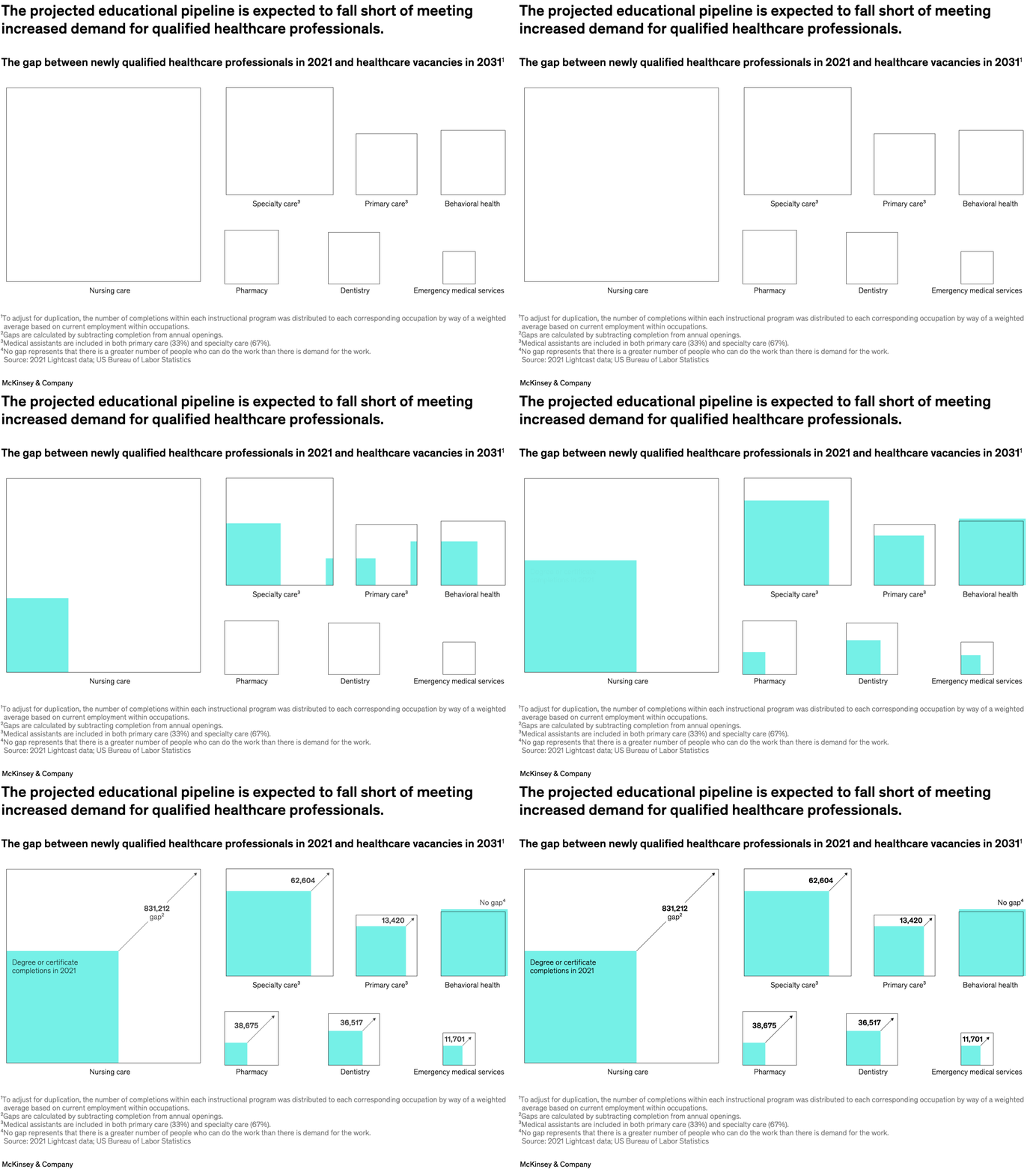
November 7, 2023 – The healthcare industry is facing a shortage of workers, as the need for nurses and others in the field is expected to rise. Boosting the educational pipeline could help address a potential talent gap, find senior partner Brandon Carrus and coauthors. For example, we project there will be one million additional nursing care jobs by 2031, which outpaces the number of those expected to complete degree programs based on current capacity.
To read the article, see “How health systems and educators can work to close the talent gap,” September 29, 2023.
customizer here
Visual form
Gap-to-demand block chart. Each profession is shown as a filled rectangle inside a larger outline, with the unfilled remainder representing the projected shortage between the educational pipeline and future vacancies.
Layout / body structure
The visual is arranged as a set of profession-specific blocks read left to right and then top to bottom. Nursing care dominates the left side as the largest panel, while specialty care, primary care, behavioral health, pharmacy, dentistry, and emergency medical services appear as smaller comparison boxes to the right and below.
What is being compared
The chart compares newly qualified healthcare professionals in 2021 with projected healthcare vacancies in 2031 across several occupational categories. It is effectively comparing future demand to current pipeline output to show where the largest talent gaps are likely to emerge.
Measurement system
The values are counts of workers or openings, printed directly in each profession box. The size of the unfilled space inside the outline shows the implied gap, while a label explicitly notes where there is no projected gap.
Visible structure inside the graphic
Each category uses the same visual grammar: a mint-colored filled block for the current educational pipeline inside a larger outlined box for 2031 need, plus a diagonal arrow and numeric gap label where there is a shortfall. Nursing care is visually overwhelming compared with the other categories, which helps anchor the scale of the problem.
Main takeaway from the visual
The healthcare pipeline is projected to fall short in most major categories, and nursing is by far the largest source of pressure. The block layout makes that visible because the nursing outline towers over the filled completion block and carries the largest printed gap on the page.
Key standout values or extremes
Nursing care shows a projected gap of 831,212. Other large shortfalls include 62,604 in specialty care, 38,675 in pharmacy, 36,517 in dentistry, 13,420 in primary care, and 11,701 in emergency medical services, while behavioral health is explicitly marked as having no gap.
Controls / sequence, when applicable
This is a static chart image with no in-chart controls to operate.
Companion media, when applicable
There is no separate companion audio or video; the chart image is the full visual on this page.