Source page: McKinsey & Company
Commentary
Distress signals
Healthcare
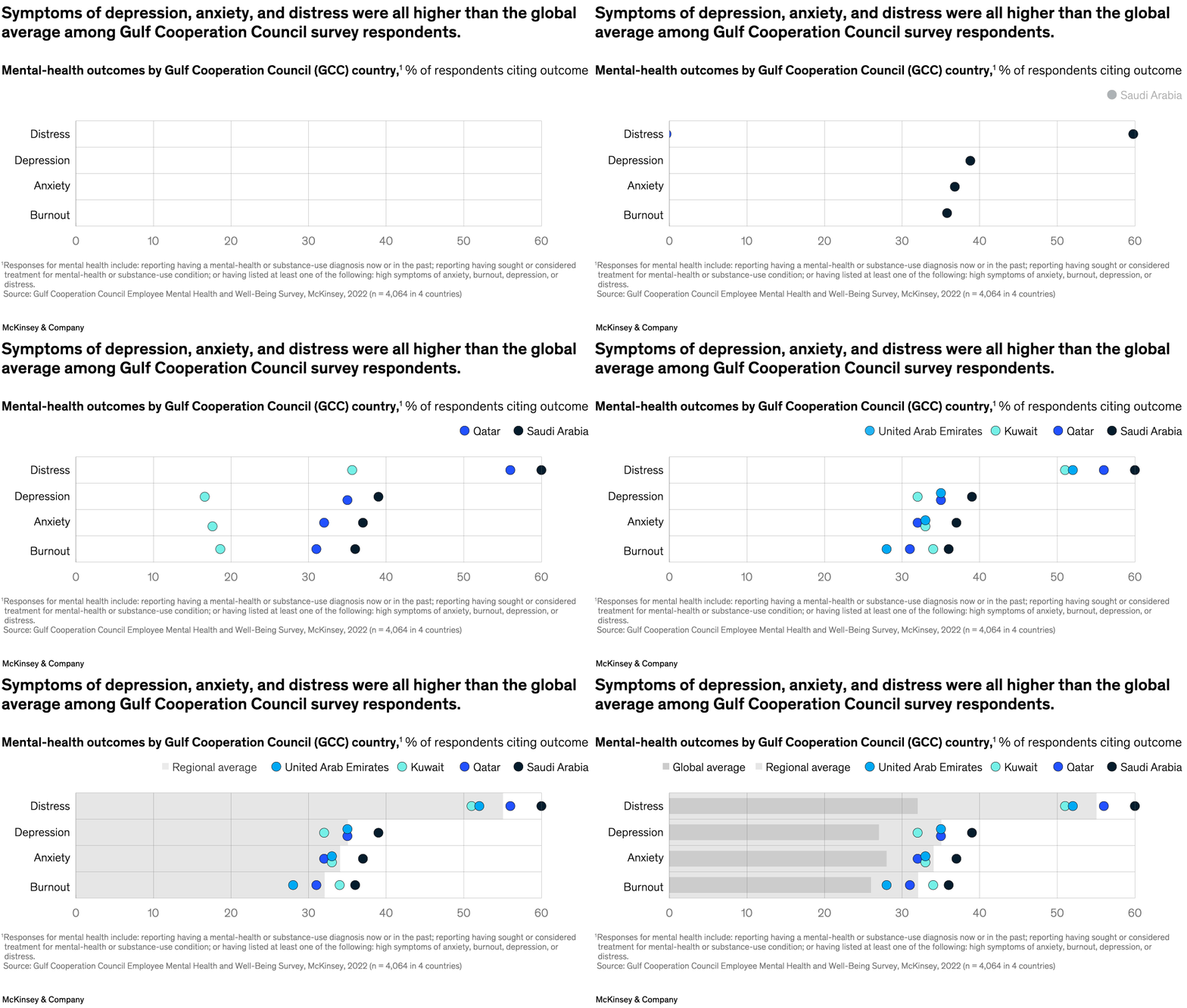
February 22, 2023 – Symptoms of burnout are higher than the global average for some living in several Middle Eastern countries, a recent McKinsey survey found. According to partner Mona Hammami and colleagues, a quarter of survey respondents indicated they suffer from anxiety and depression, and 55 percent said they experienced distress, well over the global average of 32 percent.
To read the article, see “Better health among Middle Eastern employees can start with awareness,” January 30, 2023.
customizer here
Visual form
Dot plot against benchmark bands.
Layout / body structure
The chart is organized into four horizontal rows for distress, depression, anxiety, and burnout. Each row is read left to right across a percent scale, with gray benchmark bands behind it and colored country dots overlaid on top.
What is being compared
It compares mental-health outcomes in Kuwait, Qatar, Saudi Arabia, and the United Arab Emirates against both regional and global averages.
Measurement system
The values are percentages of respondents citing each outcome, and the reader tracks each country’s dot position relative to the lighter regional-average band and the darker global-average band.
Visible structure inside the graphic
Every row includes two wide gray benchmark bars and four colored dots for the Gulf Cooperation Council countries. Saudi Arabia’s dots tend to sit farthest right, and the distress row contains the largest spread above the benchmark zones.
Main takeaway from the visual
All four countries sit above the global average on the chart, with the biggest separation showing up in distress. The pattern is consistent enough across the rows that the page reads as a regional elevation in mental-health strain rather than a one-metric spike.
Key standout values or extremes
Distress is highest, with all country dots above 50 percent and Saudi Arabia close to 60 percent against a global average around 32 percent. The other measures cluster in the low-to-high 30s, still above the benchmark bars, with Saudi Arabia again at or near the highest point in each category.
Controls / sequence, when applicable
This is a static chart image with no in-chart controls to operate.
Companion media, when applicable
There is no separate companion audio or video; the chart image is the full visual on this page.