Source page: McKinsey & Company
Commentary
Elements of success
Organization | Strategy
October 26, 2023 – Change is inevitable, but not all companies achieve successful transformations. In a recent McKinsey Global Survey on transformations, partner Rajesh Krishnan and coauthors note that organizations implementing four broad elements—rigor, scope, skill, and will—are likelier to outperform peers whose transformations included just one of those elements: at 39 percent, compared with 16 percent.
To read the article, see “How to gain and sustain a competitive edge through transformation,” October 16, 2023.
customizer here
Visual form
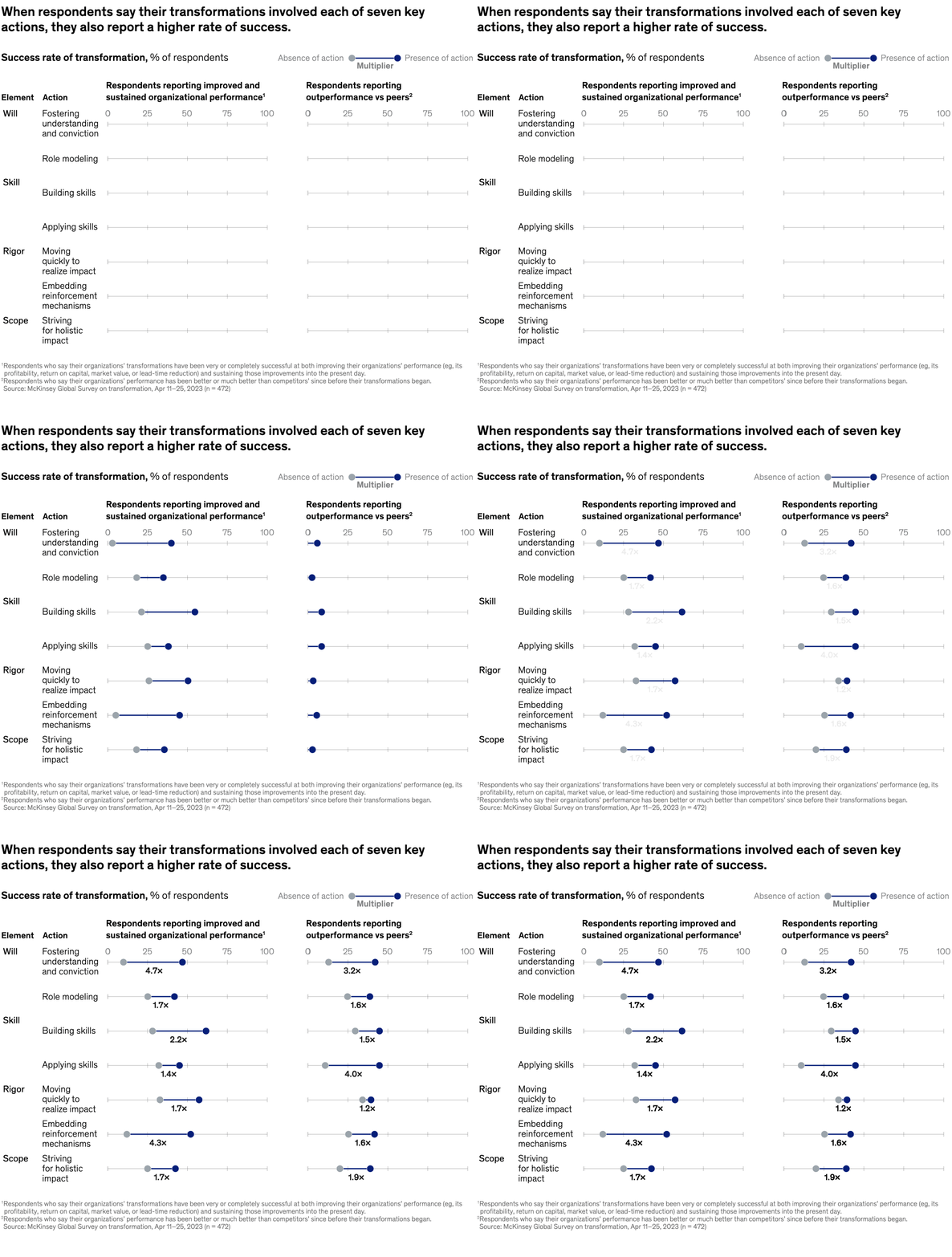
Two-panel comparison table built from row-by-row scale comparisons. It behaves like a structured scorecard more than a conventional bar chart.
Layout / body structure
The chart is laid out in two vertical columns: one for respondents reporting improved and sustained organizational performance and one for respondents reporting outperformance versus peers. Within those two columns, the rows are grouped under the transformation elements will, skill, rigor, and scope.
What is being compared
It compares transformation success when seven specific actions are present versus absent, and it does that across two outcome measures at the same time.
Measurement system
Both panels use percent-of-respondents scales running from 0 to 100. The legend distinguishes absence of action from presence of action and also flags the multiplier effect between the two conditions.
Visible structure inside the graphic
Each action gets its own row, the element labels anchor the groups on the left, and the two side-by-side panels let the viewer compare internal performance improvement against peer outperformance. The repeated row structure makes it easy to scan whether the presence-of-action mark lands farther to the right than the absence mark.
Main takeaway from the visual
The chart shows that success rises when these actions are actually in place, and it does so across both definitions of transformation success. The point is not one isolated best practice; it is the repeated gap between absent and present action across the full checklist.
Key standout values or extremes
The standout feature is the consistent multiplier pattern attached to the presence-versus-absence comparison in every row. The chart’s strongest signal is that the rightward shift repeats across all seven actions rather than appearing in only one element.
Controls / sequence, when applicable
This is a static chart image with no in-chart controls to operate.
Companion media, when applicable
There is no separate companion audio or video; the chart image is the full visual on this page.