Source page: McKinsey & Company
Commentary
Gen AI flips the script?
Artificial Intelligence | Jobs | Digital
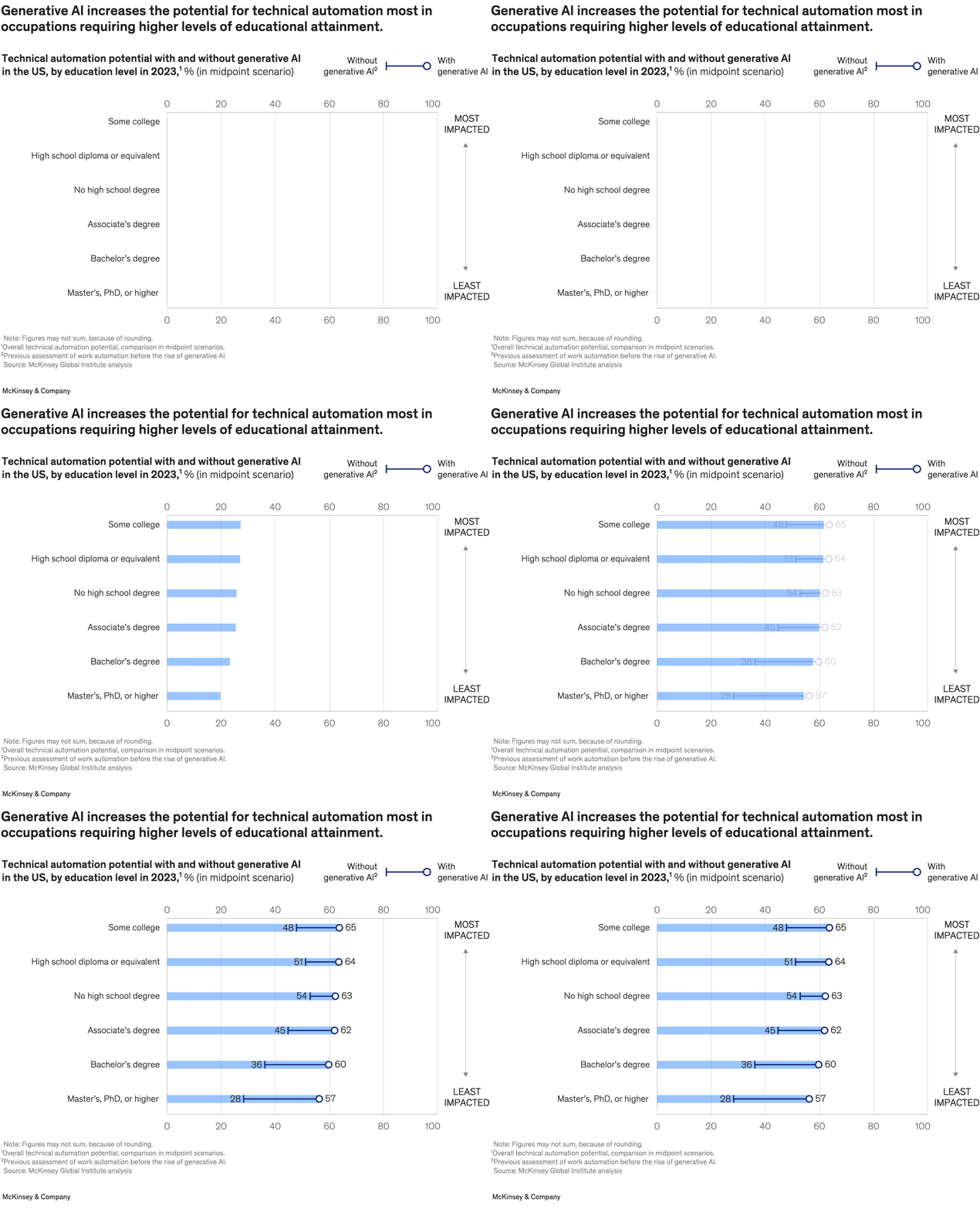
September 5, 2023 – Automation technologies tend to most directly affect workers with lower levels of educational attainment. Generative AI, however, is aimed a bit higher, senior partner Rodney Zemmel and colleagues explain. Activities performed by workers with higher education levels—such as bachelor’s degrees or PhDs—have greater potential to be carried out by generative AI than tasks performed by workers without a college degree.
To read the report, see “The economic potential of generative AI: The next productivity frontier,” June 14, 2023.
customizer here
Visual form
Two-series horizontal comparison chart. It compares technical automation potential with and without generative AI across education levels.
Layout / body structure
The chart runs top to bottom by educational-attainment category, with paired markers or bars for each row. Reader compares the two series within each education level and then scans down the full ladder from no high school degree to master’s, PhD, or higher.
What is being compared
It compares technical automation potential in the US by education level in 2023 under two scenarios: previous automation estimates and the higher potential that includes generative AI.
Measurement system
The horizontal axis is percent automation potential in a midpoint scenario. The two series are labeled as without generative AI and with generative AI.
Visible structure inside the graphic
Each educational-attainment group has a paired comparison on the same row, and an arrow or side label marks the progression from least impacted to most impacted. That structure makes the shift in the burden of automation visually obvious.
Main takeaway from the visual
Generative AI shifts more automation potential toward more-educated occupations rather than concentrating the effect only at lower educational levels. The row-by-row comparison shows the larger uplift in higher-attainment groups.
Key standout values or extremes
The most important visual contrast is the widening gap between the with-gen-AI and without-gen-AI series as the chart moves toward bachelor’s and graduate-level categories. The chart is built to show a relative reordering of who is most exposed, not just a uniform uplift for everyone.
Controls / sequence, when applicable
This is a static chart image with no in-chart controls to operate.
Companion media, when applicable
There is no separate companion audio or video; the chart image is the full visual on this page.