Source page: McKinsey & Company
Commentary
Have no car, will travel
Automotive | Mobility
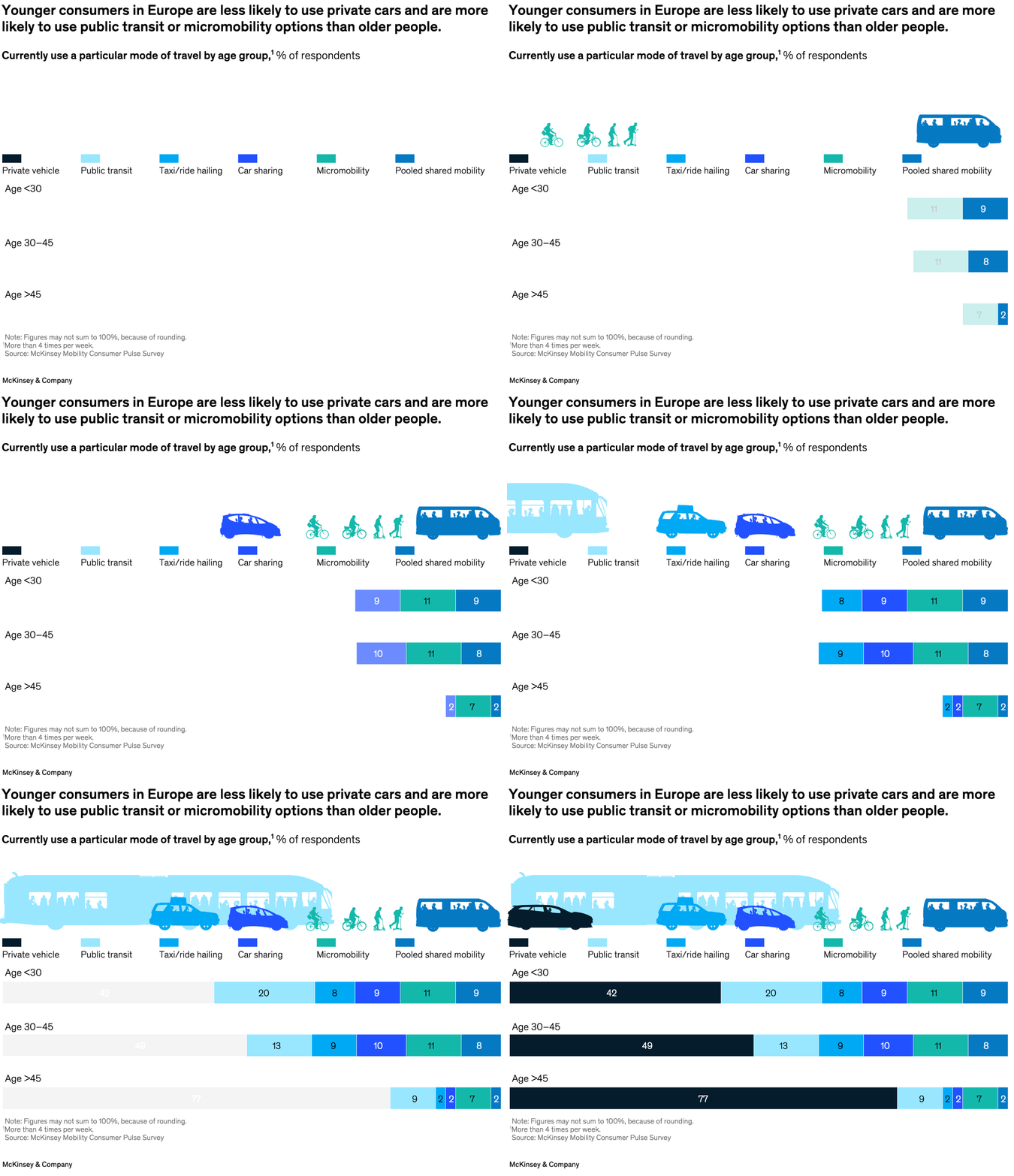
June 9, 2023 – Younger drivers in Europe have distinct mobility preferences, opting more often than older generations do for public transit and shared mobility modes over private vehicles, according to a survey by senior partner Max Flötotto and colleagues. European Gen Z consumers also indicate they plan to more frequently use sustainable-mobility modes, such as car sharing.
To read the article, see “Europe’s Gen Z and the future of mobility,” April 28, 2023.
customizer here
Visual form
Age-group mobility comparison chart.
Layout / body structure
The chart stacks age groups vertically and compares transportation modes across the same frame, with icons and color swatches identifying each mode and repeated values aligned by age band.
What is being compared
It compares how often different age groups in Europe currently use private vehicles, public transit, taxi or ride hailing, car sharing, micromobility, and pooled shared mobility.
Measurement system
The measure is percent of respondents, and the chart prints numeric values directly beside the mode entries for each age group instead of relying on a conventional axis.
Visible structure inside the graphic
Mode icons and labels span the top, age bands run down the left side, and each mode’s value appears as a separate colored block or number in the relevant row, making the cross-age contrasts readable mode by mode.
Main takeaway from the visual
The arrangement shows that younger consumers are less anchored to private-car use and appear more often in the public-transit, micromobility, and shared-mobility lanes than older cohorts.
Key standout values or extremes
In the pooled shared mobility column, the visible values step down from 9 for the under-30 group to 8 for ages 30 to 45 and 2 for the over-45 group, which makes the age gradient easy to see.
Controls / sequence, when applicable
This is a static chart image with no in-chart controls to operate.
Companion media, when applicable
There is no separate companion audio or video; the chart image is the full visual on this page.