Source page: McKinsey & Company
Commentary
LGBTQ+ workers more likely to experience microaggressions
Diversity & Inclusion | Inequality
October 27, 2022 – In a McKinsey survey, nearly one-third of surveyed LGBTQ+ employees reported experiencing a microaggression at the workplace—being interrupted or talked over, for example. This figure jumps, however, depending on the different subsets within the LGBTQ+ community, say partner Monne Williams and coauthors. For instance, LGBTQ+ women and transgender employees were more likely than gay men to report experiencing microaggressions at work.
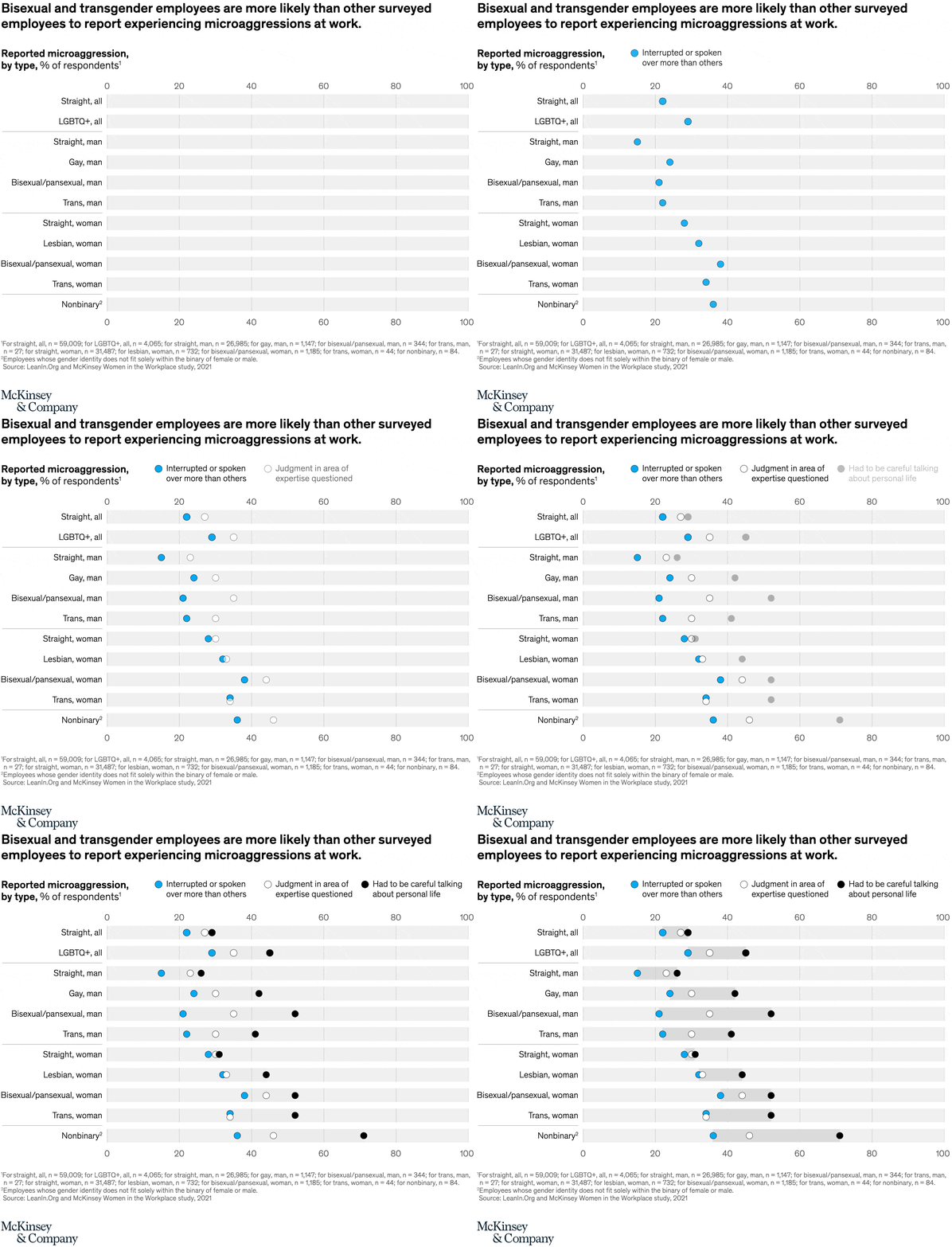
To read the article, see “Active allyship: Do your LGBTQ+ employees feel supported and included?,” June 29, 2022.
customizer here
Visual form
Survey comparison bar chart.
Layout / body structure
The chart is laid out as a set of group comparisons within the LGBTQ+ workforce, with the reader moving from the overall microaggression rate to the subgroup differences inside the community. The reading order is broad prevalence first and subgroup contrast second.
What is being compared
It compares the share of surveyed employees experiencing workplace microaggressions across different LGBTQ+ subgroups, including bisexual employees, transgender employees, LGBTQ+ women, and gay men.
Measurement system
The page uses survey percentages, so the reader is tracking the proportion of respondents in each subgroup who report experiencing workplace microaggressions.
Visible structure inside the graphic
The internal pieces are the subgroup labels and the corresponding bars or points that show their reported microaggression rates. The arrangement is built so the higher-risk subgroups stand apart from the overall average and from gay men.
Main takeaway from the visual
The page shows that workplace microaggressions are not evenly distributed across the LGBTQ+ community. Some groups experience them much more frequently, which makes the average alone misleading.
Key standout values or extremes
The source framing notes that nearly one-third of surveyed LGBTQ+ employees reported experiencing a microaggression at work. The chart then highlights bisexual and transgender employees as the groups more likely than other surveyed employees to report those experiences.
Controls / sequence, when applicable
This is a static chart image with no in-chart controls to operate.
Companion media, when applicable
There is no separate companion audio or video; the chart image is the full visual on this page.