Source page: McKinsey & Company
Commentary
Look to the trees
Sustainability | Climate change | Asia-Pacific
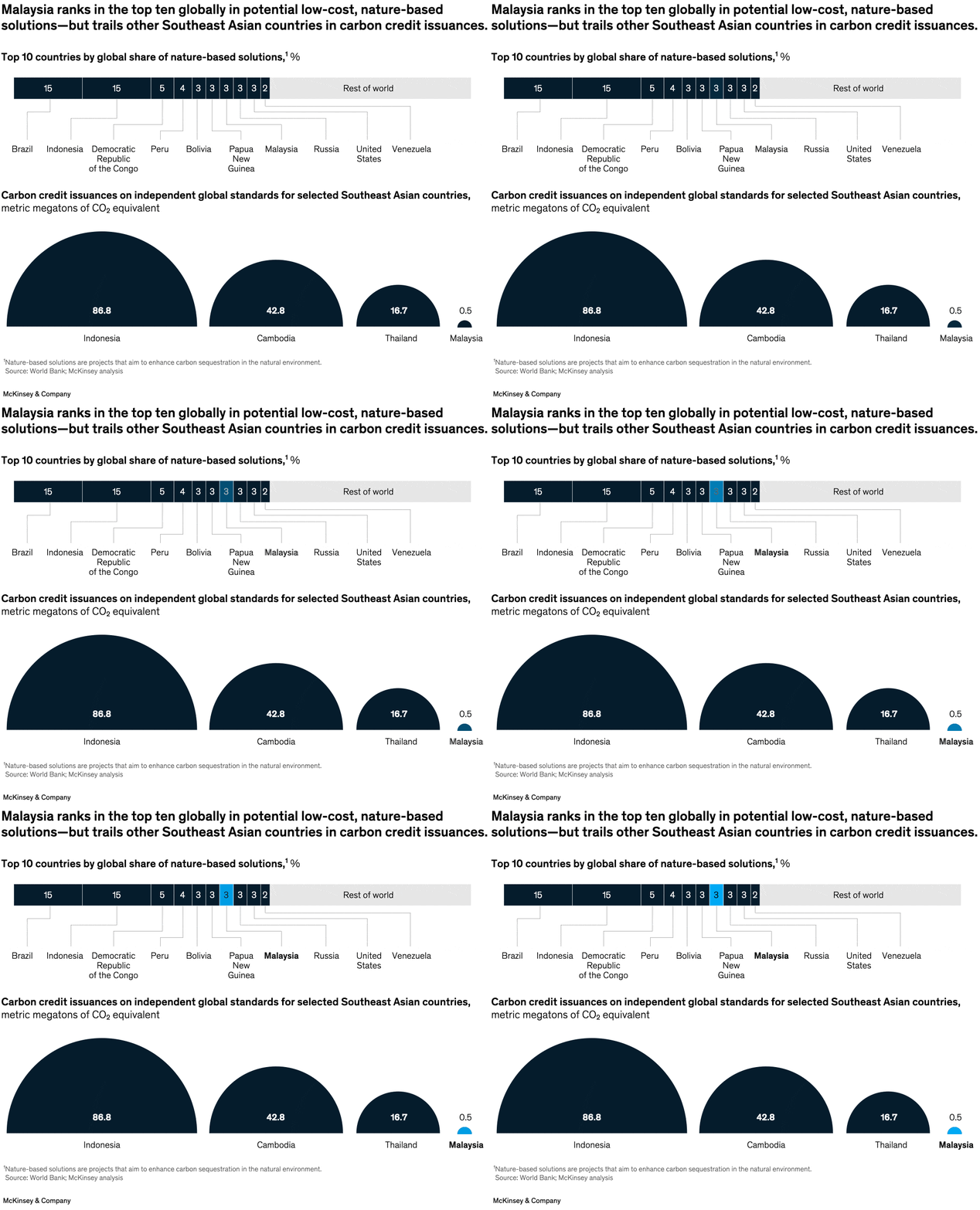
November 23, 2022 – There’s a unique opportunity in Malaysia to mitigate climate impacts. According to analysis by McKinsey senior partners Vishal Agarwal, Li-Kai Chen, and coauthors, the country has 3 percent of the world’s potential for nature-based solutions, which are projects that aim to increase carbon sequestration in the natural environment (forest protection, for example). However, a carbon market would need to ramp up to support these solutions: Malaysia historically trails other Southeast Asian countries in carbon credit issuances.
To read the article, see “How carbon markets can help Malaysia achieve its climate targets,” September 19, 2022.
customizer here
Visual form
Country benchmark chart.
Layout / body structure
The chart is set up as a country comparison, with Malaysia positioned against regional or global peers in nature-based-solution potential and carbon-credit issuance. The reading order moves from Malaysia’s large underlying resource base to its weaker current issuance position.
What is being compared
It compares Malaysia’s potential for low-cost nature-based solutions with the level of carbon-credit issuance seen in Malaysia and in other Southeast Asian countries.
Measurement system
The page mixes a share of global nature-based-solution potential with the relative level of carbon-credit issuance. The comparison is therefore about both resource scale and market output.
Visible structure inside the graphic
The main internal pieces are the country ranking or benchmark markers and the separate labels that show potential on one side and issuance on the other. The structure is designed to expose the gap between natural advantage and current market development.
Main takeaway from the visual
The graphic shows that Malaysia has a strong natural base for climate mitigation but has not converted that endowment into a similarly strong carbon-market position. The central visual contrast is between high potential and lower issuance.
Key standout values or extremes
The page highlights that Malaysia holds about 3 percent of the world’s potential for nature-based solutions and ranks in the global top ten for low-cost potential. At the same time, it trails other Southeast Asian countries in carbon-credit issuance.
Controls / sequence, when applicable
This is a static chart image with no in-chart controls to operate.
Companion media, when applicable
There is no separate companion audio or video; the chart image is the full visual on this page.