Source page: McKinsey & Company
Commentary
Meating agenda
China | Food
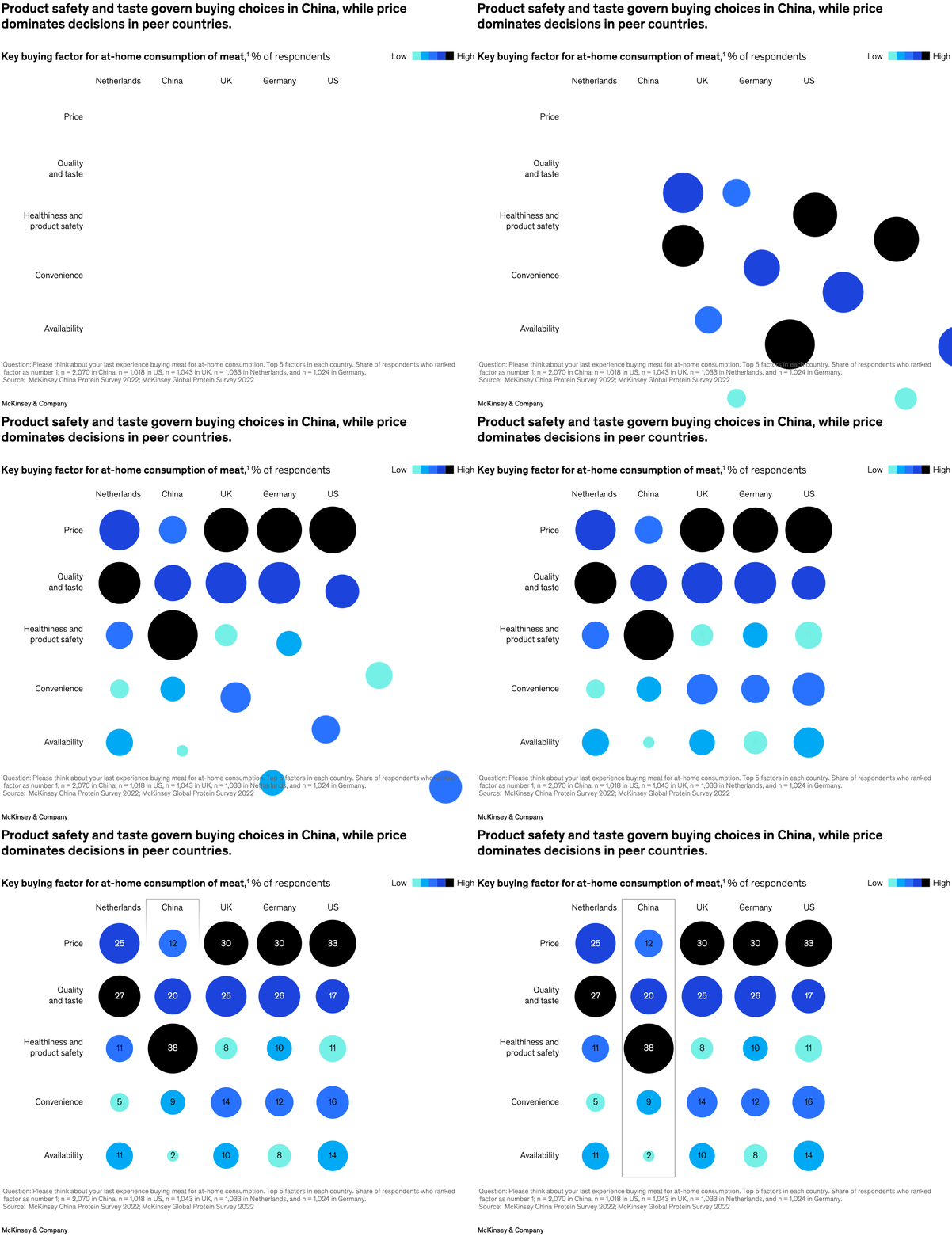
March 20, 2023 – Compared with eaters in Germany, the United Kingdom, and the United States, Chinese consumers tend to consider healthiness and product safety more than price when buying meat, find senior partners Sheng Hong and Roberto Uchoa and colleagues. Why this might matter for executives at meat companies: increasing urbanization and rising income levels could make meat more available and more affordable for Chinese consumers.
To read the article, see “For love of meat: Five trends in China that meat executives must grasp,” February 10, 2023.
customizer here
Visual form
Bubble matrix chart.
Layout / body structure
The visual is laid out as a country-by-factor matrix, with countries across the columns and buying factors down the rows. Reader scans across each row to compare countries on the same factor and then down the China column to see how that market differs overall.
What is being compared
It compares the key buying factors for at-home meat consumption in the Netherlands, China, the United Kingdom, Germany, and the United States.
Measurement system
The measure is percent of respondents, and it is encoded by both bubble size and color intensity, with larger darker circles showing stronger importance.
Visible structure inside the graphic
Each matrix cell contains a numbered bubble. Price, quality and taste, healthiness and product safety, convenience, and availability form the row structure, while the columns let the reader compare how the same buying factor ranks in each country. A small legend above the grid explains the low-to-high color scale.
Main takeaway from the visual
China stands apart because the strongest circles in its column sit on healthiness and product safety and on quality and taste, while the peer-country columns are dominated by very large price bubbles. That makes the Chinese preference profile visibly different rather than just slightly reweighted.
Key standout values or extremes
China shows 38 percent for healthiness and product safety against only 12 percent for price. In the United Kingdom and Germany, price reaches 30 percent, and in the United States it reaches 33 percent, making price the dominant buying factor in those peer markets.
Controls / sequence, when applicable
This is a static chart image with no in-chart controls to operate.
Companion media, when applicable
There is no separate companion audio or video; the chart image is the full visual on this page.