Source page: McKinsey & Company
Commentary
More than lunch money
Education | Public Sector
January 23, 2023 – The Elementary and Secondary School Emergency Relief Fund allocates $190 billion for K–12 schools in the United States—but the funds have an expiration date of 2024. Education districts have left $130 billion on the table so far, McKinsey partner Jake Bryant and coauthors found, due to challenges with navigating the compliance standards and a talent shortage that is leaving positions unfilled.
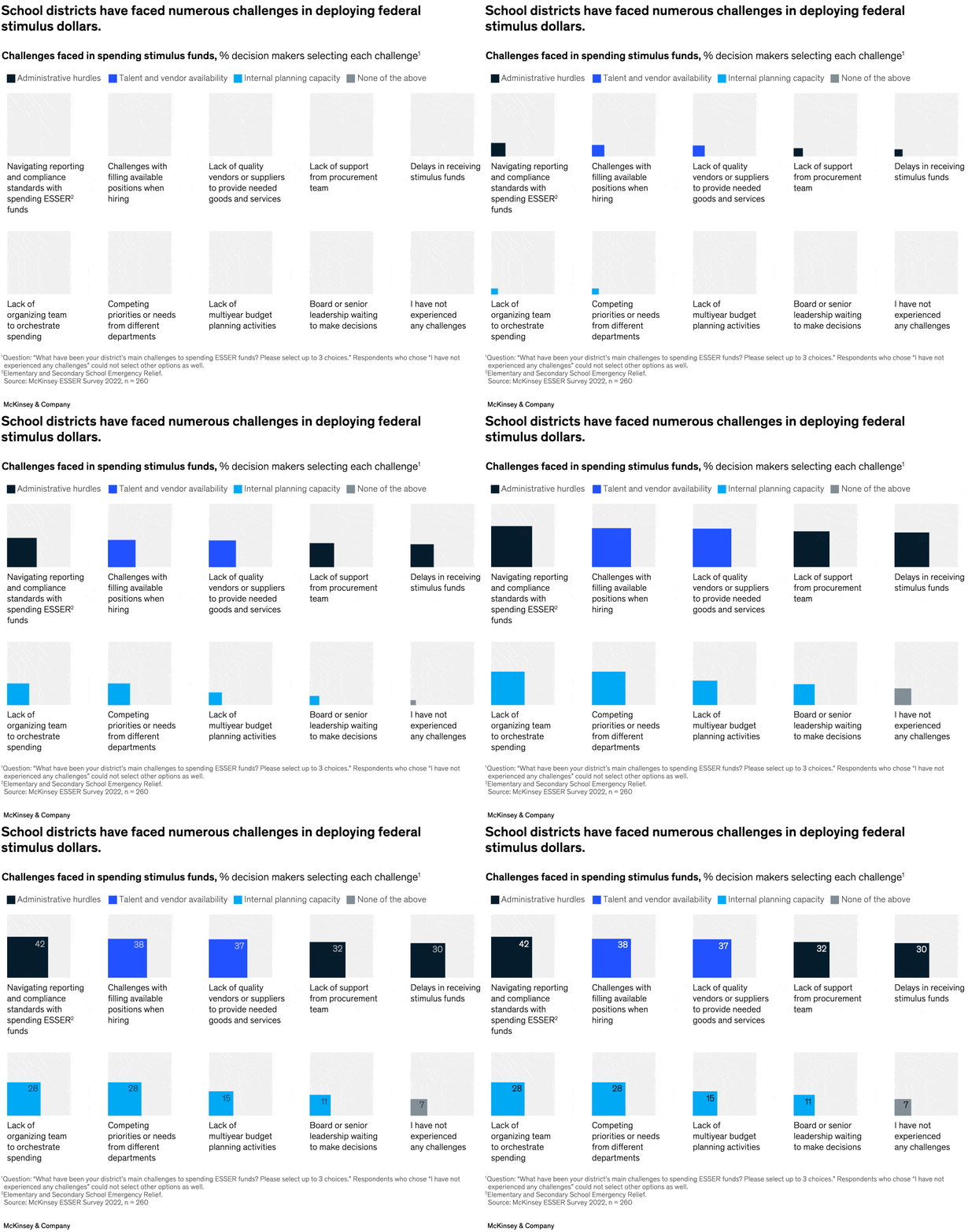
To read the article, see “Halftime for the K–12 stimulus: How are districts faring?,” November 2, 2022.
customizer here
Visual form
Funding-and-obstacles chart sequence.
Layout / body structure
The chart reads as a compact sequence that combines the scale of the available stimulus with the barriers slowing its deployment. Reader starts with the overall funding picture and then moves into the operational bottlenecks that keep districts from using the money on time.
What is being compared
It compares the total K-12 emergency stimulus available to US school districts with the much smaller portion that has actually been deployed, and it connects that gap to compliance and staffing barriers.
Measurement system
The page is anchored in dollars, specifically billions of federal school stimulus funding. The labels and callouts identify both the total allocation and the amount still left on the table.
Visible structure inside the graphic
The internal pieces are the headline funding totals and the obstacle labels that explain why districts are lagging in deployment. The visual is organized to move from money available, to money unused, to the practical reasons for the delay.
Main takeaway from the visual
The chart shows that the main story is not a shortage of money but a shortage of execution capacity. The unused balance dominates the page visually, which turns compliance complexity and staffing shortages into the real bottlenecks.
Key standout values or extremes
The strongest numeric contrast is the 190 billion dollars allocated through the Elementary and Secondary School Emergency Relief Fund versus the 130 billion dollars districts have still not deployed. That remaining amount is the dominant visual fact on the page.
Controls / sequence, when applicable
This is a static chart image with no in-chart controls to operate.
Companion media, when applicable
There is no separate companion audio or video; the chart image is the full visual on this page.