Source page: McKinsey & Company
Commentary
Moving on from the pandemic?
Economy | Strategy
May 23, 2023 – Worries over the COVID-19 pandemic’s effects on the economy have started to fade, according to a recent McKinsey Global Survey. Sven Smit, chair of insights and ecosystems and chair of the McKinsey Global Institute, and colleagues found that only 3 percent of executives consider COVID-19 to be a top risk to global economic growth, down from 86 percent at the start of the pandemic. Geopolitical instability and inflation remain top concerns, with unease about market volatility on the rise.
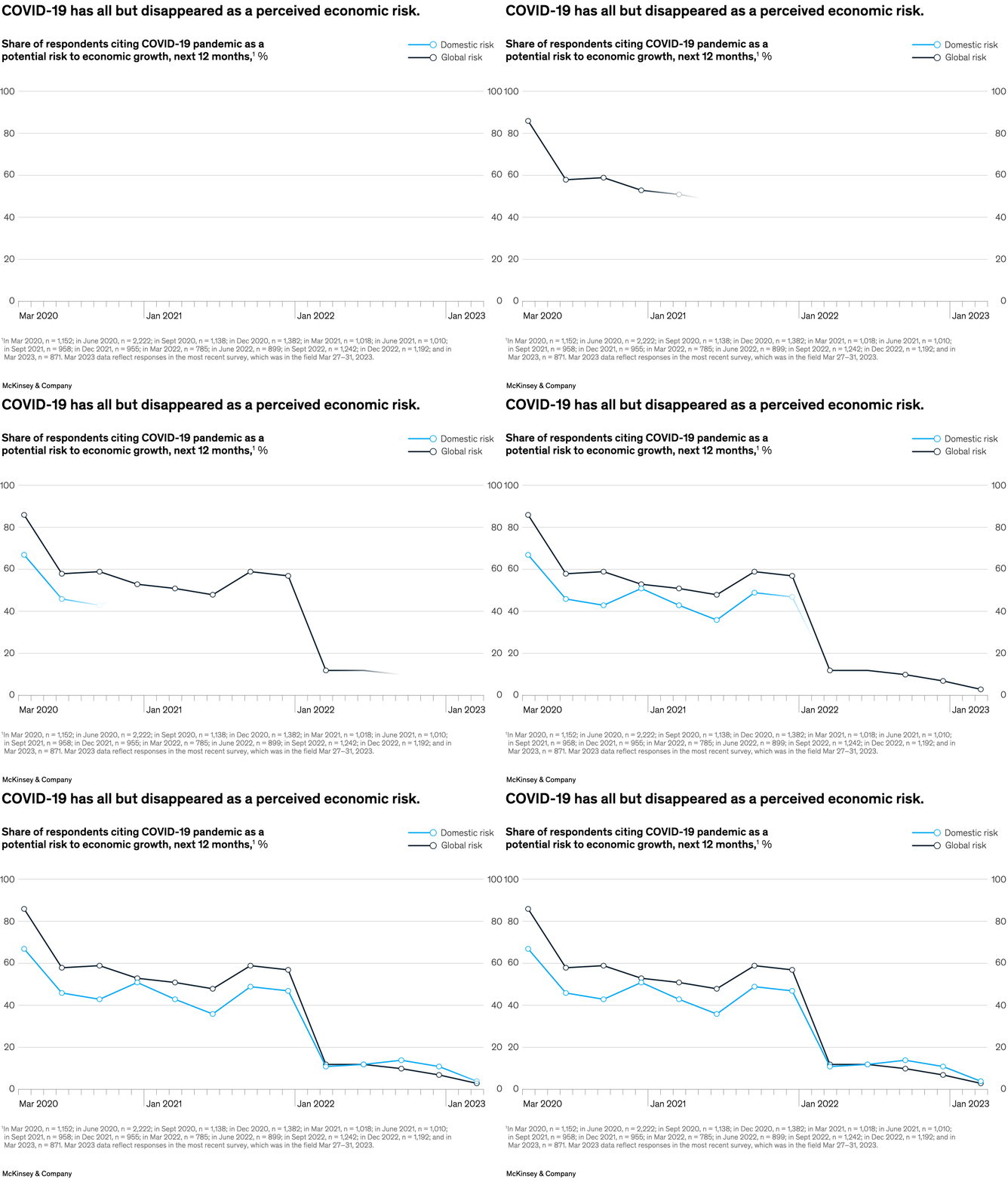
To read the survey results, see “Economic conditions outlook during turbulent times, March 2023,” April 28, 2023.
Want to read the latest digital issue of McKinsey Quarterly? Sign up for a free membership.
customizer here
Visual form
Two-line time-series chart.
Layout / body structure
A single chart stretches horizontally across the page, with one line for domestic risk and one line for global risk plotted over time from early 2020 into early 2023 and notes tucked below the frame.
What is being compared
It compares the share of respondents who cite COVID-19 as a potential domestic economic risk versus a potential global economic risk over the course of the pandemic and its aftermath.
Measurement system
The vertical measure is percent of respondents, the horizontal measure is time, and the two differently colored lines provide the only series comparison in the plot.
Visible structure inside the graphic
The chart uses two descending lines that peak at the start of the series and then taper off, with the global-risk line starting higher and both lines flattening near the bottom of the frame by the end.
Main takeaway from the visual
COVID-19 moves from being one of the most prominent economic risks at the beginning of the series to a much smaller concern by early 2023, and the narrowing distance from the baseline makes that drop immediately visible.
Key standout values or extremes
The chart begins around 86 percent for global risk and roughly 67 percent for domestic risk in March 2020, then falls to low end-of-series readings by January 2023 after a long downward trend.
Controls / sequence, when applicable
This is a static chart image with no in-chart controls to operate.
Companion media, when applicable
There is no separate companion audio or video; the chart image is the full visual on this page.