Source page: McKinsey & Company
Commentary
New roads for chip procurement
Mobility | Semiconductors
August 19, 2021 – Amid global shortages, auto manufacturers are rethinking how they source the chips needed to help drivers brake swiftly, fuse laser and LiDAR data to detect objects, and other automated activities. Our survey found three new paths in which many OEMs expect to take on more of the design and development work themselves.
To read the article, see “Automotive semiconductors for the autonomous age,” August 3, 2021.
customizer here
Visual form
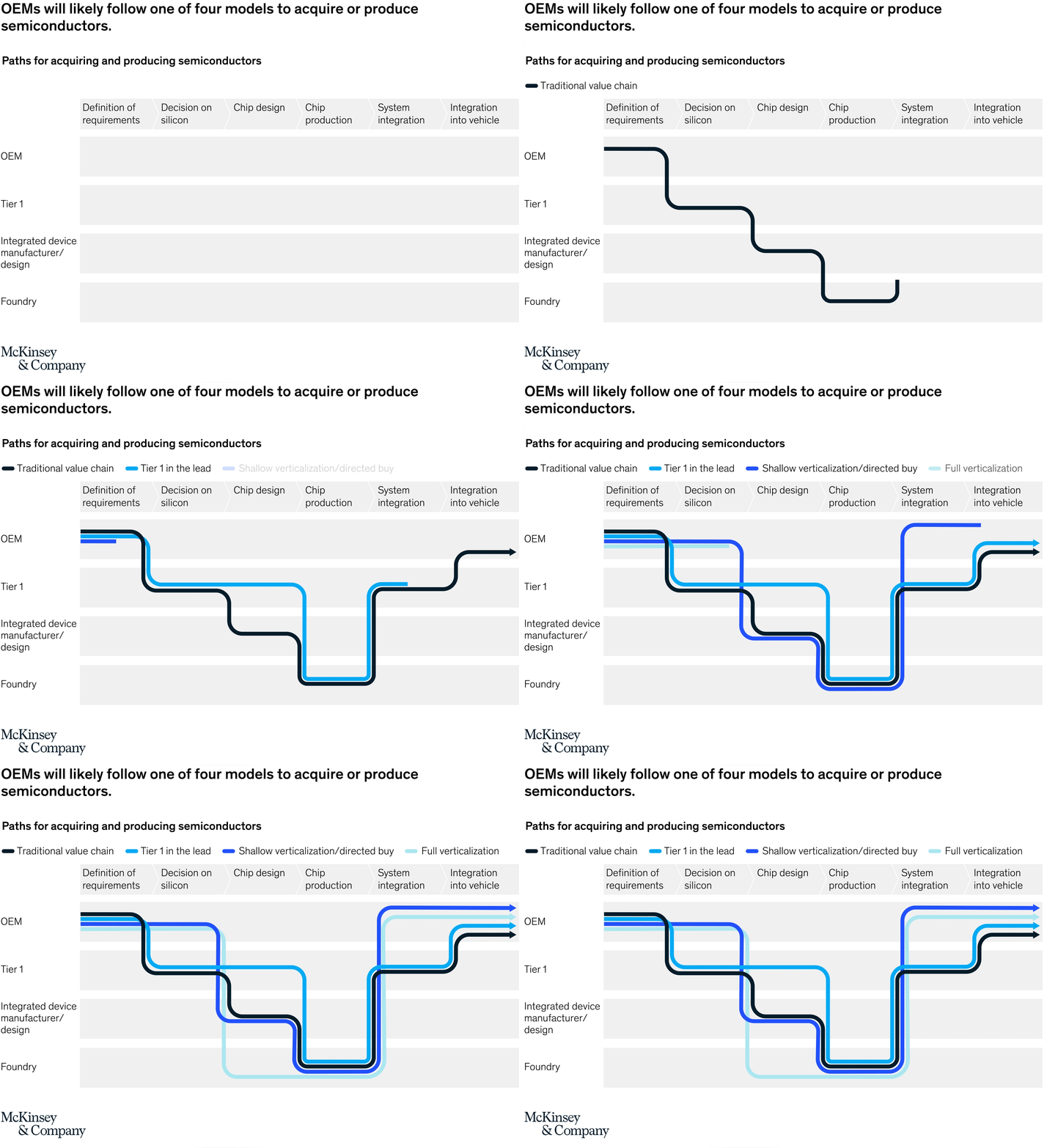
Multi-path swimlane process chart.
Layout / body structure
The chart is a single wide process map read from left to right across six stages, with organizational rows stacked from top to bottom. Follow each colored path across the stages to see which party holds responsibility at each step and where the path drops or climbs between rows.
What is being compared
The chart compares four models for how OEMs can acquire or produce semiconductors: the traditional value chain, tier 1 in the lead, shallow verticalization or directed buy, and full verticalization. It also compares how work is divided among OEMs, tier 1 suppliers, integrated device manufacturers or design players, and foundries.
Measurement system
This chart is structural rather than numeric. The horizontal axis is the production sequence from definition of requirements through integration into the vehicle, and the colored lines encode who owns each stage under each operating model.
Visible structure inside the graphic
Across the top, chevron-shaped headers name the six stages: definition of requirements, decision on silicon, chip design, chip production, system integration, and integration into vehicle. Beneath them, four thick colored lines travel through four horizontal swimlanes labeled OEM, Tier 1, integrated device manufacturer or design, and foundry, stepping down and back up as responsibility changes from one model to another.
Main takeaway from the visual
The paths diverge most sharply in the middle of the chain, especially around chip design and chip production, which is where OEMs choose whether to stay in the traditional handoff model or move toward deeper verticalization. By the time the map reaches system integration and vehicle integration, the models converge again toward OEM and tier 1 control, so the biggest strategic differences sit upstream.
Key standout values or extremes
The traditional path drops from OEM to tier 1 early, then to integrated device manufacturing and foundry before returning upward near the end. Full verticalization reaches deepest into foundry-level production while keeping more of the surrounding stages closer to the OEM. Tier 1 in the lead holds the midchain longer than the traditional path, and shallow verticalization keeps OEM involvement visibly broader without extending as far as full verticalization.
Controls / sequence, when applicable
This is a static chart image with no in-chart controls to operate.
Companion media, when applicable
There is no separate companion audio or video; the chart image is the full visual on this page.