Source page: McKinsey & Company
Commentary
No quick housing fix
Real estate | Jobs
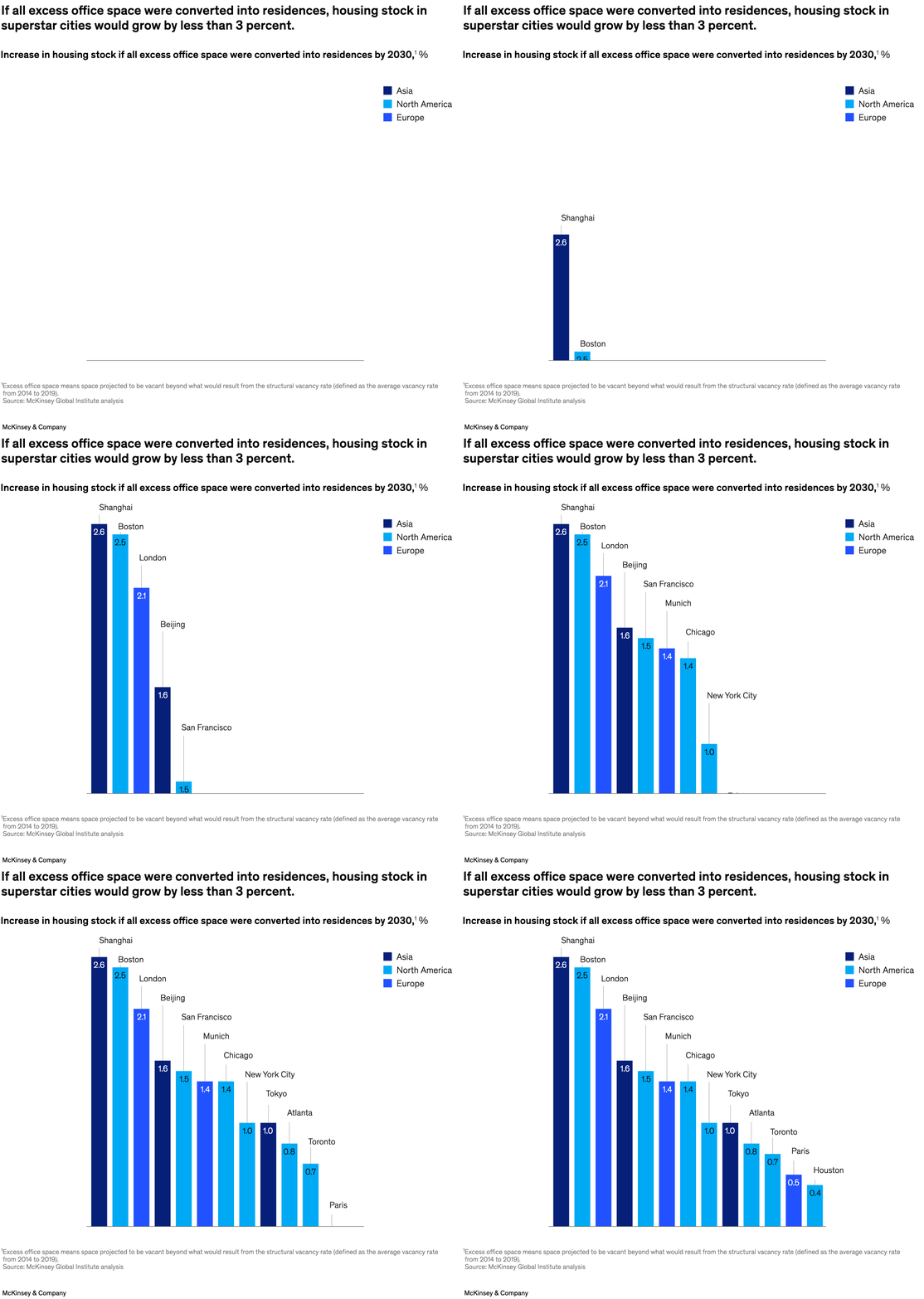
August 28, 2023 – Since the COVID-19 pandemic, office space is plentiful and residential real estate supply is inadequate in many global cities. Yet, even if all vacant office buildings were converted to residential space in many of these urban areas, according to McKinsey Global Institute partner Jan Mischke, senior partner Aditya Sanghvi, and colleagues, available housing would increase by only 3 percent.
To read the report, see “Empty spaces and hybrid places: The pandemic’s lasting impact on real estate,” July 13, 2023.
customizer here
Visual form
Ranked city comparison chart.
Layout / body structure
A single chart stacks cities vertically and reads top to bottom against a shared horizontal percentage scale, with a legend separating Asia, North America, and Europe.
What is being compared
It compares how much housing stock would increase in different superstar cities if excess office space were converted into residences by 2030.
Measurement system
The measure is percent growth in housing stock, shown as small numerical callouts and position on one common scale rather than as raw housing counts.
Visible structure inside the graphic
City names anchor the rows, colored markers and labels carry each city value, and the regional legend tells the reader which market each point belongs to.
Main takeaway from the visual
The chart makes the limitation visible: even the most favorable city cases stay in the low single digits, so office conversion does not come close to solving the housing shortfall by itself.
Key standout values or extremes
The headline ceiling of less than 3 percent is the key extreme, and the visible city labels sit around the one-to-two percent range rather than anywhere near a step-change in supply.
Controls / sequence, when applicable
This is a static chart image with no in-chart controls to operate.
Companion media, when applicable
There is no separate companion audio or video; the chart image is the full visual on this page.