Source page: McKinsey & Company
Commentary
Premiums for proteins
Food | Biotech
July 16, 2021 – It won’t be easy or quick to cut production costs for cultivated meat. Our analysis suggests it could take about a decade for consumers to start paying less for cultivated meat than its conventional counterpart. But consumer uptake could happen much sooner. Already, consumers pay extra for proteins that they believe to be healthier or more sustainable.
To read the article, see “Cultivated meat: Out of the lab, into the frying pan,” June 16, 2021.
customizer here
Visual form
Animated icon-backed block column chart.
Layout / body structure
The chart is a single horizontal row of five product categories, read left to right. Each category pairs a food icon and label with a cube-like blue block above it, and the animation builds those blocks across the row before settling on the full comparison.
What is being compared
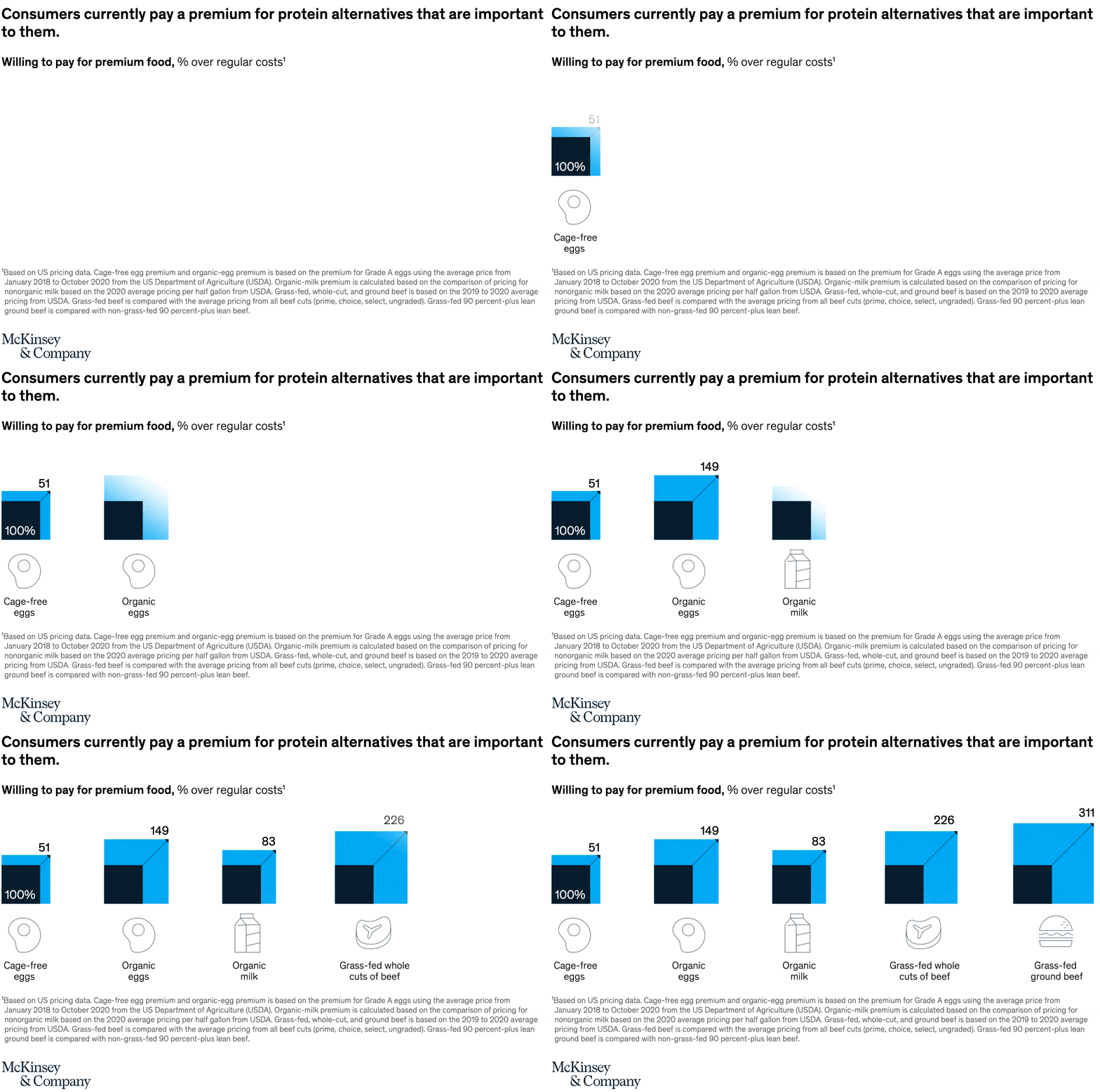
The chart compares willingness to pay a premium over regular costs across five protein categories: cage-free eggs, organic eggs, organic milk, grass-fed whole cuts of beef, and grass-fed ground beef.
Measurement system
The measurement is percent over regular costs. Each category is labeled directly with its premium figure, so the reader tracks the comparison through the numbers printed above the blocks rather than through a visible axis.
Visible structure inside the graphic
Five cube-like blue blocks sit above simple product icons, with the dark front face and bright top and side faces making the bars read as three-dimensional columns. The categories progress across the page from eggs and milk to the two beef entries, and the animated GIF reveals the columns into their final heights.
Main takeaway from the visual
The visual shows that consumers will accept much larger premiums for the beef alternatives than for the egg and milk examples. The two grass-fed beef categories dominate the row, so the premium curve rises sharply as the chart moves to the right.
Key standout values or extremes
Grass-fed ground beef is the highest labeled premium at 311, followed by grass-fed whole cuts of beef at 226. Organic eggs sit at 149, organic milk at 83, and cage-free eggs are the lowest at 51.
Controls / sequence, when applicable
This is a static chart image with no in-chart controls to operate.
Companion media, when applicable
There is no separate companion audio or video; the chart image is the full visual on this page.