Source page: McKinsey & Company
Commentary
Putting a premium on net zero
Climate change | Sustainability | Innovation
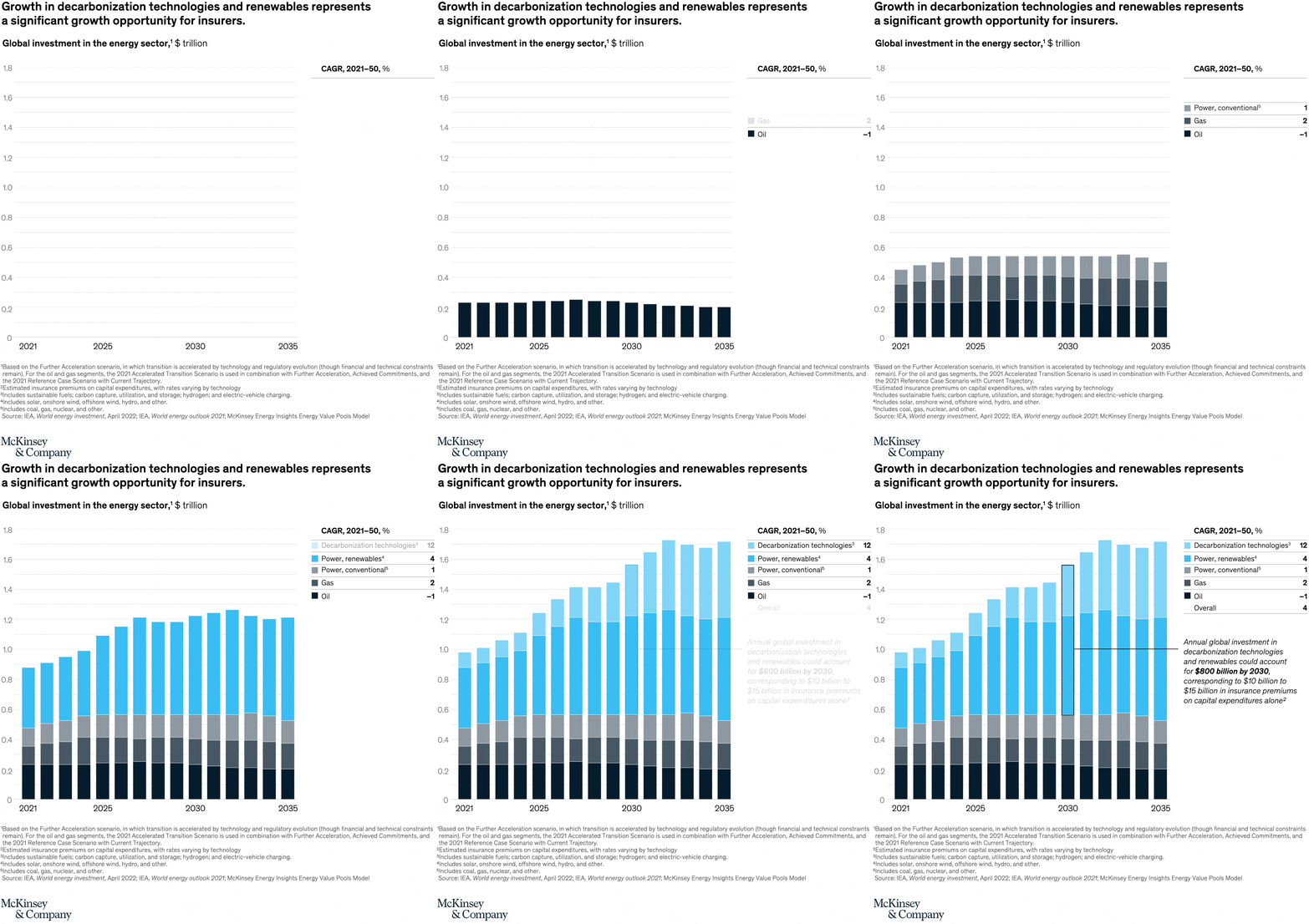
November 16, 2022 – As we approach an inflection point in the net-zero transition, insurance carriers must transform to stay relevant. Technology is a crucial decarbonization lever, say McKinsey senior partners Kia Javanmardian, Sylvain Johansson, and coauthors. According to their estimates, annual global capital expenditures in the top climate technologies could account for more than $800 billion by 2030, corresponding to roughly $10 billion to $15 billion in insurance premiums on capital expenditures alone.
To read the article, see “Capturing the climate opportunity in insurance,” September 14, 2022.
customizer here
Visual form
Climate-technology opportunity chart.
Layout / body structure
The chart is laid out as a growth-opportunity view that connects the scale of decarbonization technologies to what insurers can underwrite, insure, or support. Reader starts with the total climate-tech capital requirement and then reads that number as an insurance opportunity.
What is being compared
It compares the growth of top decarbonization technologies and renewables with the opportunity those investments create for insurers.
Measurement system
The core measure is annual global capital expenditure in dollars, paired with the implied premium and underwriting opportunity for insurance carriers.
Visible structure inside the graphic
The main internal pieces are the climate-technology categories or aggregate climate-tech bucket and the financial scale markers attached to them. The structure is designed to turn decarbonization spending into an adjacent insurance-market view.
Main takeaway from the visual
The page shows that net zero is not only a risk-management challenge for insurers but also a growth market. The sheer scale of capital flowing into climate technologies makes the insurance opportunity look large enough to matter strategically.
Key standout values or extremes
The strongest number is that annual global capital expenditures in the top climate technologies could exceed 800 billion dollars by 2030. That scale anchors the opportunity the page describes for insurers.
Controls / sequence, when applicable
This is a static chart image with no in-chart controls to operate.
Companion media, when applicable
There is no separate companion audio or video; the chart image is the full visual on this page.