Source page: McKinsey & Company
Commentary
Race and quality of care
Diversity & Inclusion | Healthcare
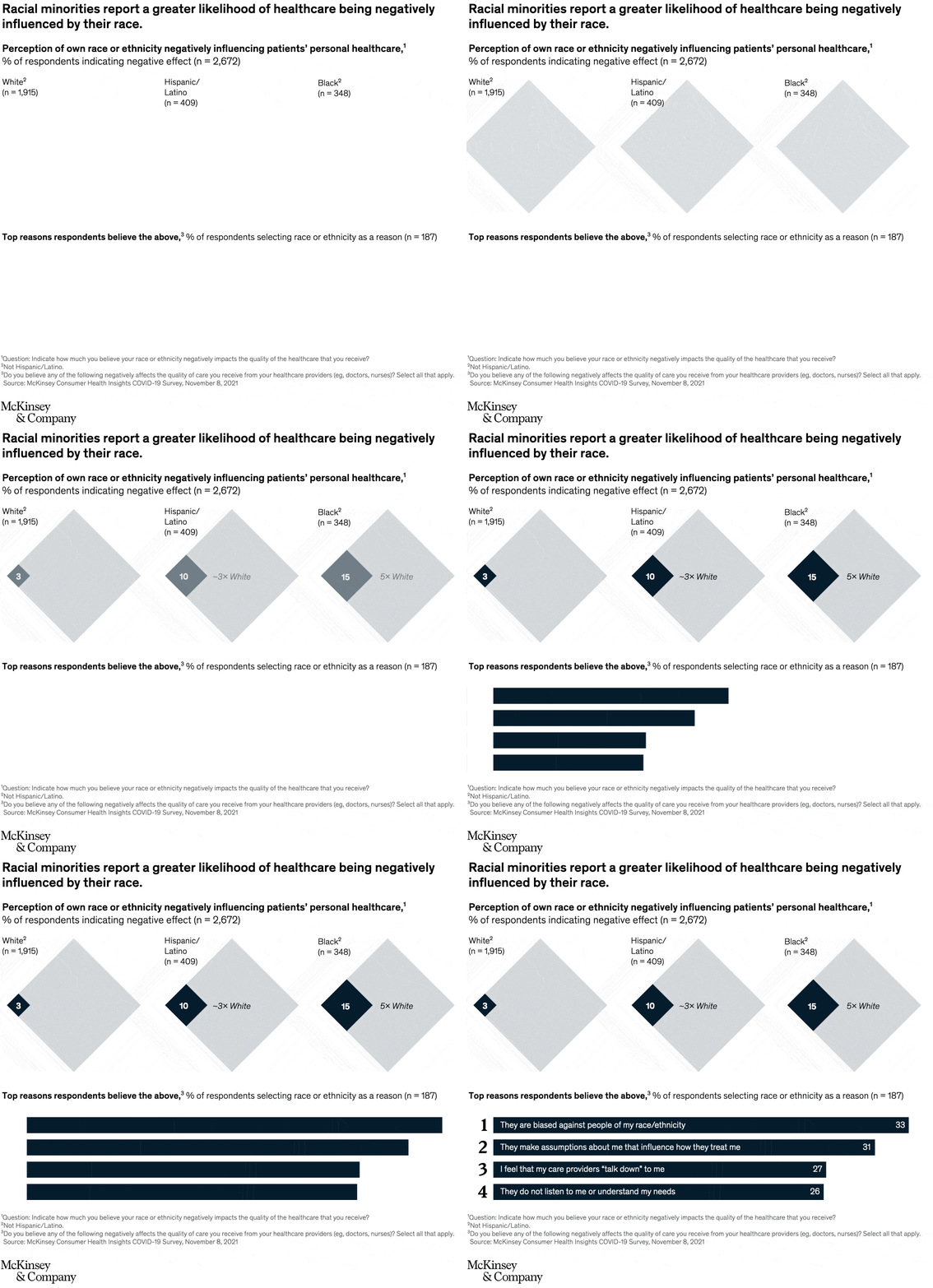
June 17, 2022 – Black and Latino patients are five times and three times, respectively, more likely than White patients to report that their race negatively impacts the quality of healthcare they receive. Among these respondents, a third report feeling their healthcare providers are biased against people of their race.
To read the article, see “What Black and Latino consumers want healthcare stakeholders to know,” May 4, 2022.
customizer here
Visual form
Multi-panel image sequence combining a three-group percentage comparison above a ranked horizontal bar chart.
Layout / body structure
The chart is split into two stacked sections. Read the top row left to right across the White, Hispanic/Latino, and Black comparison tiles, then move down to the four ranked reason bars underneath.
What is being compared
The top panel compares the share of White, Hispanic/Latino, and Black respondents who say their race or ethnicity negatively affects the quality of their personal healthcare. The bottom panel compares the reasons selected by respondents who named race or ethnicity as a factor.
Measurement system
Everything is shown as percentages, with sample sizes printed under each group label. The top row uses direct percentages plus multiplier callouts against White respondents, while the lower row ranks the reason shares from highest to lowest.
Visible structure inside the graphic
Three oversized light-gray diamond backdrops hold smaller dark diamond value markers showing 3, 10, and 15. Beneath them, four dark horizontal bars are numbered one through four and labeled with the reported reasons for poorer care.
Main takeaway from the visual
The top comparison shows a sharp race gap in perceived care quality: Hispanic/Latino respondents sit at roughly three times the White level, and Black respondents sit at five times the White level. The ranked bars then show that perceived provider bias and provider assumptions are the leading explanations.
Key standout values or extremes
White respondents are shown at 3 percent, Hispanic/Latino respondents at 10 percent, and Black respondents at 15 percent. The top four reasons are bias against people of my race or ethnicity at 33 percent, assumptions that influence treatment at 31 percent, providers talking down to patients at 27 percent, and not listening or understanding needs at 26 percent.
Controls / sequence, when applicable
This is a static chart image with no in-chart controls to operate.
Companion media, when applicable
There is no separate companion audio or video; the chart image is the full visual on this page.