Source page: McKinsey & Company
Commentary
Ramping up supply chain resiliency
Supply Chain Management | Operations | Resilience
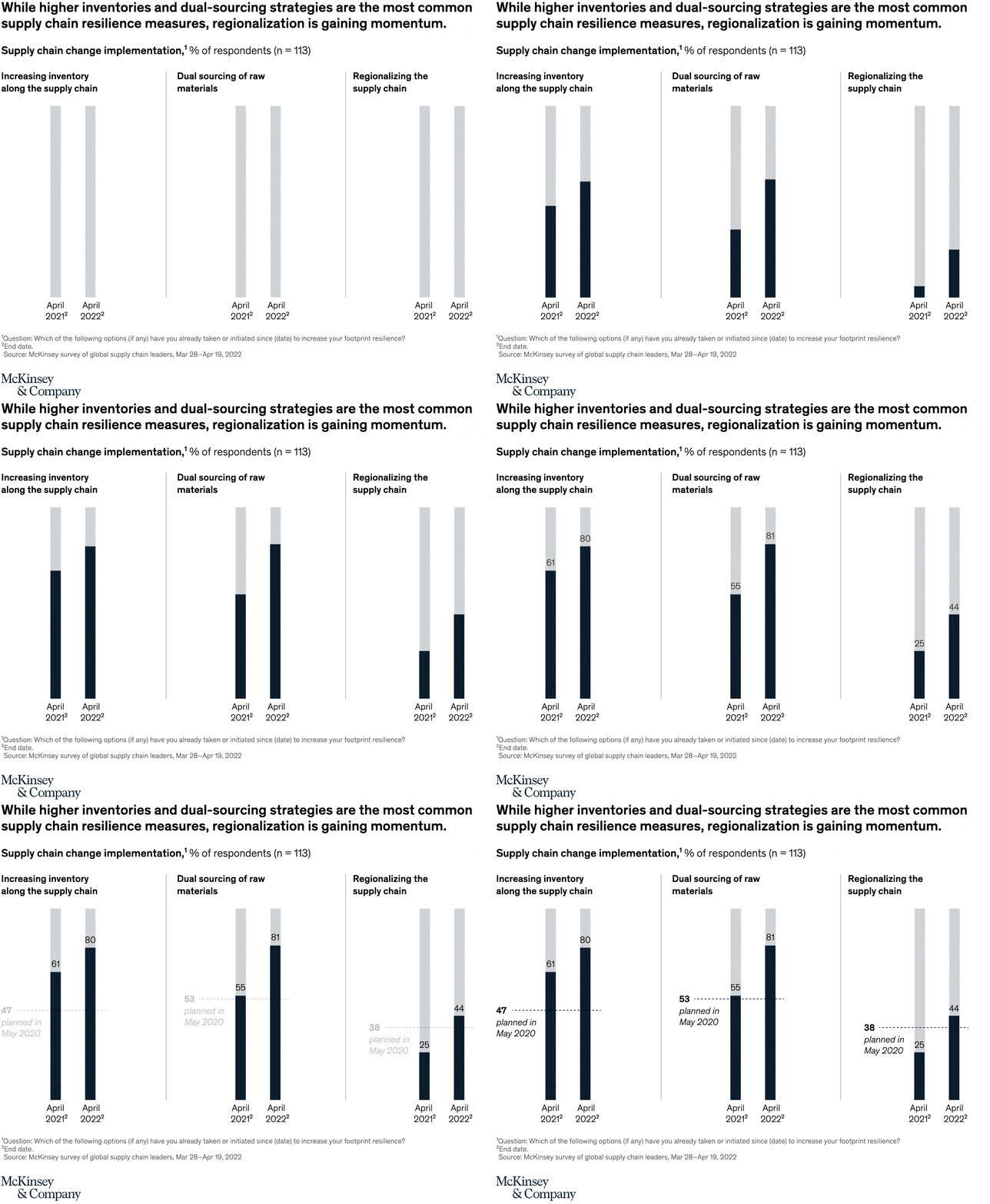
November 4, 2022 – The vulnerabilities of highly globalized supply networks have been exposed by the turbulence of recent years. Some organizations have made significant strides in their plans to improve supply chain resilience since the start of the COVID-19 pandemic, McKinsey partner Tacy Foster and colleagues found in a recent survey of 113 global supply chain leaders. For example, dual-sourcing strategies were adopted by 81 percent of respondents, a leap from 55 percent who said the same in 2020.
To read the article, see “Taking the pulse of shifting supply chains,” August 26, 2022.
customizer here
Visual form
Resilience-measures comparison chart.
Layout / body structure
The chart is laid out as a comparison of resilience moves adopted by supply chain leaders, with the reader scanning one measure after another to see which responses are most common and which are gaining traction. The reading order is from established measures to emerging ones.
What is being compared
It compares the adoption of different supply chain resilience measures, especially higher inventories, dual sourcing, and regionalization.
Measurement system
The page uses survey shares from global supply chain leaders, so the viewer tracks the proportion of organizations using each resilience measure.
Visible structure inside the graphic
The internal pieces are the named resilience strategies and the bars or markers showing how common each one is. The chart is organized so the most common actions stand out first while still revealing which newer strategies are accelerating.
Main takeaway from the visual
The page shows that most organizations have moved first on buffer-style measures like more inventory and dual sourcing, but the strategic shift toward regionalization is beginning to gather momentum. The chart therefore captures both the current playbook and its next turn.
Key standout values or extremes
The visual emphasis is that higher inventories and dual sourcing are the most common resilience measures in use, while regionalization is the standout trend still building steam. The underlying survey is based on 113 global supply chain leaders.
Controls / sequence, when applicable
This is a static chart image with no in-chart controls to operate.
Companion media, when applicable
There is no separate companion audio or video; the chart image is the full visual on this page.