Source page: McKinsey & Company
Commentary
Reaching racial parity
Diversity & Inclusion | Inequality | North America
February 21, 2024 – How long would it take for Black Americans to reach a level of economic prosperity and quality of life that’s on par with that of their White neighbors? Senior partner Shelley Stewart and coauthors find that it could take more than three centuries for Black residents of all types of communities, from rural counties to megacities, to reach such parity. Affordable housing and early childhood education are two areas of action that could help level the playing field.
To read the report, see “The state of Black residents: The relevance of place to racial equity and outcomes,” February 1, 2024.
customizer here
Visual form
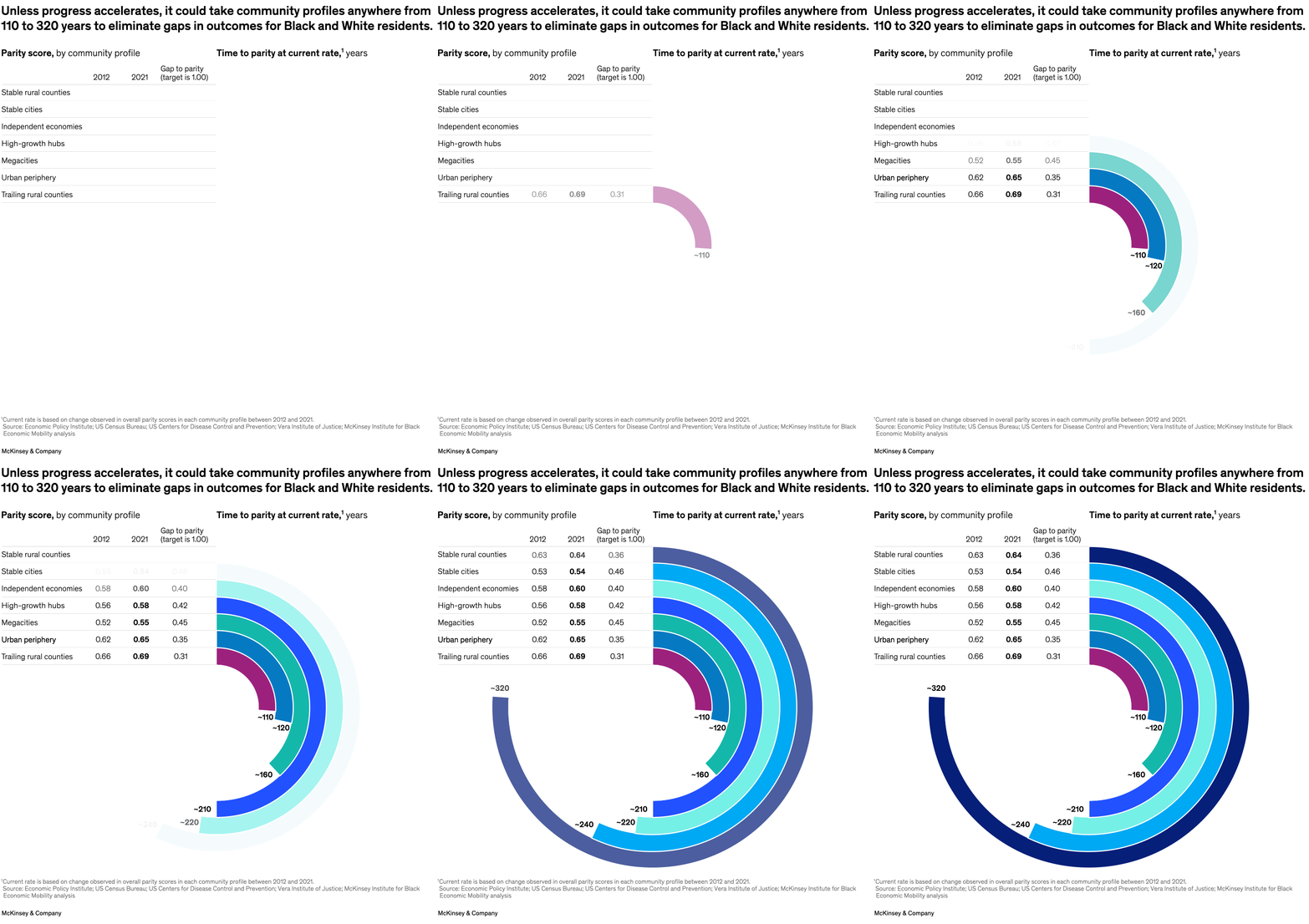
Table plus concentric arc chart.
Layout / body structure
The table sits at the upper left with parity scores and gaps, and the large concentric rings occupy the right and lower half to show time to parity for each community profile.
What is being compared
It compares parity scores for different community profiles and translates the remaining Black-White outcome gap in each profile into years to parity at the current rate of progress.
Measurement system
The table uses parity scores for 2012 and 2021 plus a remaining gap-to-parity value, and the ring display uses years to parity as its scale.
Visible structure inside the graphic
Seven community types appear as separate colored rings with approximate year labels placed on the arcs, while the table above lists the corresponding community names and score values.
Main takeaway from the visual
Every community type is still far from parity, and even the shortest path is measured in more than a century rather than a few policy cycles.
Key standout values or extremes
The shortest ring is about 110 years, the longest about 320 years, and the table shows 2021 parity scores ranging from 0.54 for stable cities to 0.69 for trailing rural counties.
Controls / sequence, when applicable
This is a static chart image with no in-chart controls to operate.
Companion media, when applicable
There is no separate companion audio or video; the chart image is the full visual on this page.