Source page: McKinsey & Company
Commentary
Readying for a recession?
Economy | Inflation
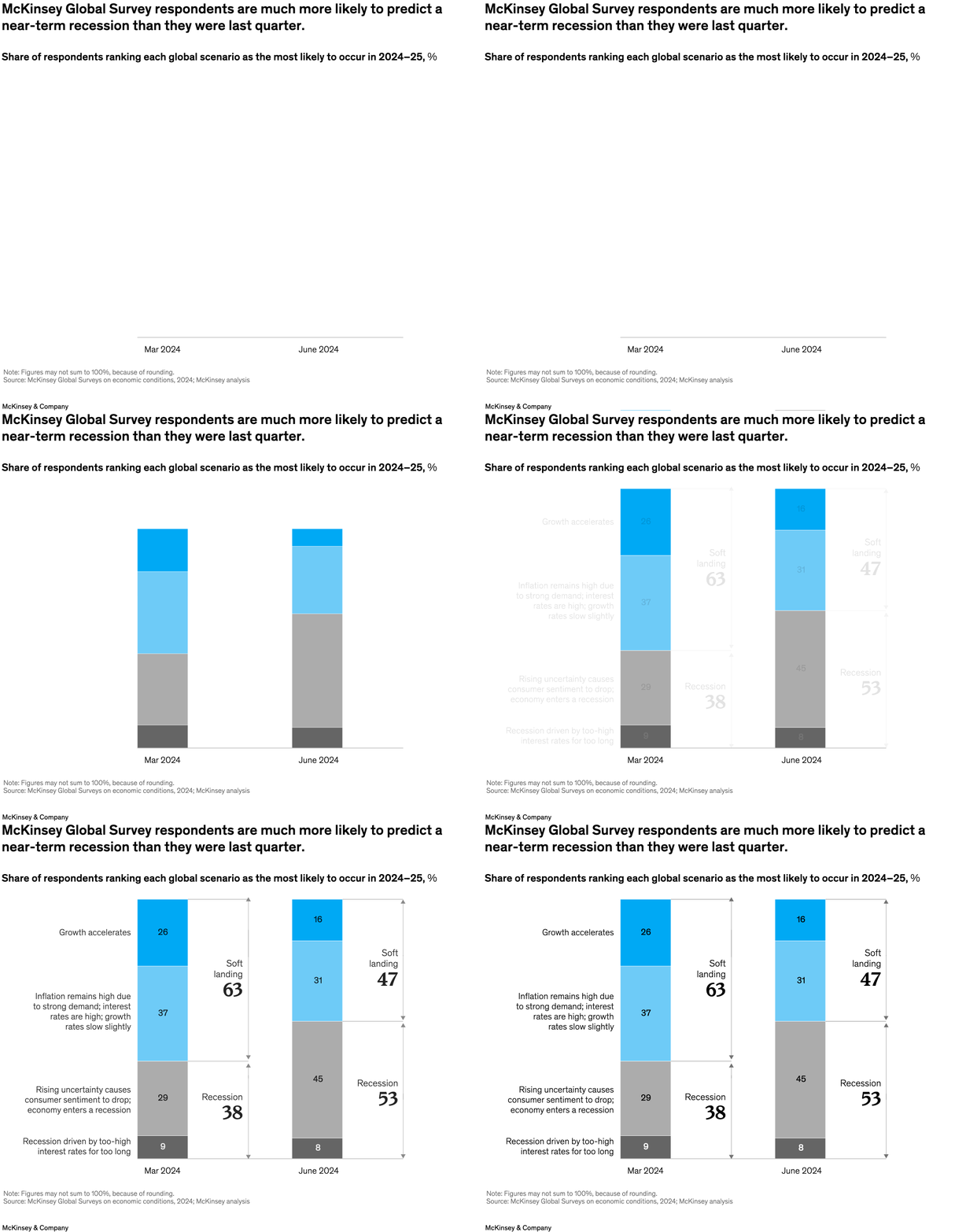
August 9, 2024 – Global economic conditions at the moment appear sunny, but clouds may be gathering on the horizon, executives say in the latest McKinsey Global Survey. Given four potential near-term scenarios, survey respondents were more likely in June than they were in March to select the two that lead to a recession, senior partner Sven Smit and colleagues explain. Concerns about changes in trade policy and anticipated increases in domestic unemployment rates are some of the reasons for the cautious outlook.
To read the article, see “Global Economics Intelligence executive summary, June 2024,” July 25, 2024.
customizer here
Visual form
Two-column stacked bar chart.
Layout / body structure
The page shows two vertical stacks side by side for March 2024 and June 2024, with scenario labels written to the left of the stacks and summary brackets on the right grouping each stack into soft-landing versus recession outcomes.
What is being compared
It compares how survey respondents ranked four global economic scenarios as the most likely outcome in 2024-25 at two points in time, March and June 2024.
Measurement system
Each segment is a percentage of respondents, and the right-side brackets combine the top two segments into a soft-landing total and the bottom two into a recession total.
Visible structure inside the graphic
Each column is divided into four stacked blocks, with the brightest blue segment for growth acceleration at the top, a lighter blue segment for a high-inflation soft landing below it, and two gray recession segments at the bottom, each labeled with its own percentage.
Main takeaway from the visual
The balance of opinion visibly swings toward recession between March and June: the recession share overtakes the soft-landing share, and the top growth-acceleration segment shrinks at the same time.
Key standout values or extremes
Soft landing falls from 63 percent in March to 47 percent in June, while recession rises from 38 percent to 53 percent; the growth-accelerates slice drops from 26 percent to 16 percent, and the larger recession scenario rises from 29 percent to 45 percent.
Controls / sequence, when applicable
This is a static chart image with no in-chart controls to operate.
Companion media, when applicable
There is no separate companion audio or video; the chart image is the full visual on this page.