Source page: McKinsey & Company
Commentary
Reduce, reuse, recycle at scale
Automotive | Decarbonization | Electric vehicles
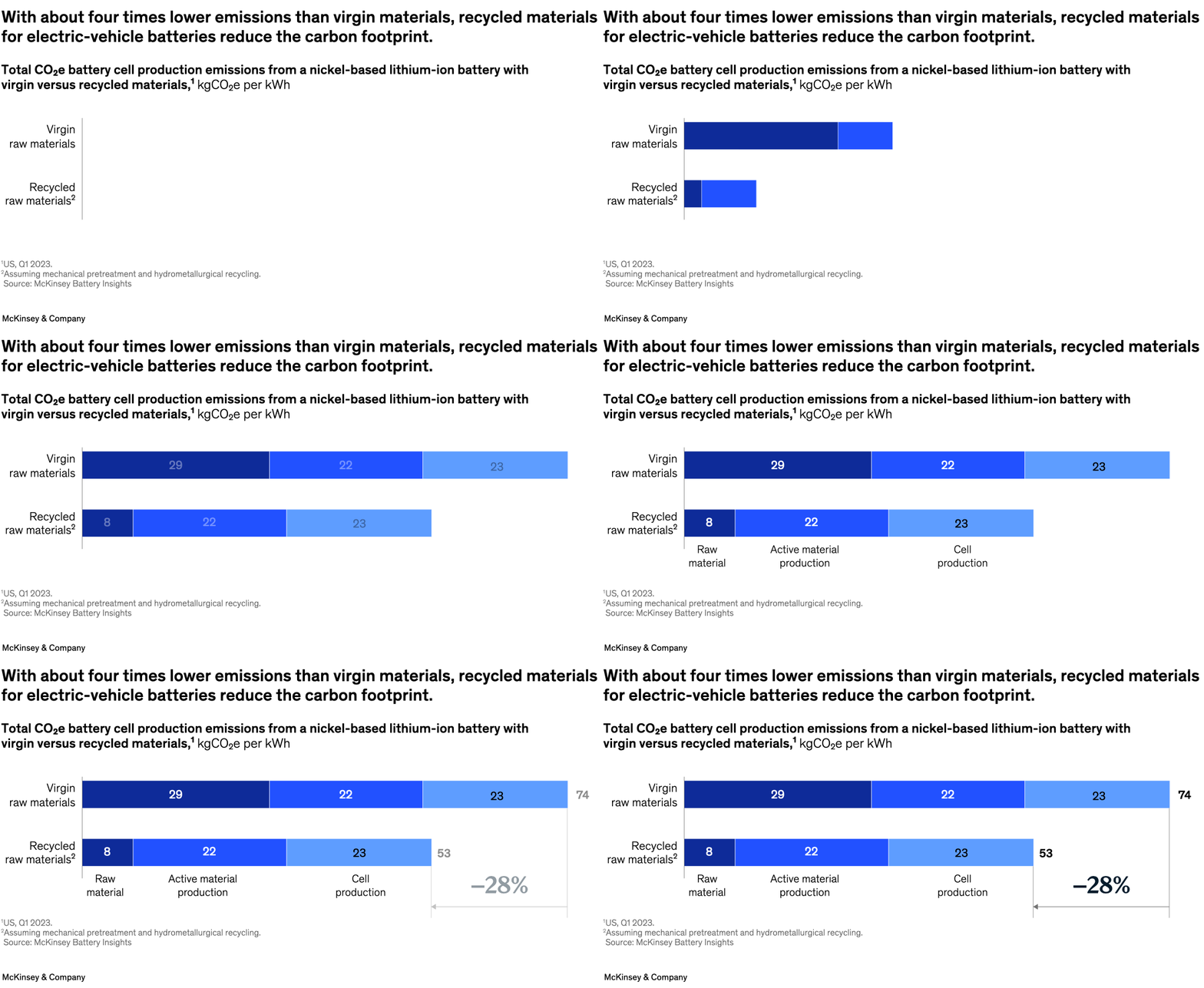
April 12, 2023 – Battery production for electric vehicles has soared to meet demand. And with 100 million vehicle batteries expected to be retired in the next ten years, there’s an opportunity to scale up battery recycling, note senior partner Martin Linder and coauthors. Production of batteries with recycled materials results in about four times lower carbon emissions than with new materials.
To read the article, see “Battery recycling takes the driver’s seat,” March 13, 2023.
customizer here
Visual form
Horizontal stacked bar comparison.
Layout / body structure
Two horizontal bars are stacked one above the other, with virgin raw materials on top and recycled raw materials below, and each bar is segmented into three emissions components read left to right.
What is being compared
It compares total battery-cell production emissions for a nickel-based lithium-ion battery made with virgin materials versus recycled materials.
Measurement system
The measure is kilograms of CO2e per kilowatt-hour, with the total visual length of each bar showing the full emissions footprint and the segment labels showing the contribution of each component.
Visible structure inside the graphic
The top and bottom bars use the same three-color segmentation, so the reader can compare total length first and then inspect which segment changes drive the lower emissions case in the recycled-material bar.
Main takeaway from the visual
The recycled-material bar is much shorter overall because the leftmost raw-materials segment shrinks dramatically, while the middle and right segments stay roughly similar, making the carbon-footprint reduction easy to trace to material sourcing.
Key standout values or extremes
The virgin-material bar is labeled 29, 22, and 23 across its three segments, while the recycled-material bar is labeled 8, 22, and 23; that cuts the total from 74 to 53 kilograms of CO2e per kilowatt-hour, roughly a four-times-lower raw-materials component and about a 28 percent lower total footprint.
Controls / sequence, when applicable
This is a static chart image with no in-chart controls to operate.
Companion media, when applicable
There is no separate companion audio or video; the chart image is the full visual on this page.