Source page: McKinsey & Company
Commentary
Scooter race
Travel & Transportation | Electric vehicles | Mobility
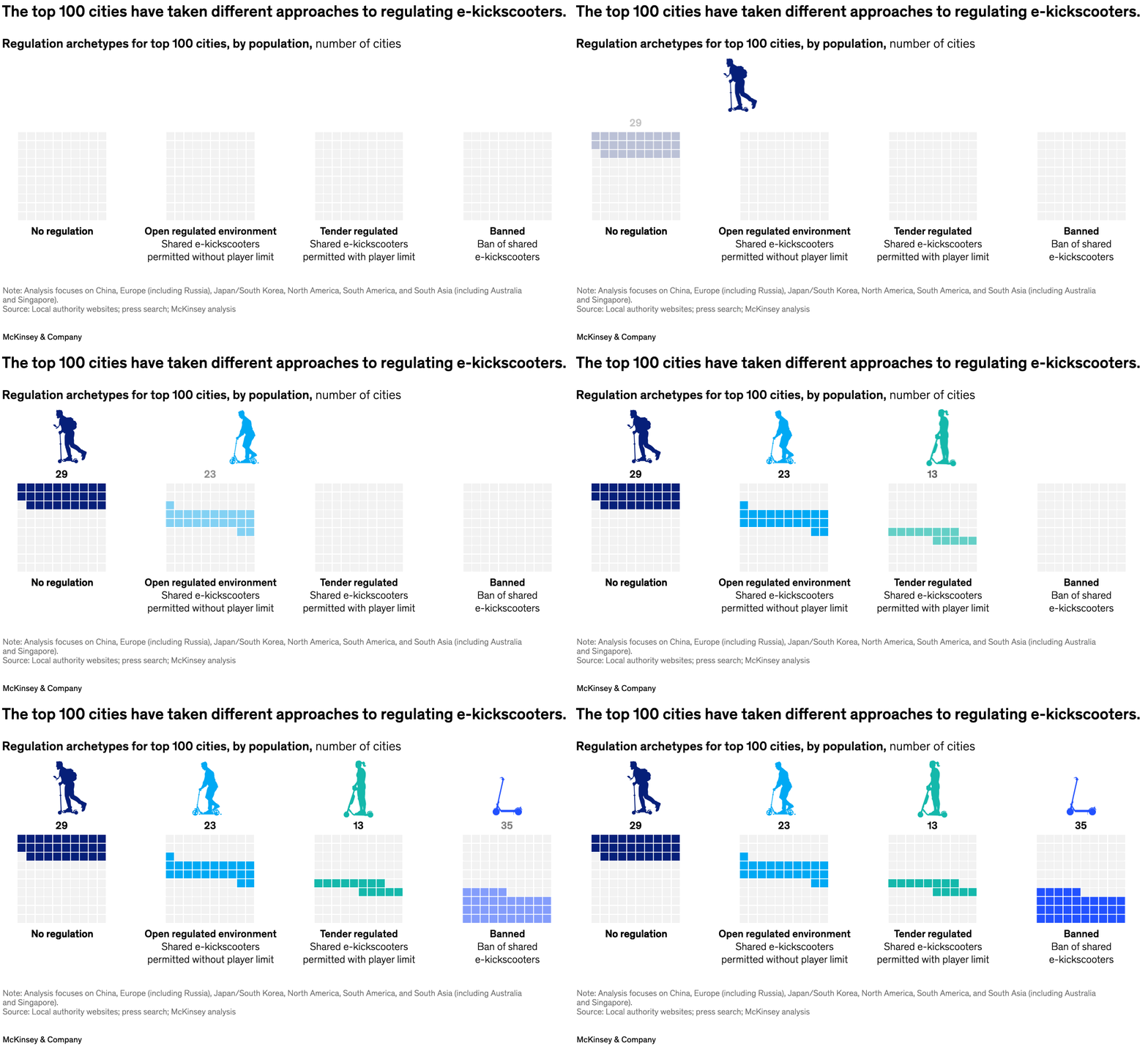
July 17, 2023 – As shared electric kickscooters (e-kickscooters) become ubiquitous around the world, cities are increasingly considering regulation. Partner Kersten Heineke and colleagues analyzed the top 100 global cities by population to see how the rules are affecting the market. They find four regulation archetypes: bans on the shared use of e-kickscooters (35 percent of the top cities), regulation that limits the number of operating services (13 percent), some regulation but no limit on the number of players (23 percent), and no regulation (29 percent).
To read the article, see “Electric kickscooters have come of age. Regulators have taken notice,” June 7, 2023.
customizer here
Visual form
Regulatory-archetype tile chart.
Layout / body structure
A single four-part layout reads left to right across regulation types, with each archetype represented as its own block of city tiles.
What is being compared
It compares how the top 100 cities regulate e-kickscooters, from no regulation through open regulation and tender systems to outright bans.
Measurement system
The measure is number of cities, shown through repeated tile units rather than a conventional axis-based bar length.
Visible structure inside the graphic
Each archetype has its own labeled tile cluster, and the labels underneath explain whether shared e-kickscooters are allowed freely, capped by permit, or banned.
Main takeaway from the visual
The page shows that cities have not converged on one model; instead, regulation is spread across several distinct approaches rather than collapsing into a single dominant rule set.
Key standout values or extremes
The strongest extremes are the presence of a full banned category on one end and a no-regulation category on the other, with the regulated middle ground split into two different operating models.
Controls / sequence, when applicable
This is a static chart image with no in-chart controls to operate.
Companion media, when applicable
There is no separate companion audio or video; the chart image is the full visual on this page.