Source page: McKinsey & Company
Commentary
Screening is just the start
Healthcare | Public Sector
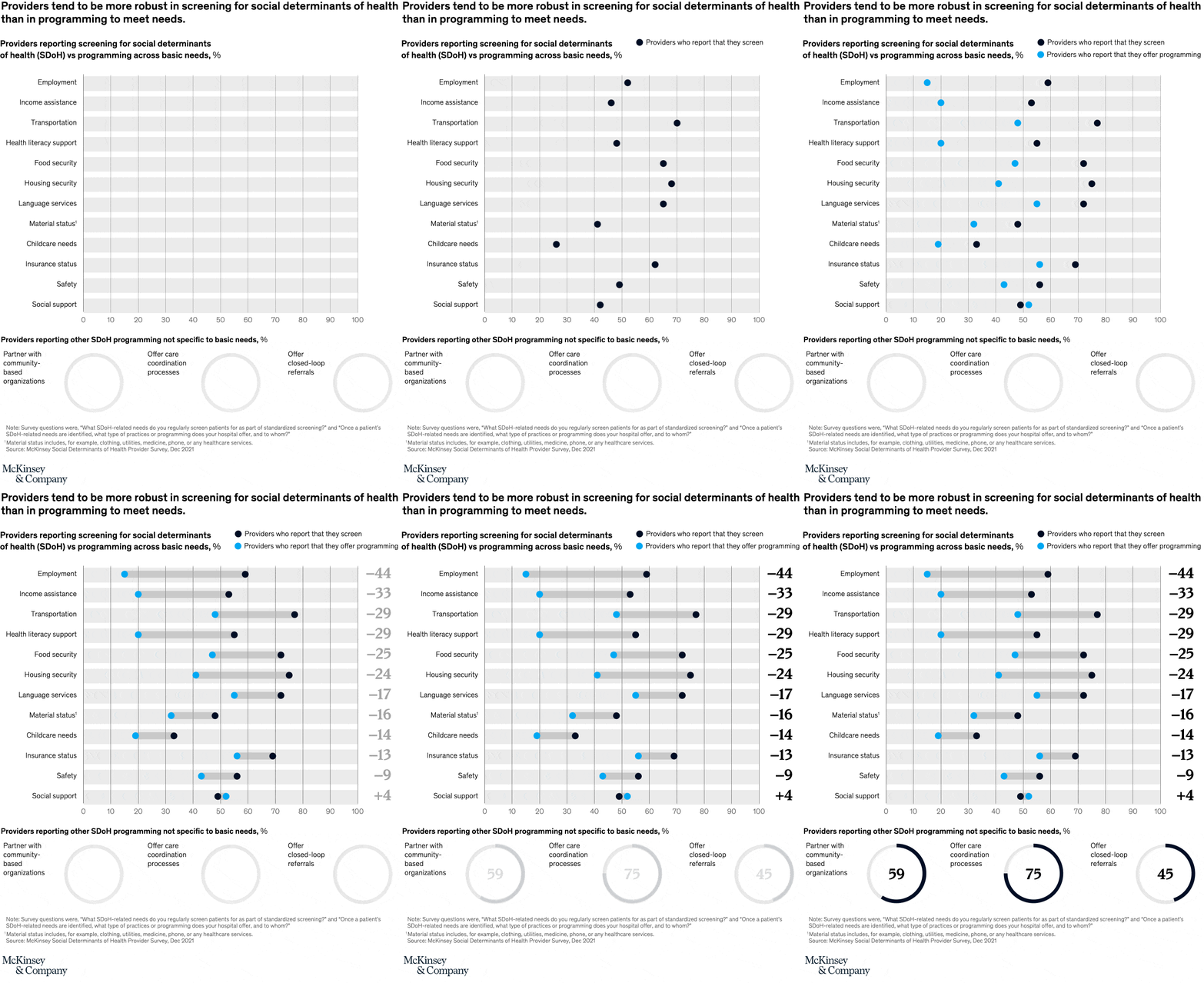
October 17, 2022 – Some healthcare and nonmedical providers have ample screening methods to assess needs related to social determinants of health but fall short of offering actual programming to the patient populations who need those services. A McKinsey survey of US providers found that fewer than half of them offer programming specific to social determinants (employment or food security, for example), although some of the providers offer referrals to address the need gaps.
To read the article, see “How providers are meeting patients’ basic needs—and where they could do more,” August 11, 2022.
customizer here
Visual form
Screening-versus-programming comparison chart.
Layout / body structure
The chart is laid out as a side-by-side provider capability comparison, with the reader moving from screening activity to the much thinner layer of actual programming or service provision. The reading order is from assessment to action.
What is being compared
It compares healthcare and nonmedical providers’ use of screening for social determinants of health with their much lower rates of offering actual programming to meet those needs.
Measurement system
The page uses survey shares of providers, so the viewer is tracking the percentage screening for needs and the percentage providing specific support programs in areas such as employment or food security.
Visible structure inside the graphic
The internal pieces are the provider actions arranged in two levels: screening and programming. The structure makes the drop from assessment to intervention the main visual contrast inside the chart.
Main takeaway from the visual
The page shows that identifying social needs is much more common than acting on them. The graphic is built to expose the implementation gap between recognizing a problem and putting support in place.
Key standout values or extremes
The standout figure is that fewer than half of providers offer programming specific to social determinants of health, even though many more have robust screening methods. That gap is the core numerical message on the page.
Controls / sequence, when applicable
This is a static chart image with no in-chart controls to operate.
Companion media, when applicable
There is no separate companion audio or video; the chart image is the full visual on this page.