Source page: McKinsey & Company
Commentary
Sports gender gap
Sports | Diversity & Inclusion
May 8, 2023 – Women sports managers create a far more positive experience for their teams than their male counterparts. Partner Drew Goldstein and colleagues find that women in the sports industry report feeling more supported by women managers than they do by male managers. At the same time, women in sports administration face negative effects in an industry dominated by men, including a lack of opportunities for advancement.
To read the report, see “The business of sports and the quest for inclusion for women,” April 5, 2023.
customizer here
Visual form
Grouped bar chart.
Layout / body structure
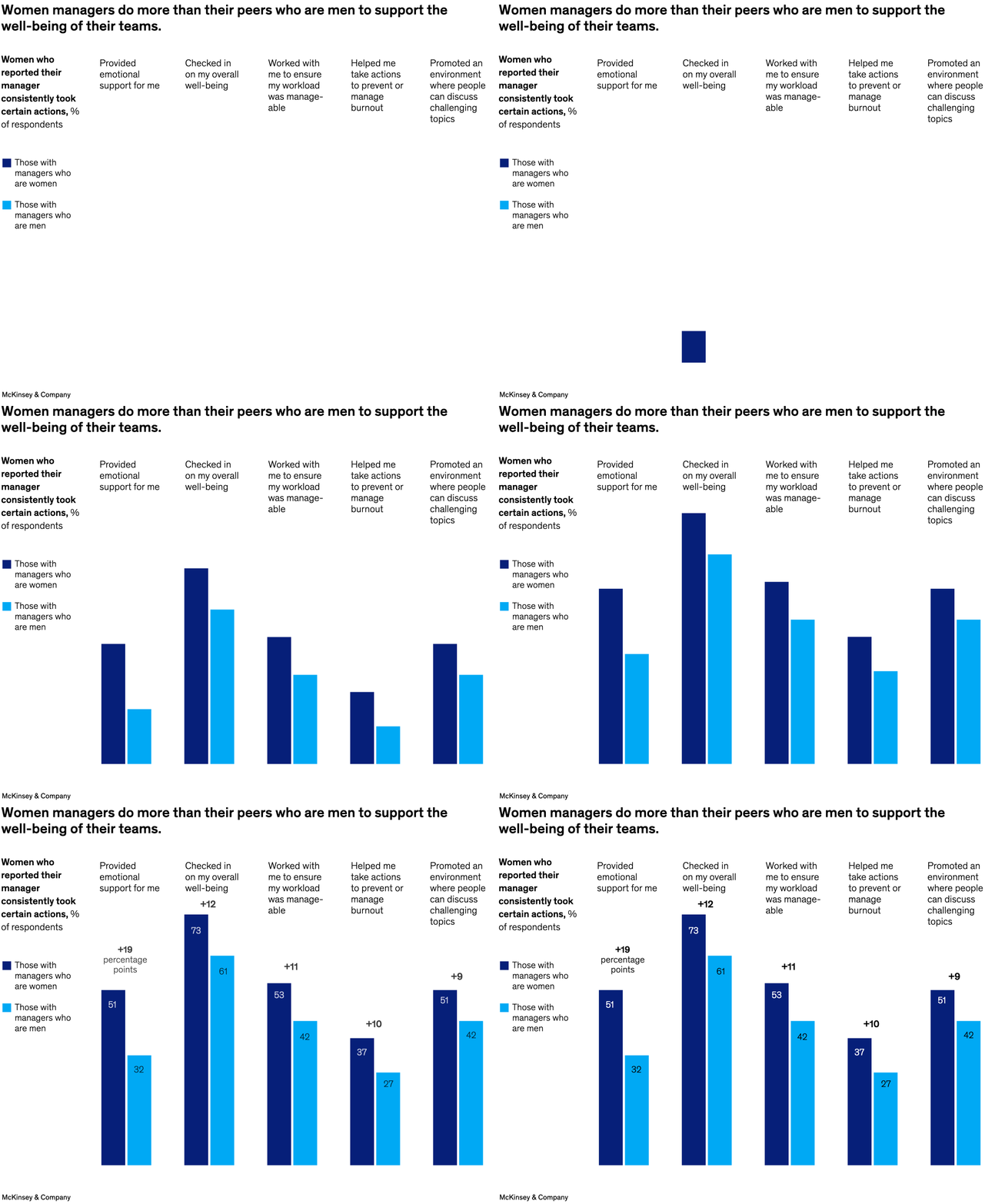
The chart lays five workplace-support actions across the page, and each action is represented by a dark-blue bar for employees with women managers and a light-blue bar for employees with men managers.
What is being compared
It compares how often women report that their manager consistently took several supportive actions, split by whether that manager is a woman or a man.
Measurement system
The measure is percent of respondents, and the chart also prints the percentage-point gap above each action group so the difference is explicit as well as visual.
Visible structure inside the graphic
Each action category has a pair of bars, direct value labels inside the bars, and a positive gap marker above the pair, which turns the chart into a side-by-side comparison of support behaviors rather than a single-series ranking.
Main takeaway from the visual
Across every action shown, the dark-blue bar is higher than the light-blue bar, so the pattern is not isolated to one dimension of support but repeats across emotional support, well-being check-ins, workload management, burnout prevention, and open discussion of challenging topics.
Key standout values or extremes
The largest visible gap is emotional support at 51 percent versus 32 percent, a 19-point spread; the highest absolute value is overall well-being check-ins at 73 percent versus 61 percent; and the smallest shown gap is still positive at 9 points for promoting an environment where people can discuss challenging topics.
Controls / sequence, when applicable
This is a static chart image with no in-chart controls to operate.
Companion media, when applicable
There is no separate companion audio or video; the chart image is the full visual on this page.