Source page: McKinsey & Company
Commentary
The ‘double shift’ of working mothers now even longer
Organization | Diversity & Inclusion
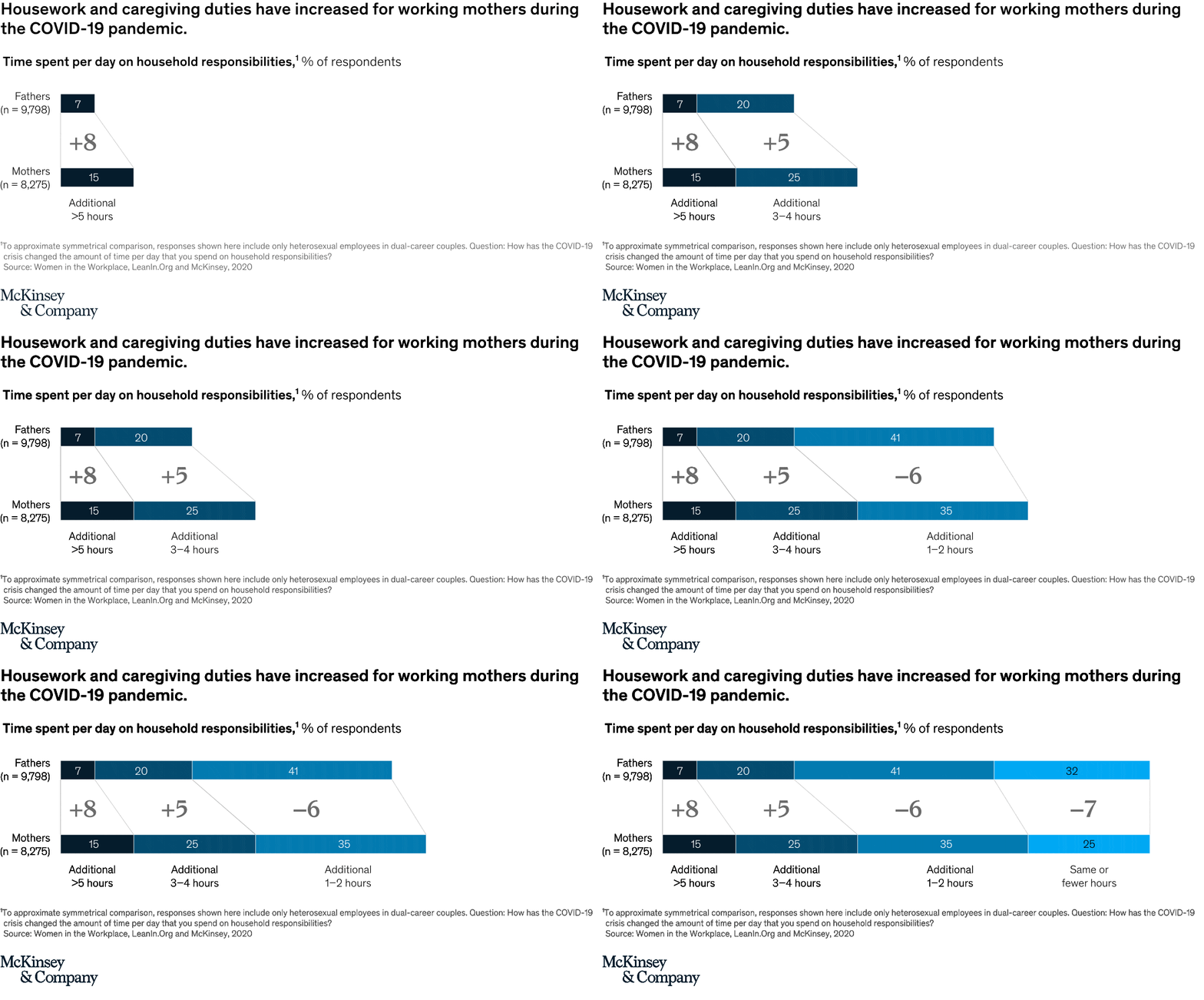
May 17, 2021 – Mothers already take on so much more housework and childcare than men that employed mothers are often said to be working a ‘double shift.’ During the pandemic, that double shift burden has grown, with mothers three times as likely as fathers to do most of the housework and caregiving.
To read the article, see “For mothers in the workplace, a year (and counting) like no other,” May 5, 2021.
customizer here
Visual form
Animated single-panel comparison chart.
Layout / body structure
The chart resolves into one vertical comparison between fathers and mothers, with the smaller value at the top and the larger value at the bottom. Reader moves from the father label to the mother label and then uses the large plus-eight bridge in the center as the summary of the gap.
What is being compared
It compares fathers and mothers in dual-career heterosexual couples on the share who say they spend more than five hours per day on household responsibilities during the COVID-19 period.
Measurement system
The measurement is percent of respondents. The chart prints the category as additional greater-than-five hours per day and uses the labeled values 7 and 15 as the two anchors for the comparison.
Visible structure inside the graphic
The graphic uses two dark value blocks, one for fathers and one for mothers, connected by a widening white bridge that visually opens from the smaller top figure to the larger lower one. The oversized plus-eight callout sits inside that bridge so the gap is visible before the footnote is read.
Main takeaway from the visual
Working mothers are shown carrying a much heavier household load than fathers. The chart makes that imbalance explicit by putting mothers at the larger lower value and turning the difference itself into the central visual object.
Key standout values or extremes
The key numbers are 7 percent for fathers and 15 percent for mothers, which creates an eight-percentage-point gap. In practical terms, the mothers value is a little more than double the fathers value in this more-than-five-hours category.
Controls / sequence, when applicable
This is a static chart image with no in-chart controls to operate.
Companion media, when applicable
There is no separate companion audio or video; the chart image is the full visual on this page.