Source page: McKinsey & Company
Commentary
Touch and go for RTO?
Jobs | Real estate
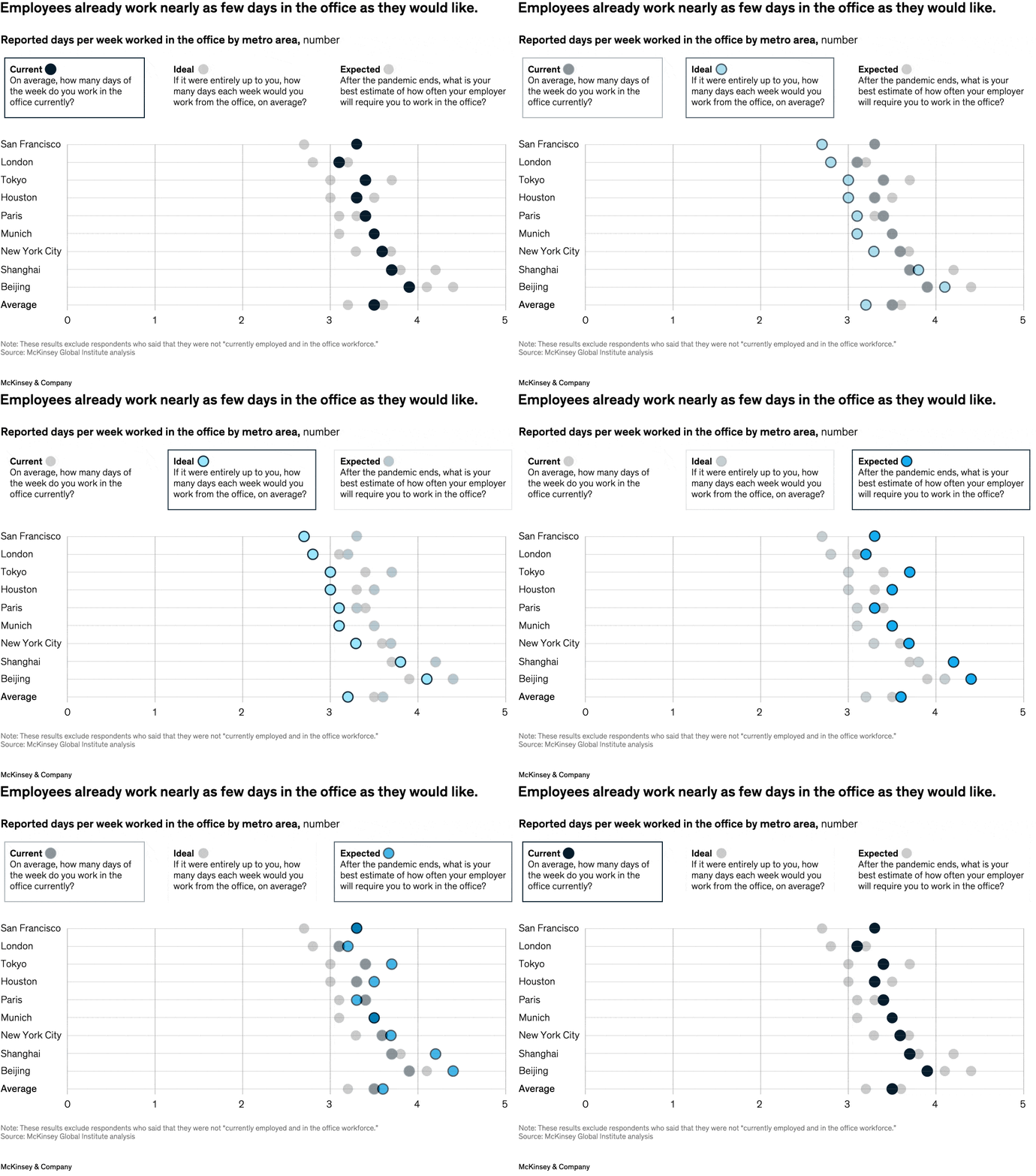
September 15, 2023 – Employees are returning to work at corporate offices, but they are going in for fewer days a week than they were before the pandemic. Office attendance has stabilized at 30 percent below prepandemic norms, according to McKinsey Global Institute partner Jan Mischke, senior partner Aditya Sanghvi, and colleagues. Among survey respondents in several large global cities, there is only a small gap between the number of days they currently work in the office and the number of days they expect to work there in the future.
To read the report, see “Empty spaces and hybrid places: The pandemic’s lasting impact on real estate,” July 13, 2023.
customizer here
Visual form
Multi-series dot plot. It compares three office-attendance measures across major metro areas.
Layout / body structure
The chart reads top to bottom by city, with three dots on each row for current, ideal, and expected office days. Reader scans horizontally within each city first and then compares rows across locations.
What is being compared
It compares how many days per week employees currently work in the office, how many days they would ideally choose, and how many days they expect employers will require, across cities such as San Francisco, London, Tokyo, Houston, Paris, Munich, New York City, Shanghai, Beijing, and the average.
Measurement system
The horizontal axis measures reported days per week worked in the office. Color distinguishes the three series: current, ideal, and expected.
Visible structure inside the graphic
Each metro area gets one row with three labeled markers, which makes the chart a compact side-by-side comparison of sentiment and reality. The repeated row structure makes gaps between current, ideal, and expected easy to see.
Main takeaway from the visual
Employees are already working close to the number of office days they say they want, so the remaining room for a large RTO push looks limited. The dots cluster fairly tightly instead of showing giant gaps between current and ideal behavior.
Key standout values or extremes
The biggest visible contrasts are city differences at the upper end, especially between Asian metros such as Shanghai or Beijing and lower-attendance cities such as San Francisco. The headline point, though, is the generally small gap between current and ideal days.
Controls / sequence, when applicable
This is a static chart image with no in-chart controls to operate.
Companion media, when applicable
There is no separate companion audio or video; the chart image is the full visual on this page.