Source page: McKinsey & Company
Commentary
What have you done for me lately?
Europe | Jobs | Talent
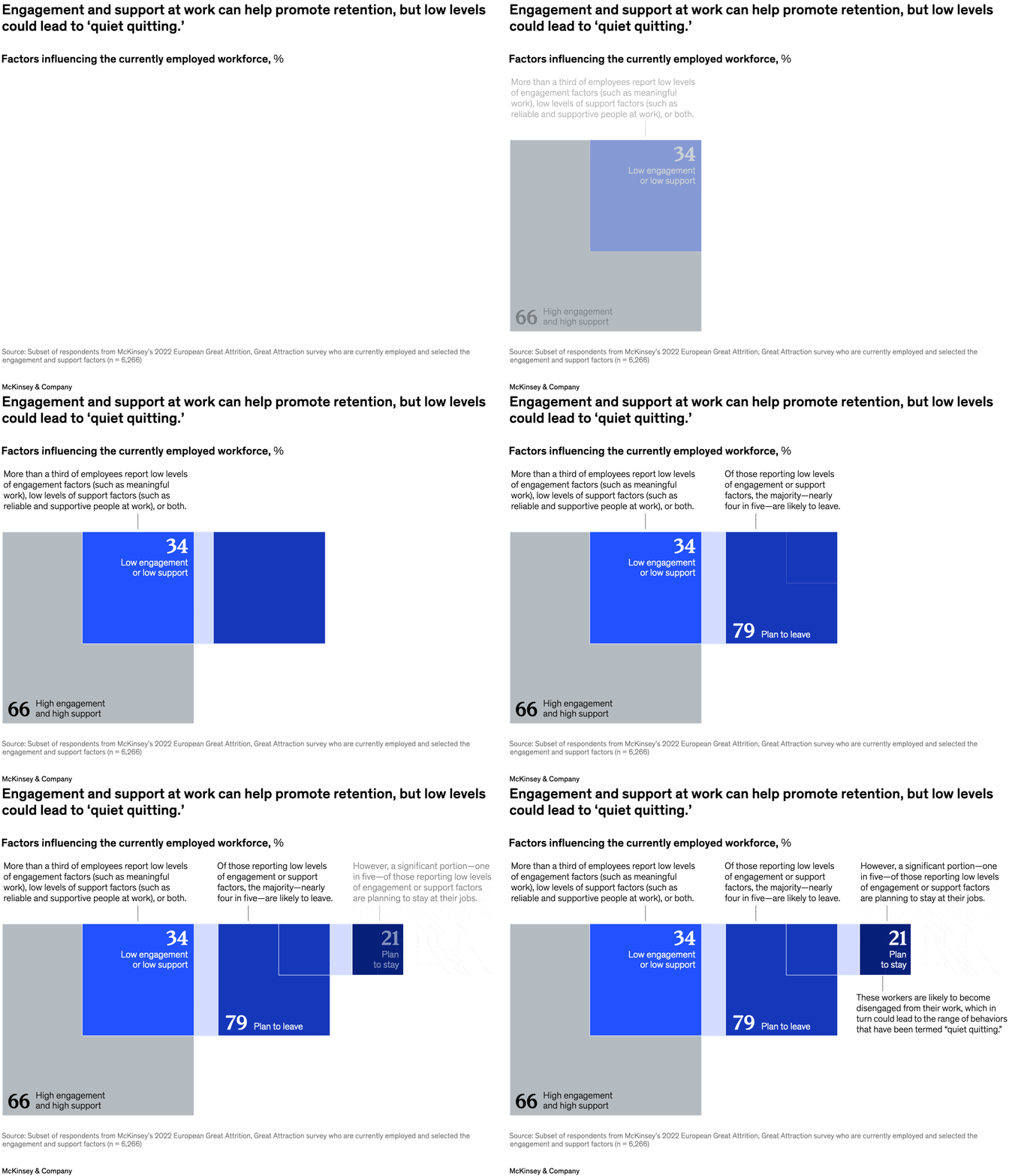
February 1, 2023 – Dissatisfied workers in Europe are eyeing other opportunities, exacerbating a high job vacancy rate and skills gap. New research by senior partners Vincent Bérubé and Dana Maor and coauthors shows that among employees there who report low levels of engagement or support at work, roughly one-fifth of them plan to remain in their jobs. Higher engagement and more support factors in the workplace are key to promoting retention.
To read the article, see “European talent is ready to walk out the door. How should companies respond?,” December 12, 2022.
customizer here
Visual form
Animated multi-panel workplace-engagement chart sequence.
Layout / body structure
The page presents a timed sequence of panels that sort workers by their level of engagement and support at work, then connects those states to retention outcomes. The reading order is panel by panel, with each frame adding another piece of the retention picture.
What is being compared
It compares employees with different levels of workplace engagement and support, and then compares how likely those groups are to stay, disengage, or drift toward quiet quitting.
Measurement system
The page uses shares of employees, so the reader is tracking percentages across experience categories rather than absolute counts. Category labels do the grouping work while the percent labels or proportional segments show the size of each outcome.
Visible structure inside the graphic
The visual is organized into repeated group comparisons, with each panel pairing engagement or support conditions to retention outcomes. The main internal pieces are the grouped bars or segmented shares, the workplace-factor labels, and the outcome labels tied to staying or detaching.
Main takeaway from the visual
The chart is built to show that support and engagement are not soft side issues; they visibly change retention outcomes. The weakest support conditions line up with the weakest commitment to remain, which is why the page frames quiet quitting as an organizational design problem rather than just an employee attitude problem.
Key standout values or extremes
The clearest numeric hook in the page framing is that only about one-fifth of employees reporting low engagement or support expect to remain in their jobs. The lowest-support conditions sit at the weak end of the retention comparison throughout the sequence.
Controls / sequence, when applicable
This is a static chart image with no in-chart controls to operate.
Companion media, when applicable
There is no separate companion audio or video; the chart image is the full visual on this page.