https://en.wikipedia.org/wiki/Universalism
Historical Development of Universalism (Origins–1930)
Clement and Origen: The First Universalists of the Christian Tradition
Clement of Alexandria (c. 150–215 CE)
Clement belonged to the Alexandrian school, where Greek philosophy and Christian theology intermingled. He viewed God as a divine educator rather than a judge—a being whose purpose was to bring every soul to moral maturity. For Clement, divine punishment was corrective, not eternal. In his Stromata and Paedagogus, he argued that even the most wicked are disciplined by God “as by a physician,” for the sake of healing, not destruction.
Clement’s synthesis of Stoic moral discipline, Platonic ascent, and Christian salvation produced an early moral-universalist theology: salvation unfolds through instruction, repentance, and eventual purification. Every human, rational by nature, was capable of responding to divine reason (Logos), which operates universally.

Origen of Alexandria (c. 185–253 CE)
Origen, Clement’s pupil and the greatest systematic theologian of the early Church, extended this idea into a full cosmology. In his De Principiis (On First Principles), he proposed that all rational souls originated in harmony with God but fell away through misuse of freedom. The purpose of history, he taught, was restoration—apokatastasis—the return of all beings to God.
Punishment, including hellfire, was educative and finite: a purgative fire cleansing souls until every will freely turns toward the Good. Even the devil, he speculated, might eventually be restored, for evil has no eternal substance.
Origen grounded this hope in scripture—especially 1 Cor 15:28, “that God may be all in all.” Salvation, for him, was universal, rational, and voluntary, the perfection of divine justice and mercy in unity.
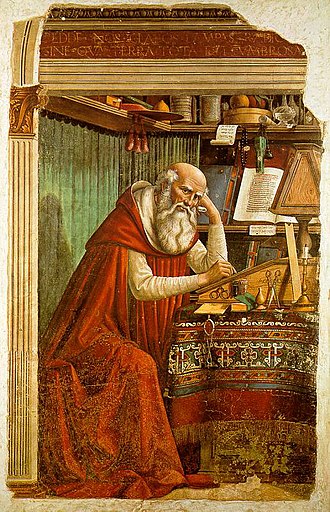
Together, Clement and Origen framed a restorative theology that saw divine judgment as medicine and history as pedagogy. Their vision made love, not wrath, the governing principle of God’s relationship with creation—an idea that would resurface more than a millennium later in the modern Universalist movement.
From the Alexandrian School to the Cappadocian Fathers (4th Century CE)
The universalist spirit awakened by Clement and Origen did not vanish with the controversies that followed them. Instead, it quietly shaped the next generation of Christian thinkers—especially those who would later define orthodox theology in the Eastern Church. These heirs, known collectively as the Cappadocian Fathers, carried forward the Alexandrian synthesis of Greek philosophy and Christian revelation, refining it into a coherent Trinitarian and spiritual theology.
The Cappadocian Fathers: Carriers of the Restorative Vision
The trio of Basil the Great, Gregory of Nazianzus, and Gregory of Nyssa (active c. 330–395 CE) built upon Origen’s intellectual framework while rebalancing it with scriptural orthodoxy.
- Basil the Great emphasized the harmony between creation, order, and divine wisdom—echoing Clement’s sense of God as a rational, educative force.
- Gregory of Nazianzus refined Trinitarian language, preserving the mystery of divine unity while affirming distinct persons.
- Gregory of Nyssa, Origen’s most direct theological descendant, developed a profound doctrine of the soul’s infinite ascent toward God (epektasis). In his writings, punishment remains purificatory, and the ultimate destiny of creation is restoration—a moderated form of apokatastasis.
For the Cappadocians, evil was finite because it lacked real substance; goodness alone had permanence. Humanity’s journey was not toward destruction but unceasing transformation, an endless movement into divine likeness.
Legacy and Transition
The Cappadocian synthesis marked the turning point from speculative Alexandrian theology to the doctrinal stability of Byzantine Christianity. They preserved Origen’s moral and philosophical depth but replaced his cosmic speculations with a Christ-centered, sacramental vision of salvation.
In this era, universalism ceased to be a radical doctrine and became instead a subtle undertone—expressed through the language of hope, purification, and divine victory. This vision of healing through divine love continued to ripple through monastic spirituality, mystical theology, and later writers such as Isaac of Nineveh and Maximus the Confessor, who would quietly keep the restorative flame alive.
Augustine and the Western Reversal (4th–5th Century CE)
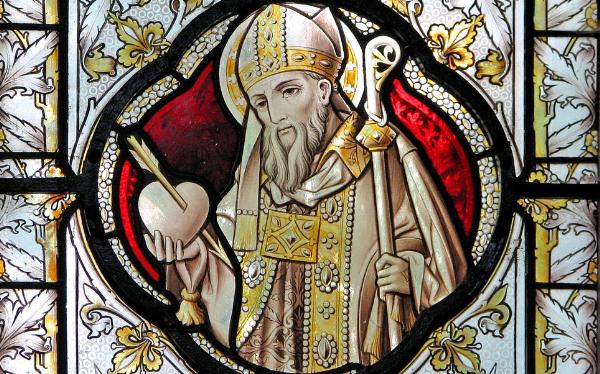
While the Cappadocians anchored universalist theology in Eastern Christianity, the Latin West moved in a different direction under Augustine of Hippo (354–430 CE). A convert from Roman rhetoric and Neoplatonism, Augustine reshaped Christian philosophy around the psychology of sin, grace, and divine will—establishing the framework that would dominate Western theology for a millennium.
Augustine’s Transformation of Neoplatonism
Educated in Carthage and Milan, Augustine absorbed the writings of Plotinus and Porphyry, finding in their philosophy a vision of the soul’s ascent from matter to God. Yet after his conversion to Christianity, he replaced the Neoplatonic emphasis on the soul’s self-return with the conviction that grace alone restores the will. Humanity, he argued, cannot heal itself; only divine mercy can overcome sin’s corruption.
In works such as Confessions and The City of God, Augustine reframed universalist hope into a more judicial theology. Evil was not ignorance or immaturity—as Clement and Origen taught—but a privation of good rooted in the disordered will. Salvation thus became selective: those predestined by God receive grace and eternal life, while others face eternal separation.
Doctrinal Consequences
Augustine’s teaching on original sin, predestination, and eternal punishment decisively shaped Latin Christianity. His rejection of Origen’s apokatastasis transformed divine justice from a restorative process into a final verdict. Where the Alexandrians envisioned judgment as a purgative healing, Augustine saw it as the manifestation of God’s unchallengeable righteousness.
This shift introduced a deep psychological and moral dualism into Western theology: the saved and the damned, grace and nature, the City of God and the City of Man. Augustine’s synthesis of Roman law, Pauline theology, and Neoplatonic interiority became the blueprint for Western medieval thought.
Legacy and Divergence
The result was a lasting split in Christian metaphysics:
- The East, guided by the Cappadocians, continued to view salvation as universal healing and deification (theosis).
- The West, under Augustine, redefined it as legal justification and personal election.
This divergence would echo through a thousand years of theology—culminating in the medieval debates over grace, purgatory, and redemption. Yet even within Augustine’s world, traces of the older restorative vision endured: in monastic mysticism, in the compassionate sermons of Isaac of Nineveh, and later in the daring speculations of John Scotus Eriugena, who would reawaken Origen’s universal horizon in the 9th century.
John Scotus Eriugena and the Medieval Revival of Universal Restoration (9th Century CE)
In the centuries after Augustine, the Western Church largely abandoned Origen’s vision of universal restoration. The dominant tone was juridical—salvation as divine judgment, heaven and hell as eternal opposites. Yet in the 9th century, a new voice emerged within the Carolingian Renaissance who quietly reopened the Alexandrian horizon: John Scotus Eriugena (c. 810–877 CE).
Philosophy at the Edge of Orthodoxy
An Irish scholar at the court of Charles the Bald, Eriugena was one of the few medieval thinkers fluent in both Greek and Latin. Drawing from translations of Gregory of Nyssa, Dionysius the Areopagite, and Maximus the Confessor, he became the first Western philosopher to revive a systematic Christian Neoplatonism since Augustine.
In his masterwork Periphyseon (On the Division of Nature), Eriugena presented an audacious cosmology:
- All things come from God and must return to God.
- Creation is not a one-time act but a continuous procession and reabsorption—a cycle of divine self-manifestation.
- Evil has no substance and will eventually be consumed in the restoration of divine order.
For Eriugena, salvation was not merely moral but ontological—the completion of existence itself as all beings are reconciled to their source. His view, echoing Origen and Gregory of Nyssa, implied an ultimate universal reconciliation (apokatastasis pantōn).
Conflict and Condemnation
Eriugena’s ideas were celebrated among Carolingian scholars for their brilliance yet alarmed church authorities for their daring. His assertion that creation was theophany—the visible unfolding of God—blurred the line between Creator and creation. In 1210 and again in 1225, Periphyseon was condemned for pantheistic tendencies.
Yet despite ecclesiastical censure, Eriugena’s work became a bridge between Greek mystical theology and the Latin scholastic method. His speculative metaphysics preserved the spiritual lineage of Origen and the Cappadocians within Western thought.
Legacy: A Hidden Line of Continuity
Through Eriugena, the restorative tradition of Clement, Origen, and Gregory of Nyssa passed silently into medieval mysticism. His influence can be traced in:
- Hugh of St. Victor and the Victorine mystics, who saw contemplation as reunion with divine wisdom.
- Meister Eckhart and Nicholas of Cusa, who later reasserted the unity of being and God’s presence in all things.
Eriugena thus stands as the Western heir of Christian Neoplatonism—a thinker who reintroduced the idea that creation itself is destined for reconciliation, not division.
Medieval Mysticism and the Quiet Survival of Universalism (12th–15th Centuries CE)
After John Scotus Eriugena, explicit universalism faded from Western theology, suppressed by scholastic orthodoxy and the dominance of Augustinian judgment. Yet the spiritual current of restoration—the idea that all being tends toward reunion with the divine—did not disappear. It survived underground, carried forward by the mystics who translated speculative Neoplatonism into the language of inner experience, contemplation, and divine love.
Hugh of St. Victor and the Victorine School (12th Century)
At the Abbey of St. Victor in Paris, Hugh of St. Victor (c. 1096–1141) and his successors revived Eriugena’s theme of return to God through contemplation.
For Hugh, creation was a classroom in which the soul learned divine wisdom through study, meditation, and love. The Didascalicon described knowledge as a ladder ascending from sense to intellect to spirit—an echo of the old Platonic ascent.
The Victorines preserved the Neoplatonic triad of procession, participation, and return but rendered it compatible with emerging scholastic theology. While avoiding any claim of universal salvation, their spirituality affirmed that all creation participates in God’s unfolding unity.
Meister Eckhart and the German Mystical Current (13th–14th Centuries)
The Dominican friar Meister Eckhart (c. 1260–1328) brought the mystical Neoplatonic tradition to its Western summit.
He taught that within every soul lies a divine spark (Seelenfünklein)—the ground where God eternally gives birth to the Word. This ground is uncreated and one with God; thus, the soul’s task is to awaken to what it already is.
Eckhart’s sermons describe a radical unity of being: all creatures emanate from the divine source and ultimately return to it. While he never taught formal universalism, his theology dissolved the boundaries between Creator and creation in language reminiscent of Clement, Origen, and Eriugena.
Condemned posthumously for “dangerous propositions,” Eckhart nevertheless became the fountainhead for later German mystics such as Johannes Tauler and Henry Suso, who continued to speak of divine union as humanity’s true destiny.
Julian of Norwich and the Theology of Compassion (14th Century)
In England, the anchoress Julian of Norwich (c. 1343–after 1416) received a series of mystical visions recorded in Revelations of Divine Love—the first book in English known to be written by a woman.
Her most famous assurance, “All shall be well, and all manner of thing shall be well,” expressed a restrained but unmistakable hope in universal reconciliation. Julian’s Christ reveals no wrath, only love; sin is “behovely” (necessary) because it occasions mercy. Though she never rejected the Church’s teaching on judgment, her revelations breathed the same restorative optimism found in Origen and Gregory of Nyssa: love as the final truth of God’s relation to creation.
Nicholas of Cusa and the Reunion of Opposites (15th Century)
The Renaissance cardinal Nicholas of Cusa (1401–1464) synthesized the entire medieval mystical heritage into a final philosophical form.
In De Docta Ignorantia (On Learned Ignorance), he proposed that God is the coincidence of opposites (coincidentia oppositorum): all contradictions—finite and infinite, good and evil, creator and creature—find resolution in the divine unity beyond comprehension.
For Cusa, the universe itself is a theophany, an image of divine harmony unfolding in infinite gradations. His cosmology reintroduced the Alexandrian vision of a cosmos tending back toward unity—a philosophical universalism expressed as metaphysical reconciliation rather than doctrine.
Legacy and Continuity
Across these centuries, the restorative vision of early Christian thought survived through new forms:
- Intellectual (Victorine and Scholastic synthesis)
- Experiential (German and English mysticism)
- Philosophical (Cusan metaphysics of unity)
Each reinterpreted the ancient cycle of emanation and return, fall and restoration, sin and healing, keeping alive the conviction that love—not wrath—is the final movement of the divine will.
When the Reformation and Enlightenment arrived, this quiet undercurrent of mystical universalism would resurface again—this time openly—in the rational theologies and moral philosophies of early modern Europe.
The Reformation and the Birth of Modern Universalism (16th–18th Centuries CE)
The Protestant Reformation shattered the unified structure of medieval Christendom, reopening questions long buried beneath scholastic orthodoxy. Among them returned a quiet but radical idea: that divine grace might ultimately embrace all creation. What had been a hidden mystical current through the Middle Ages began to reemerge as a theological and philosophical movement in its own right—first cautiously, then boldly—as the modern age dawned.
The Radical Reformation and the Polish Brethren (16th Century)
In the wake of Luther and Calvin, a constellation of reformers sought to purify Christianity beyond the established churches. Among these were the Polish Brethren, or Socinians, followers of Faustus Socinus (1539–1604).
Rejecting the Trinity and predestination alike, Socinus taught a rational, ethical faith centered on the moral teachings of Jesus. Salvation was not judicial substitution but moral transformation through divine love. The Polish Brethren thus became the first organized body in modern Europe to revive the core principles of Unitarian and Universalist theology: the unity of God, the freedom of conscience, and the perfectibility of all souls.
Their writings spread through Poland, Transylvania, and Holland, influencing Enlightenment humanism and the later emergence of English and American Unitarianism.
The English Mystics and the Vision of Universal Restoration (17th Century)
In England, amidst civil war and sectarian conflict, a series of visionary thinkers reasserted the restorative cosmology of Origen in new, poetic form.
- Jane Leade (1624–1704), a mystic associated with the Philadelphian Society, described in her revelations a coming “Age of the Spirit” when all souls, even the fallen, would be purified and restored through divine fire.
- Peter Sterry, a Cambridge Platonist and contemporary of Milton, taught that God’s justice is medicinal, not retributive—that punishment serves the soul’s correction, not its destruction.
- George Fox and the early Quakers likewise emphasized the Inner Light present in all people, implying a universal capacity for salvation.
This spiritual universalism arose from the same sources that had nourished Clement and Origen: the conviction that divine love is both the origin and the end of all being.
Rational Faith and the Enlightenment (18th Century)
By the 18th century, the intellectual climate of Enlightenment rationalism made space for a moral, non-dogmatic Christianity. Universal salvation was no longer framed as mystical speculation but as a matter of divine justice and reason.
- Elhanan Winchester (1751–1797) and George de Benneville (1703–1793) preached that an infinite God could not create beings destined for infinite punishment.
- John Murray (1741–1815) carried the message to America, founding the first Universalist congregation in Gloucester, Massachusetts, in 1779.
- Parallel to these developments, the Unitarian movement emerged from liberal Congregationalism, emphasizing reason, freedom, and the moral dignity of humanity.
What had begun as heresy under Origen had become, by the dawn of modernity, a recognized theological tradition: the belief that divine love and reason, acting together, will ultimately reconcile all souls to their source.
Legacy: From Reform to Renewal
The Reformation and Enlightenment transformed the ancient doctrine of apokatastasis into a modern moral faith.
- The mystical language of restoration became ethical universalism—the belief in the moral unity of humankind.
- The theology of return evolved into a theology of progress—history itself seen as divine education.
- The hidden river of Alexandrian thought surfaced openly, giving rise to Unitarianism and Universalism, which would formally unite two centuries later.
By the end of the 18th century, Universalism had ceased to be an esoteric hope and had become a movement of conscience, standing for the same vision first voiced by Clement and Origen: that love, not wrath, is the final word of God.
The Unitarian and Universalist Movements in America (19th Century CE)
By the dawn of the 19th century, the ideals of reason, conscience, and universal grace had taken institutional form. In the newly independent United States—where freedom of religion allowed ancient theological controversies to reemerge—Unitarianism and Universalism became two of the most dynamic liberal movements in American Christianity. Each inherited different strands of the same root: one rational and ethical, the other emotional and restorative.
The Rise of American Unitarianism
Unitarianism developed within New England Congregationalism, where liberal ministers questioned Calvinist doctrines of total depravity and predestination.
- William Ellery Channing (1780–1842) gave the movement its moral and intellectual definition in his sermon Unitarian Christianity (1819). He proclaimed God’s unity, Christ’s moral leadership, and humanity’s capacity for goodness.
- Channing’s Unitarianism was not only theological but ethical: religion must express itself in character, virtue, and social progress.
- Figures such as Ralph Waldo Emerson, Theodore Parker, and the Transcendentalists later expanded Unitarianism into a spiritual humanism, emphasizing intuition, the divinity within, and reverence for nature as the living presence of God.
Unitarianism thus evolved into the religion of reason and conscience, embracing intellectual freedom and moral responsibility over creed or ritual.
The Universalist Church of America
In parallel, Universalism spread among working-class and frontier communities.
- Hosea Ballou (1771–1852), the leading theologian of American Universalism, rejected the doctrine of substitutionary atonement in A Treatise on Atonement (1805). He argued that God’s love itself—not Christ’s death—redeems humanity, and that punishment is corrective, not eternal.
- Universalists emphasized joy, compassion, and equality, preaching that no soul was beyond God’s reach.
- Their churches became centers of education, reform, and democracy, attracting both intellectuals and ordinary citizens disillusioned with stern Calvinism.
By mid-century, Universalism was the fifth-largest denomination in the United States, animated by a message of hope, dignity, and divine benevolence.
Convergence of Reason and Love
Though Unitarianism and Universalism developed along separate paths—one intellectual, the other pastoral—they increasingly recognized their shared foundations:
- Both rejected the fear-based religion of eternal damnation.
- Both affirmed the moral law within as divine revelation.
- Both viewed humanity as progressing toward moral and spiritual maturity, not trapped in depravity.
Together, they embodied the twin pillars of modern liberal faith:
Unitarianism as the religion of reason,
Universalism as the religion of love.
Social Reform and the Liberal Gospel
In the 19th century, both movements became powerful forces for social transformation.
- Unitarians and Universalists were active in abolitionism, women’s rights, education reform, and peace movements.
- Ministers like Theodore Parker preached that democracy itself was a form of divine revelation.
- Olympia Brown, ordained in 1863, became one of the first women ministers in America—within the Universalist Church.
- Both movements expanded across New England, the Midwest, and the expanding frontier, bringing a progressive faith into the nation’s moral and civic life.
Legacy: Preparing the Ground for Union
By the end of the 19th century, Unitarianism and Universalism stood as complementary halves of the same evolving tradition.
- Each had outgrown its denominational boundaries, embracing an increasingly pluralistic, interfaith, and rational spirituality.
- Both began to describe religion not as revelation but as the ongoing search for truth and meaning.
- Their convergence—reason joined with love, conscience with compassion—set the stage for the 20th-century merger that would formalize their unity as Unitarian Universalism.
The Modern Merger and the Emergence of Unitarian Universalism (1900–1961 CE)
By the turn of the 20th century, Unitarianism and Universalism had matured into two distinct but converging liberal faiths. Both faced the same modern challenge: how to preserve spiritual meaning in an age of science, secularism, and global diversity. The century that followed would see them gradually shed denominational boundaries and unite around a single principle—the worth, reason, and destiny of the human spirit.
The Liberal Religious Awakening (1900–1930)
Early in the century, both movements embraced the Social Gospel, viewing religion as a moral force for reform rather than dogma.
- Unitarian ministers such as John Haynes Holmes and Curtis Reese worked alongside secular humanists and reformers in campaigns for civil liberties, racial equality, and world peace.
- Universalists, led by thinkers like Clarence Skinner, reinterpreted salvation as social transformation—heaven realized through justice on earth.
- The Religious Humanist Manifesto (1933), signed by several Unitarian and Universalist leaders, declared that moral truth and human progress could be pursued without reliance on supernaturalism.
This was a decisive evolution: religion became ethical, democratic, and forward-looking, anchored in human experience rather than creed.
World War and Reorientation (1930–1950)
The crises of two world wars forced both denominations to confront human suffering and the limits of reason. Rather than retreat, they broadened their spiritual base:
- Unitarianism moved beyond its Christian identity to embrace insights from Buddhism, Taoism, and modern psychology.
- Universalism deepened its commitment to compassion and reconciliation, emphasizing the unity of humanity over doctrinal divisions.
- In both, faith shifted from belief in God to trust in the moral capacity of humanity itself.
During this period, many congregations began to cooperate through joint education programs, youth organizations, and social action councils.
Toward a Common Faith (1950–1961)
By mid-century, the line between the two traditions had nearly dissolved.
- The American Unitarian Association (AUA) and the Universalist Church of America (UCA) were now working from shared principles: freedom of conscience, the authority of reason, and the moral necessity of love.
- Both faced declining membership, cultural secularization, and overlapping missions in education, peace, and human rights.
- In 1953, formal talks began on unification. Over eight years of negotiation, committees from both sides drafted a covenantal structure that would preserve congregational autonomy while joining resources and vision.
The Unitarian Universalist Association (1961)
On May 15, 1961, in Boston, the two historic movements officially merged to form the Unitarian Universalist Association (UUA).
The new body declared that faith was not a set of doctrines but a living covenant—a commitment to seek truth freely, to practice justice, and to affirm the dignity of every person.
This merger completed a 1,700-year arc:
- From Clement and Origen’s theology of restoration,
- Through the Cappadocians’ mysticism and Eriugena’s cosmology,
- Through mystics, reformers, and rationalists,
- To a modern faith of reason and love united.
Unitarian Universalism thus entered the modern age not as a sect but as a continuing tradition of open inquiry, ethical action, and hope in humanity’s spiritual evolution—the enduring legacy of the world’s oldest vision of universal reconciliation.