1. Origin Moment
- Founding forces (what actually “triggered” UU):
- Institutional consolidation: Two small, theologically adjacent liberal denominations concluded they could not sustain separate national infrastructures (seminary support, publications, governance, congregational services) and chose merger as a survival and scale strategy.
- Theological convergence: Both traditions had already shifted away from confessional Christianity toward liberal religion (reason, conscience, ethical primacy), making merger structurally feasible.
- Cultural realignment: Mid-20th-century U.S. conditions favored voluntary, individualist, pluralist religious identity; UU’s emergent identity was shaped to fit that environment (low dogma, high autonomy, ethics-forward).
- Approximate date & earliest evidence (what counts as “earliest evidence” here):
- Unit origin date: 1961 — formal creation of Unitarian Universalism as a single organized religion via merger.
- Earliest evidence types: signed merger instruments, constitutions/bylaws, denominational proceedings, published statements defining the new association, and early post-merger organizational outputs (congregational materials, governance minutes).
- Pre-history evidence (what exists before UU as a named unit): records of separate Unitarian and Universalist bodies (church minutes, sermons, pamphlets, creeds/anti-creeds, educational materials), showing the trajectories that made merger possible.
- Broader background (preceding religions, migrations, crises):
- Preceding religious substrate: Western Christianity, especially Protestant congregational life, but progressively de-doctrinalized.
- Key antecedent lineages:
- Unitarian stream: anti-Trinitarian and rationalist Christianity; emphasis on the unity of God, moral reason, and later religious liberalism.
- Universalist stream: salvation universalism; anti-hell preaching; later humanitarian and social-gospel-inflected liberal Christianity.
- Crisis conditions enabling emergence:
- Declining denominational strength of both streams as distinct identities.
- Post-war American religious competition from larger Protestant bodies plus rising secular/humanist identification.
- Need for a religious “container” that could incorporate humanism and multi-source spirituality without schisming.
- Resulting origin character: UU begins not as a revelation event or prophetic founding, but as a deliberate institutional synthesis designed to preserve and extend liberal religious life.
2. Formation Period
- Early institutional shaping (1960s–1970s):
- Post-merger integration of governance, seminaries, publications, and congregational support into a single associational structure (UUA).
- Replacement of inherited Christian confessions with covenantal language and process-based unity.
- Early articulation of non-creedal identity to prevent internal schism between the two legacy streams.
- Identity consolidation mechanisms:
- Adoption and periodic revision of Principles and Sources as a unifying but non-doctrinal framework.
- Emphasis on congregational autonomy paired with national association standards (ministerial credentialing, ethics).
- Education and ministerial training reoriented toward pastoral care, ethics, and pluralist literacy rather than theology.
- Early tensions and resolutions:
- Humanist vs. theist members: resolved by institutional neutrality on metaphysics and prioritization of ethical process.
- Christian heritage vs. pluralism: resolved by de-centering Christianity without erasing historical lineage.
- Authority vs. autonomy: resolved through association-by-consent rather than hierarchical enforcement.
- Distinctive boundary crystallization:
- Clear separation from Protestant denominational logic (no creed, no sacramental gatekeeping).
- Definition of UU as a religion of method (how meaning is made) rather than religion of content (what must be believed).
3. Expansion and Consolidation
- Growth mechanisms (how UU spread):
- Congregational replication rather than mass conversion; growth primarily through educated, urban, professional populations.
- جذب of individuals disaffiliating from mainline Protestantism, Judaism, and Catholicism, as well as secular humanists seeking a religious container.
- Use of education, publishing, and civic engagement rather than evangelism as primary expansion tools.
- Institutional consolidation:
- Strengthening of the Unitarian Universalist Association (UUA) as the coordinating body for congregations, ministers, and shared services.
- Standardization of ministerial credentialing, ethical codes, and congregational affiliation requirements.
- Development of shared curricula (religious education, lifespan faith development) to maintain identity coherence without doctrine.
- Relationship to state and power:
- No formal alliance with state authority.
- Informal influence through elite cultural positioning (academia, law, media, nonprofit leadership).
- Public moral authority exercised via advocacy rather than institutional power.
- Stabilization outcome:
- UU consolidates as a small but durable religious ecosystem.
- Unity maintained through organizational loyalty and shared ethical orientation, not numerical scale or doctrinal enforcement.
4. Reformation and Schism
- Internal fractures (post-merger):
- Persistent tension between theist, humanist, and post-theist constituencies.
- Periodic conflict over the role of God-language, prayer, and Christian liturgical inheritance.
- Boundary management (how schism was avoided):
- No doctrinal purges; conflicts resolved by procedural accommodation rather than theological settlement.
- Reforms implemented via revisions to Principles/Sources, ministerial standards, and congregational practice guidelines.
- Notable departures and pressures:
- Loss of some Christian-identified congregations and members uncomfortable with increasing pluralism.
- Parallel drift of some humanists toward explicitly secular organizations.
- Structural result:
- UU experiences chronic internal reform without formal schism.
- Identity preserved by lowering metaphysical stakes and elevating ethical consensus and institutional continuity.
5. Derivative Traditions and Successor Movements
- Direct descendants:
- No formal successor religions; UU does not generate schismatic daughter churches due to its low-doctrine, high-accommodation structure.
- Adjacent or parallel movements:
- Secular humanism (organizationally separate but historically intertwined).
- Ethical culture societies and other non-theistic moral communities (structurally similar but institutionally distinct).
- Liberal Quaker meetings and post-Christian spiritual communities share partial lineage but remain separate traditions.
- Absorptive dynamics:
- UU functions as a sink rather than a source: it absorbs disaffiliates from Christianity, Judaism, and secular backgrounds without producing new doctrinal offshoots.
- Internal diversification occurs inside the association instead of external branching.
- Transmission pattern:
- Influence spreads through cultural diffusion (education, leadership, ethics) rather than replication of formal religious units.
6. Modern Encounters
- Secularization:
- UU both responds to and internalizes secular modernity; loss of supernatural consensus is treated as a condition to manage, not a crisis to reverse.
- Growth of explicitly humanist and naturalist identities within UU congregations.
- Pluralism & globalization:
- Active engagement with interfaith dialogue; incorporation of non-Western symbols, practices, and ethical language without claims of conversion or revelation.
- Tension between genuine pluralism and accusations of cultural appropriation.
- Political modernity:
- Strong alignment with progressive social movements (civil rights, feminism, LGBTQ+ equality, environmentalism).
- Increasing perception of UU as a political-ethical institution rather than a religious one.
- Institutional stressors:
- Aging membership and declining numbers.
- Conflict over governance reforms, ministerial authority, and the balance between congregational autonomy and association-wide standards.
7. Contemporary Situation
- Demographics & vitality:
- Membership is small, aging, and numerically declining in North America, with limited youth retention.
- Cultural influence exceeds raw membership due to concentration in education, law, nonprofits, and civic leadership.
- Geographic centers:
- Predominantly United States, strongest in urban/coastal and university-adjacent regions; modest Canadian presence; minimal global footprint.
- Institutional posture:
- Ongoing debates over governance reform, ministerial accountability, and the scope of association-wide standards.
- Active reassessment of the Principles and Sources framework to address equity, inclusion, and organizational coherence.
- Identity pressure points:
- Tension between being recognized as a religion versus a progressive ethical association.
- Strain between pluralist openness and the need for clearer identity anchors to sustain continuity.
- Current status:
- Stable as an institution, fragile as a growth model; continuity maintained through ethics-first identity and congregational loyalty rather than expansion.
Origins of Unitarian and Universalist Thought
Unitarian Universalism stands on two distinct yet converging foundations: Unitarianism and Universalism. Though united today in one liberal faith, each began as a separate challenge to dominant Christian doctrines, arising from different theological impulses and historical moments.
Unitarianism — The Religion of Reason and Unity
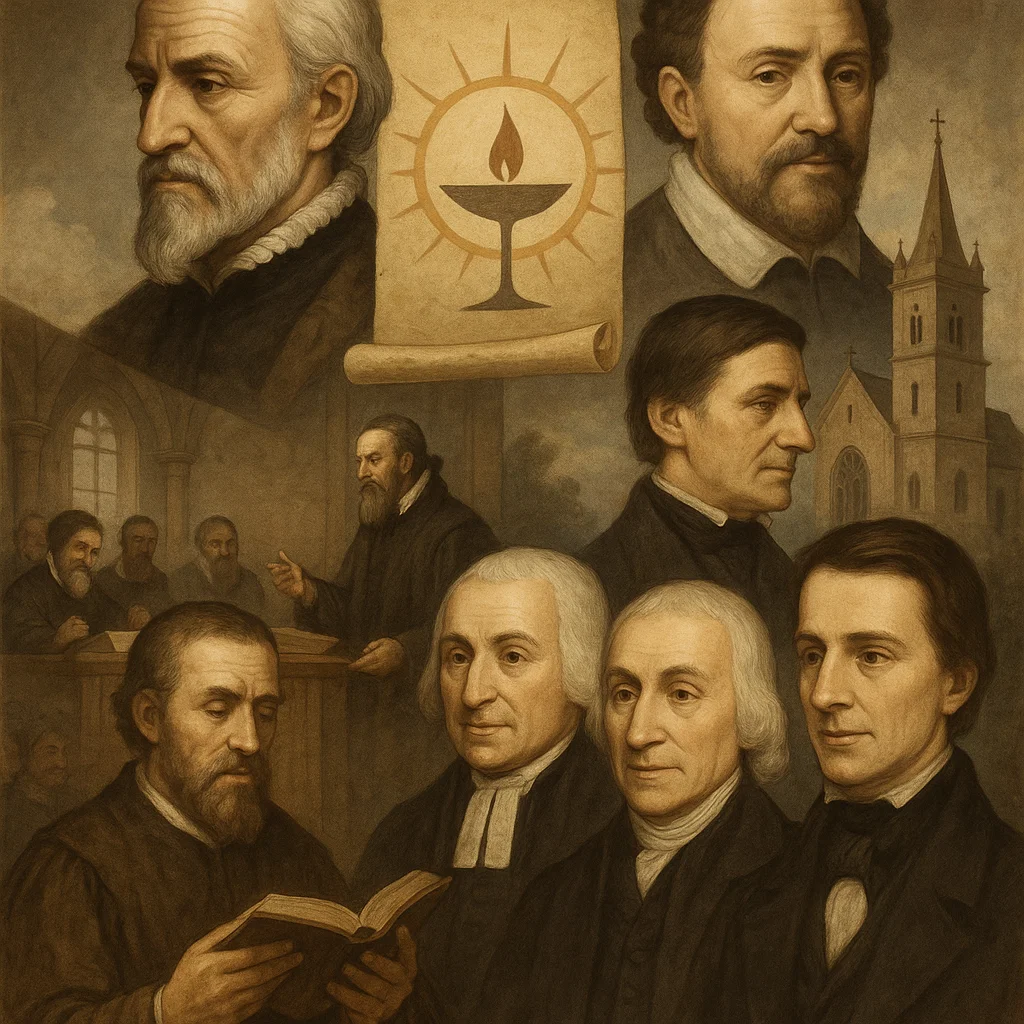
Unitarianism emerged during the Protestant Reformation as a movement of intellectual dissent. Its adherents rejected the doctrine of the Trinity, affirming instead the oneness of God and the moral reason of humanity. Early reformers such as Michael Servetus and Faustus Socinus emphasized rational interpretation of scripture and the ethical teachings of Jesus over creeds or miracles.
Protected under the Edict of Torda (1568) in Transylvania, Unitarianism became the first legally recognized non-Trinitarian faith in Europe. Later, it spread through England under thinkers like Theophilus Lindsey and Joseph Priestley, and to America, where William Ellery Channing and Ralph Waldo Emerson gave it a distinctly moral and transcendental character. By the 19th century, Unitarianism had become synonymous with rational religion, individual conscience, and social reform.
Universalism — The Religion of Love and Inclusion
Universalism began much earlier—as a theological conviction within early Christianity that God’s love would ultimately reconcile all souls. Rooted in the writings of Origen of Alexandria and Gregory of Nyssa, this doctrine of apokatastasis (restoration) taught that divine mercy outweighed eternal punishment.
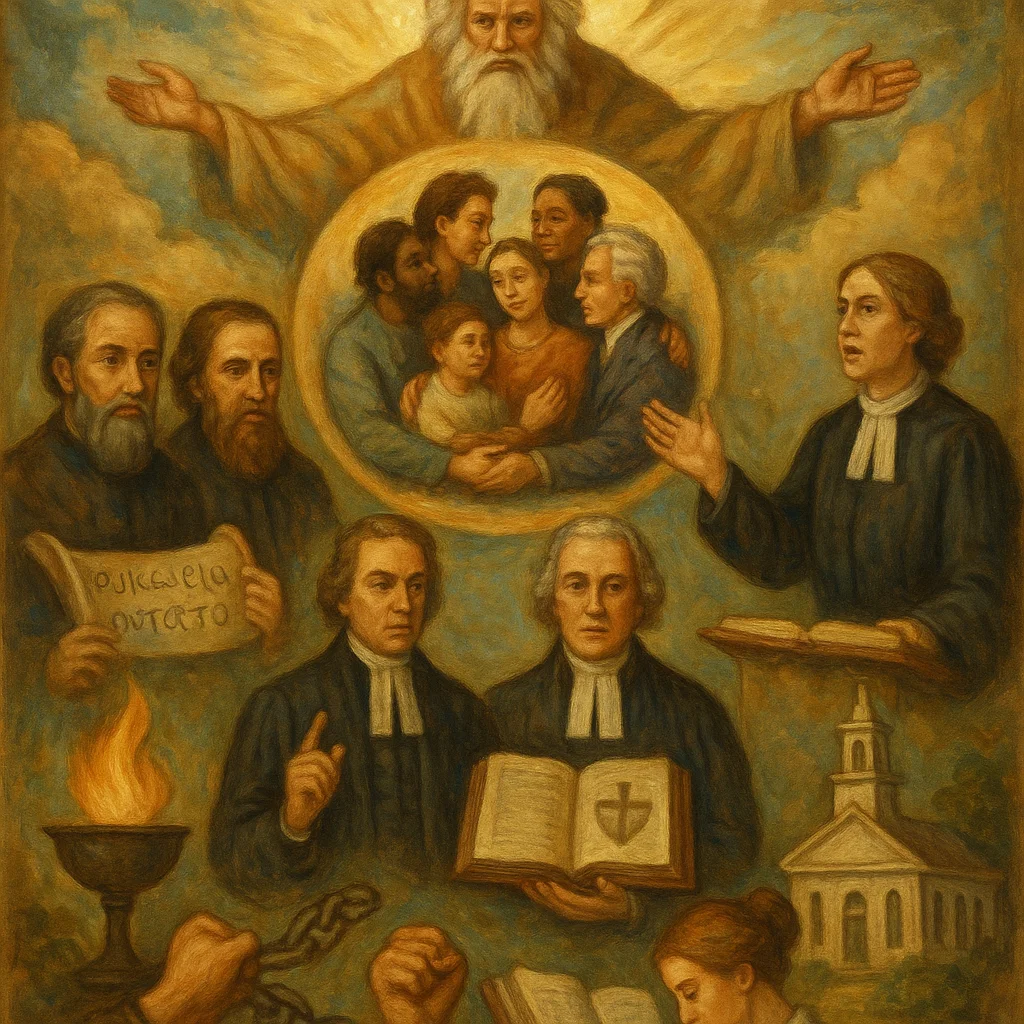
Revived in the 18th century by preachers like James Relly and John Murray, Universalism spread rapidly across colonial America, proclaiming that no one is forever damned. Under Hosea Ballou, the movement matured into a coherent theology of universal salvation through love, rejecting fear-based religion and emphasizing the inherent goodness and potential of humanity.
By the 19th century, the Universalist Church of America stood as one of the most inclusive and democratic denominations in the United States, pioneering women’s ordination, abolitionism, and education reform.
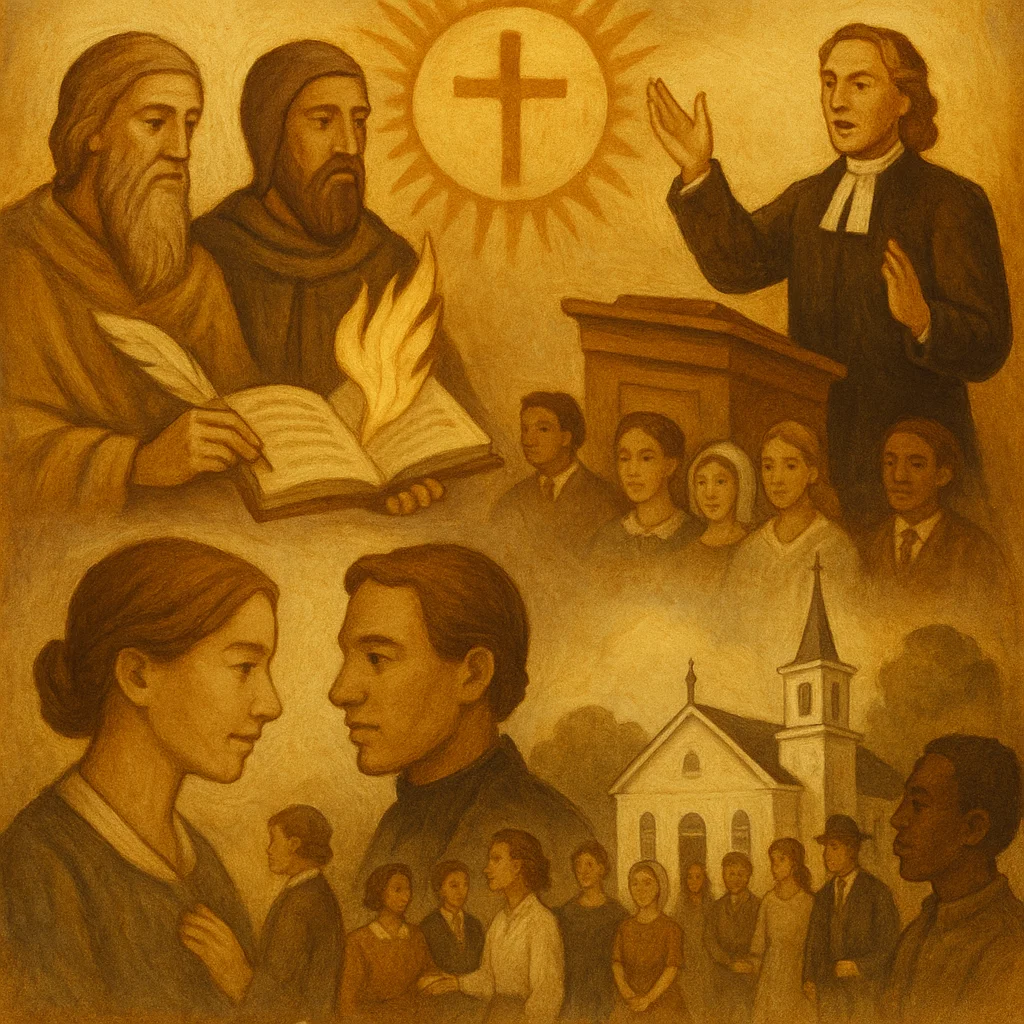
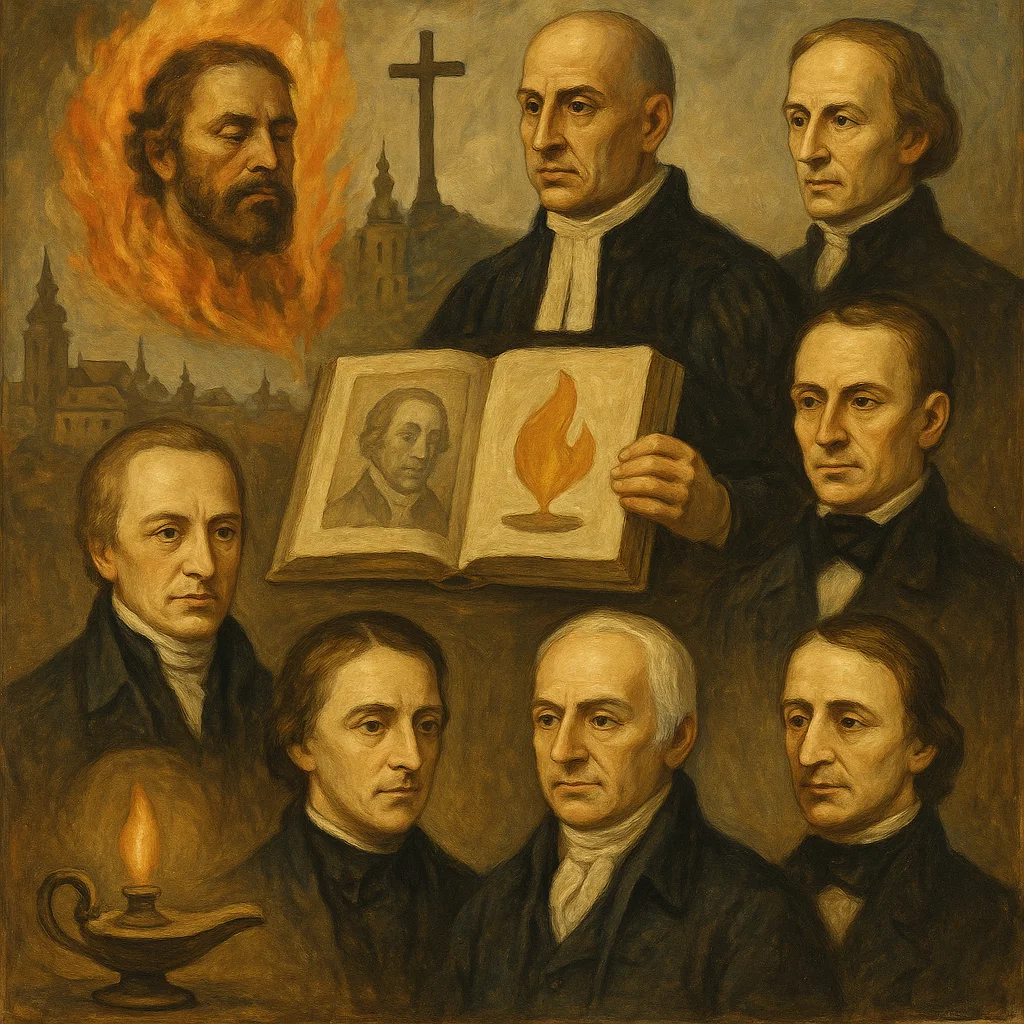
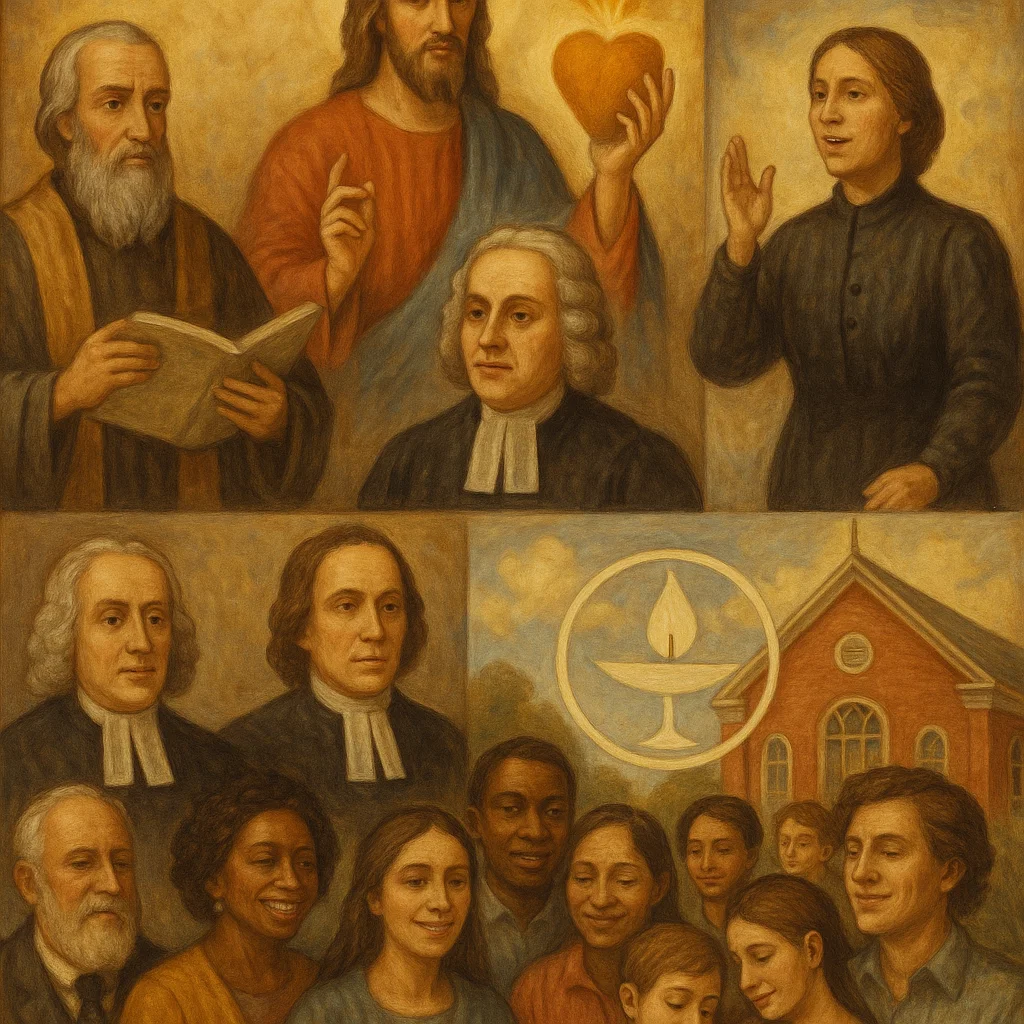
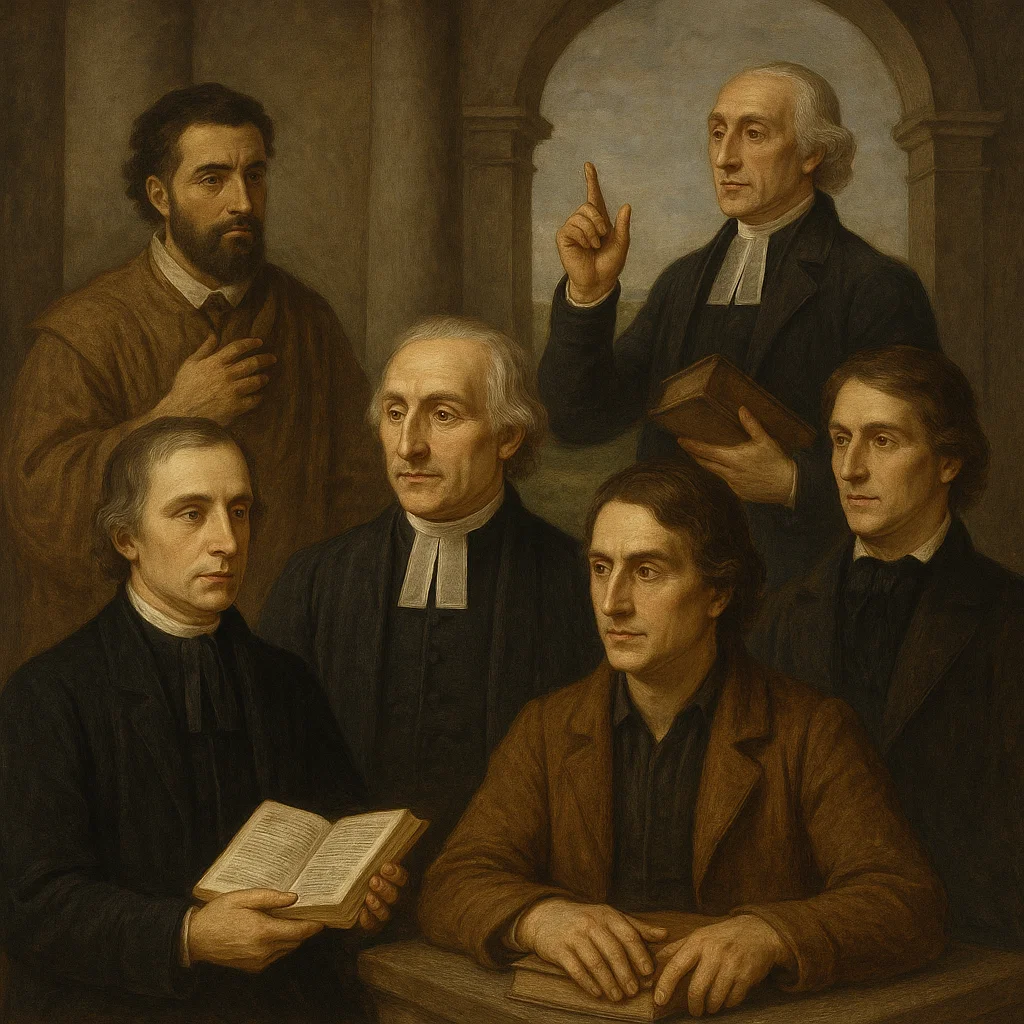
Together, these two streams—one grounded in reason and unity, the other in love and universality—flowed toward the same horizon: a faith affirming human dignity, spiritual freedom, and moral responsibility. Their eventual merger in 1961 gave birth to Unitarian Universalism, a religion not of creed, but of covenant and conscience.
Convergence and Merger (1930s–1961)
By the early 20th century, Unitarianism and Universalism had evolved into parallel liberal traditions—one rooted in reason and human potential, the other in love and universal grace. Though historically distinct, both had gradually shed their sectarian Christian boundaries, embracing a broader, more inclusive spiritual vision suited to the modern age.
Intellectual and Theological Convergence
The late 19th and early 20th centuries saw profound theological shifts in both movements.
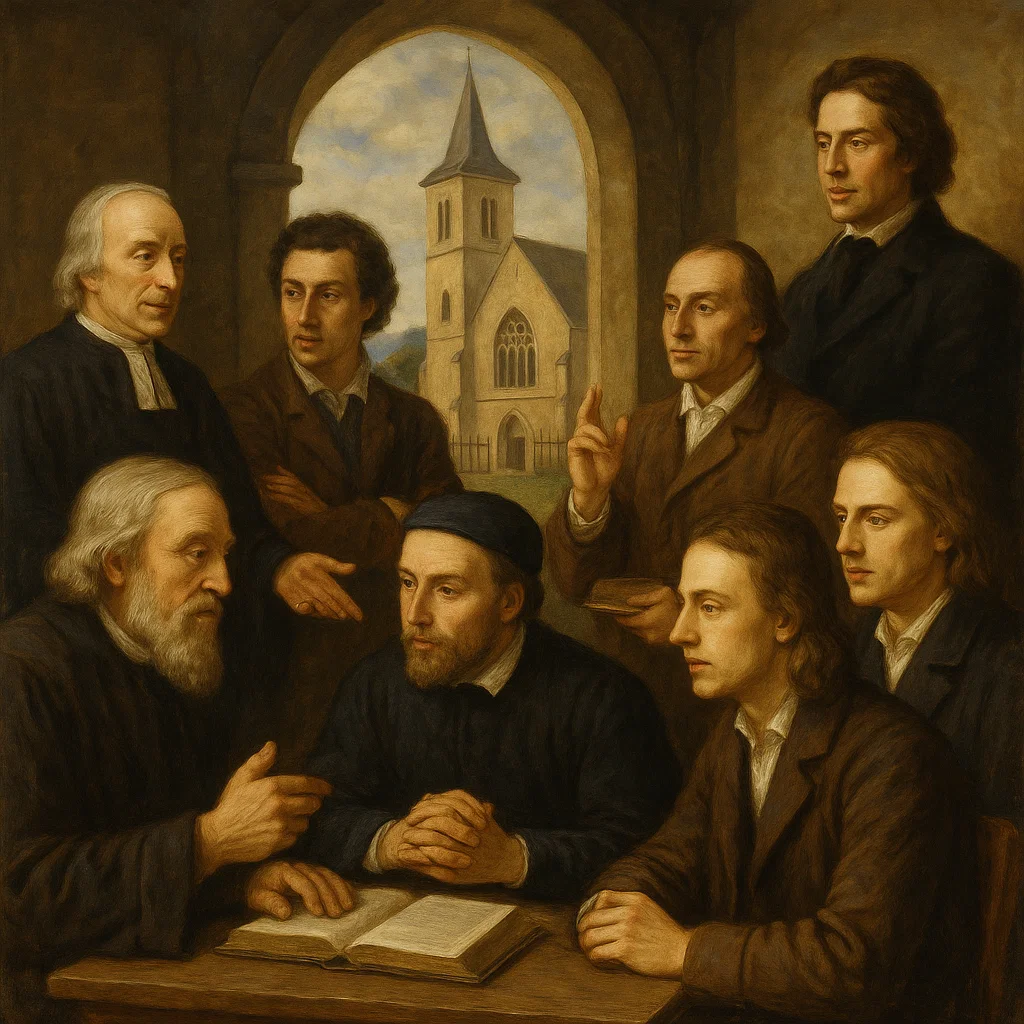
- Unitarianism, influenced by transcendentalism and the social gospel, expanded its moral concern beyond theology into human rights, education, and world peace. Thinkers like Ralph Waldo Emerson, Theodore Parker, and John Haynes Holmes redefined religion as ethical living and moral imagination.
- Universalism, led by voices such as Clarence Skinner and Hosea Ballou II, moved from doctrine to ethics—replacing debates about salvation with an emphasis on social justice, compassion, and the inherent worth of all people.
By the 1930s, both communities were increasingly aligned with Religious Humanism, a movement affirming human reason, science, and ethics as legitimate foundations for spiritual life. The Humanist Manifesto of 1933, signed by several Unitarian and Universalist ministers, marked a turning point—religion reimagined without the need for supernatural authority.
Institutional Cooperation
Parallel social missions brought the two denominations into practical alliance. They cooperated on education, peace efforts, and civil rights, recognizing that their values overlapped more than they diverged. During the Great Depression and World War II, both confronted the moral crises of modernity by promoting democracy, equality, and religious freedom.
Leaders on both sides began discussing formal unity as a way to strengthen their shared liberal presence in an increasingly secular world.
Formation of the Unitarian Universalist Association (1961)
After decades of collaboration, the American Unitarian Association (AUA) and the Universalist Church of America (UCA) officially merged on May 15, 1961, forming the Unitarian Universalist Association (UUA), headquartered in Boston, Massachusetts.
The merger created a non-creedal, covenantal religion: congregations would not be bound by doctrine but united by shared principles—affirming freedom of belief, the pursuit of truth, and respect for the inherent dignity of all persons.
This union symbolized the marriage of intellect and compassion—the Unitarian faith in reason joined with the Universalist faith in love. It marked not merely an administrative merger, but the birth of a new spiritual identity: one that honors the wisdom of world religions, celebrates diversity, and calls each person to build a just and compassionate world.
Modern Unitarian Universalism (1961–Present)
Following the 1961 merger, Unitarian Universalism entered a new era—no longer a subset of Christianity, but an independent liberal religion built on freedom, reason, and compassion. Its identity shifted from theological debate to ethical practice, seeking truth through experience, science, and diverse spiritual wisdom.
Post-Merger Identity and Principles
The Unitarian Universalist Association (UUA) organized as a fellowship of congregations bound not by creed but by covenant. In 1985, the denomination adopted the Seven Principles, affirming:
- The inherent worth and dignity of every person.
- Justice, equity, and compassion in human relations.
- Acceptance of one another and encouragement to spiritual growth.
- A free and responsible search for truth and meaning.
- The right of conscience and the democratic process.
- The goal of world community with peace, liberty, and justice for all.
- Respect for the interdependent web of all existence of which we are a part.
These principles, grounded in Six Sources—from world religions and human experience to reason and nature—became the moral framework of modern UU faith.
Theological Diversity and Expansion
In the decades after the merger, UUism grew increasingly pluralistic. Congregations welcomed theists, humanists, pagans, Buddhists, atheists, and seekers under one spiritual umbrella. Worship blended symbolic ritual, music, and meditation with rational reflection.
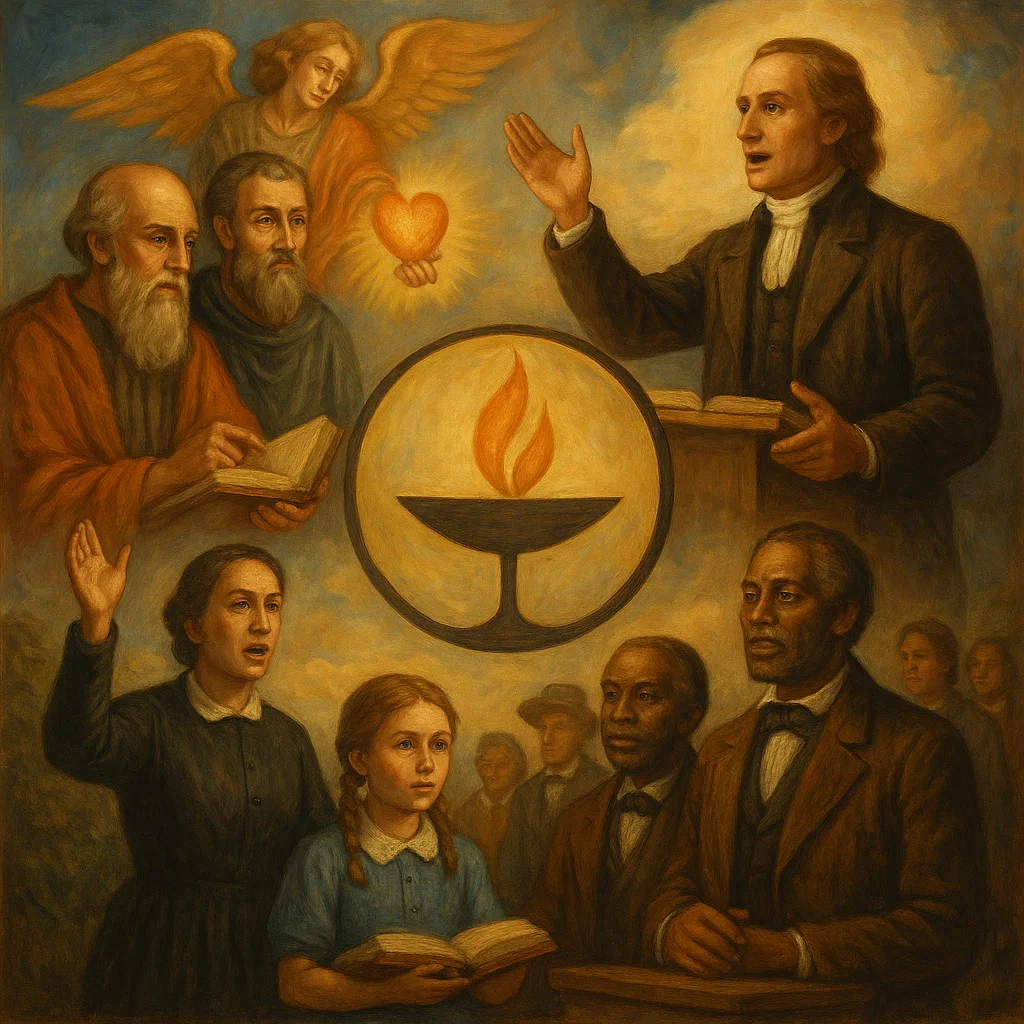
The movement’s central symbol, the Flaming Chalice, came to represent the light of truth and the warmth of community.
Through the 1970s–1990s, UUism embraced major social causes—civil rights, LGBTQ+ equality, feminism, environmentalism, and peace advocacy—treating activism as a sacred duty. Women assumed leadership in ministry and governance; Rev. Rosemary Bray McNatt and Rev. Rebecca Parker exemplified this new inclusive leadership.
Global and Contemporary Developments
Today, Unitarian Universalism extends beyond North America through the International Council of Unitarians and Universalists (ICUU) and related global associations. Congregations operate across Europe, Africa, Asia, and Latin America, often adapting to local cultural and philosophical contexts.
Modern UUism functions as a living religion—continuously revised through democratic process. Its theology remains open, encouraging exploration of science, ethics, ecology, and spirituality as intersecting paths toward truth.
In a secularizing world, it offers a framework for meaning without dogma, spirituality without exclusion, and faith without fear—continuing the ancient Universalist vision of love and the Unitarian faith in reason, united in one evolving covenant.