Minoans (Crete)
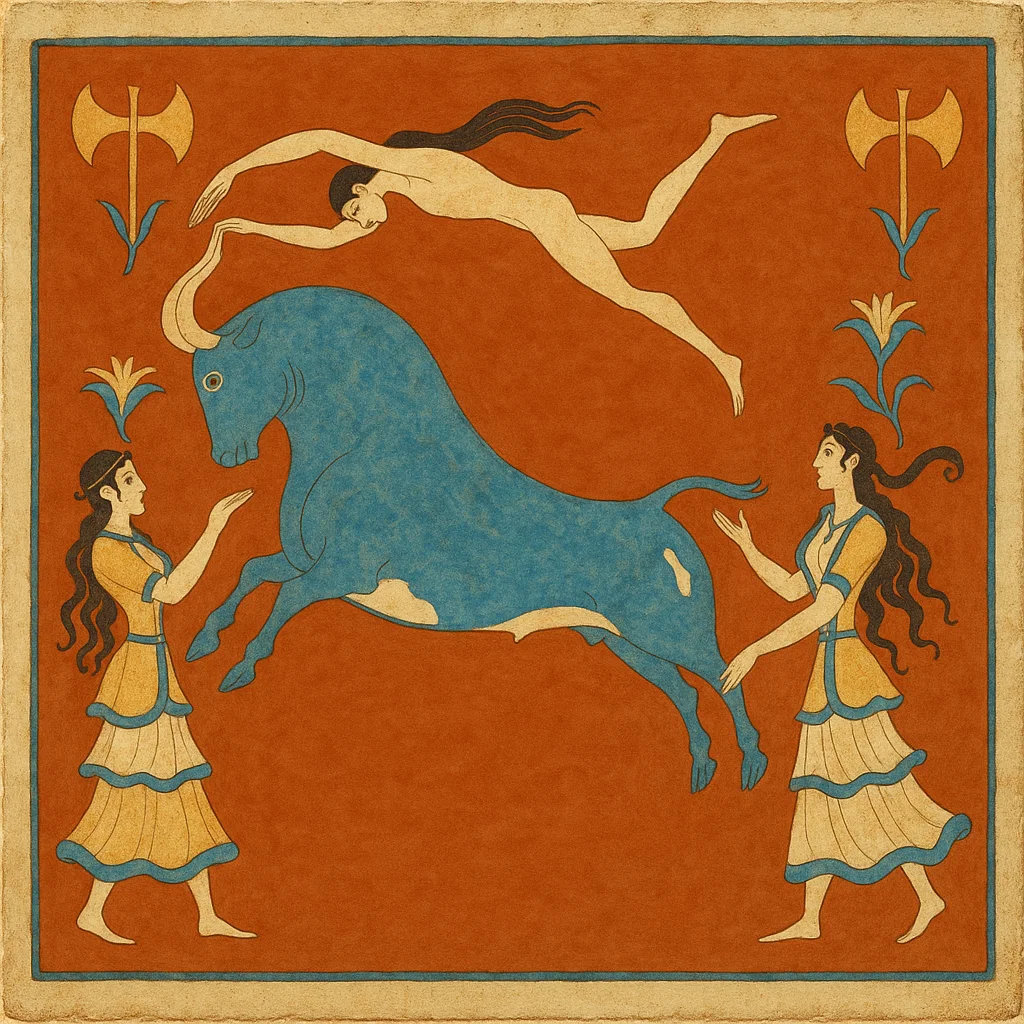
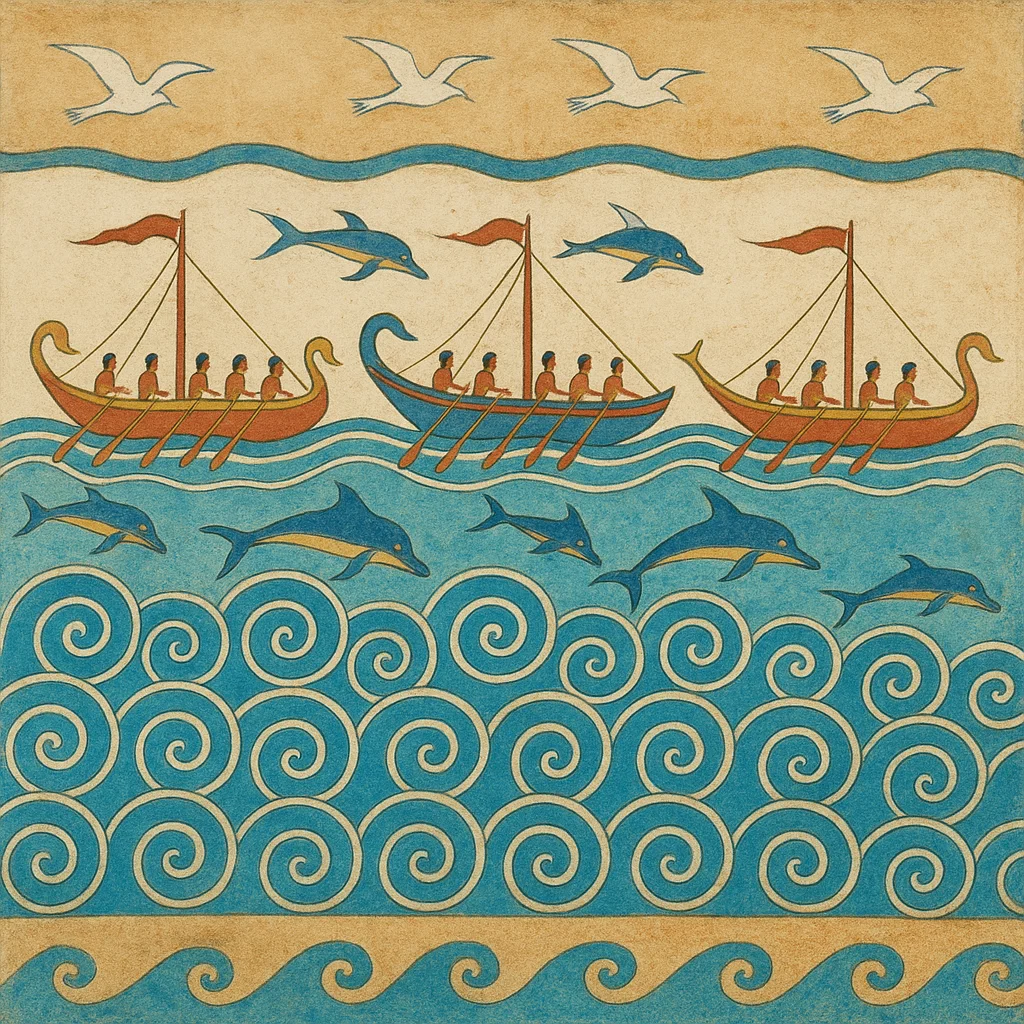
On the island of Crete, the Minoan civilization flourished during the Early to Late Bronze Age (c. 2600–1400 BCE). Geographically isolated by the sea, Crete developed a network of palace-centered communities such as Knossos, Phaistos, and Malia. The period’s context is one of maritime connectivity and relative internal peace. The Minoans established a thalassocracy – a sea-based sphere of influence – across the Aegean. Their island-studded realm traded extensively with Egypt, the Levant, and neighboring Aegean islands. This trade network brought wealth and fostered a cosmopolitan culture. Notably, Minoan sites lack large defensive walls, suggesting that for much of their history external threats were minimal or managed through naval dominance and diplomacy. The concept of Pax Minoica – a “Minoan peace” – has been proposed to describe the stability that Crete’s naval power may have enforced across the Aegean islands. However, this peaceful image is tempered by evidence of eventual upheaval: natural disasters like the Theran volcanic eruption (c. 1600 BCE) and the rise of militaristic neighbors. By the mid-15th century BCE, Mycenaean Greeks from the mainland encroached upon this context. The final chapter of the Minoans’ Bronze Age story saw Mycenaean takeover of Cretan palaces, signaling a shift from Minoan autonomy to Mycenaean hegemony.
Mycenaeans (Mainland Greece)
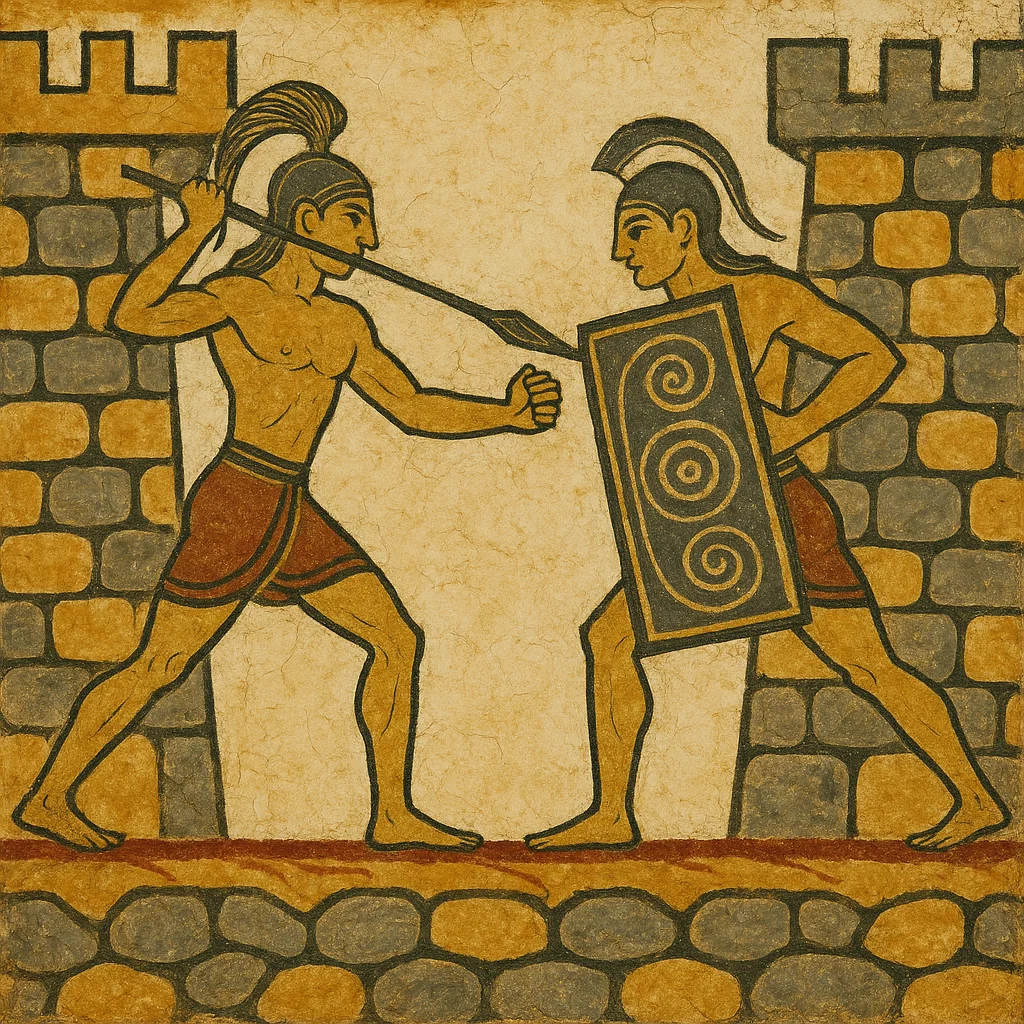
On mainland Greece, the Mycenaean civilization emerged in the Middle Bronze Age and rose to prominence around 1600 BCE. The Mycenaeans were an Indo-European people who inherited elements from the earlier Helladic cultures and were strongly influenced by Minoan Crete’s art and administration. Unlike the Minoans, the Mycenaean Greek world was politically fragmented into rival kingdoms (Mycenae, Pylos, Tiryns, Thebes, and others), each ruled by a wanax (king). The terrain – a mountainous peninsula divided by valleys – bred small, fortified centers rather than a single unified empire. Contextually, the Mycenaeans operated in a competitive environment of warrior aristocracies. Their era is characterized by frequent warfare between kingdoms and expansionist ventures overseas. By the 14th–13th centuries BCE, Mycenaeans had eclipsed the Minoans as the dominant power in the Aegean, establishing presence in former Minoan territories (including Crete and some Cycladic islands). They also figure in Hittite records under the name “Ahhiyawa,” indicating Mycenaean involvement in western Anatolian affairs. The Late Bronze Age “international system” included the Mycenaeans on the fringes of the great Near Eastern powers – engaging in trade, diplomacy, and possibly conflict with the Hittite Empire and others. The context for Mycenaean military endeavors culminates in the decades around 1200 BCE, when many centers were destroyed. This period of upheaval aligns with the legendary backdrop of the Trojan War and the broader Bronze Age Collapse, after which Mycenaean palace society disappeared.
Hittites (Central Anatolia)
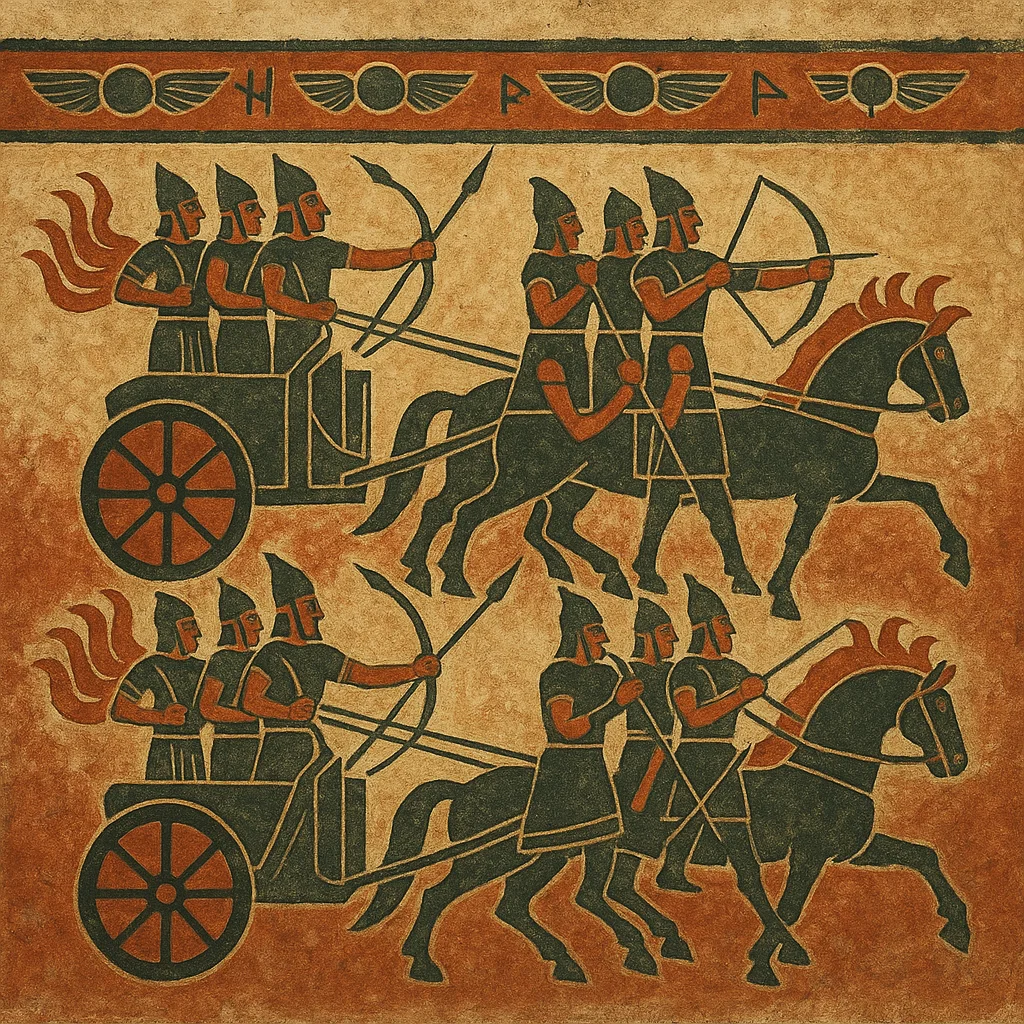
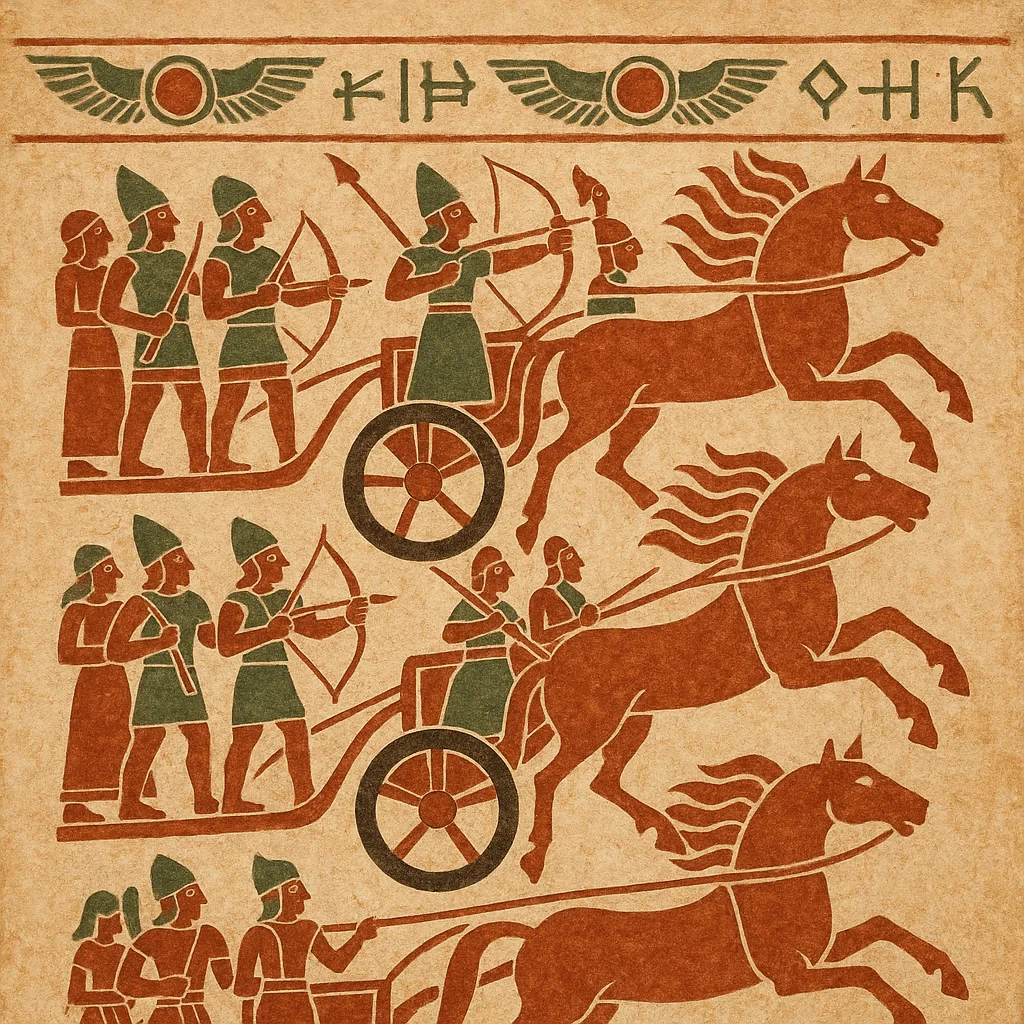
In Anatolia, the Hittites established a powerful kingdom centered on the fortified capital of Hattusa. The Hittite Old Kingdom began around 1650 BCE, and by the Late Bronze Age (after 1400 BCE) the Hittites had built a true empire rivaling Egypt, Assyria, and Mycenaean Greece. Their realm spanned the Anatolian plateau and extended into northern Syria. Period context for the Hittites is defined by near-constant military engagement: they fought to unify Anatolia, subjugate regional rivals, and defend against hostile neighbors. The Hittite kings styled themselves “Great King” in correspondence with other major powers, reflecting their participation in the international balance of power. A militaristic ethos pervaded Hittite society, even embedded in religion – their Storm God was regarded as a deity of war and victory. During the 14th century BCE, under kings like Suppiluliuma I, the Hittites decisively defeated the Mitanni kingdom and expanded influence over the trade-rich Levant. In the west, they campaigned against independent Anatolian peoples (Arzawa lands and others) to secure their frontiers. By 1300 BCE the Hittite Empire reached its apex, but it faced challenges from Egypt (famously clashing at the Battle of Kadesh in 1274 BCE) and recurring threats from the north (the raiding Kaskans) and Aegean seafarers. The period around 1200 BCE brought the disintegration of the Hittite Empire amid general Bronze Age collapse – Hattusa and other cities fell to invasions and internal strife. Thus, the Hittite military context is one of a rise from a regional kingdom to an expansionist empire built on war, ending in a dramatic fall concurrent with widespread upheavals.
Cycladic Peoples (Aegean Islands)
The Cycladic culture occupied the central Aegean islands during the Early Bronze Age (c. 3000–2000 BCE), preceding and then alongside the Minoans. In the context of their period, the Cycladic islands were small, resource-poor, and scattered, fostering a network of seafarers and traders. Early Cycladic communities were typically village-sized and relatively insular. In the third millennium BCE, there is evidence these islanders experienced an age of both flourishing arts (famed marble figurines) and emerging conflicts. Initially, many Cycladic settlements were unfortified, indicating a degree of security or isolation. By the mid-3rd millennium, however, some communities began to construct fortifications and choose defensible hilltop locations. This shift in settlement pattern suggests growing awareness of external dangers – perhaps raids by pirates or rival groups seeking metal resources. The Cyclades sat at a crossroads of maritime trade (notably the Melos obsidian and metal trade routes), which could bring both wealth and conflict. Indeed, signs of violent destruction and site abandonments toward the end of the Early Bronze Age hint at upheavals. Culturally, as the Middle Bronze Age progressed (c. 2000–1600 BCE), the Cycladic islands fell increasingly under the economic and political influence of Crete’s Minoans. Many Cycladic locales became part of the Minoan trade league or were colonized outright, which likely reduced inter-island warfare under an external hegemony. By the Late Bronze Age, the formerly independent Cycladic culture had been largely subsumed first by Minoan Crete and then by Mycenaean Greek control. In sum, the period context for the Cycladic people spans from early independent maritime chiefdoms, through a time of fortifying against aggression, to eventual incorporation into larger Aegean power structures.
Troy VI–VII (Northwest Anatolia)
Troy (Wilusa in Hittite sources) was a city-state located at a strategic junction of Asia Minor and the Aegean, near the Dardanelles strait. During the Middle and Late Bronze Age, specifically the archaeological layers Troy VI (c. 1700–1250 BCE) and Troy VIIa (c. 1250–1200 BCE), the city grew into a major fortified center. Troy’s context is defined by its role as a hub of commerce and gateway between the Aegean world and the Anatolian interior or Black Sea regions. Its imposing citadel and extensive lower town housed a population possibly up to 5,000–10,000, sizeable for the time. Culturally, Troy VI/VII had a mixed character: archaeologists have found evidence (such as names and a later Luwian-inscribed seal) suggesting the Trojans spoke a Luwian (Anatolian) language and had affinities with Hittite-affiliated peoples, yet the city also traded with – and eventually warred against – the Mycenaean Greeks. In the mid-14th century BCE, Troy (Wilusa) appears in Hittite chronicles amid the region’s turbulent politics. The Hittite Empire’s western campaigns mention Wilusa as an entity sometimes allied, sometimes contested. Troy’s political context thus involved skillful navigation between the Hittites to the east and the Mycenaean sphere across the sea. The end of Troy VI was sudden and not due to human attack but a devastating earthquake around 1300 BCE, after which the city was rebuilt (Troy VIIa) with some continuity. The rebuilt Troy VIIa, however, lived under the shadow of regional instability. Within a few decades, around 1220–1180 BCE, Troy VIIa met a violent destruction – almost certainly by warfare – which aligns chronologically with the legends of the Trojan War. Whether by a coalition of Mycenaean Greeks or by Sea Peoples sweeping across the region, Troy fell and was burned. The context for Troy VI–VII is therefore that of a prosperous entrepôt and regional power in northwest Anatolia, increasingly caught between clashing civilizations and ultimately engulfed by the wave of violence that closed the Bronze Age.