Minoans
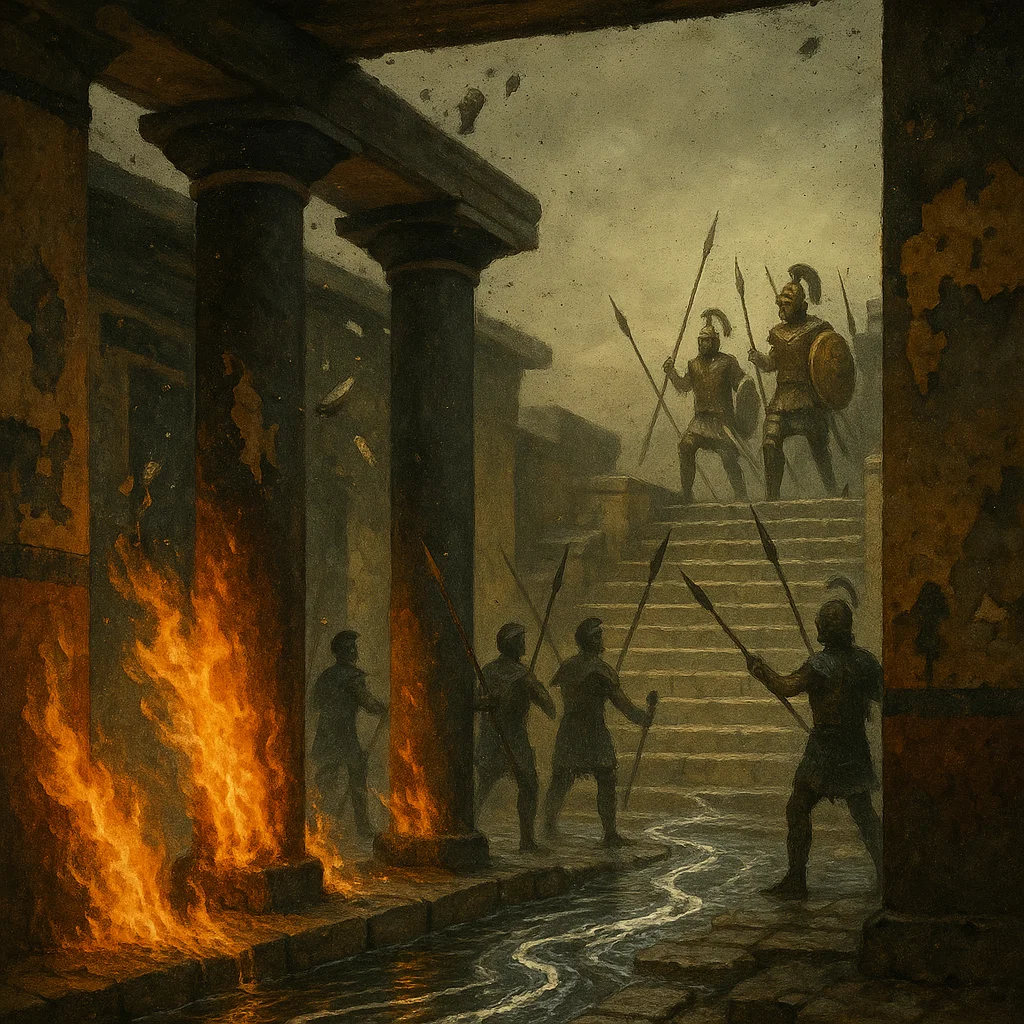
Minoan tactics and military doctrine were largely shaped by their naval orientation and the need to protect a trade-based empire without large standing armies. On land, there is scant direct evidence of Minoan battle tactics – no treatises or detailed scenes survive – so historians infer from context. Given their relatively limited fortifications, the Minoans likely emphasized preemptive defense and strategic positioning. A probable doctrine was to intercept threats at sea before they reached Crete or allied islands. Minoan fleets patrolling the Aegean would deter pirates or enemy forces, consistent with a doctrine of maritime control (akin to a Bronze Age “naval supremacy”). If a hostile force set sail, the Minoans could shadow or engage it in open waters, using superior knowledge of winds and currents around the islands. In naval engagements, tactics included maneuvering oared galleys to outflank enemy ships, boarding actions led by marines armed with spears and swords, and possibly attempts to shear enemy oars or stymie their movement. There is also evidence in art (from Akrotiri’s frescoes) of complex naval processions, which, while ceremonial, imply the Minoans could coordinate many ships together – a skill that would translate to forming naval squadrons in warfare. On land, Minoan doctrine was likely defensive and evasive. If invaders landed on Crete, the Minoans might avoid pitched battle on open ground unless absolutely necessary. Instead, they could employ guerrilla-like tactics: harassing the enemy with skirmishers, drawing them into difficult terrain (Crete’s mountains and narrow passes) where ambushes were feasible. Minoan archers and slingers perched on high ground could pepper enemy columns moving through gorges. Meanwhile, the lack of an offensive siege doctrine (no known Minoan siege engines or techniques) suggests they seldom attempted to take walled cities by force; rather, they might impose submission by cutting off islands via naval blockades. When they needed to assert control over an island or coastal town, the Minoans likely landed a force that relied on shock and awe – a sudden descent of ships, overwhelming the small local defenders by surprise. Rapid raids to disable an opponent’s leadership or capture their shrine (since religion was important) could break resistance quickly. One can surmise that the Minoans preferred to intimidate or outmaneuver rather than destroy. Their doctrine valued preservation of infrastructure (useful for trade) and integration of conquered peoples. In battle, Minoan warriors equipped with long spears and large body-shields (like the figure-of-eight shields depicted in art) might form a defensive wall to protect key points or the line of retreat to ships. Meanwhile, agile swordsmen and archers could circle around an enemy force. If the Minoans fought in formation, it was likely a loose formation geared toward flexibility – perhaps a phalanx was unknown, but small shielded groups could act in concert. Ritual bull games, oddly, may have had a side benefit: training young men to be quick on their feet and coordinated – such agility would be advantageous in combat where quick strikes and withdrawals are needed. Minoan doctrine also integrated diplomacy as a tactic. They often managed conflict by forming marriages or trade agreements rather than fighting. This “soft power” approach reduced the need for large battles. However, when facing existential threat (as in the final Mycenaean invasion), the Minoans fought desperately. Archaeological layers show signs of violent ends at some sites circa 1450 BCE, implying the Minoans did resist. They likely mustered all available men to defend palace compounds, perhaps barricading streets and fighting room to room once walls were breached. Without prior emphasis on military drills or heavy armament, though, their tactical execution under such pressure was at a disadvantage against the more battle-hardened Mycenaeans. In summary, Minoan tactics revolved around controlling the seascape, avoiding direct confrontation on unfavorable terms, and using mobility and surprise. Doctrinally, they were more inclined to contain and disrupt enemies rather than conquer and occupy through force, aligning with their identity as traders and sea-lords rather than expansionist conquerors.

Mycenaeans
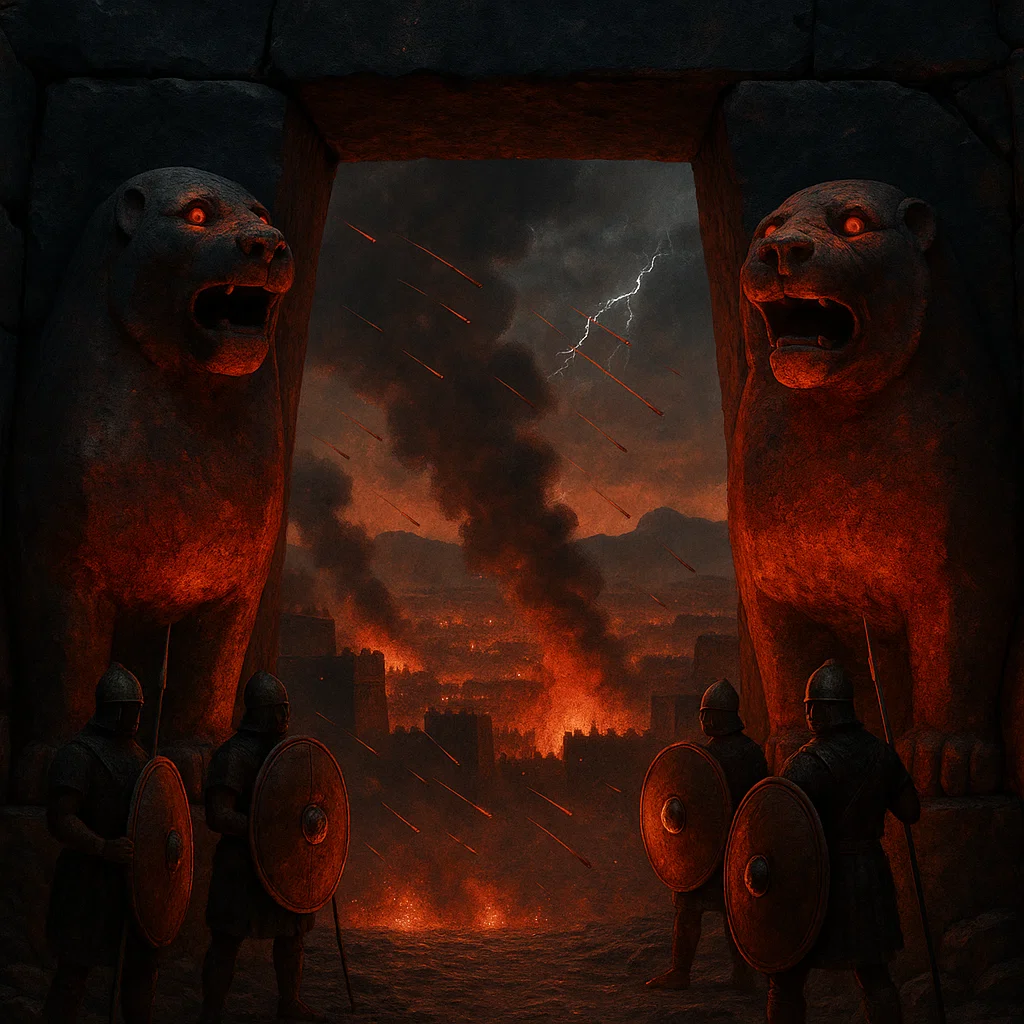
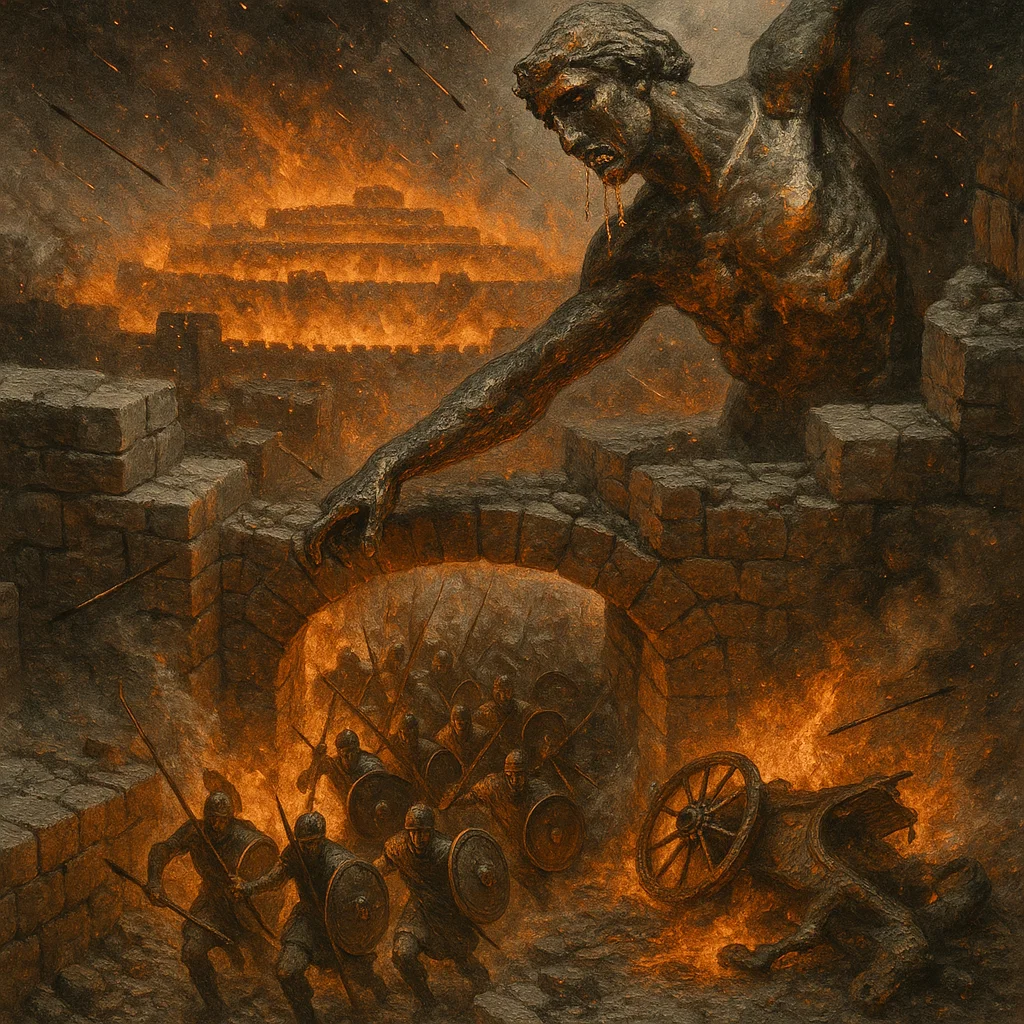
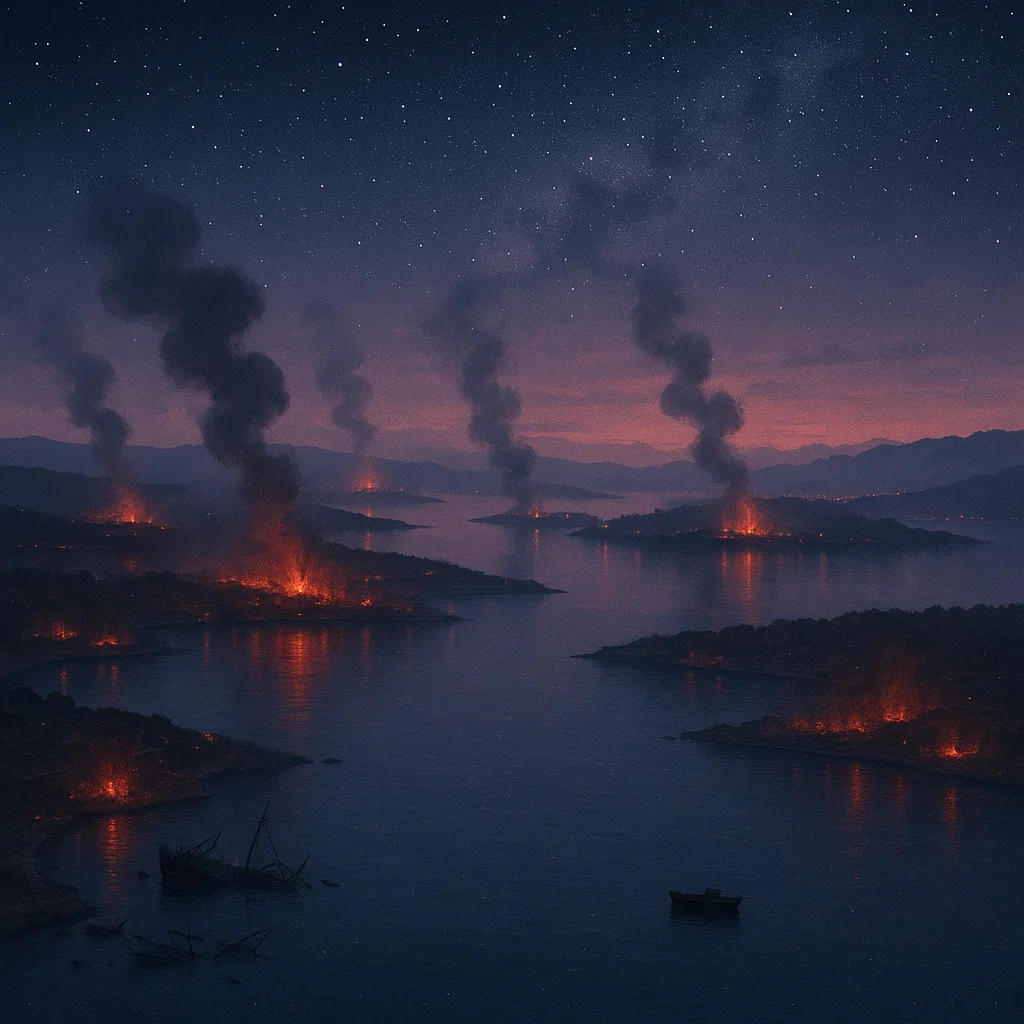
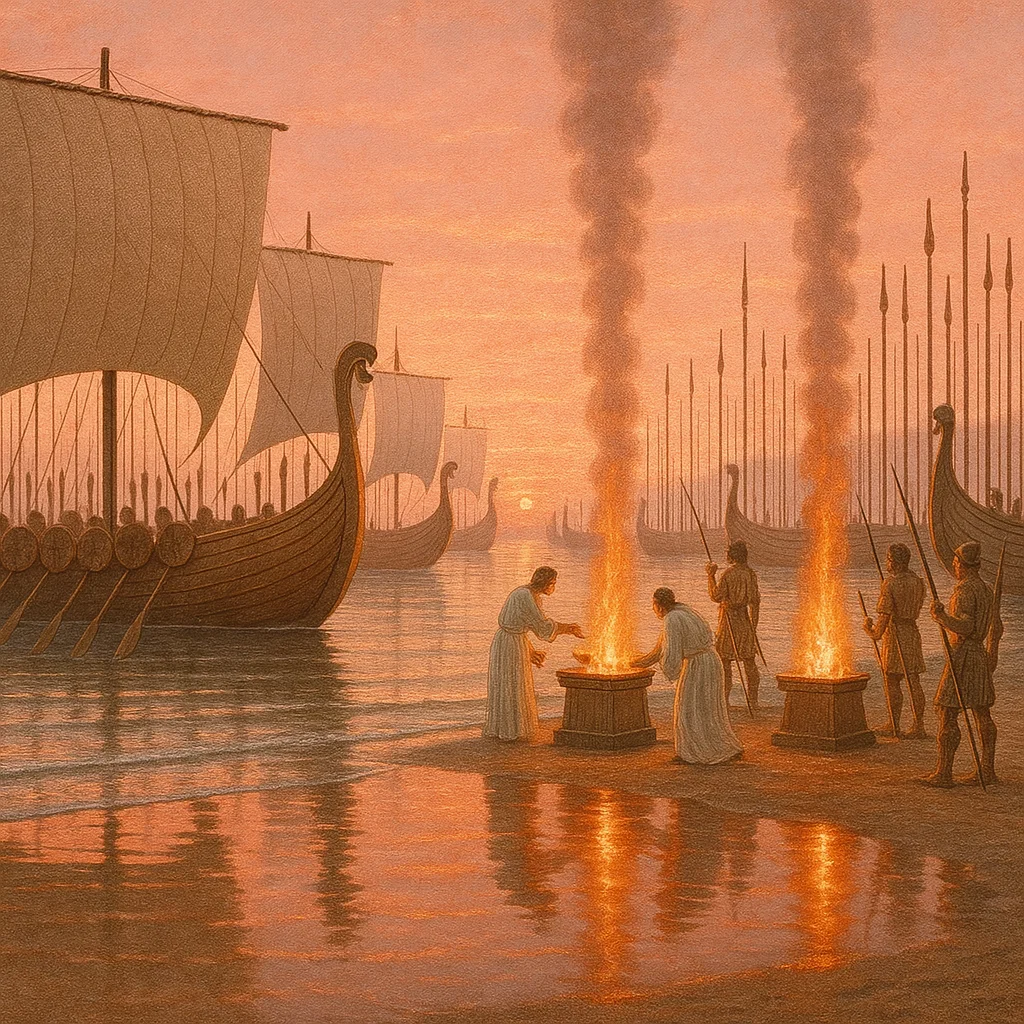
The Mycenaean approach to warfare was decidedly more aggressive and strategically varied. On the offense, Mycenaean tactics included both open-field battles and siegecraft. A typical Mycenaean army drawn up for battle would likely position its massed spearmen at the center. These infantry could fight in a proto-phalanx style – shoulder to shoulder, presenting a hedge of spears and large shields. Early on, warriors carried huge tower shields which covered most of the body; fighting in a line with these essentially created a shield wall that was hard to penetrate. By the later periods, with smaller shields and better armor, formations could become more compact and maneuverable. Mycenaean doctrine put emphasis on shock assault by elite troops. The use of chariots was one such shock tactic: though debates exist, one plausible use was to charge at enemy formations to cause disorder, then have the chariot warriors dismount to fight on foot amidst the chaos. Alternatively, chariots might rapidly redeploy forces on the battlefield – delivering a group of spear-armed nobles to a weak point in the enemy line (similar to how later eras used cavalry). Meanwhile, infantry tactics featured both spearmen and specialist skirmishers. Slingers and archers would open the engagement, softening the enemy with volleys of stones and arrows. There is artistic evidence (the Siege Rhyton relief, for example) showing naked slingers taking part in an attack on a fortified town, implying the Mycenaeans employed light, unarmored troops to harass defenders from a distance. Once missiles thinned the opposition, the main force of spearmen advanced to engage in hand-to-hand combat. Mycenaean swordsmen, armed with their sturdy blades, could follow up behind the spear line or move around flanks to exploit openings. One hallmark of Mycenaean doctrine in later years was adaptability and borrowing of techniques from abroad. For instance, the adoption of the Naue II sword improved their close-combat effectiveness; similarly, they might have learned from Hittite or Egyptian experiences how to coordinate chariots with infantry. If facing chariot-heavy foes, the Mycenaeans could respond by deploying terrain obstacles or concentrating archers – tactics gleaned through observing Eastern wars. In siege warfare, Mycenaeans demonstrated both persistence and innovation. The legendary siege of Troy (if reflecting some truth) suggests the Mycenaeans were prepared to encamp for long durations, surrounding a city and cutting off supplies. Archaeologically, at sites like Midea in Greece, there is evidence of attackers tunneling or sapping walls (one destruction layer suggests undermining of a wall). We also know that Mycenaeans built ramps or causeways to access high citadels (as seen in their own forts); they could likewise construct ramps to breach enemy walls or use large bonfires to try to burn wooden gates. The Mycenaean siege doctrine probably included assault in waves: an initial demand for surrender (perhaps with intimidation displays, such as showing allied kings and a vast host), followed by bombardment (sling stones, arrows, even firebrands), then a direct storming attempt with ladders. Repeated assaults would wear defenders down. If those failed, trickery might be tried – the Trojan Horse tale, though mythic, epitomizes the idea of cunning ruse which could very well have been part of the siegecraft repertoire (e.g., feigned retreat to lure defenders out, infiltration via a secret gate, etc.). Defensively, Mycenaean tactics leveraged their strong fortresses. If attacked, their doctrine was to retreat behind cyclopean walls and withstand siege, confident that the walls and stored food would outlast an enemy’s will to persist. They would launch sallies from their gates when advantageous – quick strikes by warriors to disrupt siege works or burn enemy camps, then withdraw to safety. We see provisions for such tactics in fortress design (sally ports hidden on the side of citadels for surprise counterattacks). On a strategic level, the Mycenaeans were capable of coordinating multiple contingents for joint operations (as implied by the various kingdoms possibly coalescing in war against Troy or in coalitions against common threats). They shared a heroic warrior code, meaning in battle individual valor was prized, but this coexisted with group discipline enforced by the wanax’s authority. A Mycenaean king would urge his men forward by invoking honor and perhaps ancestral glory – a precursor to the Homeric style of battlefield exhortation. In conclusion, Mycenaean tactics and doctrine were a blend of direct force and calculated siege warfare, with a combined-arms approach utilizing infantry, chariots, and ranged troops. They were unafraid to take the fight to foreign lands, reflecting a doctrine that valued offensive action to secure wealth and fame, as well as strong defenses at home to protect their hard-won palaces.

Hittites
The Hittite art of war was sophisticated and pragmatic, often defined by mobility, surprise, and ruthlessness. A centerpiece of Hittite tactics was the mass chariot charge. On open battlefields (like the plains of northern Syria), the Hittites would attempt to catch their enemies off-guard with a sudden chariot assault. For instance, at the Battle of Kadesh, Hittite forces under Muwatalli II executed a large-scale surprise attack: concealing their chariots behind cover and then charging into the Egyptian camp at an opportune moment. This reflects a tactical doctrine that valued ambush and shock. By committing a powerful chariot corps en masse, the Hittites sought to break enemy formations in the opening phase of battle. Each three-man chariot, with a dedicated shield-bearer, could plunge deep into infantry lines, the charioteers trampling and spearing foot soldiers. This tactic aimed to throw the opponent into chaos from which Hittite infantry could capitalize. Hittite infantry tactics themselves were built on solidity and disciplined advance. Chroniclers imply Hittite foot soldiers fought in close formation, possibly a shield-and-spear phalanx. They could form shield walls to protect against archery while advancing, then use their long spears to push and thrust when engaging enemy infantry. If their line was breached or if close combat ensued, they drew daggers or short swords to fight at arm’s length. In general, Hittite infantry served to hold the line and secure positions while the chariots performed the decisive maneuvers. Another aspect of Hittite doctrine was combined operations – coordinating multiple contingents and allied forces. They fielded diverse troops like Anatolian highlanders, Syrian vassals, and perhaps units of mercenaries (e.g., from the Sea Peoples in later times). They would often divide the army into a left, center, and right wing (similar to other contemporary forces), each with its mix of chariots and infantry, commanded by a senior officer (often a prince). Communication on the field could involve signal flags, trumpets, or drummers to relay the king’s orders, aligning maneuvers among far-flung wings. The Hittites were also masters of siege warfare when needed. They utilized siege engines like battering rams and siege towers—this is inferred from their successful captures of fortified cities such as Carchemish and Ugarit, and references to engineers in their records. A common Hittite tactic in siege was building earthen ramps to bring their troops level with the top of enemy walls, a method attested in contemporaneous Near Eastern sieges. They also practiced psychological warfare: Hittite kings often gave cities a chance to surrender, and if refused, they made examples of them upon capture (such as executions or deportations), to instill fear in other foes. This fearsome reputation was itself a strategic asset; many cities might capitulate without a fight once a large Hittite army approached. In terms of defensive tactics on their own terrain, the Hittites leveraged scorched earth and attrition against invaders. Their land was mountainous, and they could stall an enemy’s advance by devastating border villages and poisoning wells, then retreating to fortified sites. The Kaska tribes from the north constantly raided Hittite lands, and the Hittites responded by fortifying the mountain passes and launching counter-raids in a war of raids and ambuscades (a very different kind of irregular warfare compared to their set-piece battles in the south). Thus, the Hittite military was adept both at conventional battles with chariots and infantry and at protracted frontier skirmishing. The Hittite doctrine also appreciated flexibility and adaptation: if an initial chariot attack failed, they were prepared for a grinding fight with infantry – as happened at Kadesh, where after the surprise attack, the battle turned into a prolonged melee that ended indecisively. Hittite commanders could regroup and withdraw in good order if needed; they were not suicidal with their tactics. When faced with heavily fortified foes, they might bypass strongpoints to strike at softer targets, isolate the stronghold, then compel surrender through hunger – a method used in subjugating the Arzawa lands. On the strategic offensive, Hittite campaigns were often swift and focused. A king would gather his forces in spring and march rapidly to overwhelm one enemy state at a time (documented in the annals of Suppiluliuma I, for example, who blitzed through Mitanni’s territory by surprise, taking advantage of intelligence and timing). In conclusion, Hittite tactics were characterized by powerful chariot assaults, disciplined infantry formations, strategic ambushes, and effective siegecraft, all under a doctrine that valued pre-emptive strikes and combined-arms coordination to achieve dominance over their adversaries.

Cycladic Peoples
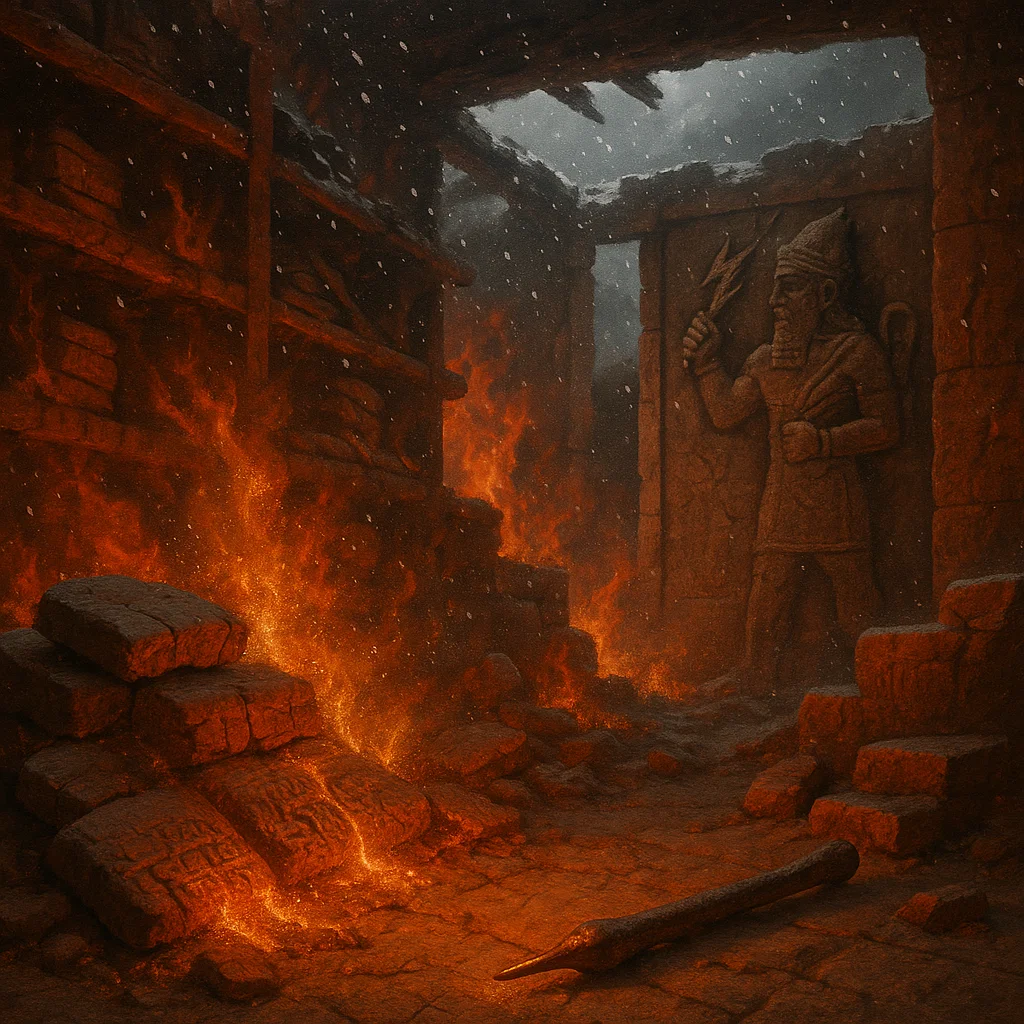
The Cycladic islands’ warfare tactics were on a smaller scale and relatively primitive, reflecting the limited numbers and technology available. The typical conflict scenario for Cycladic peoples was a raid – either one island’s warriors landing on another’s shore or repelling such an incursion. As raiders, Cycladic warriors favored stealth and sudden violence. At night or at dawn, a band of raiders would beach their boats on an undefended coast and rush toward a target village. Surprise was their greatest weapon; their aim was to catch the enemy unprepared, seize goods (like livestock, metal objects, or people for slaves), and retreat before a larger force could gather. If resistance was encountered, skirmish tactics prevailed. Lightly armed Cycladic fighters might form loose clusters, taking advantage of rocks and bushes for cover. Missile exchange often initiated combat: a flurry of sling stones or a volley of a few arrows could sow confusion. Cycladic slingers, using smooth stones or baked clay bullets, could be deadly accurate at moderate ranges and were easy to equip (every island beach provided ample ammunition). Meanwhile, defenders of a village would rally and attempt to deny the raiders a foothold. They would use their knowledge of the local terrain – for instance, funneling attackers into a narrow path between buildings or into a ravine where the defenders could ambush from higher ground. In such ambushes, defenders armed with spears and long farm implements (like sharpened sticks or shepherd’s crooks) could thrust at invaders from concealment. Open battle in formation was rare; instead, a melee would ensue, a flurry of individual duels and small group clashes. Here, personal prowess and bravery counted for much. Chiefs likely led from the front to inspire their men, as loyalty was personal rather than to an abstract banner. Given the modest armor, fights were swift and bloody—one solid dagger thrust or spear jab could incapacitate a foe. If one side’s leader fell early, his men might lose heart and withdraw. Hit-and-run tactics were common; Cycladic doctrine did not emphasize holding ground at all costs, but rather preserving one’s community. Thus, if a raid was too strong, villagers might abandon their settlement temporarily, taking refuge in the hills (some islands had caves or remote hideouts used in crises). Conversely, if raiders found themselves outnumbered once the alarm was raised, they would snatch what they could and dash back to their boats. Communication during these skirmishes was rudimentary: conch shell horns or shouting through speaking tubes could rally fighters or signal retreat. The island terrain, with its hills and coasts, lent itself to defensive vigilance as a tactic. Many Cycladic settlements were placed to have a commanding view of the sea approaches. A lookout on a ridge could spot incoming boats while they were still far off and sound a warning (lighting a fire signal or drum beats). This early warning was central to Cycladic defensive doctrine: being prepared minimized the chance of surprise. When fortifications came into play (as at fortified sites like Kastri or Ayia Irini), the defensive tactics evolved to include holding the walls. Defenders would post on the bastions and wall-walks, hurling javelins or dropping stones on attackers trying to breach the gate. Cycladic walls were not as tall as later Mycenaean ones, but they were sufficient against lightly equipped raiders. The mere presence of a wall often caused an enemy to abandon a raid, lacking siege tools. If a wall was assaulted, defenders concentrated at that single choke point. They might even sortie out of a back gate to flank the attackers—a simple tactic turning the tables. Finally, we can consider Cycladic inter-island conflict as part of a learning cycle: as one community succeeded with a particular ruse or tactic, others learned to counter it or replicate it. Over time this led to an escalation of cunning: digging pitfalls around villages, using decoys (perhaps leaving out bait goods and then ambushing thieves), feigning retreats then counterattacking once pursuers were spread out, etc. This unrecorded “martial art” of the Cyclades was all about survival with minimal resources. In conclusion, Cycladic tactics were characterized by surprise attacks, skirmishing, defensive vigilance, and opportunistic strikes. Their doctrine emphasized protecting one’s own while inflicting quick pain on enemies, rather than conquest or set-piece battles.

Troy VI–VII
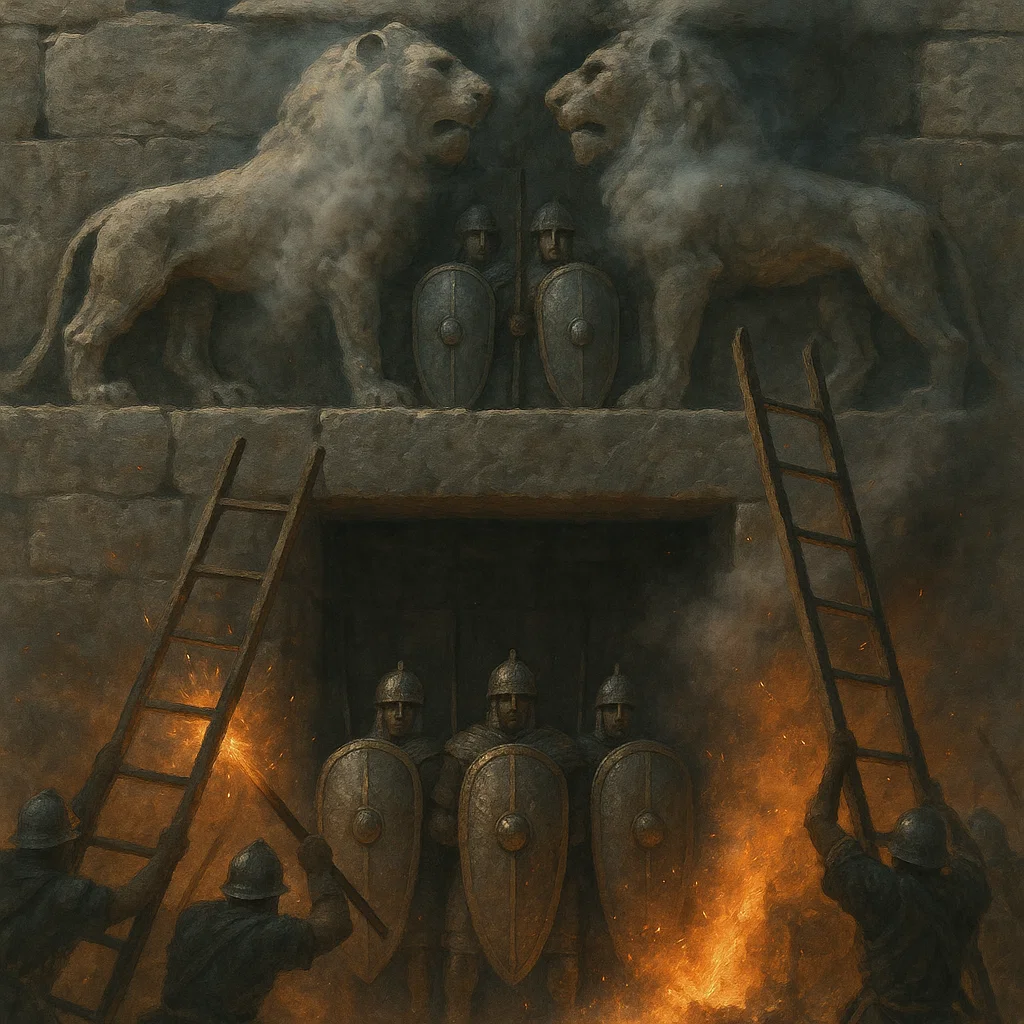
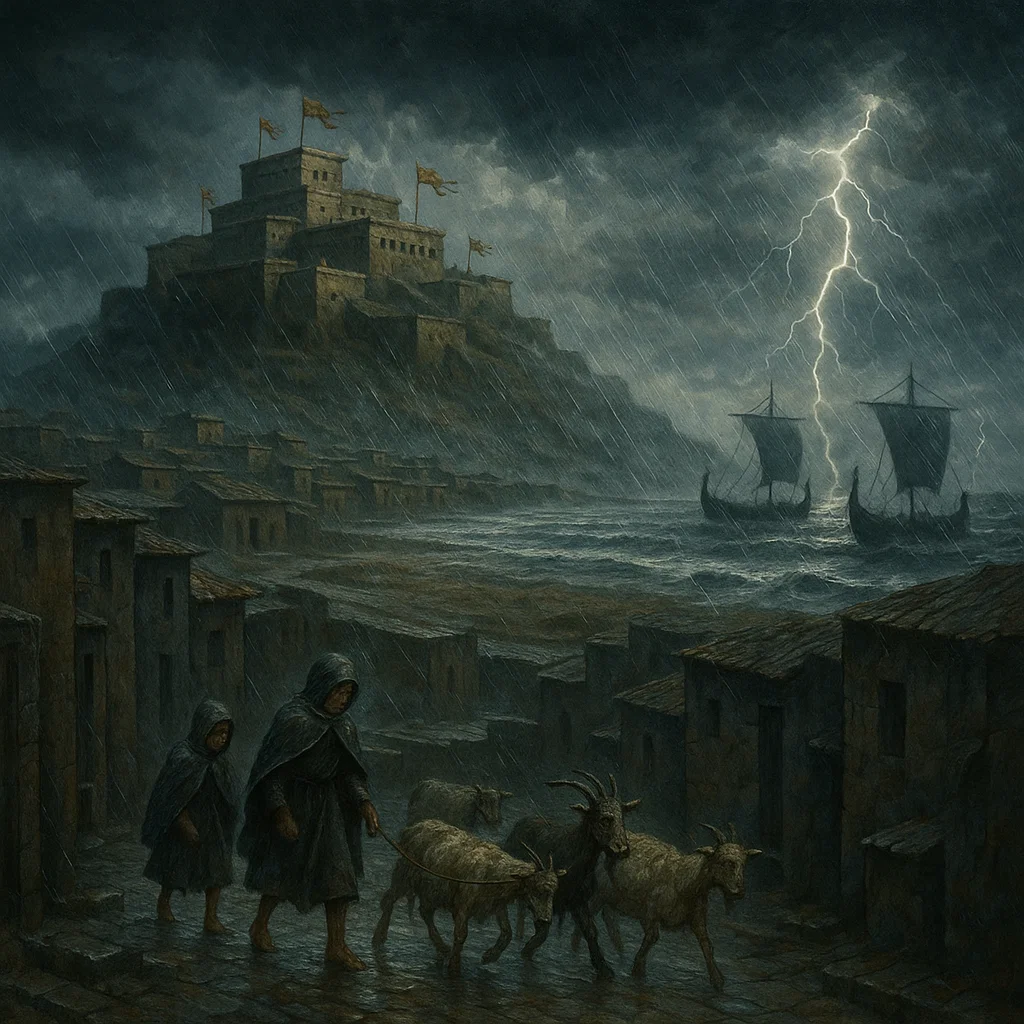
The tactical situation for Troy’s military was dominated by the presence of its fortifications and the threat of siege by powerful foes (like the Mycenaeans). Thus, Trojan doctrine revolved around fortress defense supplemented by opportunistic field engagements. In a defensive siege scenario, the Trojans aimed to make any assault as costly as possible. Archers were crucial; Trojan bowmen took positions atop the walls and towers with plentiful arrows stored nearby. Their tactic was to keep up constant fire on besiegers, targeting anyone approaching the base of the walls or operating siege equipment. Given the thick and tall nature of Troy’s walls, the defenders had a height advantage to increase arrow range and momentum. Additionally, slingers and javelin throwers on the walls could repel close assaults by dropping lethal projectiles directly down. The design of the walls, with outward-sloping lower sections of smooth stone, prevented easy ladder placement and was itself a tactical feature: attackers forced to bunch up at the foot of the wall became prime targets for missiles. The Trojans likely prepared cauldrons of water and sand to douse fires or to pour hot sand on attackers (a nasty anti-personnel trick noted in some ancient sieges). Meanwhile, inside the city, the population not actively fighting had roles in support – bringing arrows and spears to the walls, tending the wounded, and maintaining morale. Trojan doctrine highly valued morale and endurance. Holding out was victory in itself when facing a siege, because the longer the defender stands, the more likely the attacker will lose momentum or be forced to withdraw due to losses or logistics. If an enemy attempted to scale or breach the gate, Trojans would concentrate their best fighters at that breach to push them back. The narrow gateways allowed only a few attackers abreast, making them kill-zones for the defenders’ spears. Tactically, the Trojans might also use countermining if besiegers tried to tunnel – digging their own tunnels to collapse the enemy’s. In open field battles, Trojan tactics bore similarities to their Anatolian neighbors. If they faced a Mycenaean army in the plains of Troy, they would deploy chariots to counter the Mycenaean chariots or disrupt infantry formations. Trojan charioteers might use their mobility to harass the flanks of a Greek phalanx of spearmen, throwing javelins or shooting arrows before retreating behind their own lines to reload or swap horses. Infantry would be arranged with spearmen and swordsmen. Trojans likely carried round or figure-eight shields and fought in a semi-flexible formation, not as tight as a Greek phalanx but cohesive enough to present a united front. Their doctrine might encourage individual acts of bravery – later poetic tradition of Hector and others reflects that ethos – but within a framework of teamwork, where a few strong warriors can turn the tide if supported by rank-and-file. In a protracted siege, Trojans could also engage in sortie tactics. At opportune moments (for instance, if an enemy siege camp was relaxed or during a stormy night), the Trojans might send a detachment out of a side gate to raid the besiegers’ lines. These sorties aimed to burn siege engines, kill isolated pickets, or destroy supply stockpiles. Quick and carefully timed, they could prolong the siege by forcing the enemy to regroup and repair. Strategically, Trojan doctrine recognized the city as the center of gravity: losing the city meant annihilation. Thus, even on the offense, any Trojan force would not stray too far from its walls when a major threat was near. They would fight just beyond the ramparts if needed, then fall back to safety if pressured. This “offensive-defensive” method is mirrored in Homer’s accounts, where Trojans sally in the day and retreat behind walls at night – likely reflecting some tactical reality. Diplomacy too was part of Trojan doctrine. Knowing they might not withstand a huge coalition alone, the Trojans invested in alliances (with the Hittites or with neighboring Dardanians, etc.). If besieged long-term, they counted on the possibility of relief forces. For example, a Hittite army marching to lift the siege or allied contingents breaking the Greek supply lines. This wasn’t a battlefield tactic per se, but it influenced their strategic patience under siege. In conclusion, Troy’s tactics were a combination of stalwart defensive measures, calculated offensive sallies, and conventional chariot-era warfare when outside the walls. The overarching doctrine was to maximize the advantages of their fortress and buy time for either the enemy to abandon the fight or for allies to intervene, reflecting the high stakes they faced in any drawn-out war.