Domain is the foundation of the entire Science Analysis Template. It defines the conceptual world that macroeconomic systems inhabit—what large-scale phenomena they comprise, what forms of collective behavior they assume exist, how those aggregates are represented, and which simplifications and structural commitments make system-level analysis possible. Before data can be interpreted, before models of cycles or equilibria can be constructed, and before policy mechanisms can be examined, Aggregation & Dynamics must first specify its Domain: the population of agents whose actions are combined, the macro-variables that summarize their interactions, the temporal structure through which systems evolve, and the lawful regularities that constrain those evolutions. This section states those commitments explicitly, establishing the conceptual frame within which all later macroeconomic reasoning, measurement, and dynamic theory must remain coherent.
It defines which phenomena properly belong to macroeconomic systems—output, prices, employment, investment, consumption, financial conditions, shocks, frictions, and policy regimes—and the level of description appropriate to analyzing their interactions. By specifying the boundaries of aggregate inquiry, the relevant scales of time and population, the ontological entities that compose macro systems, and the assumptions that render them tractable, this Domain grounds all higher layers of analysis. It ensures that macroeconomic explanations remain internally consistent, anchored to the structural features of large-scale economies rather than drifting into micro-level or strategic-interaction territory. Through these commitments, Aggregation & Dynamics establishes the architecture required to study emergent behavior, equilibrium formation, cycles, growth paths, and the propagation of shocks within a unified system-level framework.
Aggregation & Dynamics (Macroeconomic Systems) – Domain – SAT
| Element | Aggregation & Dynamics (Macroeconomic Systems) | ||||||||||||
|---|---|---|---|---|---|---|---|---|---|---|---|---|---|
| Scope Category | 1.1 Scope of the Domain | 1.2 Ontological Commitments | 1.3 State-Variables | 1.4 Admissible Idealizations | 1.5 Domain Assumptions | 1.6 Internal Coherence Requirements | |||||||
| Sub-Item | Aggregation – Boundaries | Aggregation – Scale | Aggregation – Entities | Aggregation – Properties | Aggregation – Categories | Aggregation – Variables | Aggregation – Parameterization | Aggregation – Simplifications | Aggregation – Validity Conditions | Aggregation – Structural Assumptions | Aggregation – Implicit Commitments | Aggregation – Consistency | Aggregation – Compatibility |




1.1 Scope of the Domain
Scope of the Domain defines what macroeconomic analysis is allowed to study and the structural level at which its explanations must operate. It establishes the boundaries of system-level inquiry—identifying which phenomena count as genuinely macroeconomic—and fixes the scale at which aggregates, feedback mechanisms, and dynamic adjustments must be represented. By specifying these limits, the domain clarifies that Aggregation & Dynamics deals with emergent behavior arising from many agents, variables that move at the level of entire economies, and temporal processes that unfold through propagation, accumulation, and adjustment. Together, boundaries and scale determine the legitimate terrain of macroeconomic reasoning and the resolution at which system-wide movements can be coherently explained.
Boundaries in Aggregation & Dynamics specify exactly which phenomena qualify as macroeconomic and which do not. They mark off the domain’s legitimate objects of inquiry—aggregate output, employment, inflation, investment, credit conditions, system-wide shocks, propagation mechanisms, and policy transmission—and exclude questions that can be fully explained at the level of individual choice or small-scale interaction. A clear boundary prevents researchers from diluting macroeconomic analysis with micro-level detail or strategic-market mechanisms that belong to other domains. It ensures that attention remains on emergent, system-level behavior and that conclusions are interpreted within the correct structural context. By defining what falls inside and outside the scope of macroeconomic systems, boundaries provide coherence, set expectations, and establish the conceptual terrain on which dynamic, aggregate explanations must operate.
Scale in Aggregation & Dynamics specifies the level at which macroeconomic phenomena must be described and the temporal resolution at which system-wide movements unfold. It requires analysis to operate at the level of entire economies, sectors, or large populations rather than individual agents or small groups. At this scale, variables are aggregates—output, prices, employment, investment, consumption—whose behavior emerges from the combined actions of many agents. Time is measured in periods relevant to system adjustment: quarters, years, or decades, where shocks propagate, expectations adjust, and policies transmit. Identifying scale ensures that the tools and explanations used—dynamic equations, propagation mechanisms, equilibrium paths, and policy regimes—are appropriate to large, evolving systems. It prevents the misuse of micro-level reasoning in contexts where only aggregate dynamics can meaningfully explain the behavior observed.



1.2 Ontological Commitments
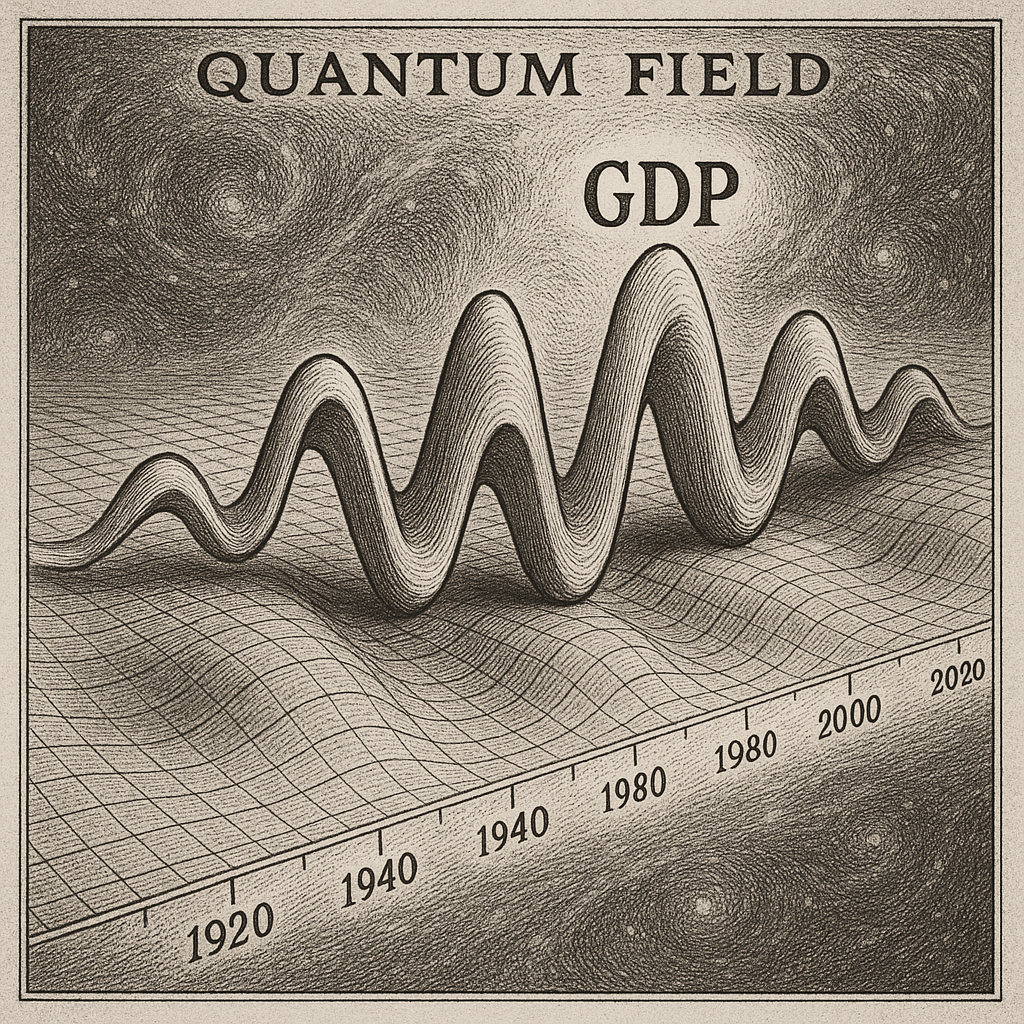
Ontological Commitments in Aggregation & Dynamics specify what macroeconomics assumes is real at the system level: the aggregates it treats as entities, the structural properties those aggregates possess, and the categories used to organize them into a coherent representation of the economy. These commitments establish the fundamental building blocks of the macroeconomic world—output, prices, employment, capital stocks, financial conditions, shocks, frictions, expectations, and policy regimes—and determine how system-wide behavior is conceptualized. They shape how explanations are framed, how data are interpreted, and how dynamic structures are constructed, ensuring that macroeconomic reasoning rests on a stable ontology suited to large-scale, evolving systems rather than individual decision processes or localized interactions.
In Aggregation & Dynamics, entities are the fundamental system-level objects the domain assumes are real and operative. They include aggregate variables such as total output, employment, consumption, investment, price levels, wages, interest rates, capital stocks, financial aggregates, and productivity trends; structural components such as sectors, institutional frameworks, and policy regimes; and dynamic forces such as shocks, frictions, and propagation mechanisms. These entities serve as the basic building blocks of macroeconomic explanation: they define what the theory manipulates, what it observes, and what it treats as causally efficacious at the system scale. Clarifying them ensures that macroeconomic models remain focused on the collective structures and state variables that drive economy-wide movements, rather than drifting into micro-level actors or processes that belong to other domains.
Properties in Aggregation & Dynamics are the defining characteristics of macroeconomic entities that matter for explaining system-level behavior. These include the cyclical or trend components of aggregates, the responsiveness of output and employment to shocks, the rigidity or flexibility of prices and wages, the persistence of inflation, the propagation strength of financial conditions, the adjustment speeds of capital and labor, and the sensitivity of expectations to policy and information. Such attributes are crucial because they determine how the economy evolves over time, how disturbances spread, and which mechanisms dominate system dynamics. Identifying these properties allows researchers to quantify macro relationships, model the behavior of aggregates with mathematical precision, and formulate hypotheses about how changes in one macro property—such as productivity growth, interest rate sensitivity, or nominal rigidity—affect the broader system. Clear specification ensures that macroeconomic analysis isolates the features of aggregates that genuinely matter for dynamic behavior rather than importing irrelevant micro-level detail.
In Aggregation & Dynamics, categories provide the taxonomy through which macroeconomic entities and their properties are organized into coherent conceptual classes. These include distinctions among types of aggregates (real vs. nominal variables, stocks vs. flows), types of dynamic processes (shocks, propagation mechanisms, adjustment dynamics, equilibria, growth paths), types of structural environments (closed vs. open economies, frictionless vs. frictional settings, stable vs. unstable regimes), and types of institutions (monetary authorities, fiscal authorities, financial intermediaries). Such categories help impose order on the complexity of system-level behavior, clarifying whether a given object should be treated as a state variable, a structural parameter, a propagation channel, or a policy instrument. By defining the conceptual buckets within which macroeconomic reasoning operates, this taxonomy ensures that explanations are structured consistently, that variables are interpreted within the correct class, and that communication across models relies on shared, well-defined types rather than ambiguous or shifting conceptual categories.




1.3 State-Variables
State-Variables in Aggregation & Dynamics define how the evolving condition of an economy is represented in a form suitable for quantitative analysis. They specify which measurable aggregates—output, prices, employment, interest rates, capital stocks, financial variables, expectations—track the system’s state at each point in time. Parameterization determines how these variables are encoded: whether they are expressed as levels, growth rates, gaps, deviations from trend, or probability distributions; whether time is modeled discretely or continuously; and which coordinate system captures dynamic relationships most effectively. Together, state-variables and their parameterizations translate the domain’s ontology into operational form, enabling macroeconomists to model propagation mechanisms, estimate dynamic responses, characterize equilibria, and analyze how shocks evolve through the system. They form the critical bridge between conceptual commitments about what the macroeconomy is and the mathematical structures used to explain how it moves.
In Aggregation & Dynamics, variables are the measurable aggregates that capture the evolving state of the macroeconomic system at each point in time. They formalize key properties of the economy—output, inflation, employment, interest rates, consumption, investment, credit conditions, capital stocks, productivity levels, and expectations—into quantities that can be observed, calculated, or inferred from data. These variables serve as the core indicators through which macroeconomists track system-wide movements, identify cyclical and trend components, detect structural shifts, and evaluate the effects of shocks or policy interventions. By encapsulating the economy’s condition in measurable form, state-variables provide the essential inputs for dynamic models, empirical analysis, and theoretical reasoning, linking high-level macroeconomic concepts to observable patterns in the actual economy.
Parameterization in Aggregation & Dynamics specifies how macroeconomic variables are encoded so that the system can be modeled, measured, and analyzed effectively. It determines whether aggregates are expressed as levels, growth rates, deviations from trend, log-transformed values, real or nominal magnitudes, or ratios such as output gaps or debt-to-GDP. It fixes the temporal structure—discrete quarterly steps, continuous-time dynamics, or multi-period horizons—and chooses the coordinate system in which dynamic relationships are represented, such as vector autoregressions, state-space forms, or structural macro equations. Parameterization also governs the degree of simplification: whether heterogeneous behaviors are collapsed into representative aggregates, whether expectations are modeled as distributions or single summary statistics, and whether financial variables are tracked as broad aggregates or detailed balance-sheet components. By selecting the essential degrees of freedom while omitting unnecessary detail, parameterization ensures that macroeconomic models remain tractable, interpretable, and capable of capturing the system’s most important dynamic behavior.



1.4 Admissible Idealizations
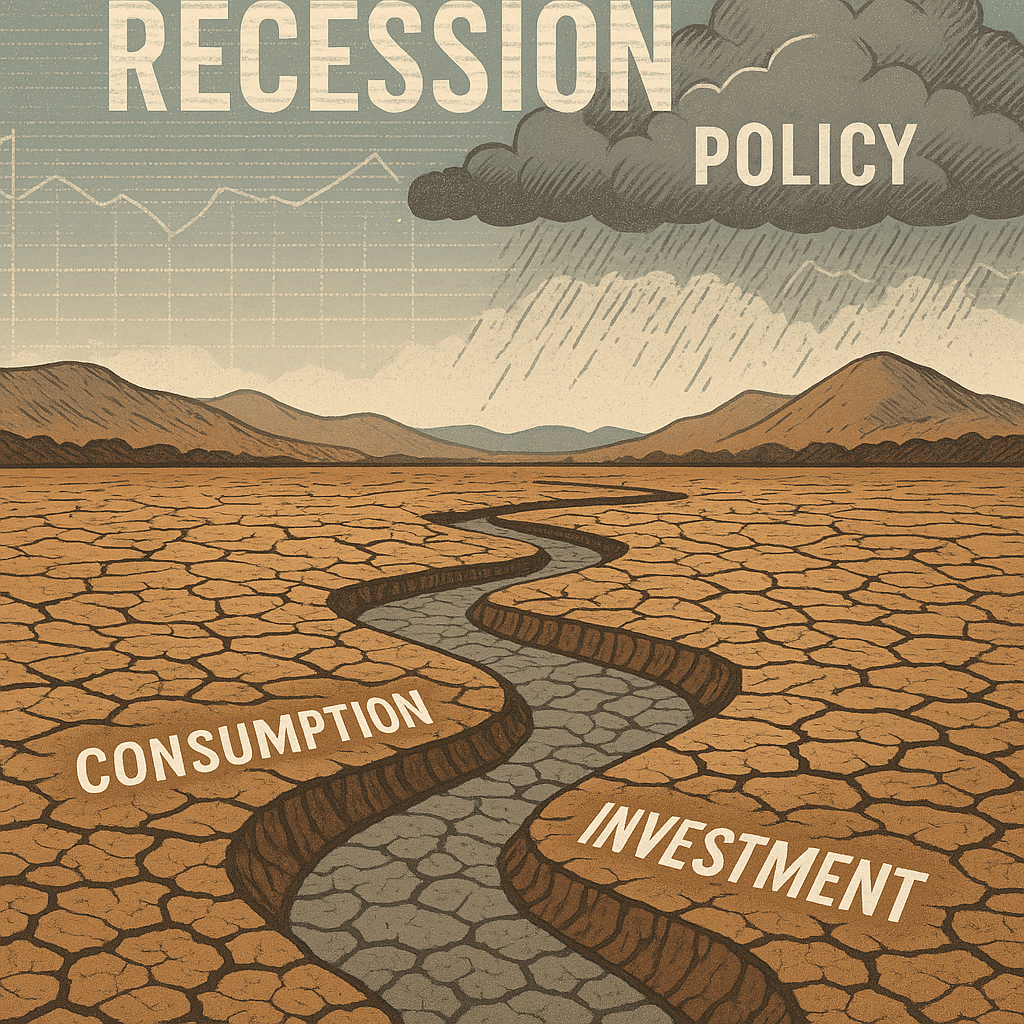
Admissible Idealization in Aggregation & Dynamics specifies which simplifications are permitted in order to capture the essential behavior of large-scale economies without drowning in intractable detail. It allows macroeconomic models to represent millions of heterogeneous agents through aggregates, to treat expectations as summary objects rather than full distributions, to approximate adjustment processes with smooth dynamics, and to represent shocks as stylized disturbances rather than full micro-level cascades. These idealizations distill the system to its dominant mechanisms—propagation, feedback, accumulation, and policy transmission—so that its behavior can be analyzed coherently. Limit conditions define where such abstractions remain valid and where they fail: aggregation breaks down under extreme heterogeneity, representative-agent shortcuts fail when distributional dynamics matter, linear approximations collapse in crises or nonlinear regimes, and smooth adjustment assumptions fail in the presence of severe frictions or discrete institutional shifts. Together, these elements specify the acceptable distance between the complexity of real economies and the simplified structures used to study them, preserving tractability while maintaining fidelity to the core dynamics that define macroeconomic systems.
In Aggregation & Dynamics, simplified models are deliberate abstractions of real economies designed to isolate their core dynamic mechanisms while suppressing overwhelming micro-level complexity. These include models with representative agents, frictionless markets, linearized dynamics around steady states, rational expectations, perfectly competitive sectors, or stylized shock processes. Like point masses in physics or perfect gases in chemistry, these constructions ignore many real-world details—heterogeneity, institutional richness, nonlinearities, behavioral deviations—in order to make the system analytically tractable and theoretically transparent. Such idealizations highlight the dominant forces driving macroeconomic behavior: how shocks propagate, how expectations shape dynamics, how policies transmit, and how economies converge or diverge over time. They are conceptual tools rather than literal descriptions of reality, and their validity depends on whether the omitted features are irrelevant to the mechanism under study. Used judiciously, simplified models enable clear reasoning about aggregate dynamics; used carelessly, they can distort the very system they aim to explain.
In Aggregation & Dynamics, every idealized macroeconomic model has a domain of validity—situations in which its simplifying assumptions generate reliable insight, and conditions under which those assumptions fail and the model becomes misleading. Linearized dynamics hold only near steady states and break down during crises or large shocks. Representative-agent frameworks work when distributional differences are irrelevant but collapse when heterogeneity drives aggregate outcomes. Rational expectations approximations hold when agents can coordinate on stable forecasting rules but fail in environments with regime shifts or Knightian uncertainty. Frictionless models approximate long-run behavior but misrepresent short-run adjustment when rigidities or bottlenecks dominate. Recognizing these limit conditions is essential for scientific rigor: it clarifies when an idealization can be trusted, where it must be refined, and which regions of the economic landscape require more detailed or nonlinear modeling. Explicitly identifying limits prevents the overextension of simplified macro theories into regimes where their underlying assumptions no longer describe the system.


1.5 Domain Assumptions
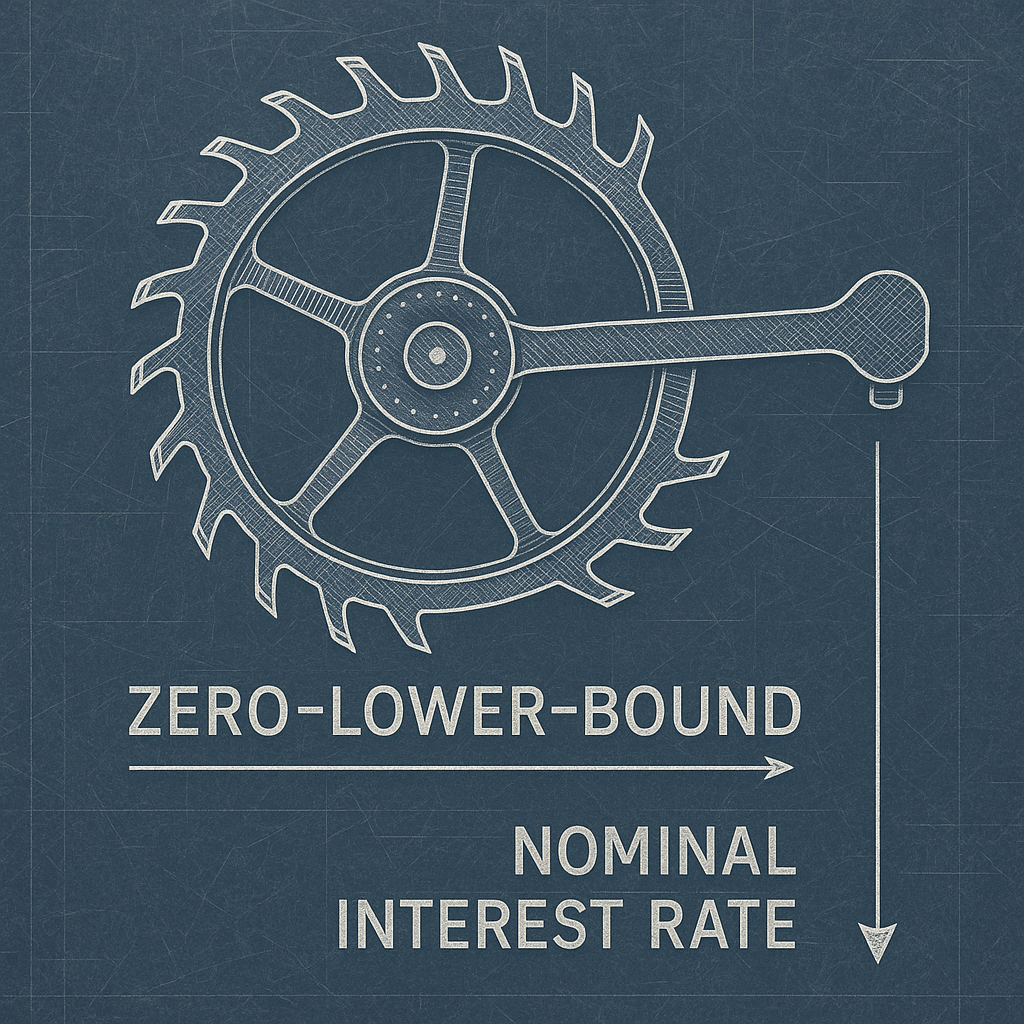
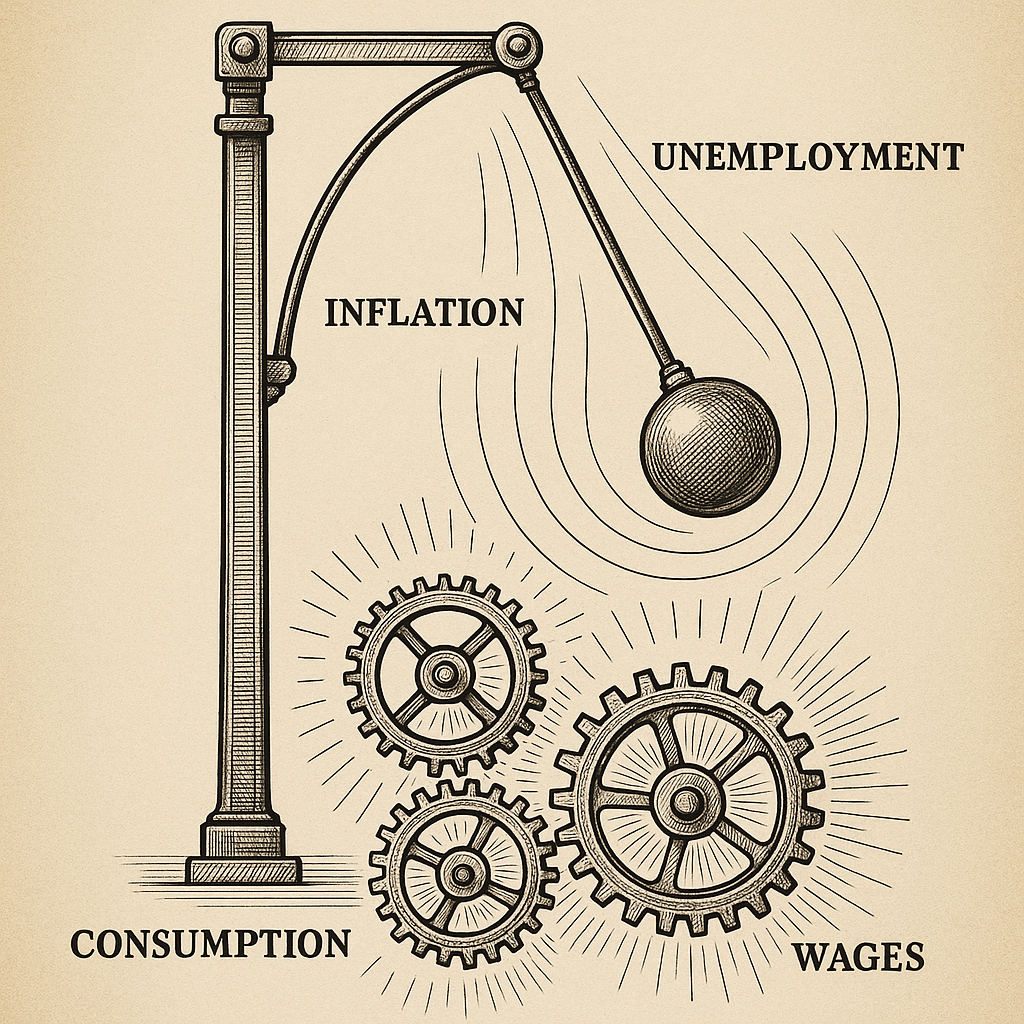
Domain Assumptions in Aggregation & Dynamics articulate the background commitments that macroeconomic analysis takes as given before any specific model is constructed. Structural assumptions define the fundamental stance of the domain—whether aggregate behavior is modeled as deterministic or stochastic, whether dynamics unfold in discrete periods or continuous time, whether adjustment is smooth or frictional, and whether policy regimes are stable or subject to shifts. Implicit commitments reflect the field’s inherited defaults: that aggregates meaningfully summarize heterogeneous behavior, that system-level variables follow coherent laws of motion, that expectations can be represented in a tractable form, and that causal structure exists at the macro scale rather than being reducible to micro-level optimization. Together, these assumptions form the invisible scaffolding that shapes how macroeconomists interpret phenomena, what kinds of mechanisms they consider legitimate, and which explanations count as coherent within the system-level framework.
Structural Assumptions in Aggregation & Dynamics are the deep, background commitments about how macroeconomic systems operate—assumptions so fundamental that they shape the entire architecture of macro modeling rather than any single hypothesis. These include whether aggregate behavior is treated as deterministic or stochastic; whether time evolves in discrete periods or continuous flows; whether adjustment processes are smooth or punctuated by nonlinearities; whether expectations form endogenously through learning or are imposed as rational; and whether aggregate relationships are stable across regimes or subject to structural breaks. Such assumptions determine the mathematical form of macroeconomic theories—difference equations, differential equations, stochastic processes, or hybrid frameworks—and encode philosophical positions about predictability, aggregation, and the nature of economic dynamics. Making these foundations explicit is essential: if a structural assumption is only approximately true or fails in certain environments, the resulting models may mischaracterize system behavior. Explicit articulation also makes it possible to question, revise, or replace these assumptions as evidence accumulates or as economic environments evolve.
Implicit Commitments in Aggregation & Dynamics are the unstated assumptions and conceptual defaults that macroeconomists inherit from the prevailing paradigm—commitments rarely written down but necessary for system-level reasoning to function. These include the belief that aggregate variables such as output, inflation, and employment meaningfully summarize vast heterogeneity; that system dynamics can be captured by stable laws of motion; that expectations can be represented in a compact form; that equilibrium concepts are appropriate organizing tools; and that causal structure exists at the macro scale rather than being fully reducible to micro-level interactions. These commitments are so deeply embedded in the field’s practice that they often go unnoticed until challenged by empirical anomalies, interdisciplinary critique, or alternative theoretical frameworks. Making them explicit is essential because they shape which questions are asked, which explanations are considered legitimate, and which modeling strategies are deemed acceptable. Surfacing these assumptions allows researchers to evaluate their validity, understand their limitations, and revise them as the structure of the economy or the goals of the science evolve.




1.6 Internal Coherence Requirements
Internal Coherence Requirements in Aggregation & Dynamics ensure that macroeconomic analysis functions as a unified, logically consistent system rather than a patchwork of unrelated claims. Consistency requires that foundational concepts—aggregates, dynamic laws, expectations, policy mechanisms—never contradict one another across models or theoretical statements. Compatibility requires that entities, variables, assumptions, and behavioral laws integrate into a single workable framework: the aggregates must correspond to the entities defined by the ontology, the state-variables must align with the dynamic equations used to model them, and the assumptions governing shocks, frictions, and expectations must fit the system’s overall causal structure. These coherence requirements impose the discipline that allows macroeconomic reasoning to generate stable interpretations, comparable results, and theoretically sound explanations of system-level behavior. Without them, macroeconomics would fracture into incompatible sub-models lacking a common conceptual foundation.
Consistency in Aggregation & Dynamics requires that every component of the macroeconomic framework—its aggregates, definitions, behavioral rules, dynamic equations, and assumptions—fits together without contradiction. No element of the theory may imply a causal structure, adjustment mechanism, or dynamic behavior that conflicts with another. For example, a model cannot simultaneously assume perfectly flexible prices in one part and rely on nominal rigidity to generate business cycles in another; it cannot define potential output inconsistently across equations; and it cannot impose expectations rules that violate the laws of motion governing the variables being forecast. Consistency also demands uniform use of terminology—such as “equilibrium,” “shock,” “trend,” or “real activity”—so that these concepts do not shift meaning across models. Maintaining consistency is essential because any internal contradiction implies that at least one component of the framework is false or misapplied. Ensuring coherence often requires explicit mathematical formulation and careful integration of new theoretical advances so that extensions strengthen, rather than destabilize, the underlying macroeconomic structure.
Compatibility in Aggregation & Dynamics requires that all components of the macroeconomic framework—its aggregates, dynamic laws, structural assumptions, entities, variables, and measurement conventions—fit together into a cohesive system capable of explaining economy-wide behavior. The aggregates defined in the ontology must correspond to the variables used in dynamic equations; the assumptions governing expectations, frictions, and policy regimes must align with the mechanisms that propagate shocks; and the state-variables must integrate meaningfully with the empirical methods used to estimate or observe them. A variable or assumption that fails to connect to the system’s causal structure signals a lack of unity. Compatibility ensures that macroeconomic reasoning forms an interconnected explanatory network rather than a collection of isolated sub-models. When components reinforce each other—when the ontology matches the measurement strategy, when the assumptions support the dynamics, and when the dynamics illuminate the aggregates—the theory gains coherence, predictive power, and interpretability. When they do not, the framework fragments, leading to confusion, misinterpretation, and reduced explanatory strength.