Minoans
Arms:
Minoan weaponry was marked by craftsmanship in bronze but often with a ceremonial flair. Excavations on Crete have revealed long rapier-like swords and ornate daggers, some inlaid with gold or silver depictions of hunts and battles. These rapiers, with their slender blades up to a meter long, were effective for thrusting; however, their narrow tangs and exquisite decoration suggest they may have been status symbols or used in ritual combat more than on a rugged battlefield. Similarly, Minoan daggers featuring intricate scenes (e.g. the famous “Lion Hunt Dagger” imported to Mycenae) demonstrate an appreciation for weaponry as art. For ranged combat, the Minoans possessed simple self-bows and perhaps arrows tipped with obsidian or bronze. They also utilized spears and javelins, though the evidence is indirect (occasional spearheads and artistic depictions). Notably absent in the Minoan arsenal is clear evidence of heavy, mass-produced war weapons – no great caches of arrowheads or standardized swords have been found at their palaces. This aligns with the idea that the Minoans did not field large conventional armies.
Defenses:
In fortification, the Minoans diverged from contemporaries: their primary palatial centers like Knossos and Phaistos were not ringed by monumental walls in their prime. The lack of city walls suggests a defensive strategy relying on Crete’s insularity and navy rather than static fortresses. That said, smaller-scale defensive works did exist. Archaeologists have identified guardhouses or watchtowers along key Minoan roads and some fortified refuge sites in rugged highlands of Crete, likely used in emergencies. Coastal sites and harbor towns might have had palisades or ditches as basic protection against pirates.
Mobility:
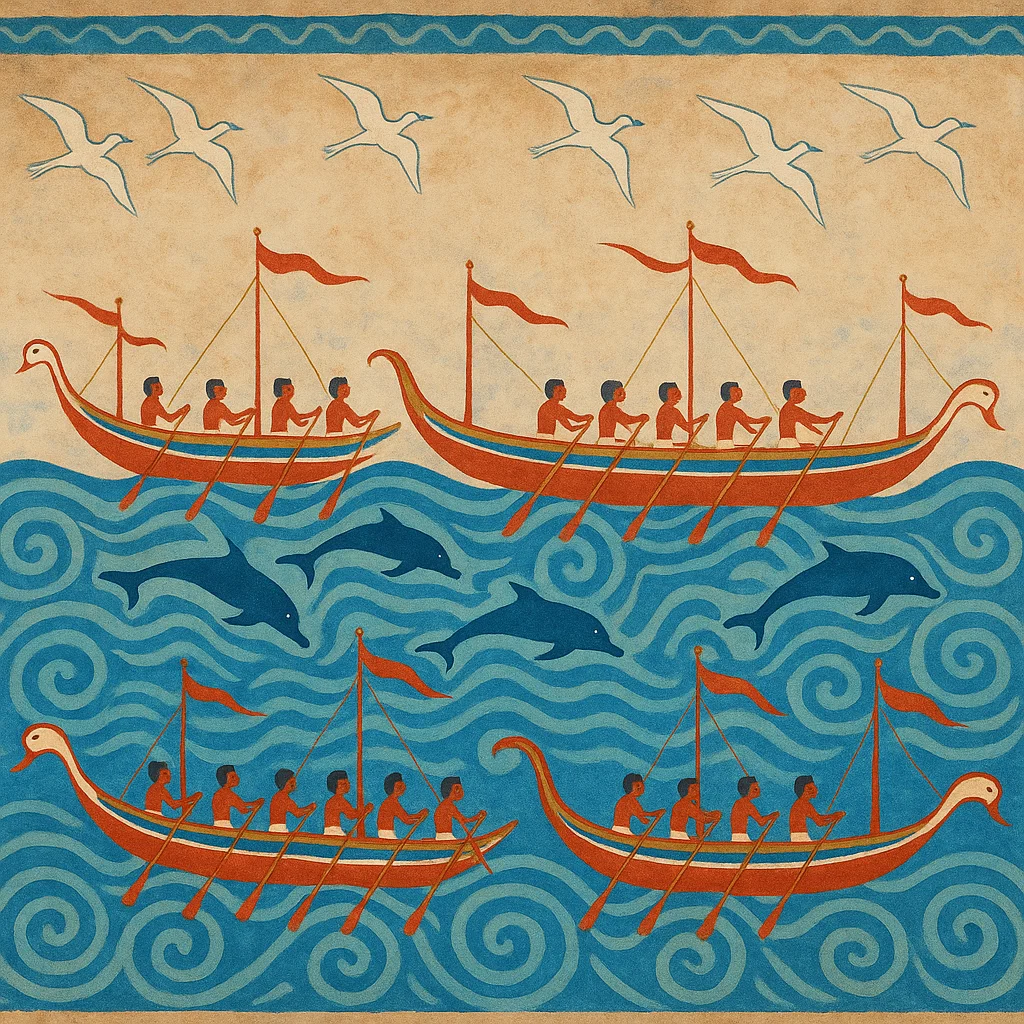
The Minoan military’s mobility centered on naval power. Crete deployed fleets of wooden ships – long, slender galleys powered by oars and possibly sails (by the Middle Bronze Age, depictions show masts). Minoan ships could transport troops or marines across the Aegean quickly, which was crucial for protecting their trade networks and overseas settlements. While these vessels were primarily for commerce, they doubled as warships when needed, carrying spearmen and archers for ship-to-ship combat or raiding sorties. On land, Crete’s rugged terrain and short distances meant wheeled transport was limited. There is scant evidence of chariots on Minoan Crete; any use of the horse-drawn chariot (a new military technology of the 17th–16th centuries BCE) would have been minimal due to the island’s mountainous topography and the absence of broad plains. Instead, the Minoans likely relied on pack animals (donkeys) for logistics over land and on their ships to project force abroad. In summary, the Minoan “means” of war were characterized by finely made but not mass-produced arms, minimal fixed defenses, and a strong emphasis on naval mobility as both shield and spear of the civilization.
Mycenaeans
Arms:
The Mycenaean Greeks developed a robust martial toolkit, reflecting their more warlike posture. Early Mycenaean warriors (16th–15th centuries BCE) carried long thrusting swords similar to Minoan rapiers, but over time sword design evolved to shorter, sturdier blades. By the 13th century BCE, a new type of bronze sword known as the Naue II (first developed in Europe) became prevalent; this was a versatile cut-and-thrust weapon with a full tang, making it far less prone to breaking in combat. Spears were the staple weapon for Mycenaean infantry, used both in melee and as throwing javelins. The typical warrior might wield a thrusting spear about 2–3 meters long for combat in formation, and lighter javelins for skirmishing. Mycenaean archery is evidenced by finds of bronze arrowheads in palace armories and the depiction of archers on frescoes and vase paintings. While not as celebrated in later Greek memory as hand-to-hand weapons, bows and slings would have augmented their ranged capabilities. The Mycenaeans also pioneered armor among Aegean peoples. Helmets crafted from boar’s tusks sewn onto leather caps were a signature item for elite warriors (examples have been found in shaft graves and depicted in art). For body armor, around 1400 BCE the remarkable bronze Dendra panoply was introduced – a suit of bronze plate armor including a breastplate, backplate, shoulder guards, and skirt of hinge-connected plates. This heavy armor, covering a man neck-to-knee, provided excellent protection and indicates some Mycenaean fighters were equipped as true heavy infantry. However, it was cumbersome, so likely reserved for chariot-born champions or specific defensive roles. Later in the 13th century, scale armor (small bronze scales sewn to a garment) appears sporadically in the Aegean, though never as commonly as in the Near East.
Defenses:
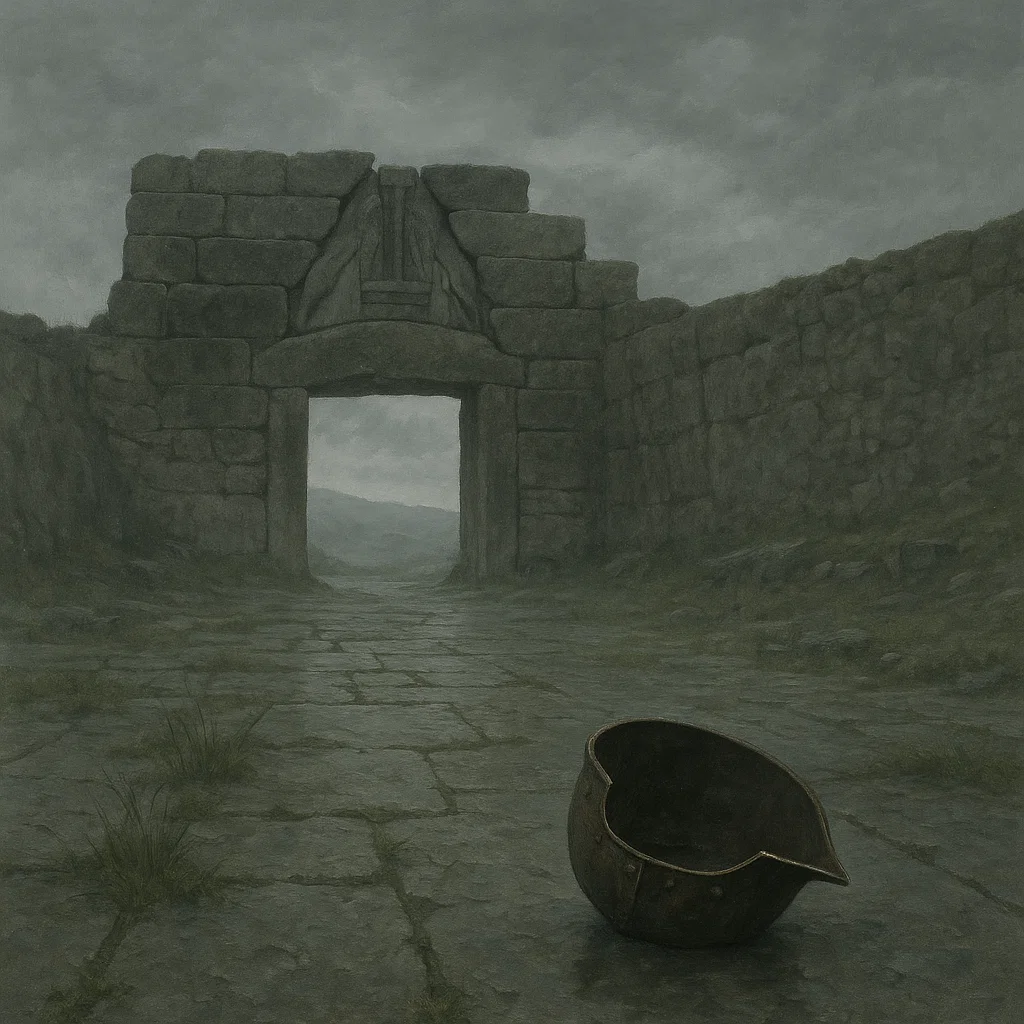
The Mycenaeans are renowned for their cyclopean fortifications – massive stone walls constructed from huge limestone boulders. Major citadels at Mycenae, Tiryns, Gla, and elsewhere were encircled by walls so thick and tall that later Greeks imagined giants had built them. These fortresses guarded palatial centers and could shelter the populace in times of siege. Their gates (such as the famous Lion Gate of Mycenae) were narrow and flanked by towers to funnel and expose attackers. Apart from citadel walls, Mycenaeans dug defensive ditches and built bastions; at Tiryns, an advanced bastion protected a side gate, and at Mycenae a secret postern gate and subterranean cistern exemplified defensive planning. These measures suggest that Mycenaean kingdoms anticipated pitched assaults and invested heavily in static defenses to protect their rulers and treasures.
Mobility:
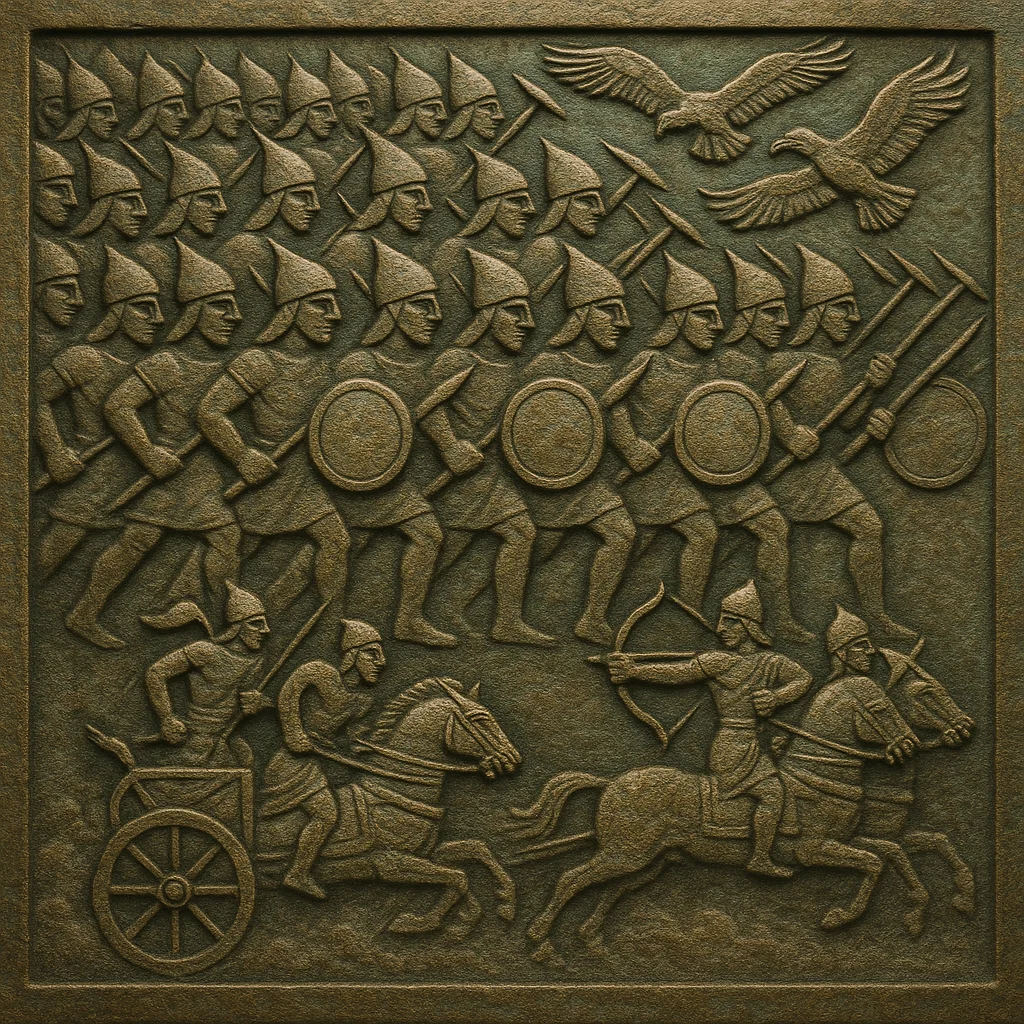
In terms of mobility, the Mycenaeans adopted the war chariot and maritime vessels to extend their reach. The chariot, likely introduced via contacts with the Near East around the 16th century BCE, became a status symbol for Mycenaean nobility. Mycenaean chariots were two-wheeled carts drawn by two horses and typically carrying a crew of two: a driver and a warrior (armed with spears or bows). Linear B tablets from palace archives inventory dozens of chariots and spare parts (wheels, axles), indicating a corps of chariotry existed as an elite strike force. In battle, these light chariots could swiftly carry warriors across open ground for shock attacks or rapid flanking maneuvers, though in the hilly Greek mainland their use was probably limited to flat coastal plains or foreign campaigns (such as the imagined fields of Troy). On sea, the Mycenaeans inherited and expanded the Minoan fleet tradition. They built long galleys capable of carrying war parties across the Aegean. Depictions on pottery and frescoes show Mycenaean ships with a single mast and square sail for cruising, complemented by multiple oarsmen for speed and maneuver in combat. These ships lacked the bronze rams of later classical triremes, but Mycenaean marines could pull alongside enemy vessels to board them, or land on hostile shores for raids. The discovery of a large number of identical weight arrowheads and spearheads in palace stores suggests Mycenaean states could outfit sizeable expeditionary forces. In all, the Mycenaeans had at their disposal heavy infantry arms, fortified strongholds, fast chariots, and capable ships – a comprehensive suite of Bronze Age military means that enabled both strong defense at home and power projection abroad.
Hittites
Arms:
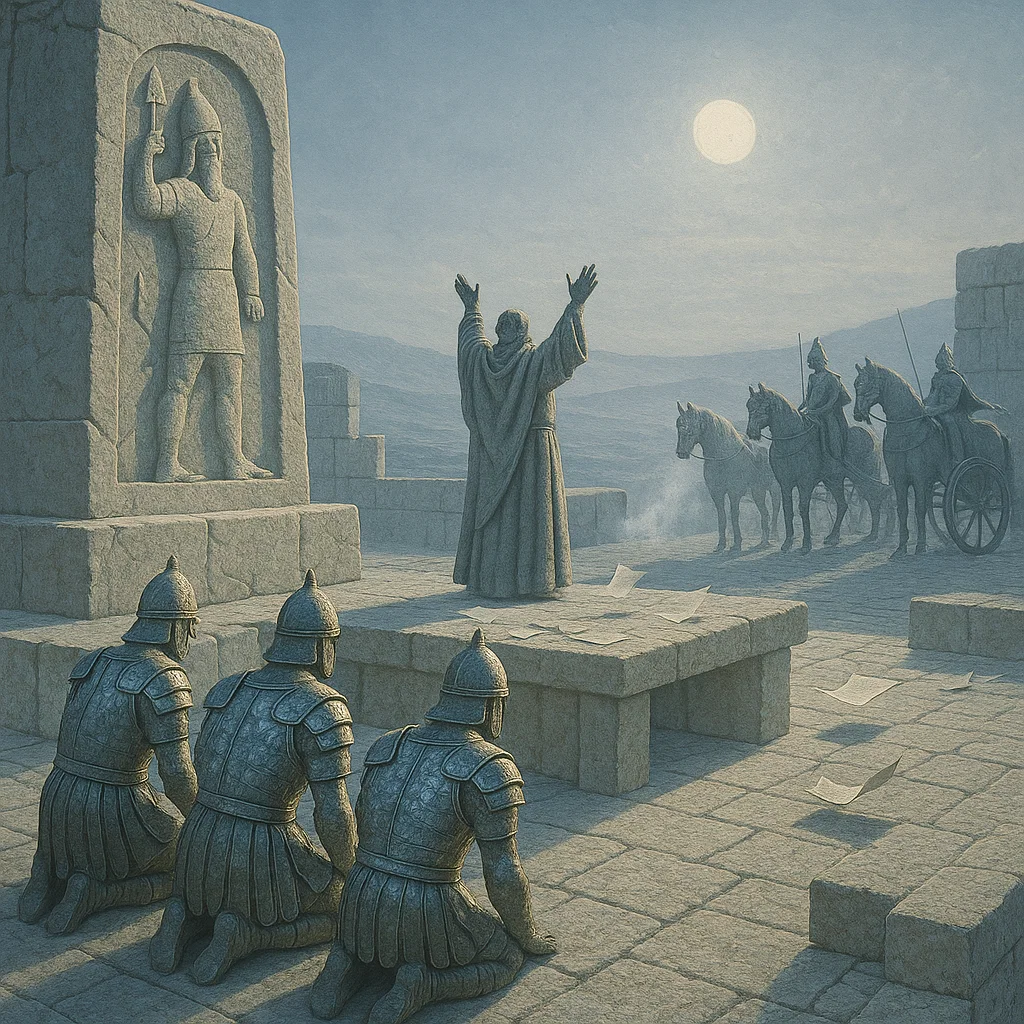
The Hittite military apparatus was heavily influenced by the broader Near Eastern armament of the Late Bronze Age, yet it featured its own refinements. The primary offensive arm of the Hittites was the spear. Hittite infantrymen carried long spears (up to ~2.5 meters) suited for close-order combat. Contemporary accounts and later reconstructions suggest that Hittite foot soldiers often fought in dense formations, using these spears as pikes to present a bristling front. For close-quarter fighting once formations broke, Hittite warriors were equipped with secondary weapons like short swords or daggers. Surviving Hittite swords tend to be shorter and sturdier than the earliest Aegean rapiers – some were akin to long daggers or leaf-shaped short swords suitable for stabbing and slashing in tight melee. There is evidence that Hittite blacksmiths, toward the end of the Bronze Age, had begun forging iron implements. Indeed, the Hittites developed an iron-working industry (in a strictly controlled, quasi-sacred capacity) and were producing a limited number of iron blades by the 13th century BCE. These iron weapons were likely reserved for royalty or as ceremonial gifts, since bronze remained the standard for rank-and-file equipment. For ranged combat, the Hittites used bows, though interestingly their chariot corps did not rely on composite bow archery as much as the Egyptian charioteers did. It appears Hittite archers were predominantly infantry units, armed with simple or composite bows, providing volleys of arrows behind the screen of spearmen. The Hittites also made use of the battle-axe and mace in their arsenal – blunt or chopping weapons effective against armored foes at close range (some Hittite artwork depicts warriors with axe-like weapons).
Defenses:
The defensive gear of Hittite soldiers combined leather, bronze, and occasionally iron elements. A typical Hittite infantryman wore a padded linen or leather tunic, sometimes reinforced with bronze scale plates over vital areas (scale armor was widely used by contemporaries like Egyptians and Assyrians and likely adopted by the Hittites for nobles and chariot crews). Archaeological finds and artistic depictions suggest that Hittite elite warriors wore bronze helmets, possibly with cheek guards and a distinctive conical shape. Common soldiers may have worn simpler leather caps. For body defense, bronze scale armor – small overlapping bronze scales sewn onto a garment – offered flexible protection and was within the metallurgical ability of the Hittites. Notably, one of the only Bronze Age scale armor cuirasses found west of Mesopotamia was discovered in a Mycenaean context, but Hittite sources imply their use of scale corselets, which could have been similar. Shields used by Hittite troops were often rectangular or slightly figure-eight shaped, constructed from wood and leather. These shields, sometimes depicted with scalloped edges, were large enough to cover much of the body and were effective in walling off an enemy’s blows when infantry formed shield-wall formations. On the strategic defensive, the Hittite Empire built formidable fortifications. Hattusa, their capital, was encircled by miles of cyclopean stone walls with periodic gates and towers. Engineers incorporated features like corbelled arch tunnels (the famous Postern Gate at Hattusa) and glacis slopes to strengthen city walls. Provincial centers and frontier forts (e.g. Carchemish, a major Syrian city under Hittite control) were likewise strongly walled. Siege defenses were enhanced by the Hittites’ practice of positioning archers on ramparts and using the high ground – many Hittite cities sat on mountain spurs or elevated plateaus.
Mobility:
The hallmark of Hittite military mobility was the three-man war chariot. The Hittites, like other Late Bronze Age powers, capitalized on the chariot revolution in warfare. Their chariot design, however, had unique characteristics: the chariot’s axle was placed at the center of the chassis (rather than at the rear as in Egyptian chariots), making the platform larger and slightly less nimble but capable of carrying an extra crewman. Each Hittite heavy chariot carried a driver, a shield-bearer, and a warrior (often armed with spears or javelins). This three-man crew allowed Hittite chariots to perform a shock role – the shield-bearer could protect the team as the warrior hurled spears into enemy infantry or engaged opposing chariots. In effect, a charge of Hittite chariots was akin to an ancient armored division: a thundering mass of horse-drawn platforms delivering an initial missile salvo and then crashing into enemy lines, where the spear-men could even dismount to fight amidst the chaos. The Hittite army was reputed to field hundreds, even thousands, of chariots in major battles; for instance, at Kadesh they may have amassed over 2,500 chariots from Hatti and allied states. For transport and communication, the Hittites employed horses beyond just chariots – dispatch riders and messengers on horseback are noted (although true cavalry for combat did not yet exist). The road system radiating from Hattusa allowed relatively rapid movement of troops across Anatolia’s challenging terrain. Additionally, though the Hittites were not a seafaring nation in the way the Minoans or Mycenaeans were, they did maintain some naval capability on the Mediterranean coast via vassal states like Ugarit. Ships from Ugarit or other ports could carry Hittite-allied troops for coastal operations when necessary. In sum, the Hittites leveraged heavy chariotry for offensive mobility, constructed strong defenses for strategic strongpoints, and armed their soldiers with a combination of bronze and early iron weaponry suited to both shock and missile tactics.

Cycladic Peoples
Arms:
The Early Bronze Age Cycladic islanders armed themselves with simple but effective weapons. In the 3rd millennium BCE, metalworking was still developing; the Cyclades had access to local copper and imported tin (possibly via trade links as far as Anatolia – there are hints that tin reached the Aegean from regions like ancient Troy or beyond). The result was early bronze (or arsenical bronze) tools and weapons. Daggers were a common weapon form – small, flat blades of copper or bronze that could be used in close combat or hunting. These daggers often appear in Cycladic graves, indicating their value to the people. Spearheads of copper have also been found, suggesting that spears were an important weapon for defending settlements or in skirmishes between communities. Before metal became widespread, sharp obsidian blades from the volcanic island of Melos were a critical part of Cycladic armament. Obsidian arrowheads and knife blades remained in use for some time due to their lethal sharpness, even as bronze gradually replaced stone. As for defensive arms, there is scarce evidence of armor among Cycladic warriors – most likely they fought with little body protection save perhaps thick clothing or simple leather shields. In the absence of visual depictions, we infer from the size of Cycladic communities that warfare was small-scale: a few dozen warriors might engage with farm implements doubling as weapons, alongside dedicated daggers and spears.
Defenses:
When it came to defenses, the Cycladic peoples eventually fortified certain key sites, especially in the mid to late 3rd millennium BCE. Initially, earlier villages were unfortified, nestled in naturally sheltered coves or terraces. But as inter-island raiding or outside threats increased, Cycladic communities invested in defensive architecture. Archaeologists have identified strong stone fortification walls at sites such as Kastri on Syros and Ayia Irini on Kea. At Kastri, for example, a solid stone wall was built across the most accessible approach to the settlement, supplemented by half a dozen rectangular bastions projecting outward. These bastions allowed defenders to cover the wall’s base with flanking fire (arrows or spears) and prevent scaling. Inside these defensive perimeters, houses were closely packed, forming a dense habitation that could retreat behind walls in times of danger. Some settlements were strategically placed on hilltops with steep slopes, using the terrain itself as a natural moat against attackers. The presence of towers and multiple phases of wall expansion at certain sites indicates a sustained concern for security. The Cycladic islands being relatively small, however, meant that sieges would rarely be protracted – an attacker could surround a hill fort, but the scale of conflict was more akin to raids than multi-year wars.
Mobility:
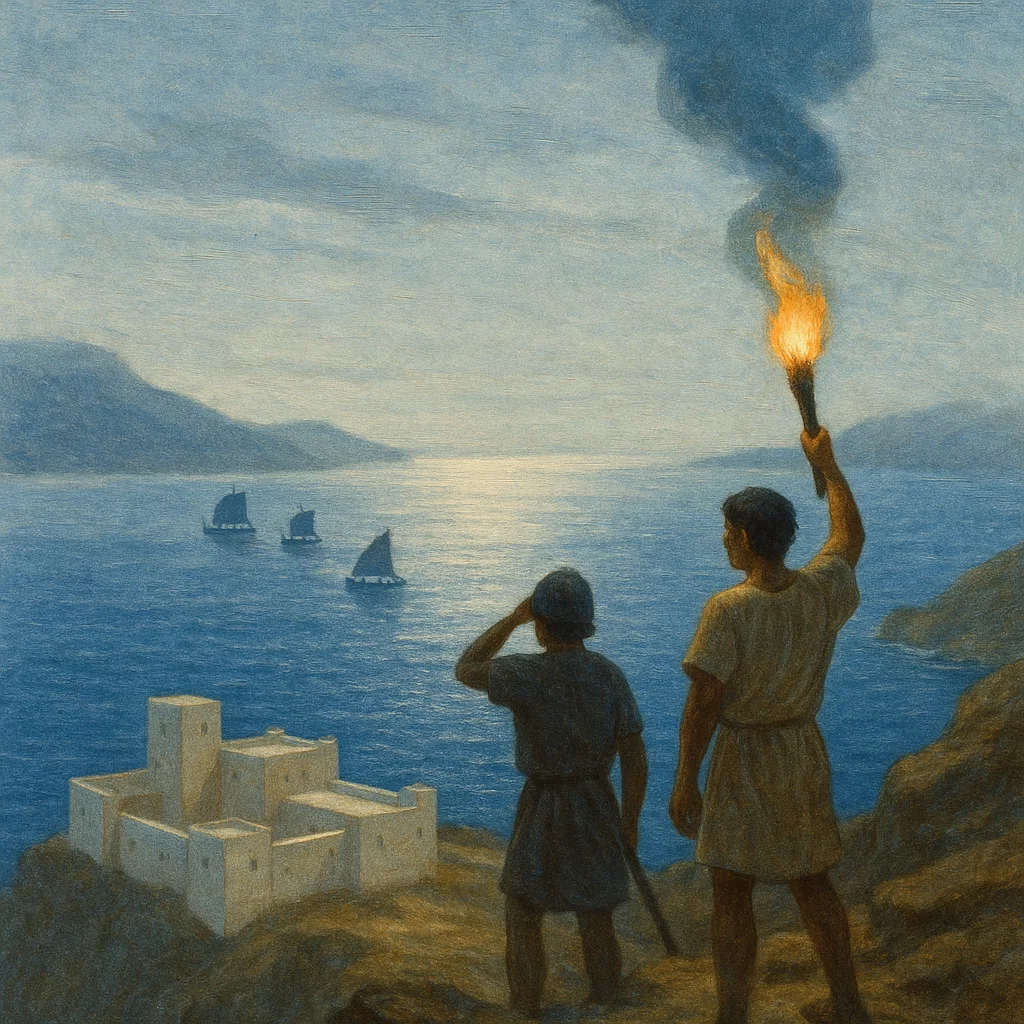
For Cycladic communities, mobility was predominantly maritime. Each island was separated by miles of Aegean Sea, so sturdy boats were vital for communication, trade, and warfare. The Cycladic people built long rowboats, evidenced by the depiction of high-prowed boats incised on Early Cycladic pottery (the so-called “frying pan” vessels). These boats typically had a raised stern and a low bow, likely propelled by teams of oarsmen. Early Cycladic ships might not yet have had sails – some reconstructions suggest they relied purely on oar power and coastal navigation. This limited their range somewhat but gave fine control for island hopping and quick landings on enemy shores. A raiding party could embark in a dozen longboats at night, cross a channel, and surprise a neighboring island settlement by dawn. In warfare, such boats allowed swift strikes and equally swift retreats, characteristics ideal for the intermittent feuding of small communities. On land, the small size of islands meant that warriors could march from one end to the other in a matter of hours. There was no need for horses or chariots – indeed, horses were likely absent from these islands in the Early Bronze Age, and chariots were unheard of until much later when foreign influences arrived. If an island was invaded, defenders could retreat into high interior areas; for instance, there is evidence of refuge sites in mountainous parts of islands where people could hide from coastal raiders. In conclusion, Cycladic Bronze Age warfare relied on light weapons and simple defenses, with mobility almost entirely dependent on oared boats. While technologically simpler than their later Aegean counterparts, the Cycladic peoples effectively used what means they had to navigate a world where the sea both connected and threatened them.
Troy VI–VII
Arms:
The inhabitants of Troy VI/VII possessed arms reflective of a blend between Anatolian and Aegean military traditions. Excavations of these layers have uncovered a variety of weapons, particularly a significant number of arrowheads. The arrowheads found in the ruins of Troy’s destruction layers are of bronze and sometimes of Mycenaean style, indicating that either the Trojans employed similar designs or they were attacked by Aegean archers. In either case, the prevalence of arrows suggests archery played a notable role in Troy’s warfare. Troy’s defenders would have deployed bows from atop their walls to rain arrows on attackers, as well as on the field. Besides archery, Trojans likely wielded spears as their primary melee weapons – a universal Bronze Age choice. Some spearheads and javelin points have been found on the site, reinforcing this. Close combat weapons such as swords and daggers were also present. A few sword fragments from Troy around 1200 BCE resemble the Aegean Naue II type, implying either trade or that Mycenaean mercenaries/allies were present. Additionally, one can assume that like other Anatolian warriors, the Trojans may have used slings to hurl stones (sling bullets have been found in earlier Troy strata) and possibly battle-axes for brutal close fighting.
Defenses:
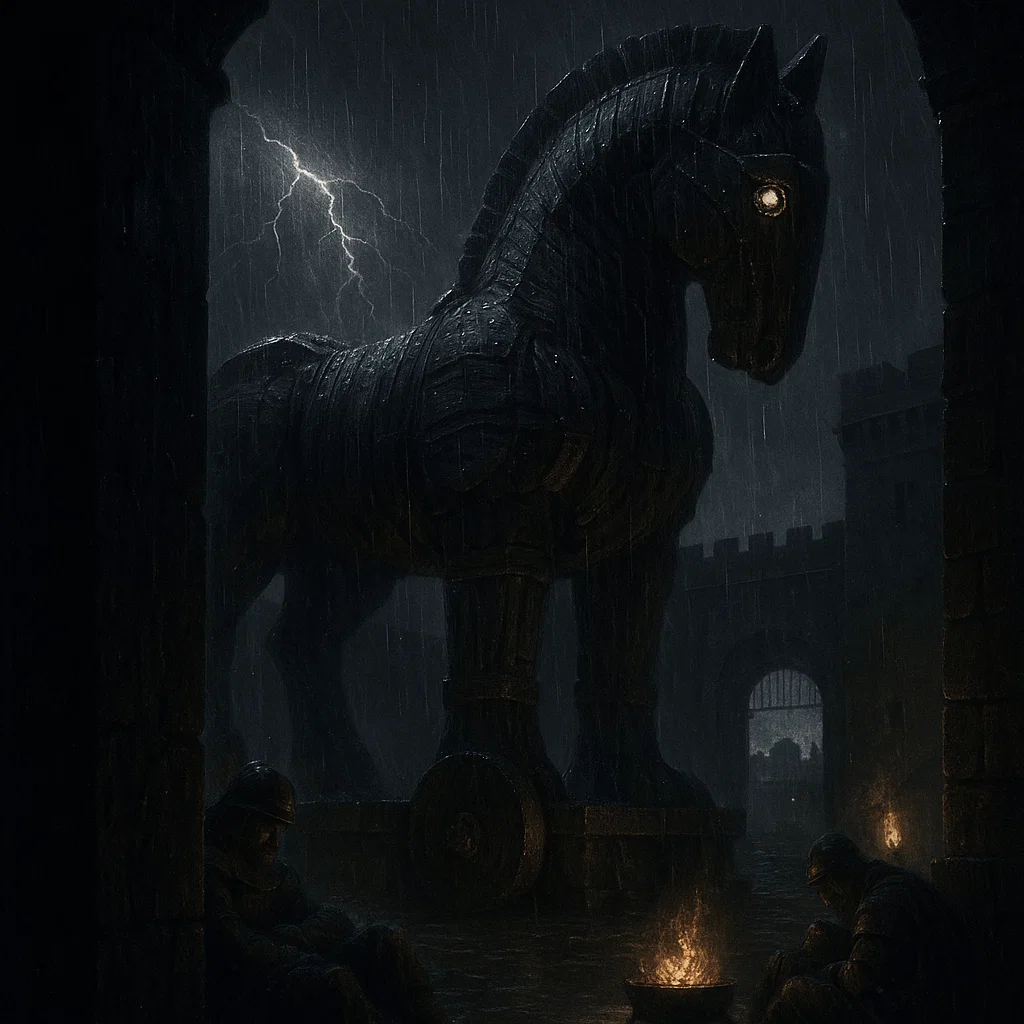
Troy’s most famous military asset was its mighty fortification system. By the Troy VI period, the citadel was encircled by stone walls of exceptional quality. These walls, built with large stone blocks at the base and likely mudbrick superstructures above, stood approximately 8–10 meters high in places and several meters thick. Every so often, imposing watchtowers projected from the circuit – one noted example is the Eastern Tower guarding a gate, where the wall turns outward, creating a flanking position over the entrance. The gates themselves were narrow and robust, with multiple door leaves and possibly barred with wooden beams. The design of Troy’s defenses reveals an understanding of advanced principles: at one point, houses were tightly packed behind the wall, but in later Troy VIIa, new houses were built abutting the inside of the wall, indicating a last-ditch expansion of capacity despite compromising some defensive principles. The lower town of Troy (outside the citadel) was also defended in the latest Bronze Age phase by a ditch or additional outer wall, evidence that Troy had expanded beyond its citadel and sought to protect those inhabitants as well. The strong defensive architecture of Troy meant that any attacker faced a daunting task – the city sat on a rise, its walls steep and smooth-sided, making scaling difficult. Within the city, the population could stockpile food in large storage pithoi (some have been excavated in homes), enabling them to withstand sieges for a time.
Mobility:
The Trojans, like most contemporary states, utilized chariots and ships for mobility, though perhaps on a smaller scale than the great empires. The wide plain of Ilium outside the city was suitable for chariot maneuvers, and if Troy followed typical Anatolian military patterns, its nobility would go to battle in horse-drawn chariots. A two-horse chariot with a driver and an armed warrior could be used for sallying out from the city to harass besiegers or to engage an enemy host on the plain. While direct evidence of chariots in Troy’s ruins is scant (chariot parts like wheels or yokes rarely survive, especially in a destroyed city), references in Hittite archives to Wilusa’s involvement in regional wars imply that Troy’s military included chariotry – the prestige weapon of Late Bronze Age aristocrats. Regarding naval capability, Troy’s location near the Dardanelles strait suggests it participated in sea trade and possibly had its own fleet of ships. Trojan ships would have been similar to Mycenaean or Levantine ships of the time: oared galleys capable of coastal voyages. They may not have rivaled the larger navies of Crete or Cyprus, but a fleet would allow Troy to control the sea-lanes of the Hellespont, enforce tolls on passing merchant vessels, and transport troops or messengers to allies. Indeed, controlling the waterways was likely a source of Troy’s wealth and strategic value. Thus, in terms of mobility, Troy’s defenders could operate on both land and sea – chariots giving local battlefield mobility and ships providing strategic reach, while its massive walls reduced the need for rapid maneuver once behind them. In essence, Troy’s military means combined strong defensive works, competent archers and spearmen for defense, and sufficient mobile units (chariots on land, ships at sea) to project power in its vicinity or to call for aid from allies like the Hittites if threatened.