Bronze Age Near Eastern Military Tactics and Doctrines (3300–1200 BCE)
Battlefield Formations and Infantry Tactics
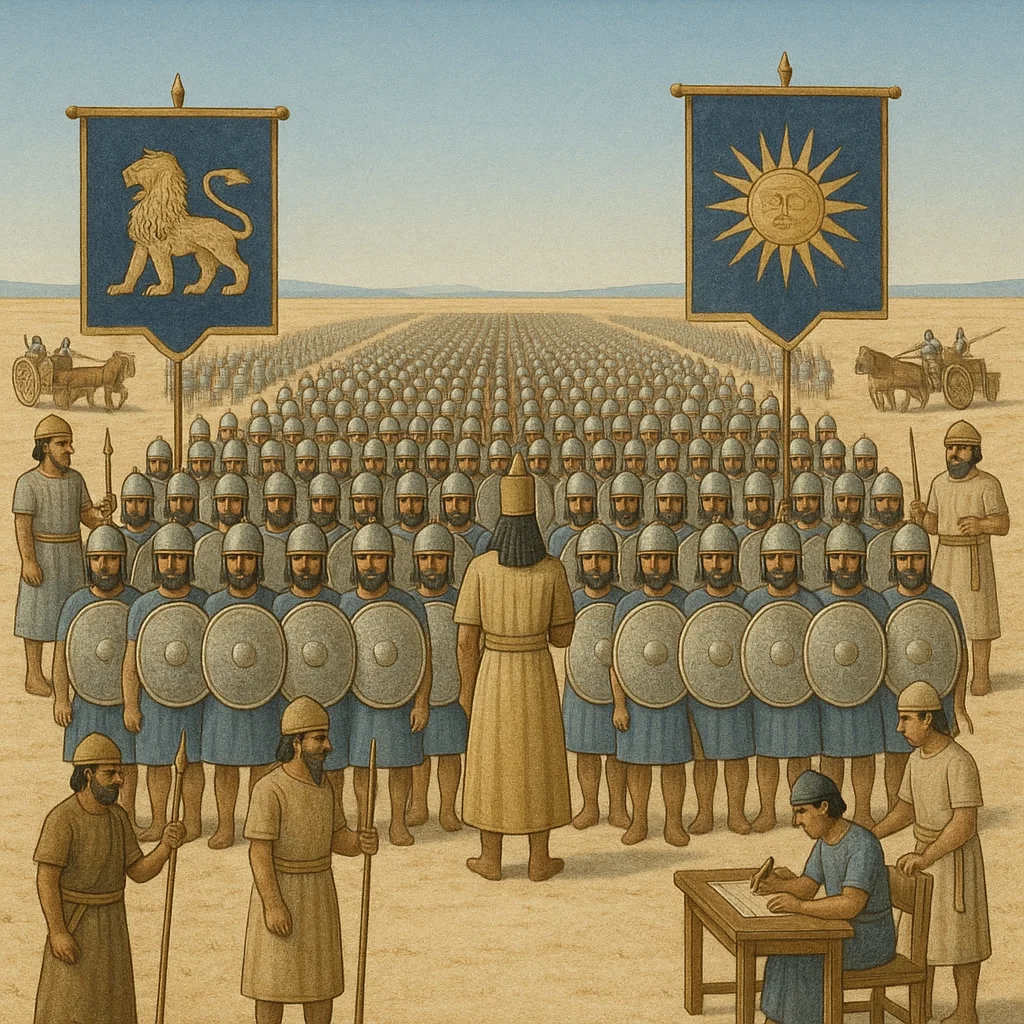
Early Mesopotamian armies were among the first to employ organized battlefield formations. Sumerian city-states of the 3rd millennium BCE fielded close-order infantry units, famously depicted on the Stele of the Vultures (c. 2450 BCE) in a phalanx-like arrangement[1]. In this relief, armored spearmen with large shields stand six files deep and eight abreast[1], indicating a disciplined shield-wall formation that foreshadows the later Greek phalanx. These heavy infantry – likely professional royal guards – formed the front line, while missile troops (javelin-throwers or archers) massed behind them[2]. Contemporary texts suggest that battle would open with volleys of javelins and arrows, after which spear-armed infantry advanced to engage at close quarters, followed by axe-wielding troops to finish off a broken enemy[3][4]. The Mesopotamian battle order thus combined shock infantry and ranged support, often with mobile units positioned on the flanks (in early periods these were war chariots, later cavalry)[2].
Despite these formations, actual combat could quickly devolve into fluid engagements. Scholars note that militia levies had limited training, so any rigid formation may have dissolved upon contact with the enemy[5]. Battles likely became a series of skirmishes and melees once lines broke, with groups of soldiers maneuvering in loose order and employing “hit-and-run” tactics[6]. Nonetheless, the use of a shield-wall and coordinated ranks in the Sumerian and Akkadian eras marks an important development in battlefield tactics. By the Akkadian period (c. 2330–2200 BCE), armies were larger and more specialized: inscriptions of Sargon and Naram-Sin mention units of archers, spearmen, and axe-men, each deployed in sequence[7][4]. For example, ranged troops would barrage the foe with arrows or sling stones, then spearmen advanced in formation, and finally axe-men or short-sword infantry moved in to rout wounded or fleeing enemies[3]. This tiered tactic suggests a rudimentary combined-arms doctrine, maximizing each weapon’s strengths in turn. Early Babylonian armies (c. 1900–1600 BCE) and Middle Assyrian armies (c. 1400–1200 BCE) inherited these methods. They retained the shield-wall formation for heavy infantry and increasingly relied on archers and slingers as their primary missile corps, since these eventually outclassed javelinists in range and volume of fire[8]. By the late 2nd millennium BCE, Assyrian reliefs and texts show massed ranks of archers forming the core of infantry, protected by shield-bearers – a tactical evolution that underscores the growing importance of ranged warfare.
Siege Warfare and City Assaults
Siege tactics in Bronze Age Mesopotamia evolved in response to the formidable mud-brick city walls that protected urban centers. The earliest strategy was simply to encircle and starve a city into submission, a method frequently attested when armies lacked specialized equipment[9]. Over time, however, Mesopotamian engineers devised tools to breach fortifications. One of the earliest siege engines was the battering ram, in use by 2500 BCE: essentially a large log wielded by many men to smash gates or walls[10]. By around 2000 BCE, nearly every Near Eastern army employed battering rams of some form[10]. Attackers also used simple scaling ladders from an early date – Egyptian sources show soldiers with shields on their backs climbing ladders to storm walls[11]. Siege craft grew more sophisticated in the Late Bronze Age. The Hittites, for example, famously built earthen ramps against enemy ramparts, allowing wheeled rams to be rolled up to weaker points in the wall[12]. Contemporary Syro-Mesopotamian texts and archaeology likewise indicate the use of ramps and possibly wooden siege towers. By the early Assyrian era, references appear to mobile assault towers taller than city walls, used to give archers a vantage point and to cover ram crews[13]. Though such complex machinery is best documented in the Iron Age, its roots lie in the Bronze Age: cities in Syria such as Ebla and Mari (2500–1800 BCE) constructed elaborate fortifications specifically to counter rams and siege towers[14], implying their enemies already deployed these engines.
Actual siege operations often combined multiple methods. Siege engineers might attempt tunneling (sapping) to undermine walls, while other teams brought forward rams or levered out bricks at weak spots[15]. At the same time, archers and slingers laid down covering fire from a distance to pin down defenders on the ramparts[13]. Textual evidence from later Assyrian tradition describes a coordinated assault: sappers undermining foundations, ladders and ramps allowing infantry to scale or bypass walls, and “masses of archers” protecting the attackers[16][17]. Although Bronze Age accounts are less detailed, the basic principles were in place. For example, an Akkadian inscription of Naram-Sin recounts his siege of Armanum, a city boasting triple concentric walls – a rare case where a monumental text explicitly celebrates overcoming complex fortifications[7]. We also see early instances of psychological warfare and cruelty to break a city’s resistance. Victorious Mesopotamian kings sometimes massacred or mutilated captured garrisons and displayed their bodies (as later Assyrian kings notoriously did) to terrorize other cities into surrender[18][19]. More commonly, though, sieges ended with negotiated surrender once food and water ran out. Seasonal factors limited siege length – a protracted blockade might fail when campaigning season ended (armies could rarely maintain encampments year-round). Notably, written chronicles praise rapid assaults: the ideal Mesopotamian siege was a swift storming of the walls, followed by looting of the vanquished city, rather than a drawn-out starvation siege[20][21]. This bias for quick, decisive assault encouraged the development of siege technology even in the Bronze Age. By 1200 BCE, the rising Assyrian state had a dedicated corps of engineers and a repertoire of siege tactics – from undermining, to scaling ladders, to siege ramps – that would make it the master of siegecraft in the Iron Age[16][22].
Seasonal Campaigning and Constraints
Warfare in agrarian Mesopotamia was highly seasonal. The agricultural calendar dictated when large armies could assemble, since the bulk of soldiers were farmer-conscripts. As a rule, major campaigns took place between the spring planting and the autumn harvest, to avoid disrupting critical farming activities[23]. Late spring through early fall was the window when laborers could leave their fields for war without courting famine at home[24]. For example, after sowing or once crops were growing, kings would muster troops and march during the dry summer months. The summer campaigning season also had logistical advantages: fodder and grain were available in the field to forage, and roads were dry for the movement of carts and chariots[25]. Conversely, winter campaigns were rare – heavy rains could turn the Fertile Crescent’s roads to mud, and flooding in Mesopotamia (fed by winter rains and spring snowmelt) made travel difficult. Thus, armies usually disbanded in late fall so peasants could return for harvest and winter planting.
These seasonal constraints often shaped strategy. Ancient reports describe kings timing attacks when rivers were low or after harvest-time to seize stored grain. In protracted wars, truces or pauses were common during planting or harvest, effectively enforcing an annual rhythm to conflict. Only well-resourced states could occasionally over-winter in the field or maintain sieges into the cold season[26]. For example, texts note that on rare occasions an army “overwintered at a siege site,” but this required extraordinary preparation to feed and shelter troops in winter[27]. More often, if a city did not fall by the onset of winter, the besiegers had to withdraw and return the next year. Climate and agricultural cycles also influenced routes of march – in summer, water sources dictated campaign routes, as armies had to stay near rivers or wells in the hot, dry climate[28]. This sometimes forced invading armies into predictable paths (e.g. following the Euphrates or Tigris downstream), shaping the geography of warfare. In sum, Bronze Age commanders had to align their operational timing with the harvest cycle and weather, a limitation that made most wars intermittent and short-lived on an annual basis[25][26]. The concept of a “campaign season” was thus firmly entrenched – even into the Iron Age, Assyrian kings proudly recorded yearly campaigns, typically launched in late spring each year when troops and provisions were readily available[29][30]. Seasonal necessity became ritual: annual spring campaigns were almost expected of great kings, but practical needs underpinned this tradition.
Strategic Objectives and Motivations for War
Bronze Age Near Eastern warfare was driven by a blend of political ambition, economic gain, and religious ideology. Kings did not wage war aimlessly; they pursued concrete goals that shaped the scale and direction of their campaigns. Some of the primary strategic objectives included:
- Territorial and Political Dominance: Rulers sought to subjugate neighboring cities or regions to expand their domain. City-states like Lagash and Umma fought over borderlands and to assert hegemony over each other. For instance, the Lagash–Umma conflict (c. 25th century BCE) centered on a disputed fertile field on their border; each city’s strategic aim was to control that land and the prestige of victory[31][32]. Later, empire-builders like Sargon of Akkad (c. 2300 BCE) campaigned widely to turn independent cities into provinces of a larger state[33][34]. Strategic conquest secured trade routes and created buffer zones against rival powers. In northern Mesopotamia and the Iranian plateau, early Assyrian and Elamite kings likewise fought to dominate key fortress cities and mountain passes, cementing their political power over tribes and trade ways.
- Economic Gain – Resources, Tribute, and Plunder: Many campaigns were essentially economic enterprises. Mesopotamia was resource-poor in stone, metal, and timber, so wars were waged to procure raw materials or secure access to them[35][36]. For example, the kings of Ur III (21st century BCE) and Old Babylonia (18th century BCE) launched expeditions eastward into Elam and the Zagros highlands to control tin and copper sources or lapis lazuli mines, and north to obtain timber and stone for building[37]. Capturing a city also yielded enormous plunder – grain stores, precious metals, livestock, and skilled artisans. Victorious armies routinely looted wealth and took it home to enrich the king’s treasury and reward soldiers[38]. Booty distribution was formalized: one chronicle notes that after a “successful war” the royal palace distributed gifts and shares of the loot to the victorious general and his troops[38]. Beyond one-time plunder, enduring conquests enabled the victor to levy tribute or impose taxes on vassal states. Empires like Akkad and later Assyria structured their campaigns to force cities into tribute-paying submission, effectively turning warfare into a revenue stream. Control of trade routes was another economic motive – for instance, Hamoukar in Syria (destroyed c. 3500 BCE) sat on a key obsidian trade route, and its violent overthrow may have been driven by competition over that lucrative trade[39][40]. Likewise, the desire to secure caravan roads (for tin, textiles, etc.) frequently dictated a campaign’s direction.
- Religious and Ideological Goals: Warfare had a strong religious dimension in Mesopotamia. Conflicts were often framed as struggles sanctioned – even demanded – by the gods. Before battles, kings would consult oracles and declare that their patron deity required the defeat of the enemy[41][42]. For example, Eannatum of Lagash claimed that the god Ningirsu had ordained his victory over Umma in a dream[41]. Centuries later, Babylonian king Nebuchadnezzar I (c. 1120 BCE) justified his invasion of Elam by proclaiming that the sun-god Shamash “ordered him to plunder the land of Elam”[42]. Such statements reveal a genuine belief (or propagandistic claim) that war served divine justice – perhaps to punish sacrilege or retrieve stolen sacred objects. In fact, an important religious objective was the recovery of cult statues: Mesopotamians believed a city’s patron god physically resided in its idol, so stealing an enemy’s idol was both a spiritual victory and a tool to demoralize the foe. Several wars were sparked to avenge impiety or reverse sacrilege. One example is the Babylonian-Elamite conflicts: Elam once looted the statue of Babylon’s national god Marduk, and Nebuchadnezzar I’s celebrated campaign to Elam not only plundered the enemy but brought Marduk’s statue home – a pious triumph. More broadly, kings saw military success as proof of divine favor and a way to legitimize their rule[43][44]. Rebellions were crushed and labeled as offenses against the gods’ order. In ritual terms, a just war restored ma’at (order) and upheld the gods’ will, whereas defeat implied divine wrath. This mindset led to formal religious procedures accompanying warfare: before battle, armies performed protective rituals (“so that in battle arrows do not come near a man”)[45], and after victory, kings offered rich sacrifices and dedicated spoils to the gods in thanks[46][47]. Thus, religious objectives – from vindicating oracles to capturing enemy idols – went hand in hand with political and economic goals.
In practice, these motives intertwined. A campaign might be launched to seize a wealthy region (economic) but justified by claiming the enemy broke a treaty or offended the gods (political/religious). For instance, the protracted Umma–Lagash border war was on the surface about land and water rights – control of fertile irrigated fields – but each round of fighting was couched in ritual terms: the enemy was accused of oath-breaking and impiety, and Lagash’s victories were commemorated as divinely sanctioned justice[31][48]. Similarly, Assyrian kings in the late Bronze Age asserted that their god Ashur demanded expansion “so that all peoples worship Ashur,” effectively blending imperial ambition with religious mission[49][50]. On the whole, Bronze Age warfare was a means to concrete ends – submission of rivals, acquisition of wealth, securing of frontiers – but always under the banner of kingly duty and divine mandate.
Role and Evolution of Chariot Warfare
One of the most transformative military developments of the Bronze Age was the rise of chariot warfare. In early Mesopotamia, the precursor to the true chariot was the heavy battle wagon: a four-wheeled cart pulled by donkeys or wild asses (onagers)[51][52]. The Sumerians invented this vehicle by c. 2500 BCE, as evidenced by the Standard of Ur mosaic, which shows clumsy four-wheel carts trampling enemies[51]. These war carts carried two crew (a driver and a warrior) and required four onagers to pull[52]. Lacking spoked wheels or true suspension, they were slow and hard to maneuver – likely used as mobile firing platforms or to transport elite infantry to critical points[53][54]. In fact, the Stele of the Vultures shows King Eannatum riding to battle on such a cart but dismounting to fight on foot, illustrating that early “chariots” mainly conveyed leaders and did not charge in combat[53]. Sumerian charioteers were armed with javelins and axes (tellingly, early war carts did not utilize bows, suggesting they were intended for shock action or rapid flanking moves rather than mobile archery)[55][56]. However, given their bulk and the primitive nose-ring steering, these vehicles were likely ineffective as a breakthrough weapon and were limited to nobles – one text notes an allied city could field only 60 chariots, implying rarity and high status[57][58].
Chariot warfare truly blossomed in the Middle Bronze Age with a series of technological innovations. Between roughly 1800–1600 BCE, the introduction of the domesticated horse (replacing slower donkeys) and the invention of the light, two-wheeled chariot revolutionized mobility[51][59]. Horses provided greater speed and endurance, while new design features – spoked wheels, axle placement at the rear, and lighter frames – made chariots faster and more agile[60][61]. A crucial improvement was the development of the bridle and bit (replacing the nose-ring), which allowed much finer control of the horse team[62]. These advancements, many pioneered by Indo-Iranian or Eurasian steppe peoples and transmitted to the Near East (e.g. the Mitanni were famous horse trainers), yielded a true “battle chariot” capable of complex battlefield maneuvers. By the Late Bronze Age (c. 1600–1200 BCE), the chariot had become the elite strike force of Near Eastern armies – in contemporary writings it is the “arm par excellence”[63]. Chariot units, manned by aristocratic warriors, were used for swift flanking attacks, pursuit of fleeing troops, and as mobile firing platforms for archers. Notably, by this time chariot crews often included a driver, a shield-bearer, and an archer armed with the composite bow, turning the chariot into a fast-moving missile platform that could shower enemy infantry with arrows and then wheel away[64][65]. This tactic was evident in contemporaneous cultures (for example, Egyptian chariots at the Battle of Kadesh, 1274 BCE, functioned in this way), and Mesopotamian kingdoms adopted similar practices.
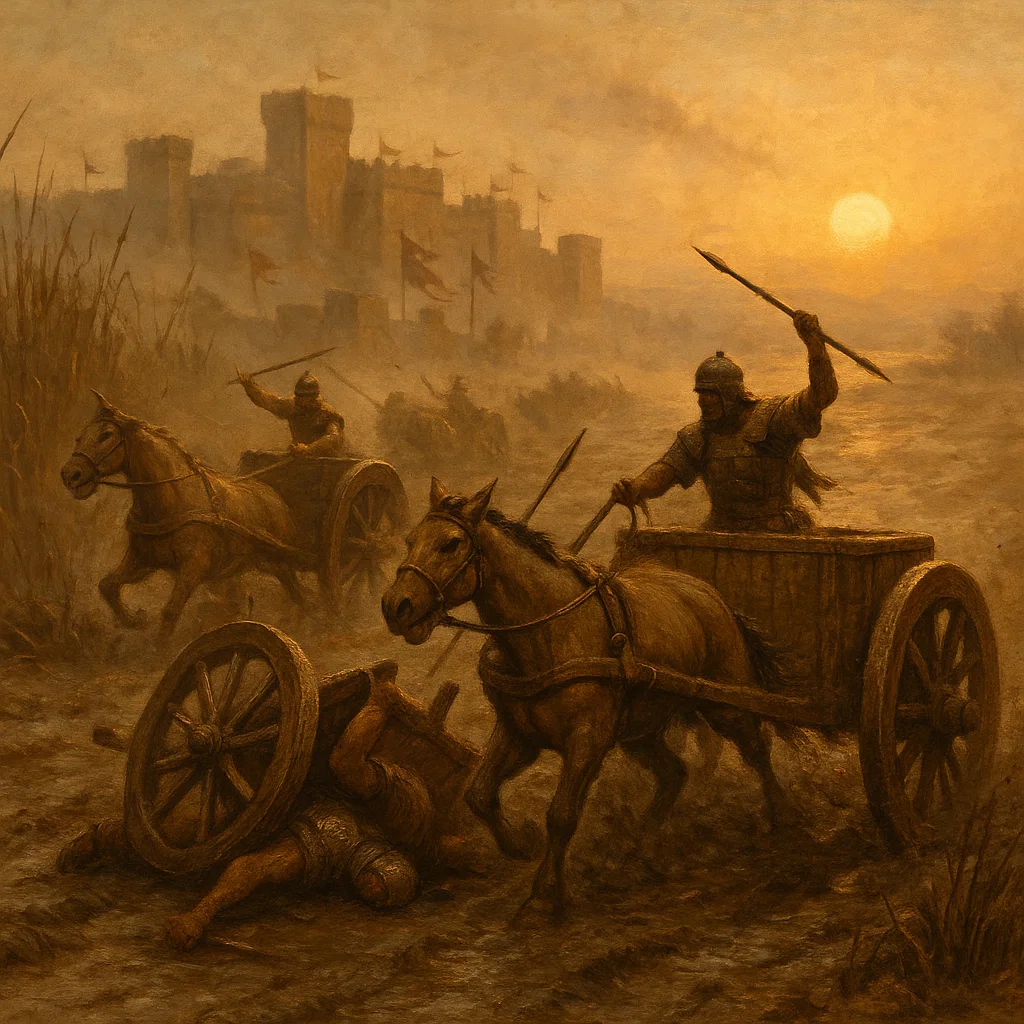
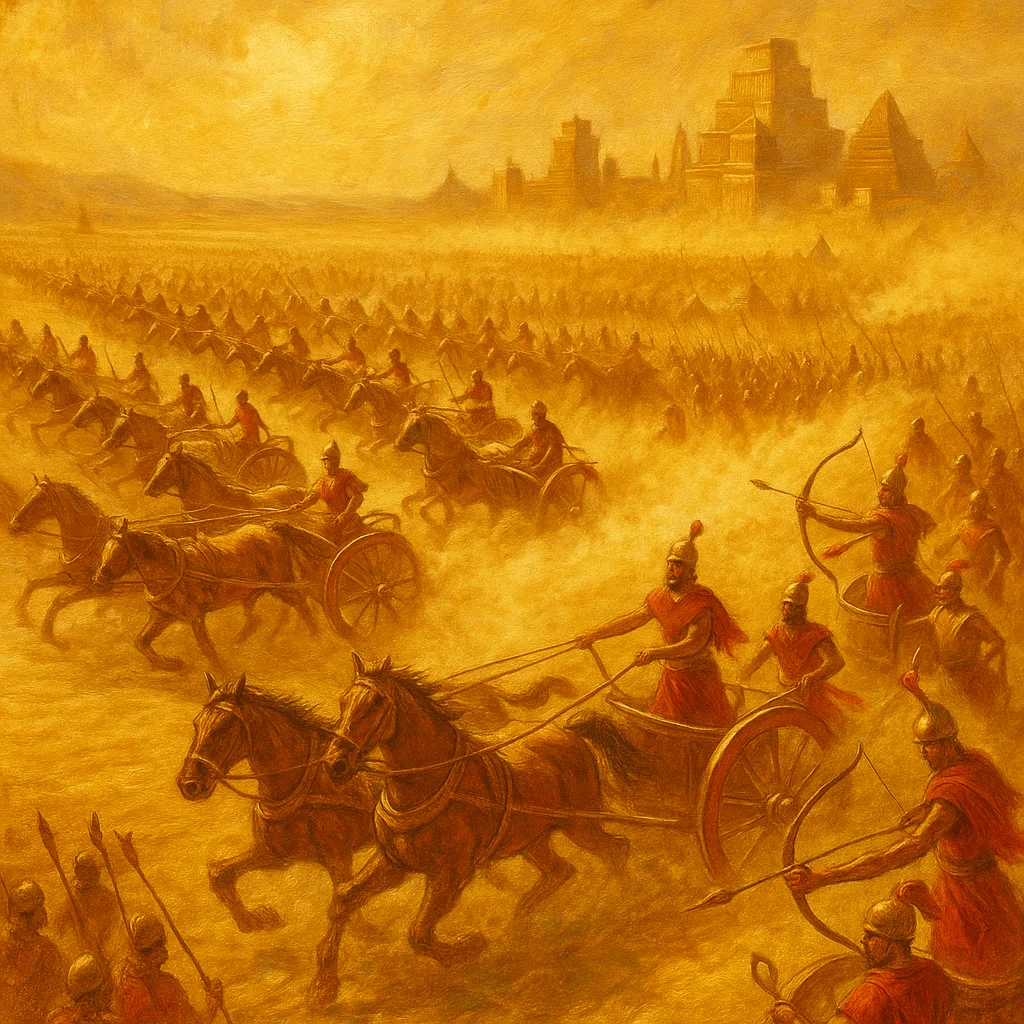
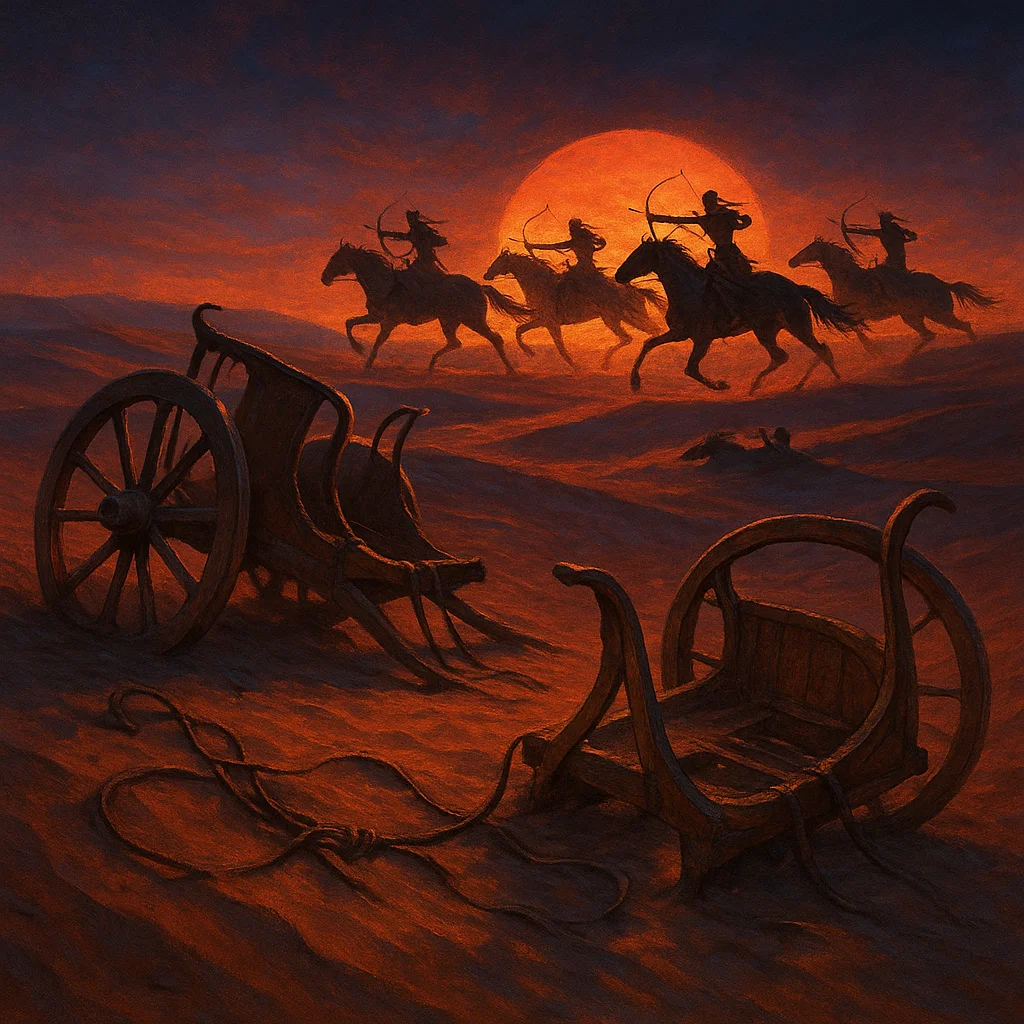
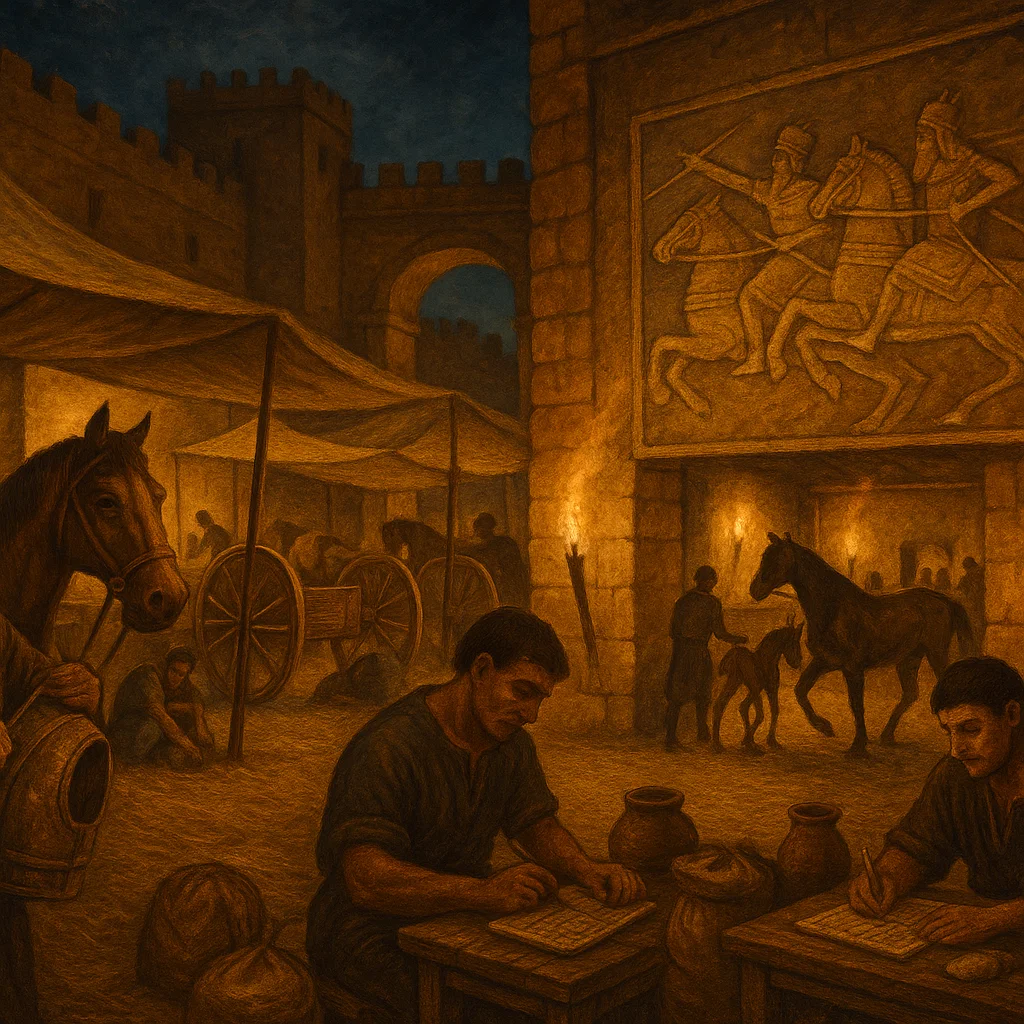
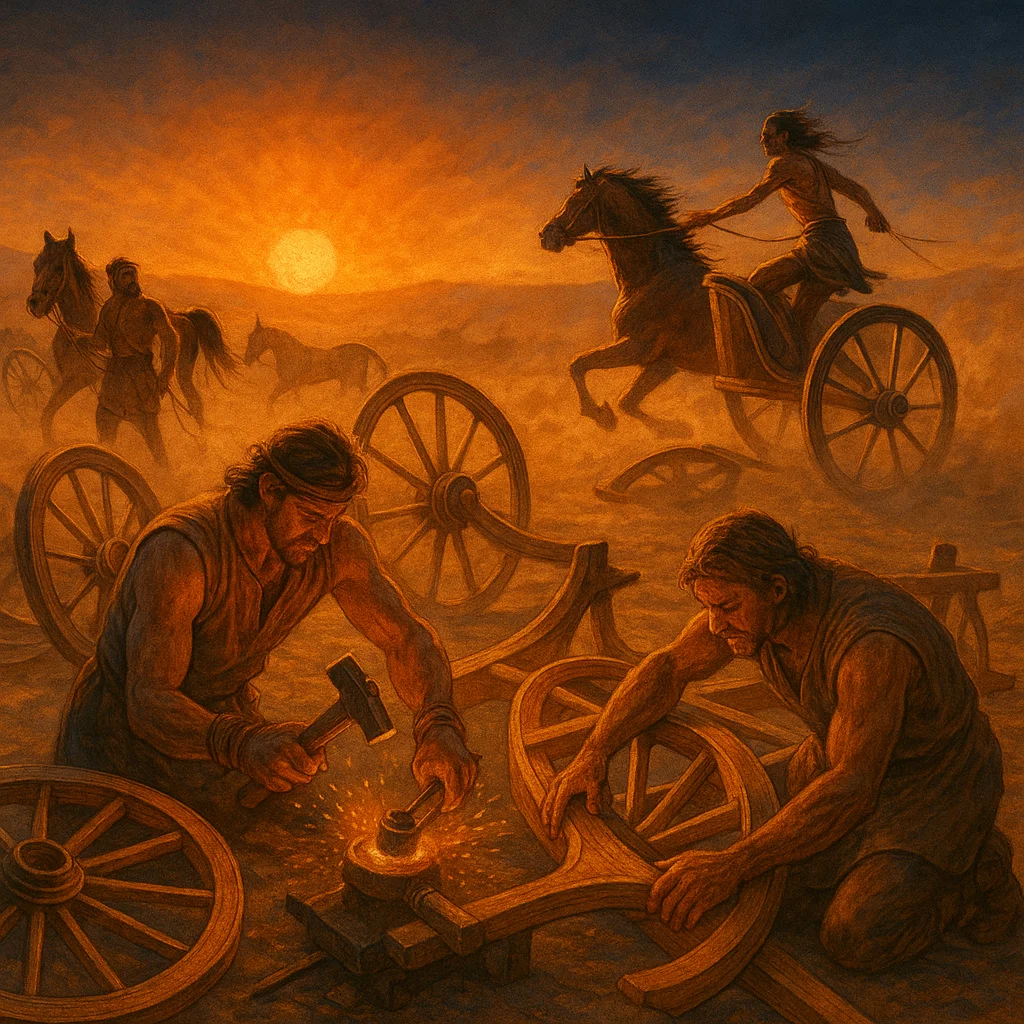
The evolution of chariot roles can be seen in texts and art. Early references in Babylonia (18th century BCE) still list chariots in small numbers, often as royal messengers or shock troops. By the Middle Assyrian period (14th–13th centuries BCE), Assyria could field hundreds of chariots, and they formed the core of the army’s offensive punch. Chariots gave Bronze Age armies unprecedented operational range – a chariot force could travel faster and further than infantry, enabling kings to campaign over greater distances. However, chariots also demanded extensive support: horse breeding and training became state priorities (later Assyrian archives detail royal studs and a specialized class of horse trainers, the “maryannu” chariot nobles in Mittani being an example)[66][67]. The expense of maintaining chariots meant they were associated with the aristocracy and often tied to feudal land grants (chariot warriors in some texts held estates to support their horses). Over time, the dominance of chariots waned only when true cavalry emerged: by the late 2nd millennium, experiments in mounted riding produced cavalry units, and by the early Iron Age (c. 9th century BCE) the Assyrians had developed a permanent cavalry that eventually made chariots obsolete[68][69]. But within the Bronze Age, the chariot was king on the battlefield – swift, terrifying, and symbolizing the zenith of military technology of its time. Its impact is evident in the way Late Bronze Age battles were decided: swift chariot charges or feigned retreats by chariots often determined victory, demonstrating the pivotal role this innovation played in Near Eastern warfare evolution.
Military Organization and Codified Practices
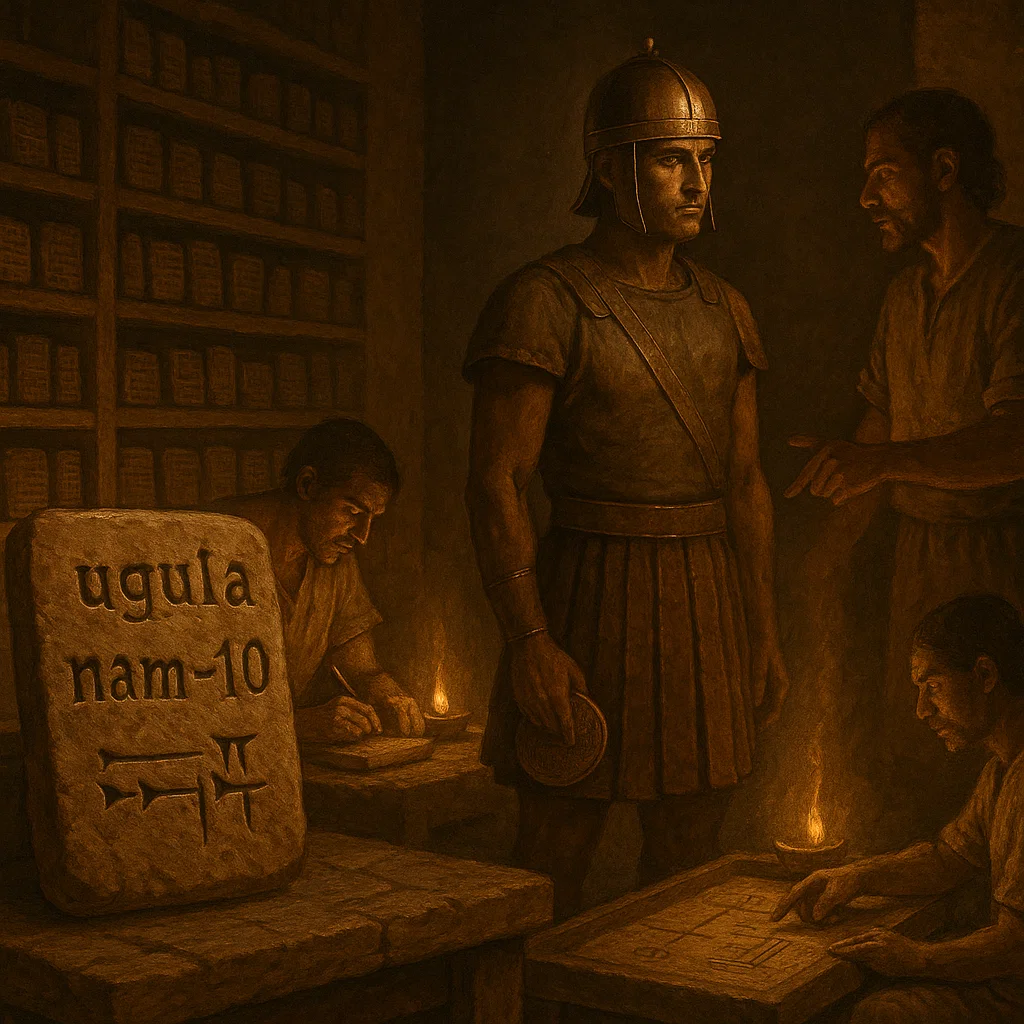
Throughout the Bronze Age, Mesopotamian states developed increasing formalization in their military organization – a nascent military doctrine evident in administrative texts, law codes, and inscriptions. One striking feature is the emergence of a hierarchical command structure with specialized ranks. Even in Early Dynastic Sumer, we find titles such as ugula (unit commander) and nu-banda (captain) mentioned in documents[70][71]. The army was organized on a decimal/sexagesimal system (squads of ~10, 60, 600, etc.), with unit names reflecting the number of soldiers under a commander[72][73]. For example, a term ugula-.nam-10 indicated a commander of ten men[73]. Such records, alongside the Stele of the Vultures depiction, have led historians to argue that professional standing forces existed in Sumer by 2500 BCE[74]. Indeed, the stele’s portrayal of uniformly armed, helmeted soldiers suggests a trained corps maintained by the state[75]. These would have been supplemented by mass levies in wartime, but the core of ancient armies were increasingly disciplined troops with defined roles.
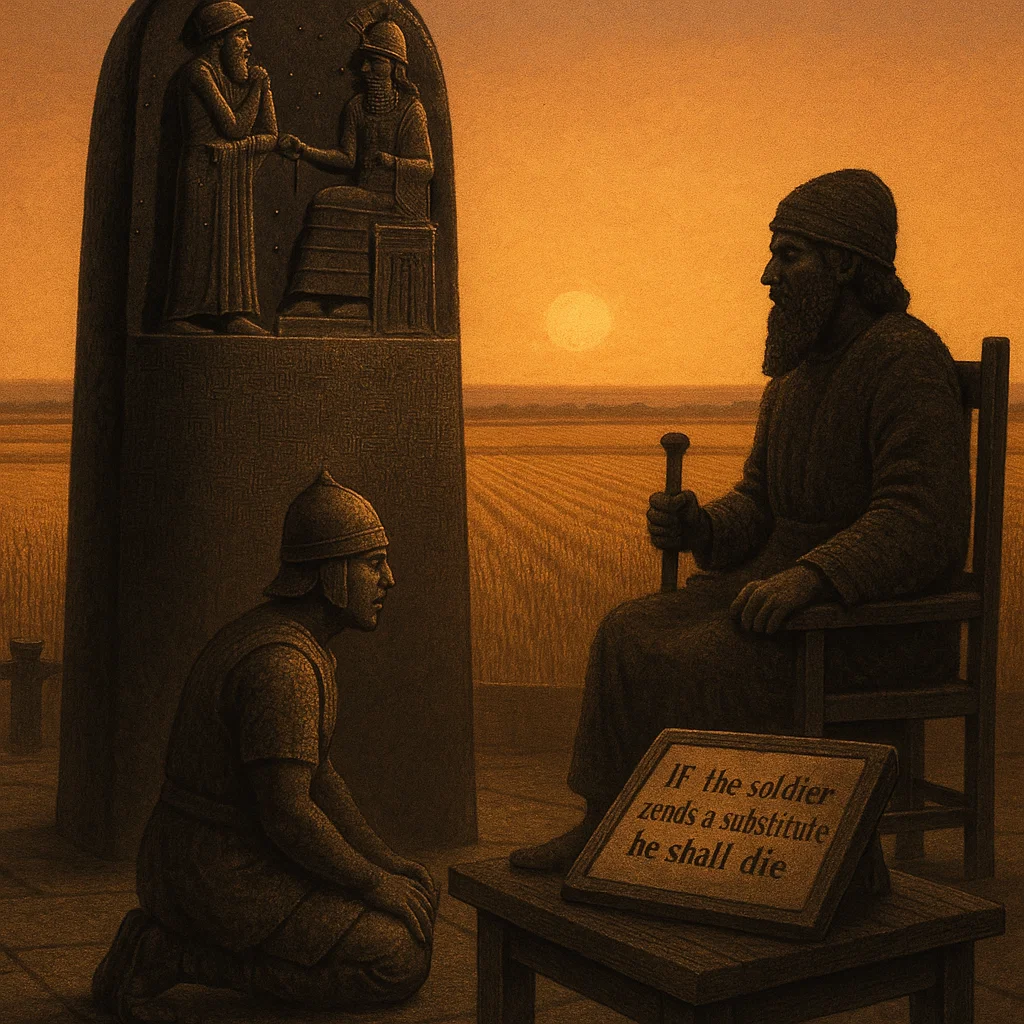
Military service was institutionalized via legal and economic obligations. The Old Babylonian Code of Hammurabi (c. 1750 BCE) contains a section on the duties of soldiers, indicating a formal feudal-like system known later as ilku-service. According to Hammurabi’s laws, every “chieftain or common soldier” who held land from the king had to serve when called to war, and could not hire a substitute without permission[76][77]. One law (Law 26) specifies that if a soldier shirks duty and sends an unapproved mercenary in his place, he shall be put to death and the substitute inherits his house[77]. Other laws protect a soldier’s property during campaigns: if a soldier is captured in battle, his field cannot be seized; it is to be kept for his family until his return (Laws 27–28)[78]. These regulations show a codified military obligation embedded in society – land grants were given in exchange for service, and the state guaranteed the maintenance of a soldier’s farm while he fought[79][80]. Similarly, in Middle Assyrian times (14th–13th c. BCE), texts confirm that all free male citizens were required to perform military service when called, under the ilku system[68]. This widespread obligation allowed Assyrian kings to field large armies annually, and was backed by legal codes and administrative records. For example, the Middle Assyrian Laws (compiled c. 1070 BCE, though touching earlier practice) and Assyrian royal decrees both mention conscription and penalties for avoidance[76][77].
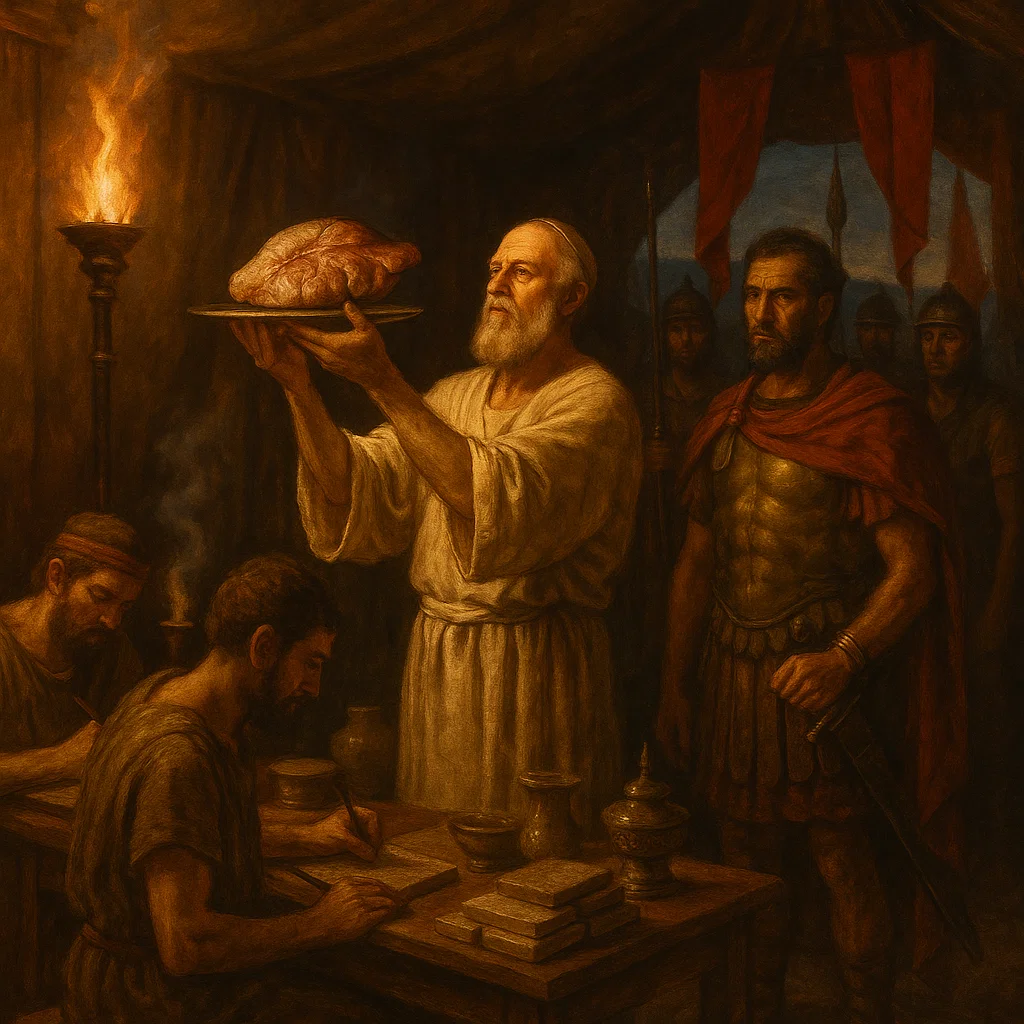
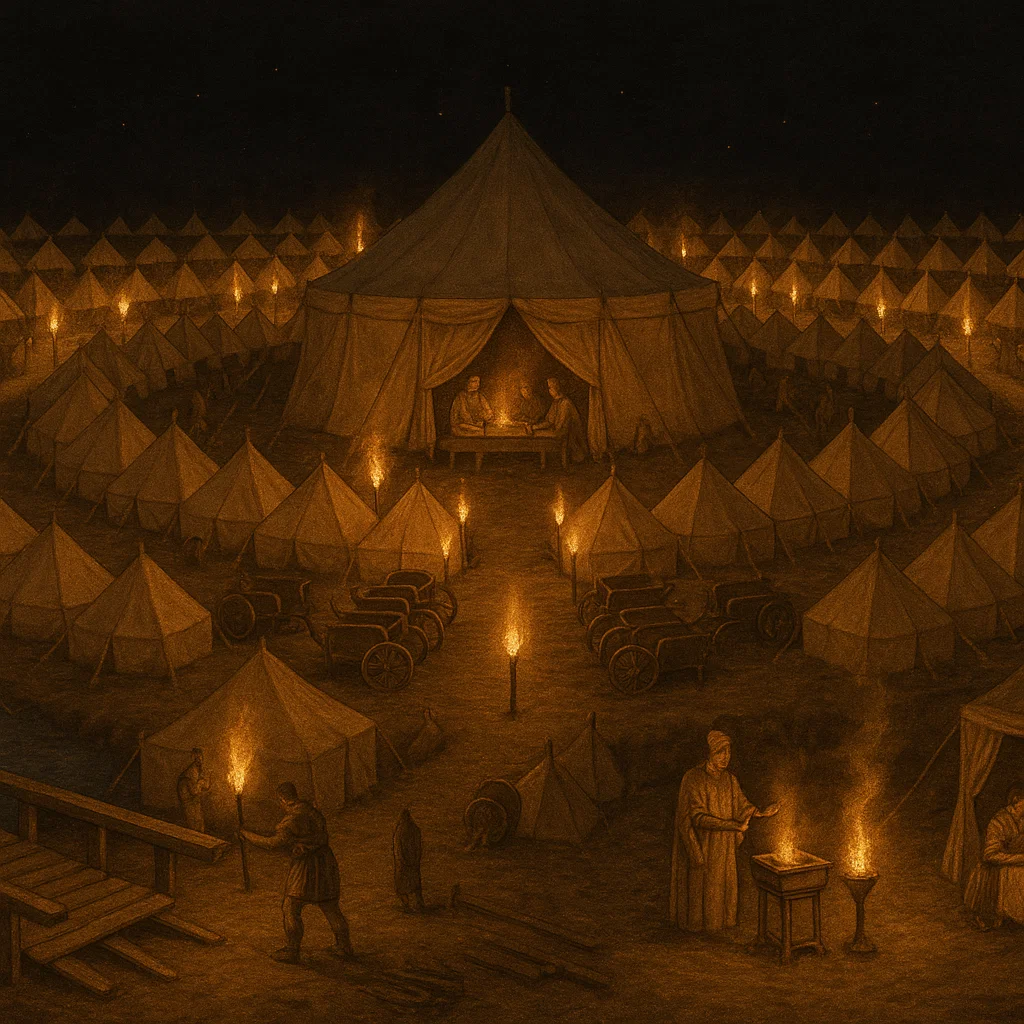
Beyond manpower, states developed logistical doctrines and support structures. The Assyrians (even in the Middle Assyrian Bronze Age) are credited as possibly the first to deploy a corps of engineers attached to the army[16]. They carried tools to build camps, pontoon bridges, siege works, etc., demonstrating that technical support was part of the army’s organization. By the late 2nd millennium, we see evidence of specialized personnel accompanying armies: letters and reliefs mention scribes, physicians, and diviners traveling with the military to handle administration, medical care, and religious rites[81][82]. A Mari letter (c. 1770 BCE) from a general to King Zimri-Lim reports that extispicy (liver divination) was performed to ensure the “well-being of the troops” before marching, highlighting the formal role of priests/diviners in the chain of command[83][45]. High-ranking officers even had staff: cooks, grooms, and shield-bearers, indicating almost a field bureaucracy in large campaigns[84][85]. These practices show a measure of codified procedure – for instance, no major battle or march was undertaken without auspicious omens and rituals, a doctrinal norm deeply ingrained in military decision-making[41][86].
Another aspect of doctrine was the recording and standardization of tactics. While no ancient “field manual” survives, scattered evidence implies a shared understanding of maneuvers. Later Assyrian commentaries (likely reflecting earlier traditions) refer to tactics like ambushes, flanking movements, encirclements, and feigned retreats[87]. The fact that terminology for such maneuvers exists suggests they were taught and expected in warfare. Indeed, kings sometimes brag of outflanking an enemy or drawing them into ambush, which means commanders were planning battles with specific tactics in mind. Strategic doctrine can also be seen in how campaigns were structured: Assyrians, for example, conducted multi-year sequences of systematic conquest – each year attacking a different region, aiming to isolate and reduce enemies in detail. This reflects long-term planning at the state level, presumably guided by the king and his council. We also have evidence of coalitions and treaties regulating warfare. The Kiengi League of Sumer (a coalition of city-states around 2600 BCE) was an early attempt at a structured alliance, possibly to establish rules of mutual defense or collective offense[88][89]. While ultimately ineffective (its members still fought each other), the league’s existence hints at an early form of “diplomatic doctrine” regarding warfare. Later, by the Late Bronze Age, formal treaties (such as the Hittite treaties) included clauses about military aid and rules of engagement with mutual foes; Mesopotamian states like Kassite Babylonia engaged in this international system, indicating that warfare had legal norms – e.g. declaring war, treatment of captured royalty, etc., that were at least sometimes honored.
In summary, Bronze Age Mesopotamia saw the rise of organized, rule-governed warfare: armies were not ad-hoc mobs but hierarchically led forces with defined unit sizes[72], laws binding soldiers to service[90], and established practices for everything from provisioning to divination. Kings took counsel of military experts and the gods before major operations, reflecting a codified approach to deciding on war[41][86]. Logistics and training, while rudimentary by modern standards, were sufficiently systematized that by ~1300 BCE the Assyrians could conduct annual campaigns with a standing army – a feat only possible through formal administration and doctrine. The Bronze Age thus laid the foundations of Near Eastern military tradition, many elements of which (drilling of infantry, use of combined arms, emphasis on siegecraft, and integration of religion with warfare) would persist and be refined in subsequent Iron Age empires[91][92].
Archaeological Evidence of Warfare and Tactics
Physical evidence from excavations complements the textual and artistic records of Bronze Age warfare, providing tangible proof of battle tactics and their consequences. One dramatic example comes from Hamoukar, a site in northeastern Syria, which shows the remains of a violent siege around 3500 BCE. Archaeologists uncovered a city wall that had been assaulted and a layer of destruction with collapsed, burnt buildings. Scattered in the ruins were over 2,300 baked clay sling bullets – egg-shaped projectiles that rained down on the city[93][94]. These bullets were found at all stages of use: some stored near firing positions, others in the impact damage of walls, and even a cache in a workshop pit where defenders hastily manufactured ammunition during the final onslaught[95][96]. The distribution of sling bullets around the gate and along the walls suggests the attackers bombarded the city to suppress its defenders while likely attempting a breach. The excavators also found 12 skeletons hastily buried in the debris, presumably casualties of the battle[97][98]. Hamoukar provides rare archaeological confirmation of a large-scale, planned assault: the concentric rings of sling bullets indicate where slingers stood, and the penetration of a bullet into a mudbrick wall attests to their lethality[95]. This find is arguably the earliest evidence of organized warfare in the Near East and aligns with textual themes of sieges – it shows that even in proto-literate times, armies used volleys of missiles to soften targets before storming in.
Artifacts and iconography also shed light on battlefield tactics. The Standard of Ur, discussed earlier, not only displays early chariots but also a clear stratification of forces: infantry with spears and axes marching in formation behind the chariots[51]. This indicates a planned deployment – chariots leading or flanking, infantry following – precisely as later written sources describe (chariots on the wings, infantry center)[2]. The Stele of the Vultures is another artifact that effectively maps a tactical formation: the carving of tightly packed infantry with shields locked together is physical evidence of the use of the phalanx formation in Sumer[1]. The fact that the stele explicitly celebrates this formation implies it was a source of pride and a recognized military innovation. Moreover, the burial evidence from the Royal Cemetery of Ur (c. 2600 BCE) has yielded actual pieces of early military equipment, like the famous helmet of King Meskalamdug (a gold helmet) and copper helmets on soldiers in grave pits[75]. These helmets, along with finds of lamellar armor scales and bronze spearheads in various sites, corroborate that Bronze Age infantry were equipped with protective gear and standardized weapons – necessary for maintaining a shield-wall in combat.
Excavated city fortifications also inform our understanding of siege tactics. Many city mounds (tells) in Mesopotamia show massive mudbrick walls with bastions and moats dating to the Early Dynastic and Akkadian periods[99][88]. At sites like Tell Beydar or Mari, archaeologists have identified evidence of siege works, such as ramps or tunnels. For example, at the site of Alalakh (Level VII, c. 1600 BCE) in Syria, a destruction layer and a collapsed section of the defensive wall hint at a possible sapper activity or undermining, consistent with Hittite records of attacking that city. Another intriguing piece of evidence comes from Ugarit on the Syrian coast (Late Bronze Age): while the city’s destruction (c. 1190 BCE) is attributed to invading “Sea Peoples,” recent analysis of arrowhead concentrations suggests pitched fighting in the streets, with clusters of bronze arrowheads found near gate complexes. This implies tactical choke-point defense and the intensive use of archery in urban combat – matching the emphasis in texts on archers during assaults[100][101]. In Mesopotamia proper, we have fewer excavated battlefields, but one notable discovery is at Tell Qarah (ancient Kar Tukulti-Ninurta, late 13th c. BCE Assyria): archaeologists found a siege ramp used by Middle Assyrian forces to storm the rebel city – a precursor to the better-known Iron Age siege ramps. The ramp’s remains (a sloping embankment of earth and brick against the city wall) validate the description of ramp-building found in Hittite and Assyrian texts[102].
Finally, evidence of planning and doctrine emerges from archives such as those of Mari and Hattusa (though Hattusa is Hittite, it interfaces with Mesopotamian practice). At Mari, clay tablets include detailed reports from generals and even diagrams. One tablet has a rudimentary map of a campaign route with distances between water sources – essentially logistical planning on clay. Another contains a roster of troops and a schedule for staging posts, indicating a high degree of organization. Combined with references to standardized drills (for instance, a Mari letter refers to troops practicing maneuvers before the king[92]), these finds suggest that by the Bronze Age’s end, military leaders were deliberately mapping out strategy and drilling tactics in advance. Although we lack a written “Art of War” from this era, the convergence of archaeological data and texts paints a consistent picture: Bronze Age Near Eastern warfare was not a chaotic melee but a progressively systematized affair – formations were arrayed with forethought, sieges prosecuted with engineering, timing chosen with care, and all of it underpinned by societal structures and ideologies that left their mark both in cuneiform on clay and in the ruined cities and weapons unearthed by modern spades.
Sources: Historical and archaeological information drawn from cuneiform inscriptions, ancient law codes, and modern excavations (Oriental Institute reports, Louvre Museum artifacts, etc.), as cited above: e.g. Stele of Vultures and Standard of Ur depictions[1][51], Mesopotamian military texts and analyses[7][2], Code of Hammurabi laws on soldiers[90], and excavation reports from Hamoukar[93][95], among others. This integrated evidence provides a comprehensive view of Bronze Age Near Eastern military tactics and doctrines.
[1] [9] [10] [11] [12] [13] [15] [20] [21] [22] [51] [52] [55] [56] [57] [58] [59] [64] [65] [70] [71] [72] [73] [74] [75] [100] [102] Soldiers Lives through History – The Ancient World – PDF Free Download
https://epdf.pub/soldiers-lives-through-history-the-ancient-world.html
[2] [8] [16] [17] Mesopotamian military strategy and tactics – Wikipedia
https://en.wikipedia.org/wiki/Mesopotamian_military_strategy_and_tactics
[3] [4] [5] [6] [7] [14] [24] [25] [26] [27] [28] [31] [32] [33] [34] [35] [36] [37] [38] [41] [42] [43] [44] [45] [46] [47] [48] [53] [54] [60] [61] [62] [63] [66] [67] [81] [82] [83] [84] [85] [86] [87] [88] [89] [91] [92] [99] [101] (PDF) Warfare in Mesopotamia (uncorrected proofs)
https://www.academia.edu/42186514/Warfare_in_Mesopotamia_uncorrected_proofs_
[18] [19] [29] [30] [49] [50] [68] [69] The Assyrian Empire and the New Babylonian Empire – Guest Hollow
[23] Assyrian Warfare – Karan Aujla – Prezi
https://prezi.com/-1hbbgkx_ycs/assyrian-warfare
[39] [40] [93] [94] [95] [96] [97] [98] Evidence of battle at Hamoukar points to early urban development
http://chronicle.uchicago.edu/070118/hamoukar.shtml
[76] [77] [78] [79] [80] [90] Hammurabi’s Code of Laws on Crimes, Fines Soldiers and Legal Matters | Middle East And North Africa — Facts and Details