Reformation Beginnings (16th Century CE)
Unitarianism was born from the intellectual and spiritual upheaval of the Protestant Reformation, when reformers across Europe challenged both the authority of the Church and the limits of inherited theology. Its defining insight was simple yet revolutionary: God is one, not a trinity, and human reason is a divine gift capable of discerning moral truth.
Michael Servetus and the First Fire of Dissent
The first great Unitarian voice was Michael Servetus (1511–1553), a Spanish physician and theologian who rejected the Trinity and infant baptism. In his 1531 work On the Errors of the Trinity, he argued that God’s nature was a single divine essence revealed in Christ and the Spirit, not three persons.
Servetus believed that theology must be grounded in reason and scripture, not metaphysical speculation. His challenge to orthodoxy was fatal—he was condemned by both Catholics and Protestants and burned at the stake in Geneva under Calvin’s authority. Yet his ideas ignited a lasting flame: that faith must be rational, ethical, and humane.
The Polish Brethren and Faustus Socinus
Servetus’s writings inspired a generation of reformers in Poland and Transylvania, who organized the first Unitarian communities. The Polish Brethren, led by Faustus Socinus (1539–1604), built a theological system centered on the unity of God, the moral example of Christ, and salvation through character, not creed.
Socinus rejected original sin and predestination, teaching instead that salvation was open to all who lived by conscience and love. The Brethren’s Racovian Catechism (1605) systematized this rational Christianity and spread throughout Europe, influencing later Enlightenment and liberal thought.
The Edict of Torda (1568) and the Transylvanian Church
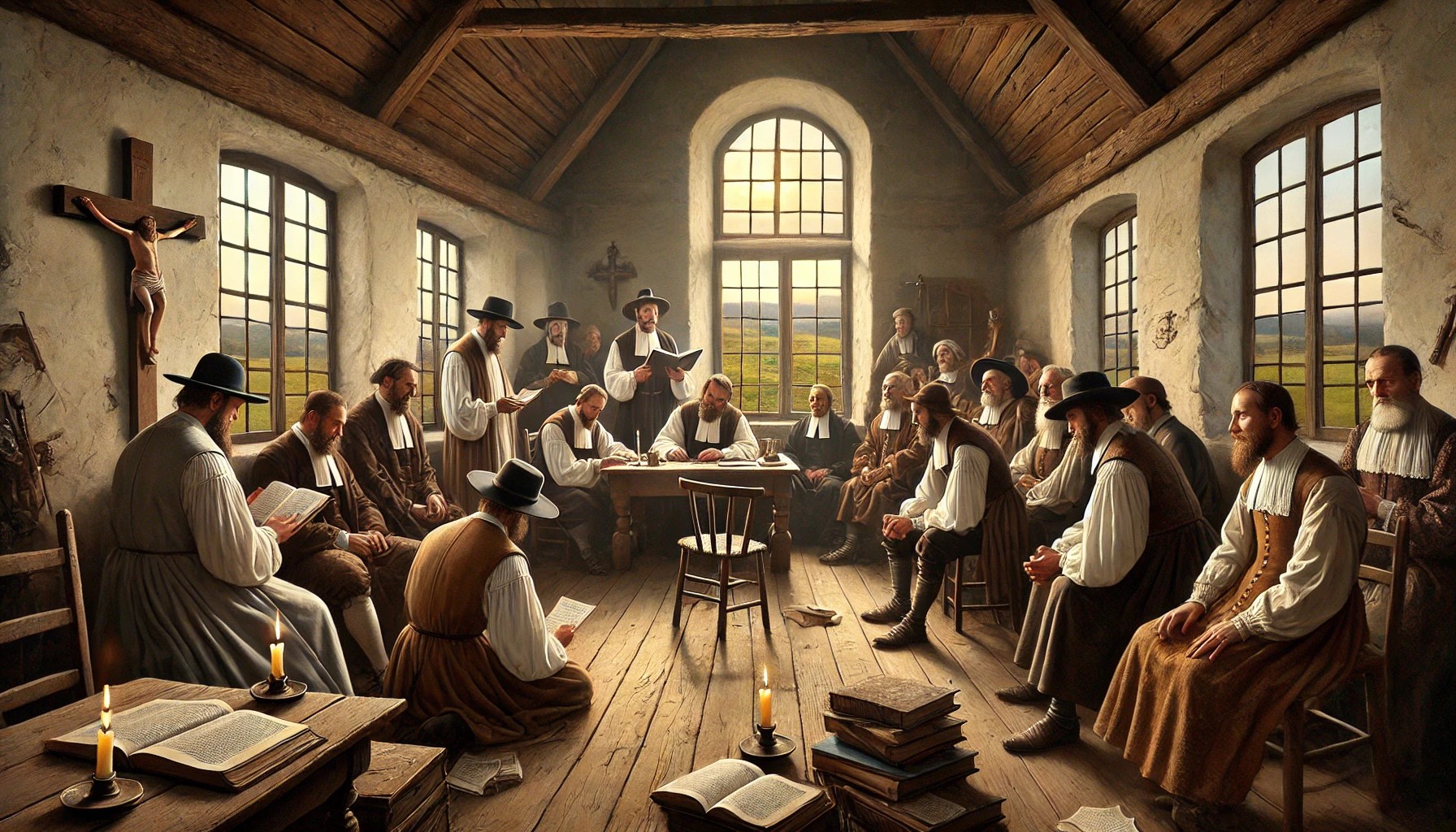
In Transylvania, under the reign of King John II Sigismund, Unitarianism achieved a unique early triumph. The Edict of Torda (1568) declared that “faith is a gift of God” and that no one should be coerced in matters of belief—Europe’s first legal act of religious tolerance.
Under the leadership of Francis Dávid, the Transylvanian Unitarian Church was established, teaching that the unity of God and the moral reason of humanity were the foundation of true religion. Though later suppressed by Catholic and Protestant powers, it survived—and remains active today as the world’s oldest continuous Unitarian body.
Theological Character of Early Unitarianism
The Reformation-era Unitarians combined humanist scholarship with biblical rationalism. They believed that:
- Truth must align with reason and moral conscience.
- Religion should inspire virtue, not fear.
- God’s unity implies the unity of all truth—science, ethics, and faith as one coherent reality.
In a time when heresy could cost a life, they laid the foundations of a new religious vision: faith as understanding rather than submission, and salvation as moral awakening rather than dogmatic conformity.
Enlightenment and English Liberal Religion (17th–18th Centuries CE)
After its turbulent birth in Central Europe, Unitarianism took on a new and lasting shape in England, where it merged with the intellectual spirit of the Enlightenment. Here, the faith of moral conscience and reasoned scripture became a movement for rational religion, ethical reform, and spiritual freedom.
From Dissent to Rational Faith
In the 17th century, England’s Dissenting churches were home to thinkers who questioned Calvinist dogma and insisted that faith must agree with reason and experience.
- John Biddle (1615–1662), often called “the father of English Unitarianism,” translated the Bible directly from Greek and denied the Trinity using only scriptural argument. He spent much of his life imprisoned, yet his writings circulated widely among radicals and scholars.
- Others, inspired by Faustus Socinus and the Polish Brethren, continued to develop a scriptural monotheism rooted in moral law rather than metaphysics.
These early Unitarians were cautious reformers: loyal to scripture, committed to morality, and convinced that religious authority must yield to reason.
The Age of Enlightenment
By the 18th century, the intellectual climate of England had shifted. Science, philosophy, and religious reform converged in a single confidence—that truth was universal, discoverable, and harmonious.
Unitarianism became the religion of enlightened conscience. It emphasized:
- One God—the rational and benevolent Creator.
- Jesus as moral exemplar—a teacher of virtue, not a divine sacrifice.
- Human progress—the belief that knowledge and virtue advance together.
This synthesis attracted some of the most creative minds of the age.
- Isaac Newton quietly held Unitarian convictions, applying the same rational order he found in physics to his understanding of God.
- Thomas Emlyn (1663–1741) was tried and imprisoned for heresy after publishing An Humble Inquiry into the Scripture Account of Jesus Christ (1702)—a reasoned defense of biblical monotheism.
- Joseph Priestley (1733–1804), chemist, philosopher, and theologian, became the movement’s leading public voice. He taught that revelation and science must never contradict, that Christianity was a progressive revelation, and that faith must serve the improvement of society.
Theophilus Lindsey and the Birth of Open Unitarian Worship
In 1774, Theophilus Lindsey, a former Anglican priest, opened the Essex Street Chapel in London—the first church to worship openly as Unitarian. He was joined by Priestley, Richard Price, and other Enlightenment reformers who believed religion should promote virtue, inquiry, and moral independence.
Their congregations became centers of education and civic life, advancing causes such as abolition, women’s education, and freedom of conscience.
Religion as Moral Philosophy
By the late 18th century, English Unitarianism had become less a sect and more a philosophy of life:
- It viewed revelation as continuous with reason.
- It replaced dogma with ethics, character, and conscience.
- It embraced science and moral progress as expressions of divine order.
The Act of 1813 finally repealed the legal penalties for denying the Trinity, confirming Unitarianism’s permanent place in English religious life.
Legacy
The English Enlightenment transformed Unitarianism from a persecuted heresy into a respected rational faith—a religion of mind and morality. Its influence crossed the Atlantic, where it would take on new life in America through William Ellery Channing, Ralph Waldo Emerson, and the Transcendentalists, who carried its torch into the modern world as a religion not of fear, but of freedom and understanding.
The American Transformation (18th–19th Centuries CE)
When Unitarianism crossed the Atlantic, it found fertile ground in New England’s intellectual and moral culture. The United States—newly independent, democratic, and alive with reform—provided the perfect setting for a religion that trusted both reason and conscience as guides to truth.
William Ellery Channing and the Moral Gospel
The central figure in American Unitarianism was William Ellery Channing (1780–1842), minister of Boston’s Federal Street Church. In his 1819 sermon Unitarian Christianity, he defined the movement as a faith rooted in reason, moral character, and divine goodness.
Channing rejected Calvinist doctrines of total depravity and predestination. Instead, he taught that humanity was created in God’s image, capable of moral growth and perfection. Christianity’s purpose, he said, was not to terrify the sinner but to elevate the soul.
His theology marked the beginning of liberal religion in America—a moral Christianity free from fear, affirming the dignity and potential of all people.
Transcendentalism and the Expansion of Spirit
By the mid-19th century, Unitarianism began to evolve beyond its Christian frame through the influence of Transcendentalism.
- Ralph Waldo Emerson (1803–1882), once a Unitarian minister, urged believers to look for truth not in ancient texts but in the divine presence within the self and in nature. His 1838 Divinity School Address declared that revelation is continuous and personal.
- Theodore Parker (1810–1860) extended this vision into prophetic social action, preaching that the moral law is eternal and that religion’s purpose is to reform society. He linked faith with abolitionism, women’s rights, and education, giving rise to what he called the “absolute religion of humanity.”
Through them, Unitarianism became transcendent rather than doctrinal, a faith of inner experience and universal truth rather than dogma.
Social Reform and the Religion of Progress
The optimism of Unitarian thought found natural expression in reform movements. Unitarians were at the forefront of nearly every humanitarian cause in 19th-century America—abolition, education, temperance, peace, and women’s rights.
- They founded institutions such as Harvard Divinity School, which became the intellectual center of liberal theology.
- Their emphasis on moral progress and civic virtue influenced American public life, blending religious conviction with democratic ethics.
By the late 1800s, Unitarianism had become less a sect than a moral philosophy—a belief that truth, virtue, and freedom are inseparable and that human progress is a form of divine revelation.
Toward a Broader Humanism
As science, historical criticism, and global awareness expanded, many Unitarians embraced Religious Humanism and universal spirituality. The movement gradually opened to insights from world religions and natural philosophy.
What had begun as an argument about the Trinity had become a religion of human possibility—the conviction that divine truth reveals itself through reason, conscience, and love.
Legacy
The American transformation of Unitarianism turned a Reformation heresy into a national faith of ethics and freedom. It prepared the ground for the next great synthesis: the 20th-century convergence with Universalism, where reason’s unity and love’s universality would finally meet in the 1961 merger, forming Unitarian Universalism—a faith committed to truth, dignity, and the continual progress of the human spirit.
Humanism and the Path to Merger (20th Century CE)
By the dawn of the 20th century, Unitarianism had outgrown its Christian boundaries and entered a new philosophical phase. Science, psychology, and global awareness reshaped its understanding of faith. The movement no longer sought to defend a single creed—it sought to build a religion of humanity, rooted in moral freedom, reason, and shared responsibility for the world.
Religious Humanism and the New Theology (1910s–1930s)
The early 1900s brought a decisive turn toward Religious Humanism, especially among Unitarian ministers, scholars, and lay intellectuals. They argued that religion should express the highest human values rather than appeal to supernatural revelation.
- John Haynes Holmes and Curtis W. Reese declared that democracy itself was a sacred form of cooperation—a spiritual expression of mutual respect and shared purpose.
- The Humanist Manifesto (1933), signed by several Unitarian ministers, formally articulated this worldview. It proclaimed that humanity must find its destiny in ethical living, scientific inquiry, and social progress—not in divine intervention.
- James Luther Adams, the leading Unitarian theologian of mid-century, reframed this humanism as theology of community and action, insisting that religious freedom required moral accountability and collective responsibility.
This era marked a redefinition: God became a symbol of the highest ideals of human life, and religion became the organized pursuit of justice and meaning.
World War, Crisis, and Renewal (1939–1950s)
The devastation of two world wars tested the optimism of liberal religion. Yet Unitarians responded not with retreat, but with renewed moral engagement.
- They participated in international peace movements, refugee aid, and the founding of the United Nations.
- The experience of global conflict deepened Unitarian commitments to human rights, education, and cross-cultural understanding.
- Many congregations became interfaith centers, welcoming Buddhists, Jews, atheists, and seekers of every kind—reflecting the growing conviction that truth is many-sided and evolving.
By the 1950s, the American Unitarian Association (AUA) was no longer a Christian denomination in the traditional sense—it was a humanistic, pluralistic movement, sharing both spirit and vision with its longtime counterpart, the Universalist Church of America (UCA).
Toward Union with the Universalists (1950s–1961)
Theological convergence, shared social activism, and similar congregational structures brought the two denominations into close cooperation.
- Both upheld freedom of conscience and the moral use of reason.
- Both rejected the idea of eternal punishment and affirmed the inherent worth of every person.
- Both saw religion as a living, democratic process, not a fixed revelation.
Joint conferences, youth programs, and publications blurred the denominational lines. By the late 1950s, merger became an expression of principle rather than necessity—the logical culmination of their shared evolution.
The Merger: The Unitarian Universalist Association (1961)
On May 15, 1961, in Boston, the American Unitarian Association and the Universalist Church of America united to form the Unitarian Universalist Association (UUA).
This new body was not a compromise but a synthesis—a covenant between reason and love, between the mind’s freedom and the heart’s compassion.
The founding statement affirmed that:
“We, the member congregations, dedicate ourselves to the principles of freedom, reason, tolerance, and love, and to the service of all humanity.”
The merger completed a historical arc stretching from the Reformation’s cry for conscience to the modern call for universality. What began with the solitary defiance of Michael Servetus had become a global, pluralistic faith dedicated to justice, equality, and the continual unfolding of truth.
Legacy
By 1961, Unitarianism had evolved from a theological protest into a moral civilization in miniature—a faith of open inquiry, shared compassion, and boundless hope. United with Universalism, it entered the modern world not as a relic of Christendom but as a living philosophy of freedom, devoted to the conviction that truth is ever unfolding and love is the law of life.