Philosophy School
Scientific Revolution
Early modern transformation of natural philosophy associated with Copernicus, Galileo, Kepler, Bacon, Descartes, Boyle, Newton, and learned societies, replacing inherited Aristotelian-Ptolemaic frameworks with mathematized, experimental, instrumental, and law-governed inquiry into nature.
Period
Early Modern History1500 CE – 1799 CE
Era
Scientific Revolution and State Formation1600 CE – 1699 CE
Begin
1473 CE
End
1642 CE
Structural Factors
- Shared Core Claims
- The Scientific Revolution holds that nature can be investigated through disciplined observation, mathematical analysis, experiment, instruments, and public correction. It treats inherited authority as revisable and seeks lawlike explanations of celestial, terrestrial, mechanical, optical, anatomical, and chemical phenomena.
- Shared Methods
- The movement uses telescopic and experimental observation, mathematization, controlled trials, natural history, measurement, mechanical modeling, hypothesis, induction, deduction, replication, diagrams, tables, correspondence, printed demonstration, and institutional peer scrutiny.
- Shared Lineage
- The lineage runs from ancient Greek mathematics and astronomy, Islamic and medieval natural philosophy, scholastic university learning, Renaissance humanism, Copernicus, Vesalius, Galileo, Kepler, Bacon, Descartes, Boyle, Hooke, Huygens, Newton, and early scientific academies.
- Shared Problems
- Central problems include planetary order, motion, inertia, falling bodies, optics, anatomy, vacuum, matter, mechanism, causation, method, evidence, instruments, certainty, scriptural interpretation, the status of hypotheses, and how mathematical models can describe physical reality.
- Shared Vocabulary
- Key terms include natural philosophy, revolution, observation, experiment, demonstration, induction, deduction, hypothesis, law of nature, heliocentrism, mechanism, corpuscle, inertia, force, vacuum, instrument, measurement, evidence, method, and mathematization.
- Shared Historical Context
- The Scientific Revolution unfolded chiefly in sixteenth- and seventeenth-century Europe, shaped by printing, universities, courts, navigation, astronomy, anatomy, religious conflict, patronage, correspondence networks, craft knowledge, instruments, and new learned societies such as the Royal Society.
Defining Axes
- Doctrine
- Doctrinally, the movement is defined by the rejection or revision of Aristotelian-scholastic cosmology, the rise of heliocentric and mechanical explanations, confidence in mathematical order, and the claim that knowledge of nature must answer to observation and experiment.
- Method
- Its method is mathematical, experimental, and collaborative: observe carefully, use instruments, formulate models, test predictions, publish methods and results, invite replication, and revise inherited theories when evidence and calculation require it.
- Lineage
- The lineage runs from Ptolemy, Aristotle, Euclid, Archimedes, medieval Islamic and Latin science, and Renaissance humanism through Copernicus, Galileo, Kepler, Bacon, Descartes, Boyle, Huygens, Newton, and the institutional culture of academies and journals.
- Subject Focus
- The school focuses on philosophy of science, natural philosophy, astronomy, mechanics, mathematics, epistemology, metaphysics of nature, method, experiment, instrumentation, optics, anatomy, chemistry, religion and science, and intellectual history.
- Geography / Culture
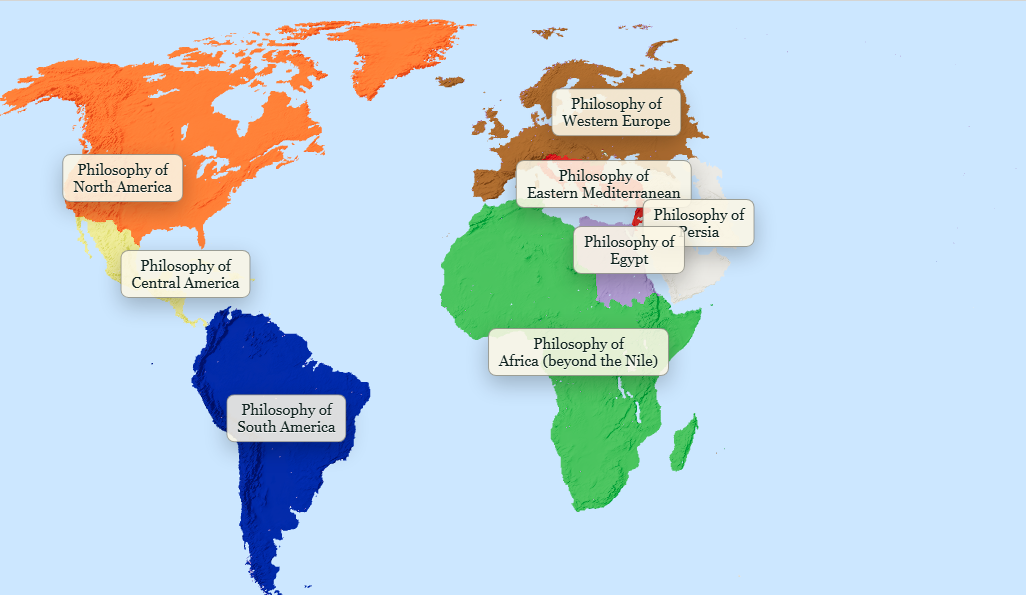
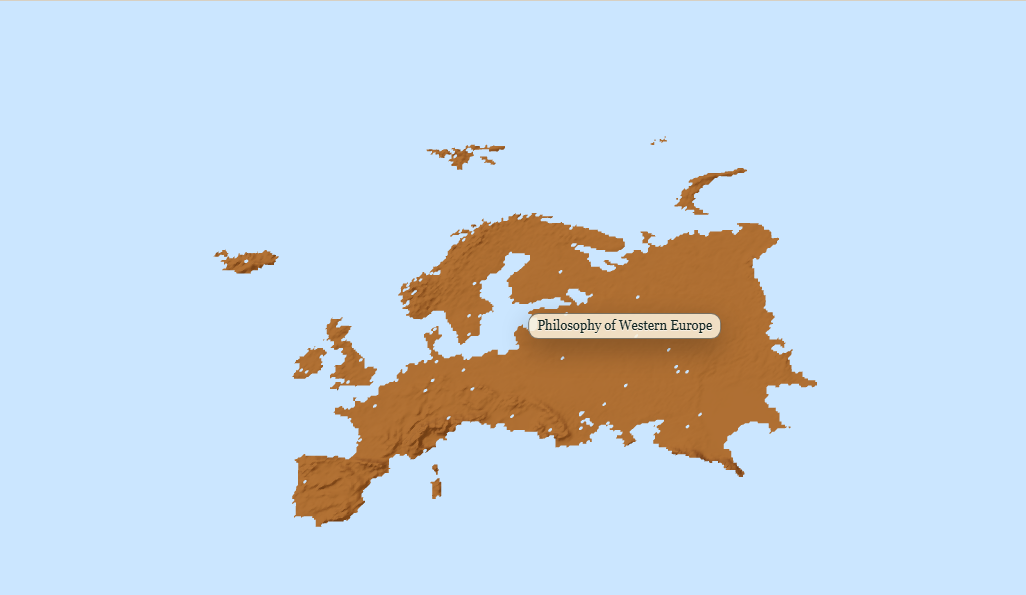
- The movement developed across early modern European centers including Poland, Italy, England, France, the Dutch Republic, German lands, and Prague, circulating through Latin scholarship, vernacular print, universities, courts, workshops, observatories, and academies.
- Historical Reaction
- The Scientific Revolution responds to Ptolemaic astronomy, Aristotelian physics, scholastic authority, Renaissance recovery of ancient mathematics, navigational and calendrical needs, Reformation-era disputes over authority, and growing confidence in instruments and practical arts.
Internal Structure
- Foundational Texts
- Foundational texts include Copernicus's De revolutionibus, Vesalius's Fabrica, Galileo's Sidereus Nuncius, Dialogue, and Discourses, Kepler's Astronomia nova and Harmonices mundi, Bacon's Novum organum, Descartes's Discourse and Principles, Boyle's Sceptical Chymist, and Newton's Principia and Opticks.
- Core Vocabulary
- Core vocabulary includes nature, matter, motion, force, law, cause, experiment, observation, instrument, evidence, model, hypothesis, demonstration, mathematics, mechanism, heliocentrism, inertia, vacuum, corpuscle, induction, and natural philosophy.
- Metaphysics
- Scientific Revolution metaphysics often treats nature as mathematically intelligible, law-governed, and mechanically ordered, while debating corpuscles, forces, forms, qualities, space, time, causation, divine action, and the relation between appearances and physical structure.
- Epistemology
- Its epistemology combines experience, experiment, mathematical proof, instrument-mediated observation, public demonstration, replication, probability, and criticism of inherited authority, while debating induction, certainty, hypotheses, and the trustworthiness of senses and devices.
- Ethics
- Its ethics emphasizes intellectual humility before nature, public usefulness, cooperative inquiry, honest reporting, practical benefit, the relief of human need, and responsibility in negotiating the power of natural knowledge with religious and political authority.
- Method
- The movement proceeds through astronomical calculation, experimental trial, anatomical observation, mechanical modeling, natural history, correspondence, published controversy, institutional witnessing, and synthesis of mathematical theory with empirical practice.
- Internal Debates
- Internal debates concern continuity versus rupture, realism versus instrumentalism, Baconian induction versus mathematical deduction, mechanism versus vital or scholastic forms, experimentalism versus rational system, science and Scripture, and whether the Scientific Revolution is a single coherent event.
- Successors
- Successors include Enlightenment science, empiricism, rationalism, Newtonianism, philosophy of science, scientific societies, modern physics, modern chemistry, secular naturalism, positivism, history of science, and Kuhnian theories of scientific revolutions.
External Classification Context
- History of Philosophy
- The Scientific Revolution is a central early modern transformation linking metaphysics, epistemology, method, mathematics, natural philosophy, and institutional knowledge to the emergence of modern science.
- Philosophy of Philosophy
- The movement treats philosophy as reform of knowledge: inquiry should replace verbal authority with method, observation, mathematical clarity, experiment, and public correction.
- Intellectual History
- The tradition links Renaissance humanism, scholastic natural philosophy, print culture, Reformation authority disputes, instrument making, court patronage, correspondence networks, academies, and later Enlightenment confidence in reason and progress.
- University Classification
- Classify Scientific Revolution under early modern philosophy, philosophy of science, history of science, epistemology, metaphysics, natural philosophy, astronomy, mechanics, science and religion, and intellectual history.
- Classical Sources
- Classical sources include Aristotle, Ptolemy, Euclid, Archimedes, medieval Islamic and Latin science, Copernicus, Vesalius, Galileo, Kepler, Bacon, Descartes, Boyle, Hooke, Huygens, Newton, early academy records, and early scientific journals.
- Sociology of Knowledge
- The Scientific Revolution spread through universities, courts, workshops, observatories, printers, patronage, correspondence, academies, demonstrations, instruments, vernacular publication, Latin scholarship, and later histories that made it a founding story of modern science.
Linked Philosophers
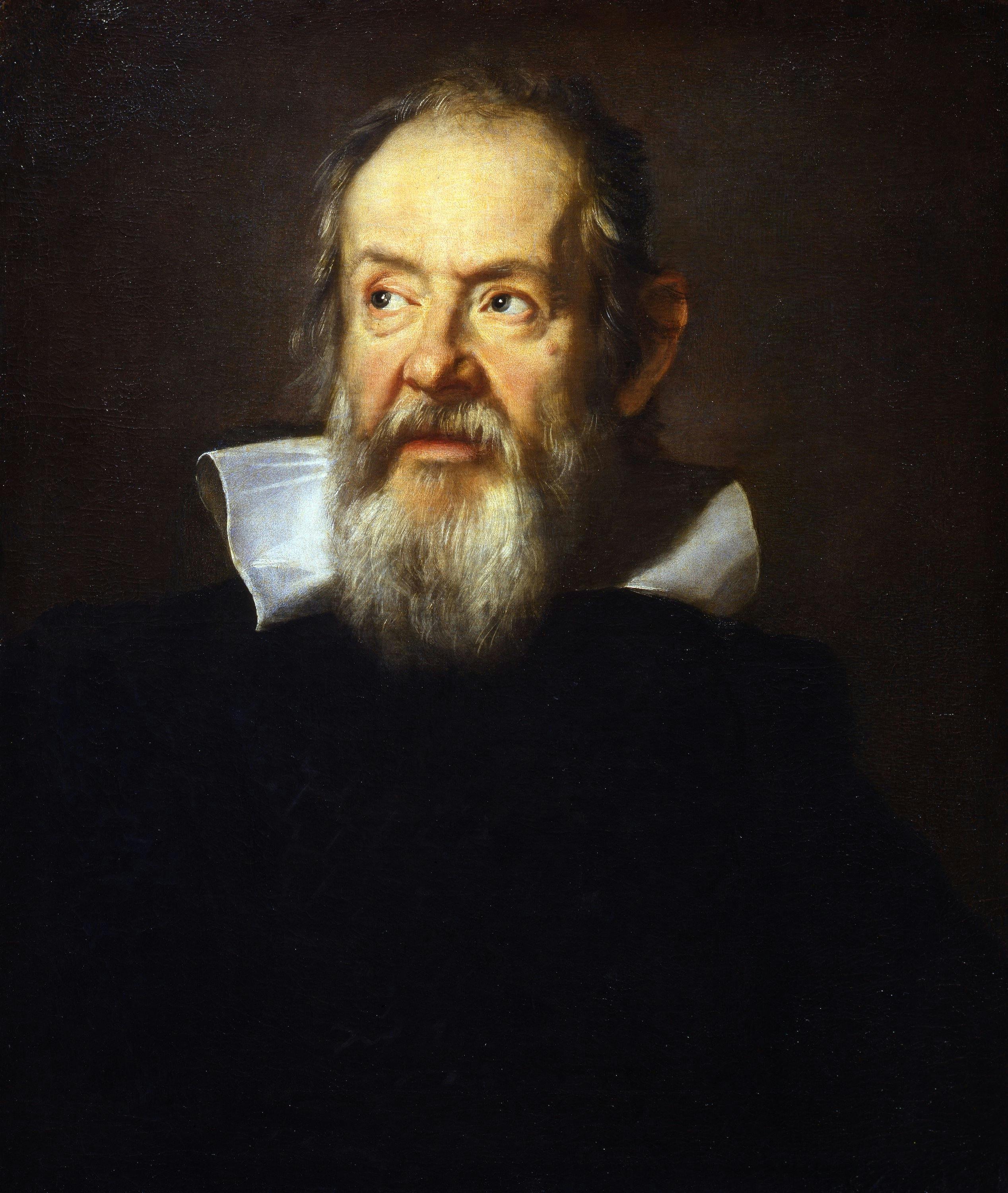
Galileo Galilei
1564 CE – 1642 CE
Pisa, Duchy of Florence
Italian mathematical natural philosopher whose telescopic astronomy, mechanics, instrument work, and scriptural hermeneutics helped reshape early modern philosophy of science and the Scientific Revolution.
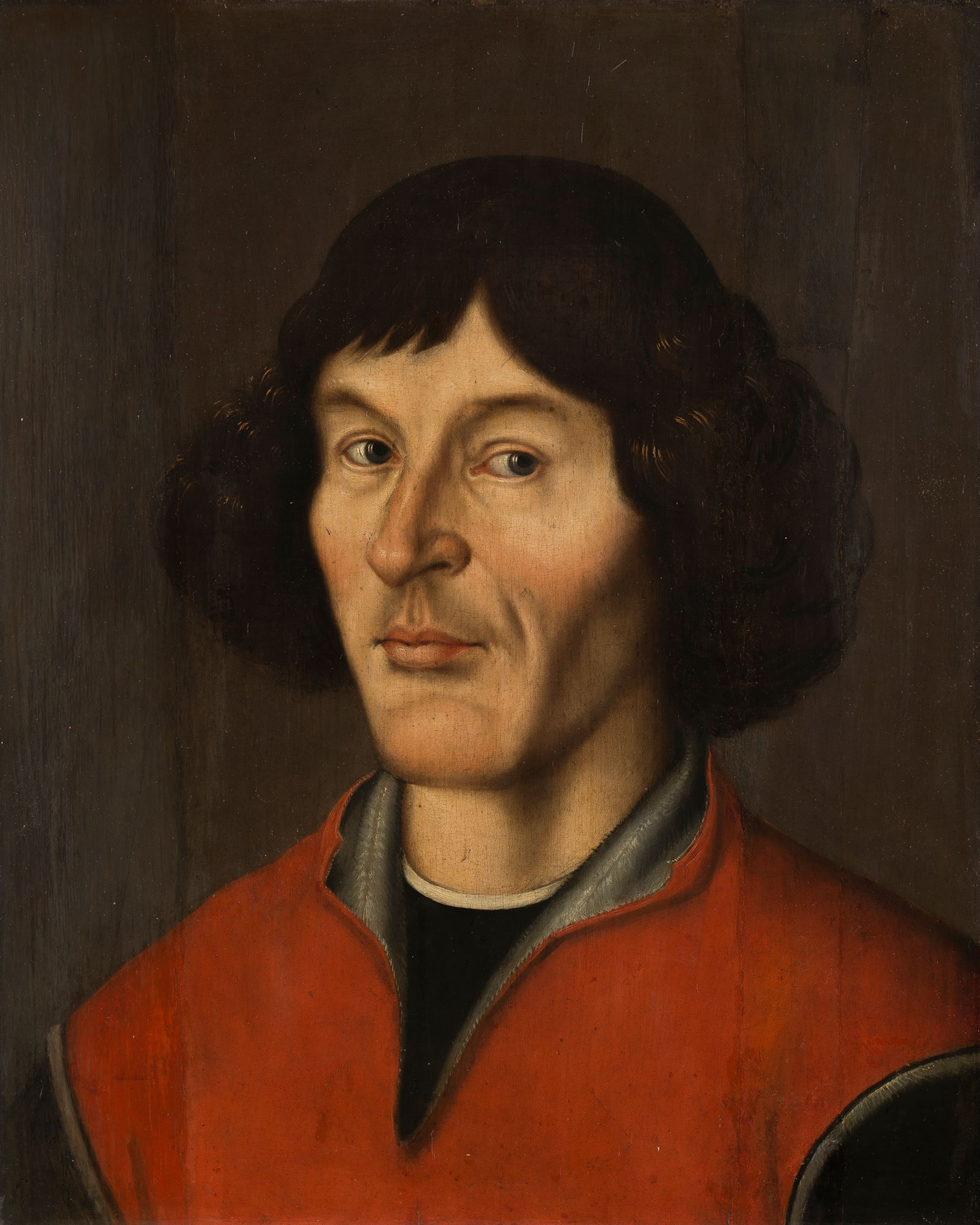
Nicolaus Copernicus
1473 CE – 1543 CE
Torun, Royal Prussia
Renaissance natural philosopher and mathematical astronomer of heliocentrism, De revolutionibus, Commentariolus, Warmian administration, and monetary reform.